
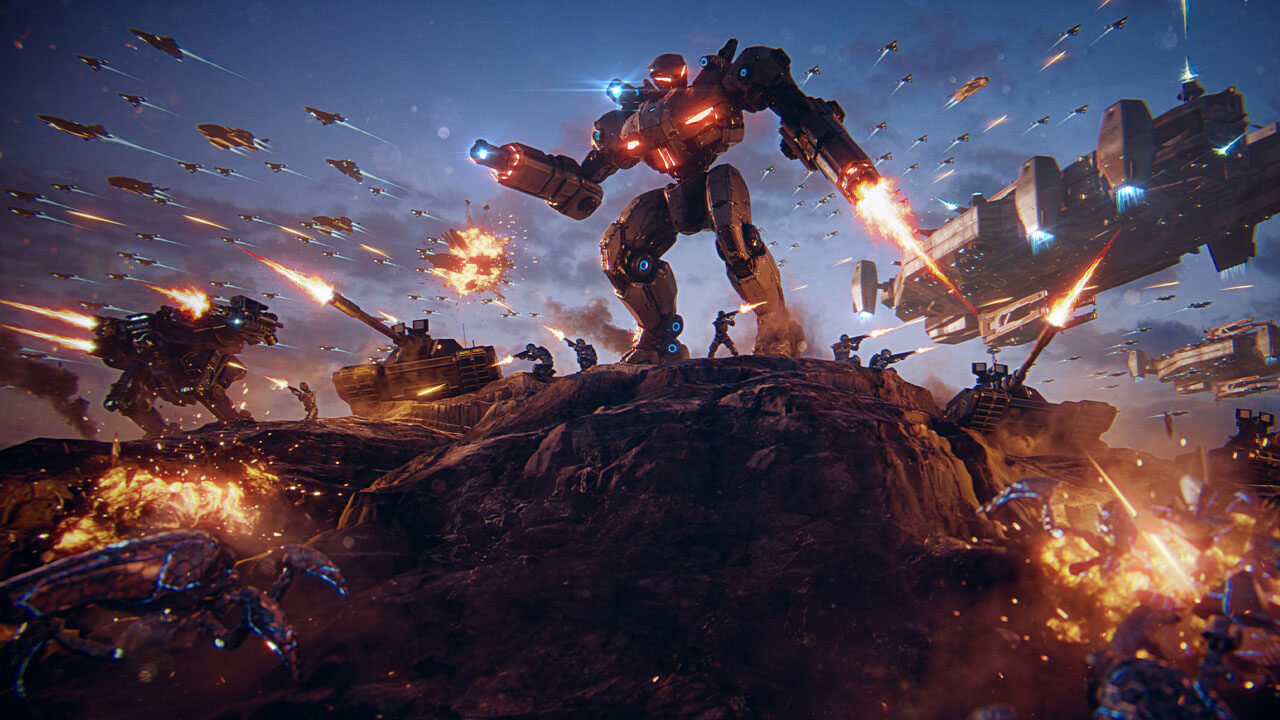

Ashes of the Singularity II is one of those games I’d call a one-trick pony. It does one thing, but it does it really, really well. And in this case, that’s providing almost unbelievably huge battles, where you constantly have to juggle multiple fronts. The core asymmetric strategy experience is satisfying, moving your pieces around the map like a master tactician – even if every battle starts to blend together after a while.
Like its predecessor, Ashes of the Singularity II is sort of the spiritual sequel to the Supreme Commander games – real-time strategy titles with a focus on battle size and micromanagement. At any given time, there can be, literally, thousands of units in any one battle. And if you bump up a skirmish or multiplayer match to eight players, that number likely goes up to ten thousand.
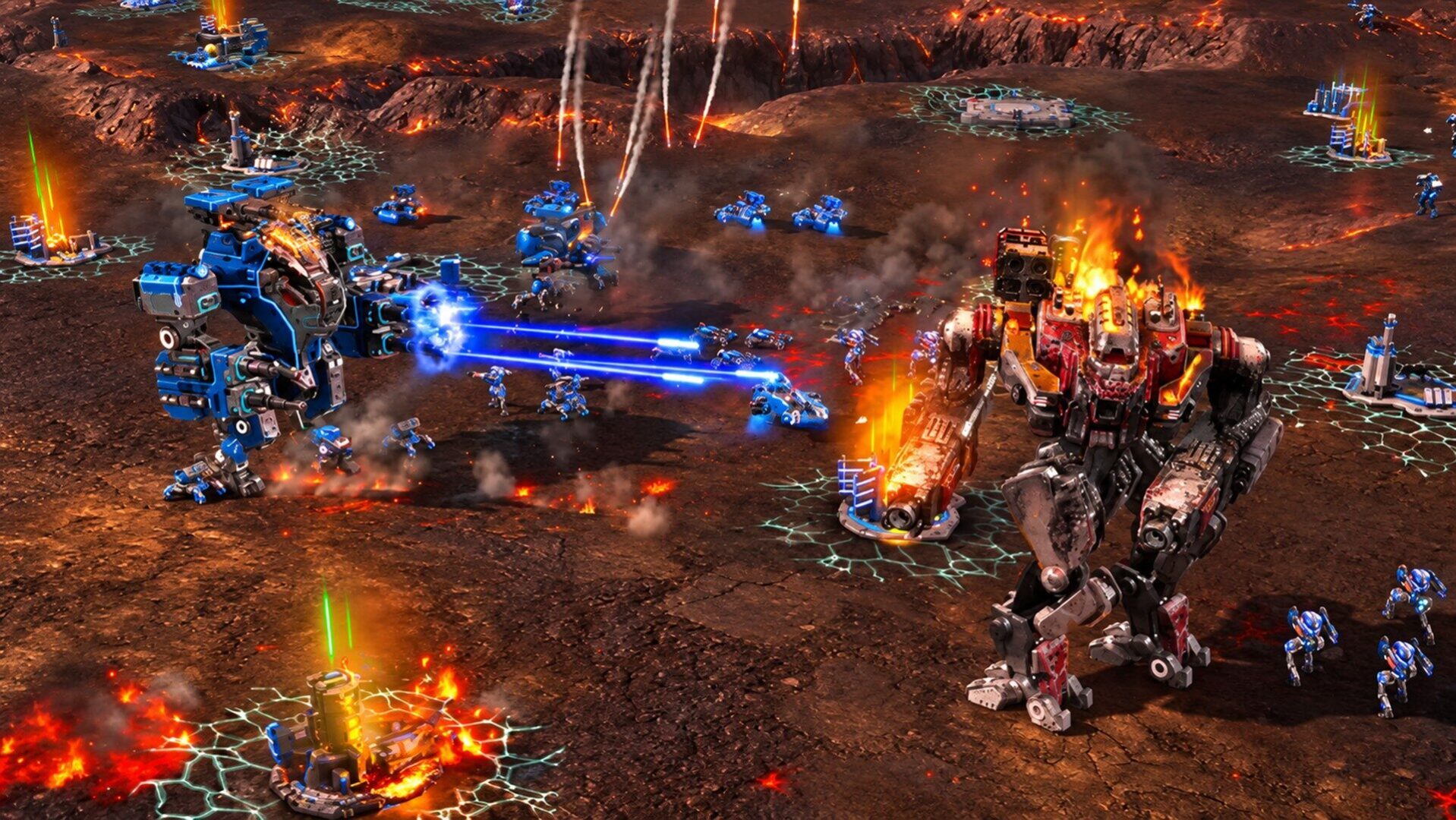
I realize that probably sounds unreal, but it cannot be overstated how large the battles in Ashes of the Singularity II can get – which means you’re usually controlling things from an overhead view, instead of the minutiae of moving individual units.
“The important part is that the core strategic experience of Ashes of the Singularity II is rock solid.”
The gist of any given match in Ashes of the Singularity II is getting your economy set up, slowly spreading out your zone control, building an army, battling for map control, and then making sure you have a constant flow of units to each front you’re trying to push. This isn’t an RTS with fast matches or blitzing, but typically long, drawn-out tugs-of-war. At any time, you can completely zoom out from the action to a tactical map, where everything is laid out with icons and colouring for zones. This gives you a more tactile way to select things and make your actions.
Each map in Ashes of the Singularity II is split into dozens of little zones that armies can capture and then build on, with each zone also having a central building that adds some kind of benefit, like extra power for constructing buildings or Logistics (army cap). Like most RTS games, Ashes of the Singularity II revolves around gathering resources, in this case, Durantium, Elerite, and Quanta. Think of these like Food, Gold, and Research Points in other games. Durantium and Elerite are gathered by simply constructing gatherers on top of the nodes for each. Additional buildings, like Refineries, allow you to boost the production of resource gatherers.
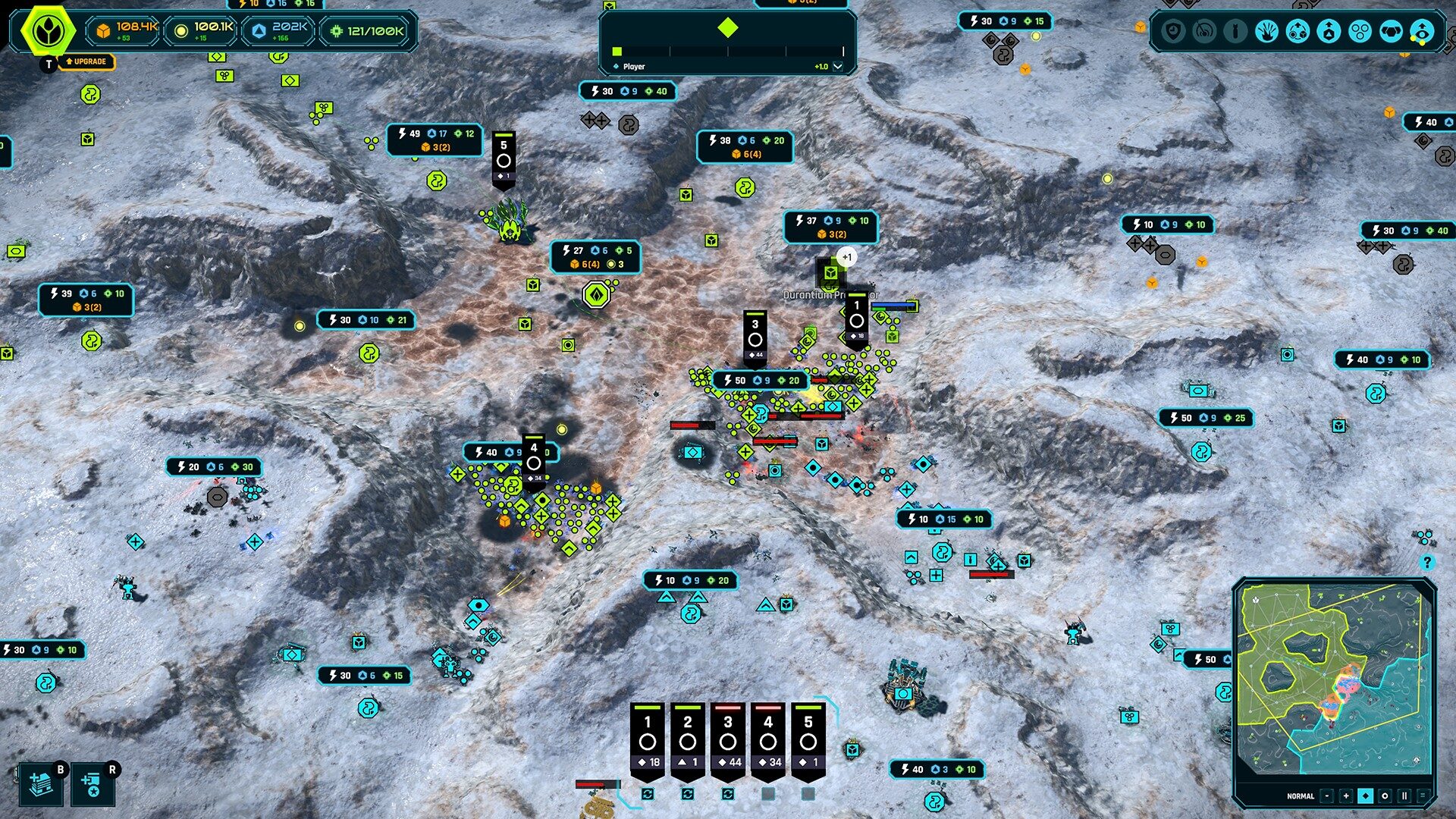
But a large part of the gameplay loop here is managing your resource income versus the vast amount of units that you’re trying to produce at any given time, as well as building construction. Quite often, you’ll find yourself with a resource deficit, having to decide if you can manufacture more units or try to boost your resources to make sure your army doesn’t stumble as enemies push. This oftentimes creates an interesting push and pull in the game’s mechanics, where split-second decisions can have long-reaching effects.
“These massive battles are a spectacle, surely, and it’s undeniably satisfying to overcome the odds and obliterate your enemies after a nail-biting two-hour match.”
As matches go on, you also build up research points that can be used on a tech tree to unlock new units, stat bonuses, rechargeable powers like orbital lasers, and more. The game’s three different factions- Earth, Post-Human Coalition, and the Substrate – also feel nicely varied. Ashes of the Singularity II is quite as asymmetric as something like StarCraft, but there are decisive differences between each faction, namely in the tech tree and powers being distinct.
Each faction has completely different units, which ties into the strategies you should use. The Post-Human Coalition has stronger units that can self-repair, meaning each army is focusing on quality over quantity. Meanwhile, the Substrate’s units have energy fields that recharge, making them perfect for hit-and-run attacks, where you rebuild in between. Then, as you might expect, the Earth forces focus on sheer unit numbers and buffs, needing a constant stream of fresh forces.
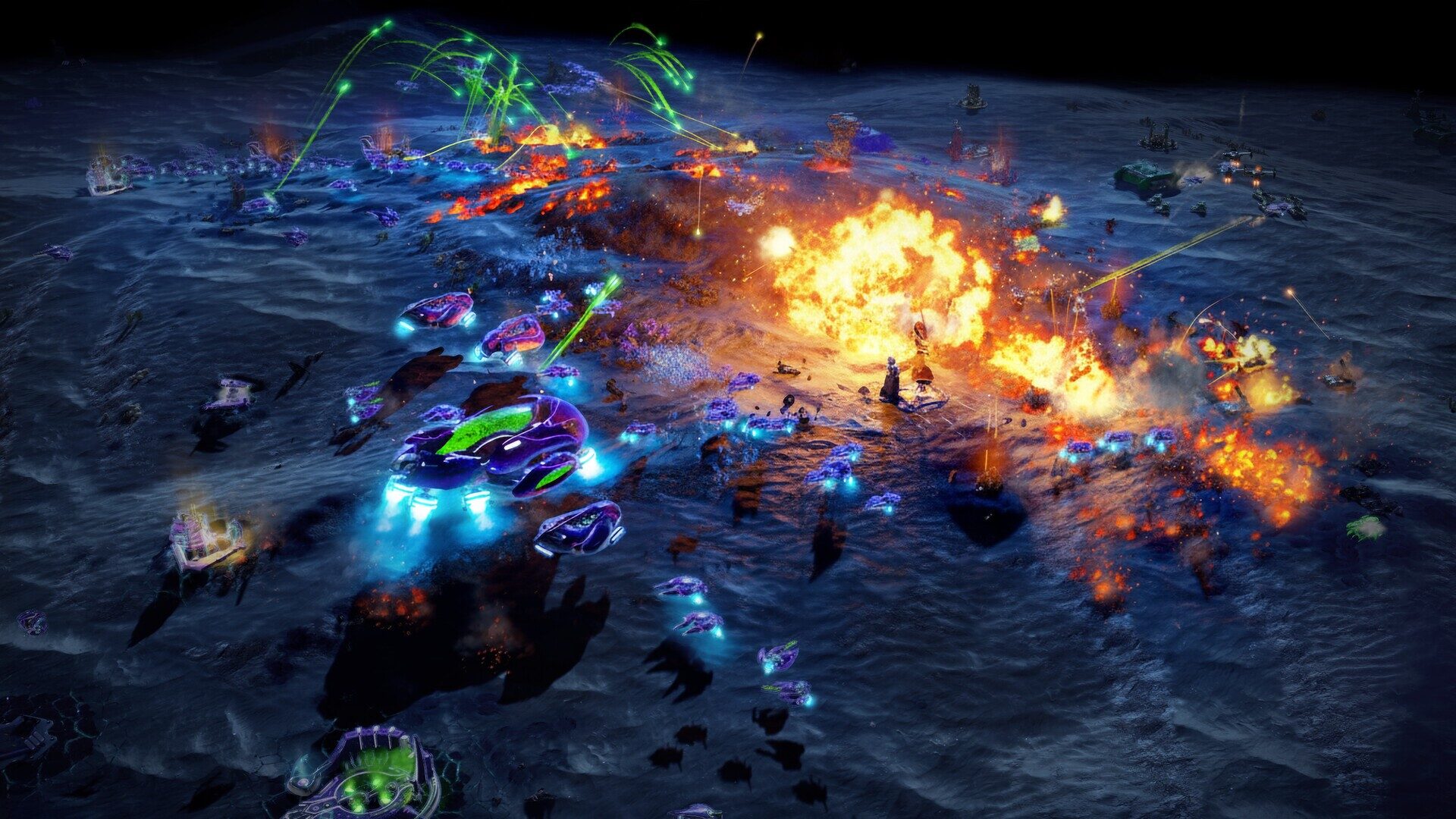
In terms of the actual gameplay experience of these three factions, there’s a lot of variance, but the one problem that does arise is a lack of visual individuality. StarCraft’s visual language works because each faction is wildly, integrally different, on a core level. But in Ashes of the Singularity II, everything sort of blends together in a vaguely robotic, futuristic way. And especially as you add in thousands of units, it’s impossible to tell what’s happening or what territory is yours without zooming out to that tactical map.
The important part is that the core strategic experience of Ashes of the Singularity II is rock solid. The flow of matches is great, with a clear arc of resource gathering, building, and then combat. That means matches are easy to initially understand, with complexity being layered in as things go on. There’s a wonderful ebb and flow to how battles play out, and a lot of thought and care has been put into how players control matches.
But the core criticism, then, becomes that Ashes of the Singularity II really only does one thing – even if it does it well. Multiplayer matches and skirmishes all ultimately end in these massive battle slugfests. There is a single-player campaign that adds a little bit of varied mission design, but usually ends up resulting in the same feeling as well. There’s some decent thought and characterization put into the campaign’s story, but an extremely lacklustre presentation makes the whole thing feel underbaked.
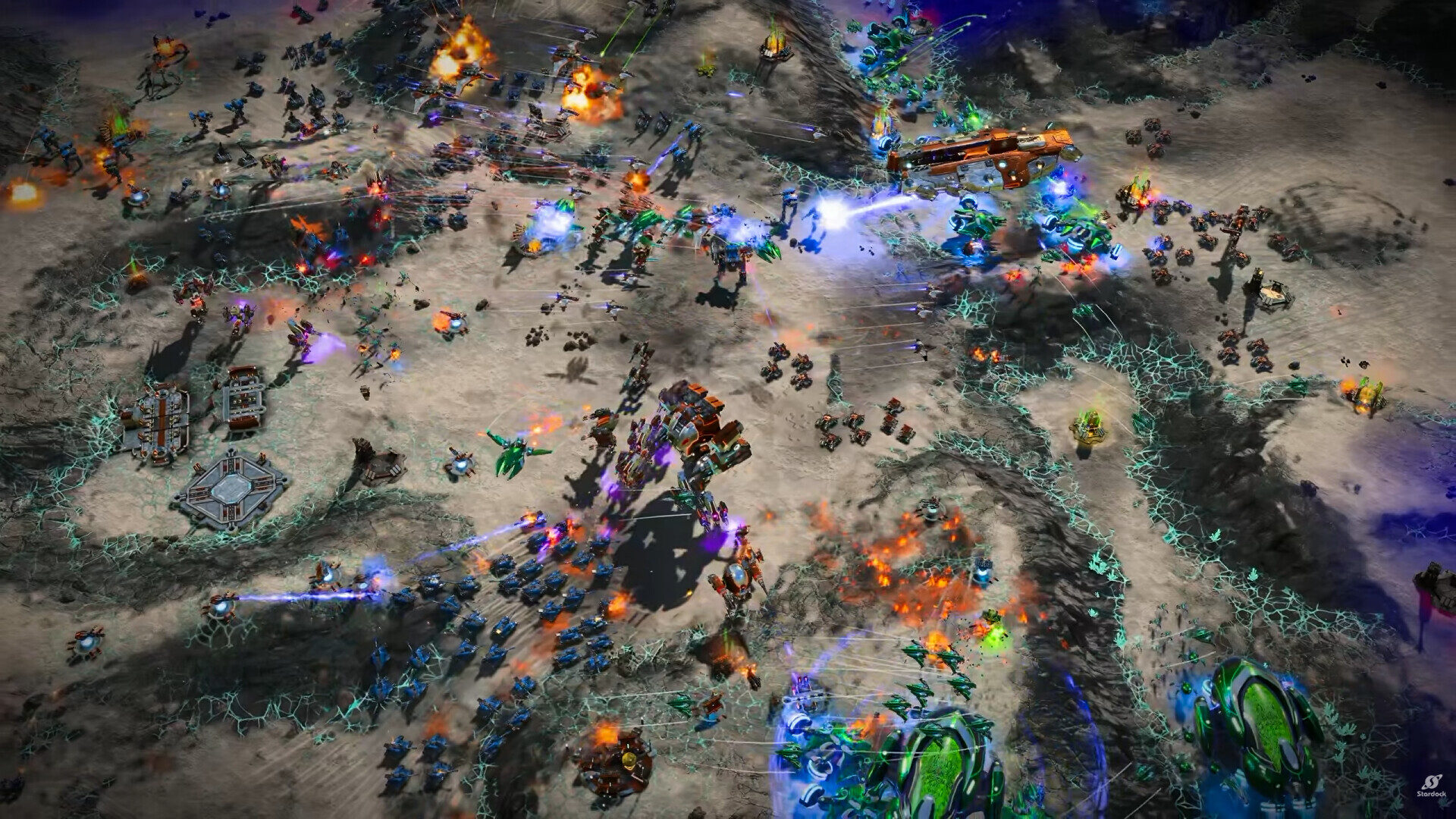
Ashes of the Singularity II is ultimately one of those games that, if you vibe with what it’s doing, there’s a lot of fun to be had. But that enjoyment is inherently limited because of a lack of variety. These massive battles are a spectacle, surely, and it’s undeniably satisfying to overcome the odds and obliterate your enemies after a nail-biting two-hour match.