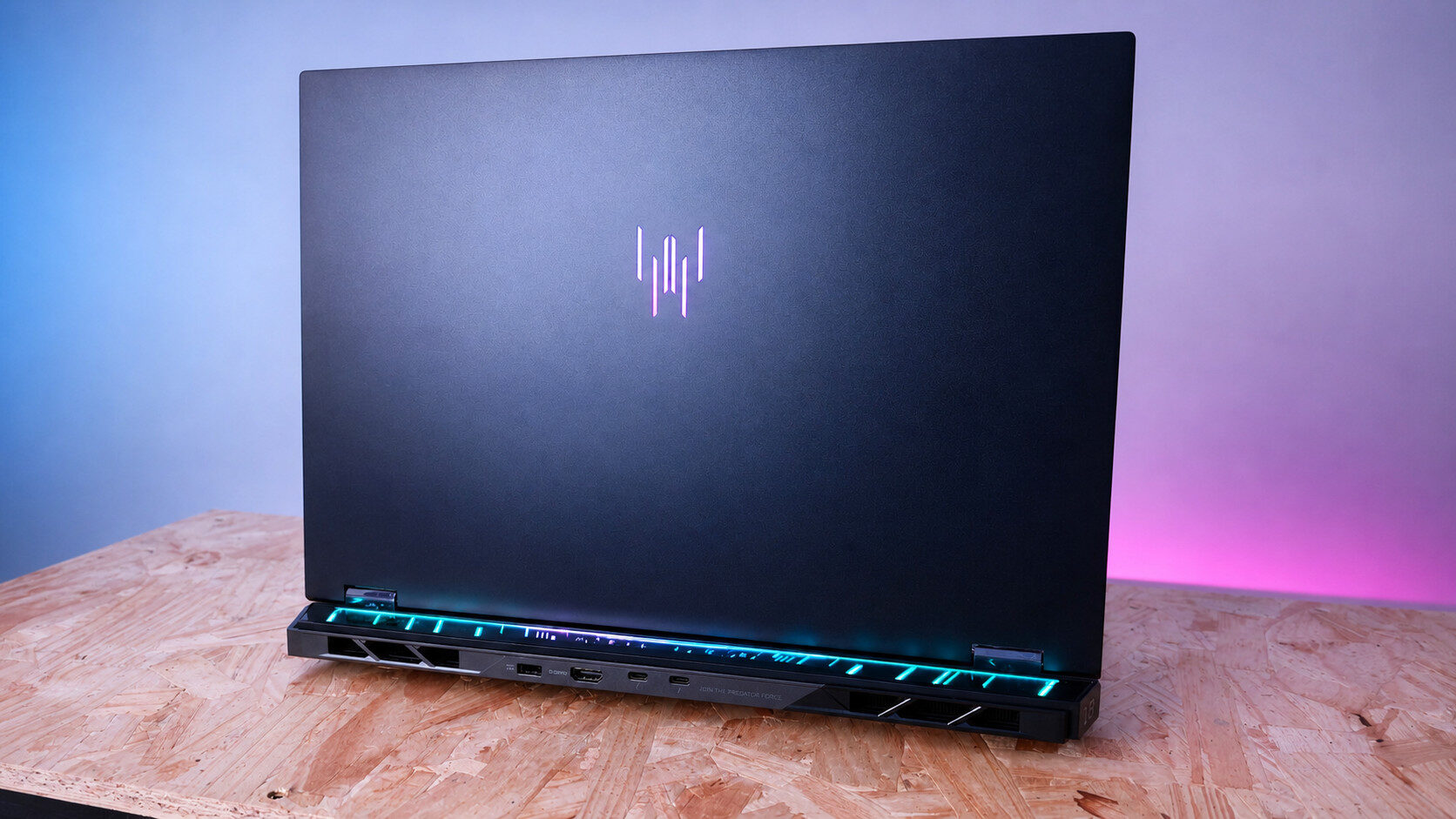


The Acer Predator Helios 18 AI is an impressive 18-inch, games-ready laptop that brings all of the latest high-end hardware to its slick, RGB-laden form factor. Housing up to an Intel Core Ultra 9 275HX processor, NVIDIA GeForce RTX 5090, and potentially 192GB of RAM, the Predator Helios 18 AI pulls no punches, aiming to crush the most demanding games and tasks with ease. Offering a unique outershell and up to a 3840 x 2400 dual-mode display, the Helios 18 AI is Acer’s offering in the high-end gaming laptop market, and it has what it takes to keep up with some of the more cost-heavy competitors on the market.
While the top-end Predator Helios 18 AI series offers the aforementioned specs, the unit reviewed here presents a more sensible set of hardware specifications. While the Core Ultra 9 275HX processor is present and accounted for, this Helios 18 AI comes equipped with the GeForce NVIDIA RTX 5080 16GB, 32 GB of DDR 4400 MT/s Dual-channel RAM, 1 TB NVMe M.2 SSD Gen5, and a 2560×1600, 250 Hz mini-LED display. It’s a solid offering for high-end performance while still priced at $3,099.99.
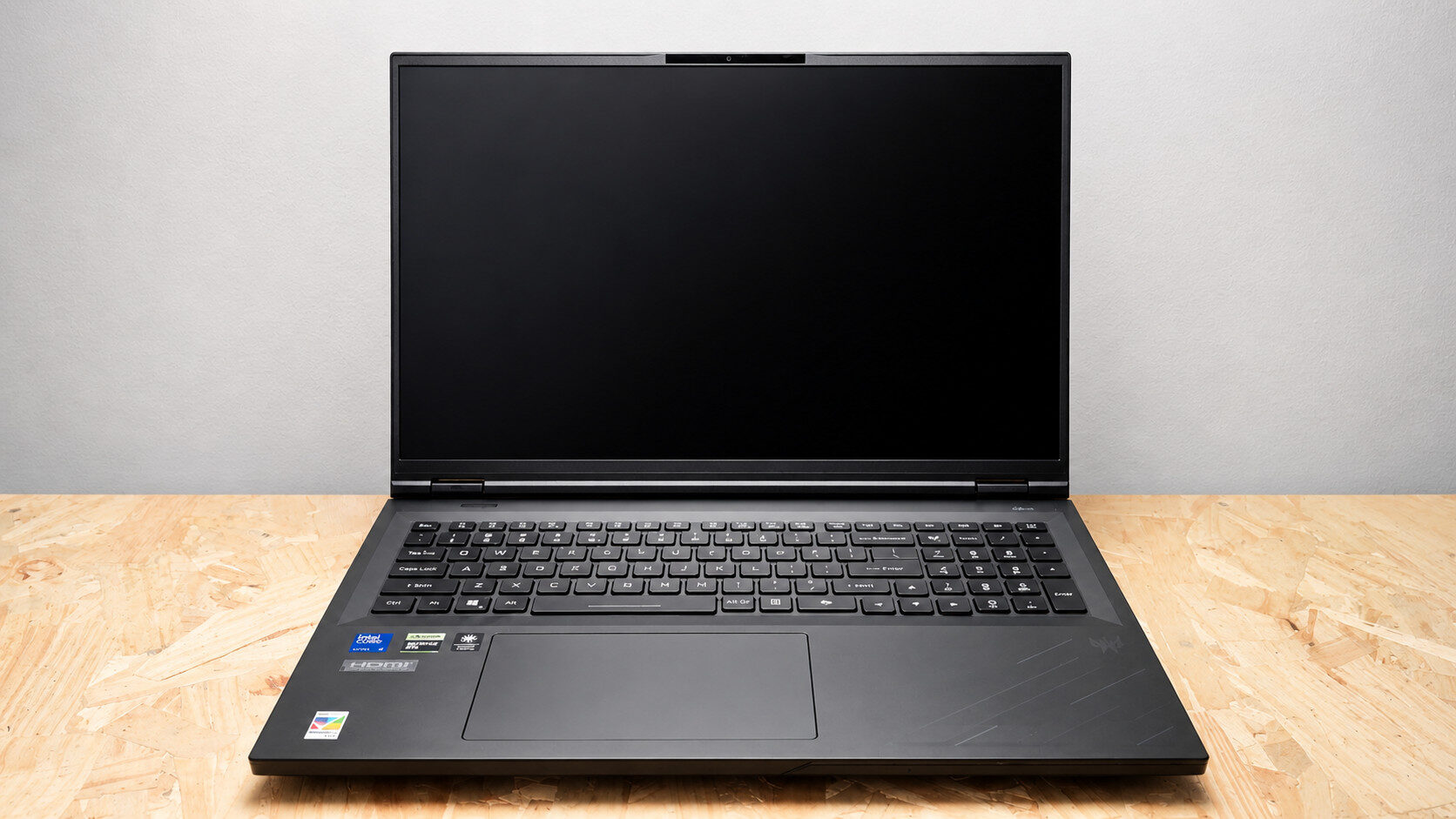
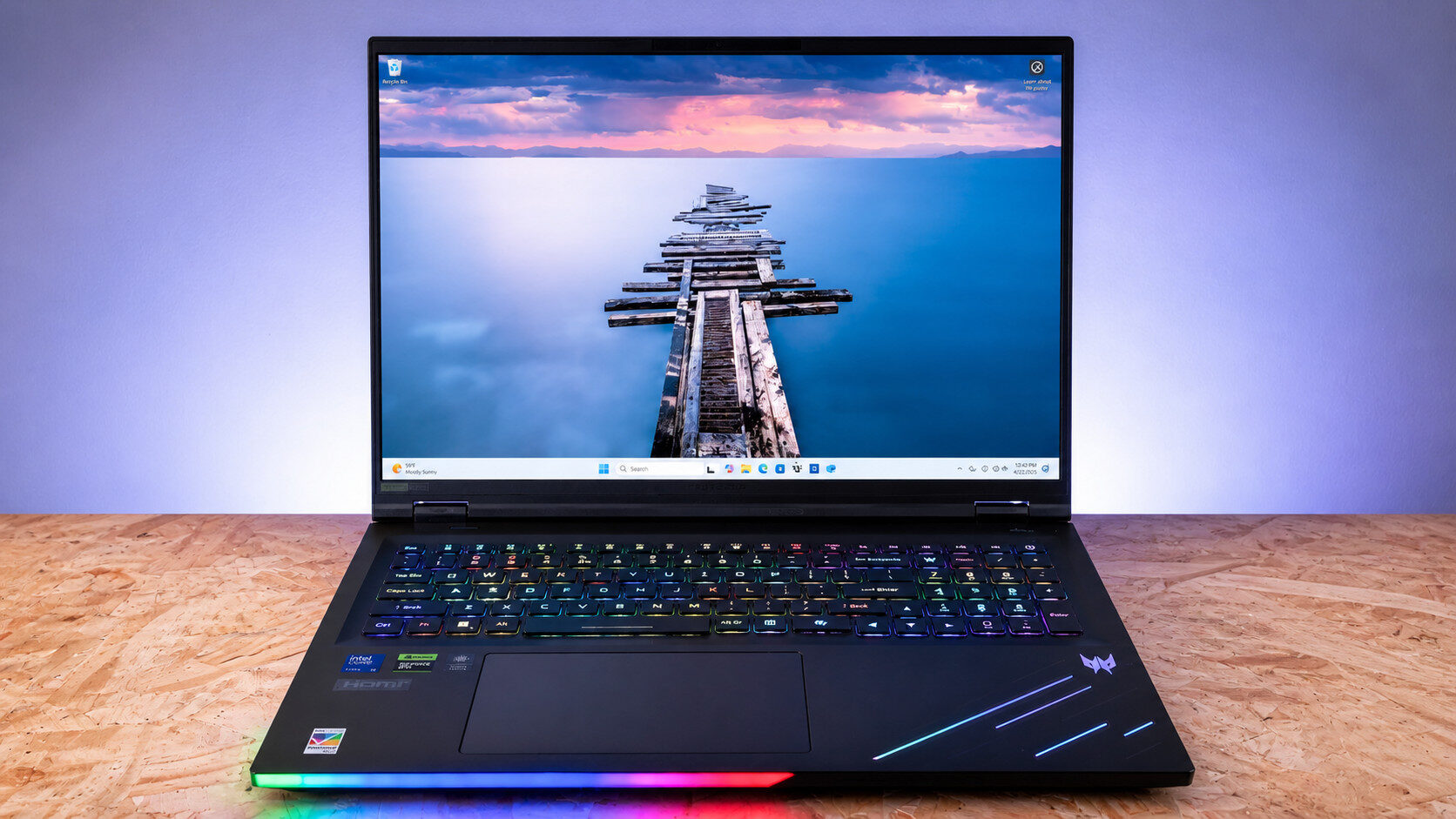
The Helios 18’s design follows a fairly standard format with a few notable elements. Measuring 401.67 mm x 307.85 mm and 29.97mm at its thickest, bringing it into a comparable size with other 18-inch gaming laptops such as the Lenovo Legion 9i 18. Weighing 3.47kg, the Predator is a great desktop replacement size but still portable if needed.
“The Acer Predator Helios 18 AI is an impressive 18-inch, games-ready laptop that brings all of the latest high-end hardware to its slick, RGB-laden form factor.”
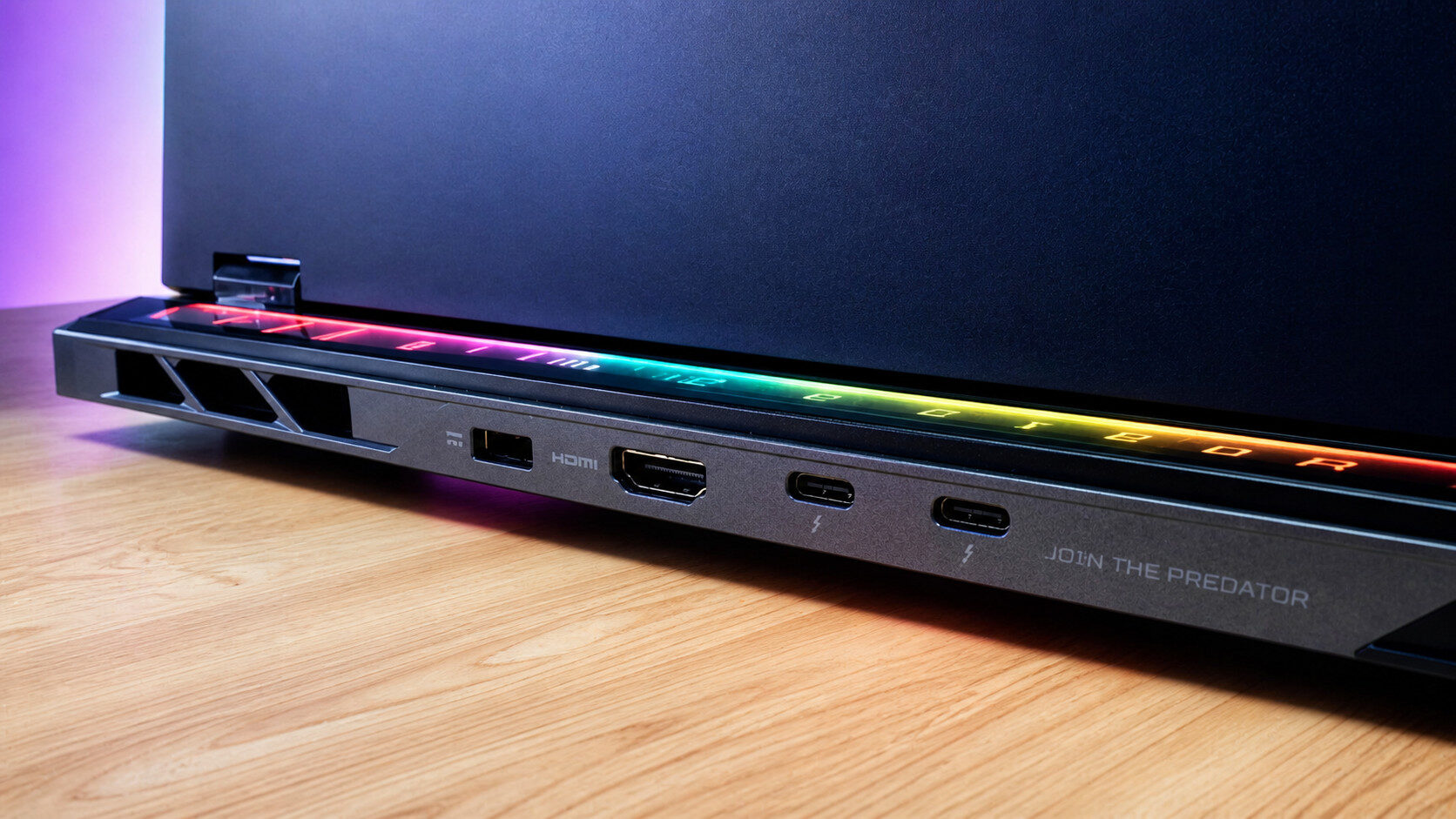
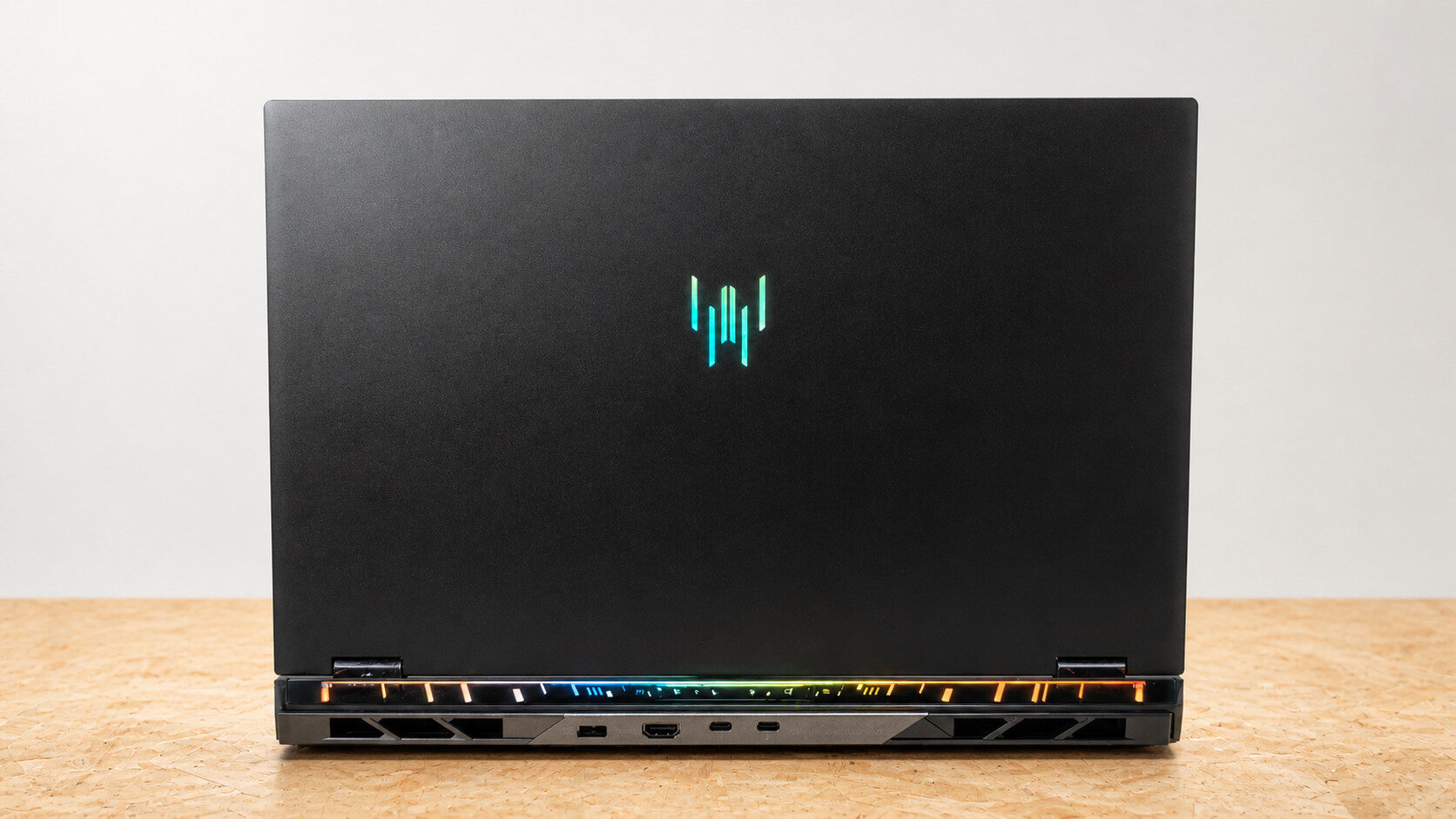
It features three sides of IO, allowing for a broader range of port selection. The right side of the unit includes two USB-A 3.2 ports, with one supporting offline charging, while the left side offers an additional USB-A 3.2 port along with an RJ-45 port, a MicroSD slot, and a 3.5mm audio combo jack supporting headsets with up to 600 ohms impedance. The rear portion of the Helios houses the DC-in jack, dual Thunderbolt 5 Type-C ports and an HDMI 2.1 output for external displays.
I appreciate the robust port selection, with special note of the impressive 600 ohm impedance support for power-hungry headphones. This is of special interest to those who listen with or test high-drive audiophile headphones, as it provides a listening solution without the need for a preamp or full DAC. As for connectivity, the Predator Helios 18 comes with Wi-Fi 7 and Bluetooth 5.4, with full support for LE audio, making it great for streaming high-quality audio to Hi-Fi-enabled Bluetooth headphones like the Status Pro X earbuds.
Speaking of audio, Acer has included a 6-speaker DTS:X audio system with the Predator Helios 18 AI. This system offers a solid sound profile for a laptop and is among the better ones I’ve tested over the past year. Even when running the system in turbo mode, which drives the system fans quite hard, the audio still comes through well.
While I don’t typically highlight the keyboard on laptops, I have been impressed with Acer’s unique offering. Featuring MagKey 4.0 mechanical switches on the WASD and arrow keys, and per-key RGB support, the Predator Helios’ keyboard experience is geared specifically for gaming. With only 0.3 mm of key travel, the keystrokes still manage to provide great tactile feedback while feeling at home with the rest of the keys. More interesting still is that the aforementioned keys are swappable, like a traditional mechanical board, providing a great solution for long-term use.
“Gaming looks absolutely beautiful on the 2560×1600 250Hz panel included in the review unit.”
The touchpad, on the other hand, while usable, feels way too large and, as a result, remains disabled most of the time. I find it to be a constant pain point when trying to type for any length of time. This is due to where hands naturally rest when typing. If you follow a traditional typing format with your index fingers positioned on the F and J keys, your palms will have no choice but to rest on the touchpad. The result is utter chaos when typing quickly, as your palms naturally lift and set down as your fingers move across the keyboard. Best to connect a mouse and disable the touchpad for any long-term typing.
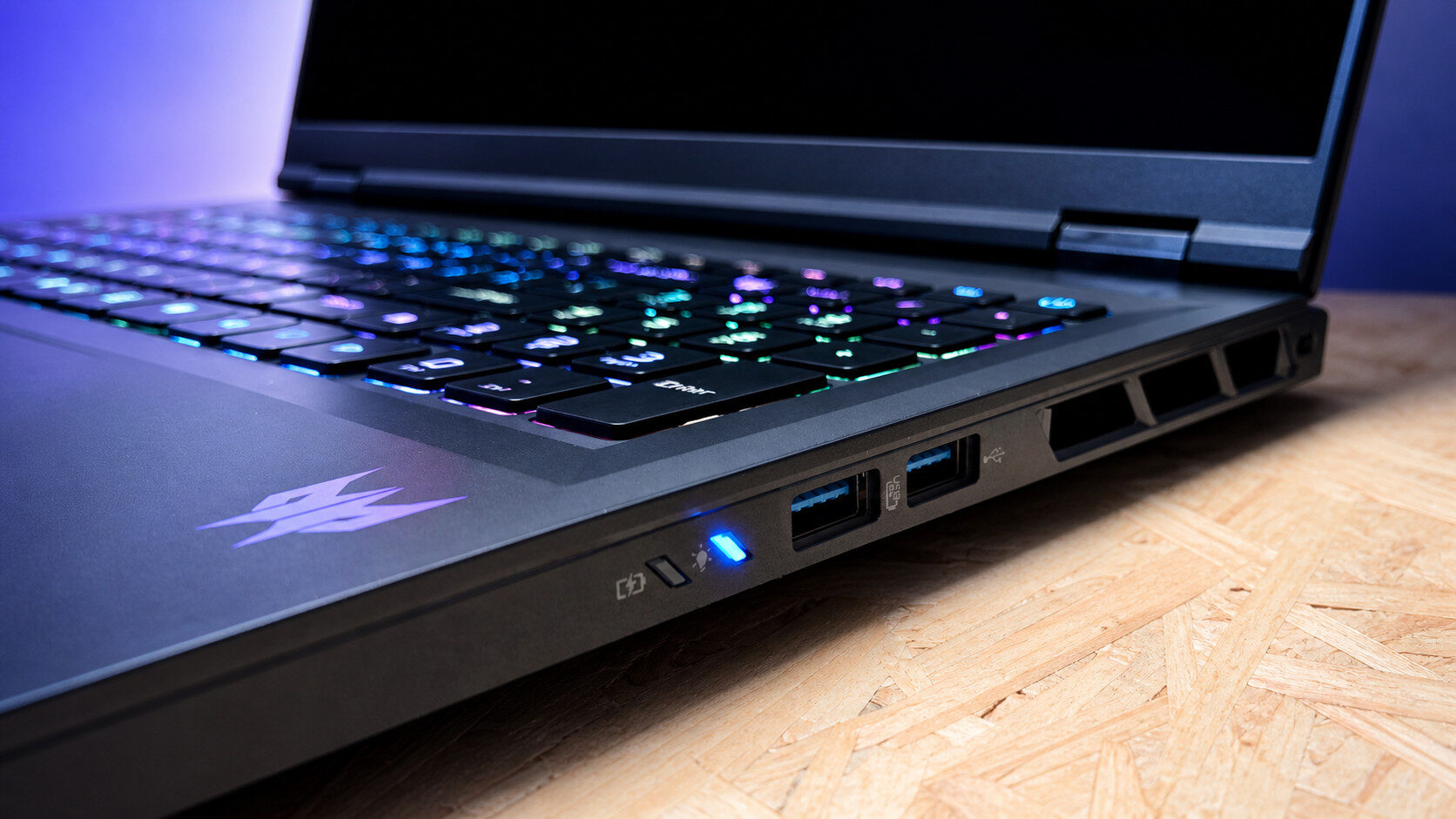
Finally, the last noteworthy element of the physical design is the robust RGB lighting woven into almost every part of the Predator Helios case. Starting with the cover, Acer has integrated a dynamic RGB-powered logo into the design, allowing users full customization of the colour and lighting pattern here. Moving along the back of the unit reveals what Acer refers to as the “MilkyWay” RGB trail that once again is fully customizable. Examining the front of the unit, an L-shaped “InfinitteRing” provides an additional lighting dimension while the right side of the palm rest caps off the RGB design with some great diagonal lighting effects.
Is this all necessary? Absolutely not. Does it look amazing? Absolutely, it does! Controlled from Acer’s PredatorSense software, RGB control, along with system profiles management and monitoring, is easy to manage with a simple and easy-to-navigate UI ready to welcome users. It’s one of the better in-house programs I’ve tested and provides a simple-to-use settings tool.
The display on the Predator Helios 18 is another beautiful element of Acer’s gaming laptop. Available in two versions, the aforementioned 3840 x 2400 240Hz panel and a 2560 x 1600 250Hz display panel, the Predator Helios 18 has opted for a mini-LED display solution. More cost-effective than OLED, I’ve seen this trend in other high-end gaming laptops, such as MSI Powerhouse Titan 18 HX AI. Mini-LED has come a long way in the last couple of years, offering exceptional brightness with 600-1000 nits and full HDR support. Gaming looks absolutely beautiful on the 2560×1600 250Hz panel included in the review unit.

On the note of gaming, the Predator Helios 18 AI doesn’t hold back. Equipped with the impressive Intel Core Ultra 9 Processor 275HX, the Predator Helios 18 comes out swinging, performing well alongside similar gaming laptops. For comparison, the Predator Helios 18 matched the Lenovo Legion 9i on similar benchmarks, with the only notable difference being that the Legion housed 64GB of DDR5-5200 vs the Helios 18’s 32GB of DDR5-4400.
With the NVIDIA GeForce RTX 5080 16GB on board, the Predator Helios consistently crushed the Cyberpunk benchmarks, pushing 111 FPS at ultra settings at 1440p. Even with Ultra Ray Tracing settings applied, the Predator Helios still produced a very respectable 67.32 FPS without issue. All tests were performed in a performance scenario (our standard when doing gaming benchmarks).
Thanks for DLSS via the RTX 5080, the Predator Helios cranked out a whopping 283 FPS at 1440p. The point of all this is that the Predator Helios 18 is Acer’s response to high-end gaming laptops like the aforementioned Legion 9i, Titan 18 HX AI and the Razer Blade 18. It offers similar performance to other top-end gaming laptops. The biggest distinction is the price. With an MSRP of 2,999.99, the Predator Helios 18 AI sits at a lower price point than all the 18-inch gaming laptops mentioned above, making it the most cost-effective 18-inch gaming laptop.
Cooling the Predator Helios 18+ is two 6th-generation AeroBlade 3D fans. Currently, some of the thinnest fans available, these 0.05mm fans have a total of 100 blades and push an exceptional amount of air through the system with the ability to adjust in real time so as to accommodate heavier loads with quicker response time.
“On the note of gaming, the Predator Helios 18 AI doesn’t hold back.”
This is paired with Acer’s Vector Heat Pipes with offer a wider surface area for heat dissipation. This results in a faster heat transfer, allowing the system to remove more heat more quickly. In testing, I was impressed by how cool the system felt in Turbo mode and how relatively quiet the fans ran. Even when under load, the Predator Helios 18 is cool to the touch in the key areas where your hand naturally rests. It’s a slick system that gets the job done well.
Shifting from raw power performance to productivity and features, the Predator Helios 18 incorporates many of the AI features that feel standard these days. Along with Windows Co-Pilot, which features a dedicated key on the keyboard, the laptop also benefits from what Acer calls Experience Zone 2.0, a suite of AI tools to enhance every aspect of the user experience. The standout in testing was the PurifiedView 2.0, which offers auto-framing and gaze correction. I found they both worked exceptionally well and actually did feel like they enhanced the webcam capture without any additional work.
With all of the features, hardware and RGB goodness packed into the Predator Helios 18 AI, there is a lot to love. Acer’s top-end gaming laptop provides a similar gaming experience to the others in its weight class, but manages to do it at a slightly more budget-friendly cost point. It’s a great entry from the company and, for those looking for an 18-inch desktop replacement, a great deal worth considering.

- [Superior Display] 18″ Mini LED WQXGA (2560×1600) 250Hz Display; 802.11be, Bluetooth 5.4, RJ-45, Webcam, RGB KB Standard Keyboard
- [Powerful Performance] Ultra 9- 275HX 2.70GHz Processor (upto 5.4GHz, 36MB Cache, 24-Cores, 24-Threads, 8 Performance-cores); GeForce RTX 5080 16GB GDDR7 Dual (Integrated+Dedicated) Graphics, VR Ready