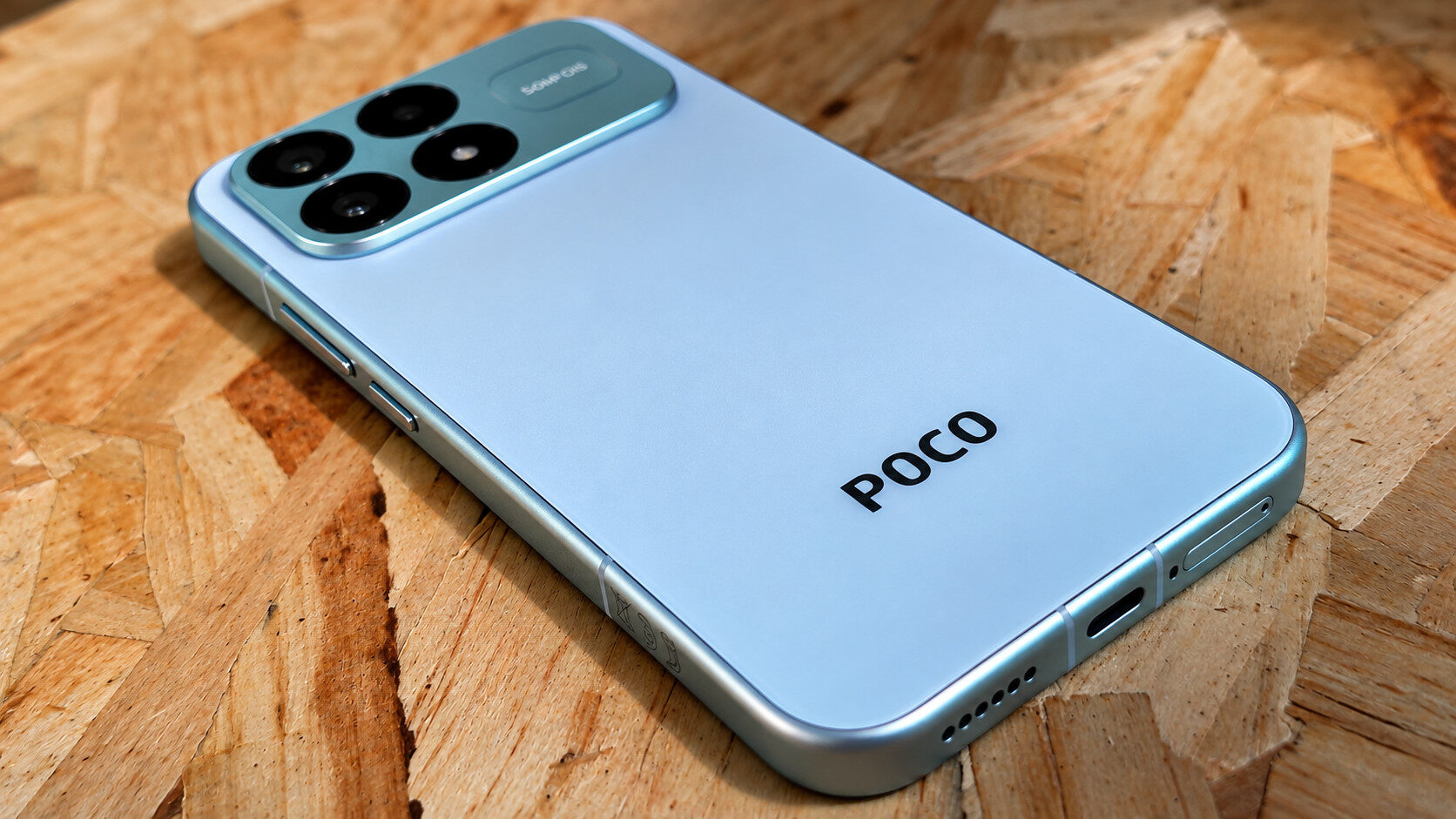


The POCO F9 Pro, part of the new F9 Series release, is an impressive phone that offers most all of its counterparts’ (the F9 Ultra) processing and features in a more compact form factor. Sporting the impressive Snapdragon 8 Elive Gen 5 V series processor, VisionBoost D8 chipset, 12GB RAM, 512GB of storage, and the absolutely beautiful M11 display panel, the POCO F9 Pro is a powerful phone that can go toe-to-toe with most flagship phones on the market.
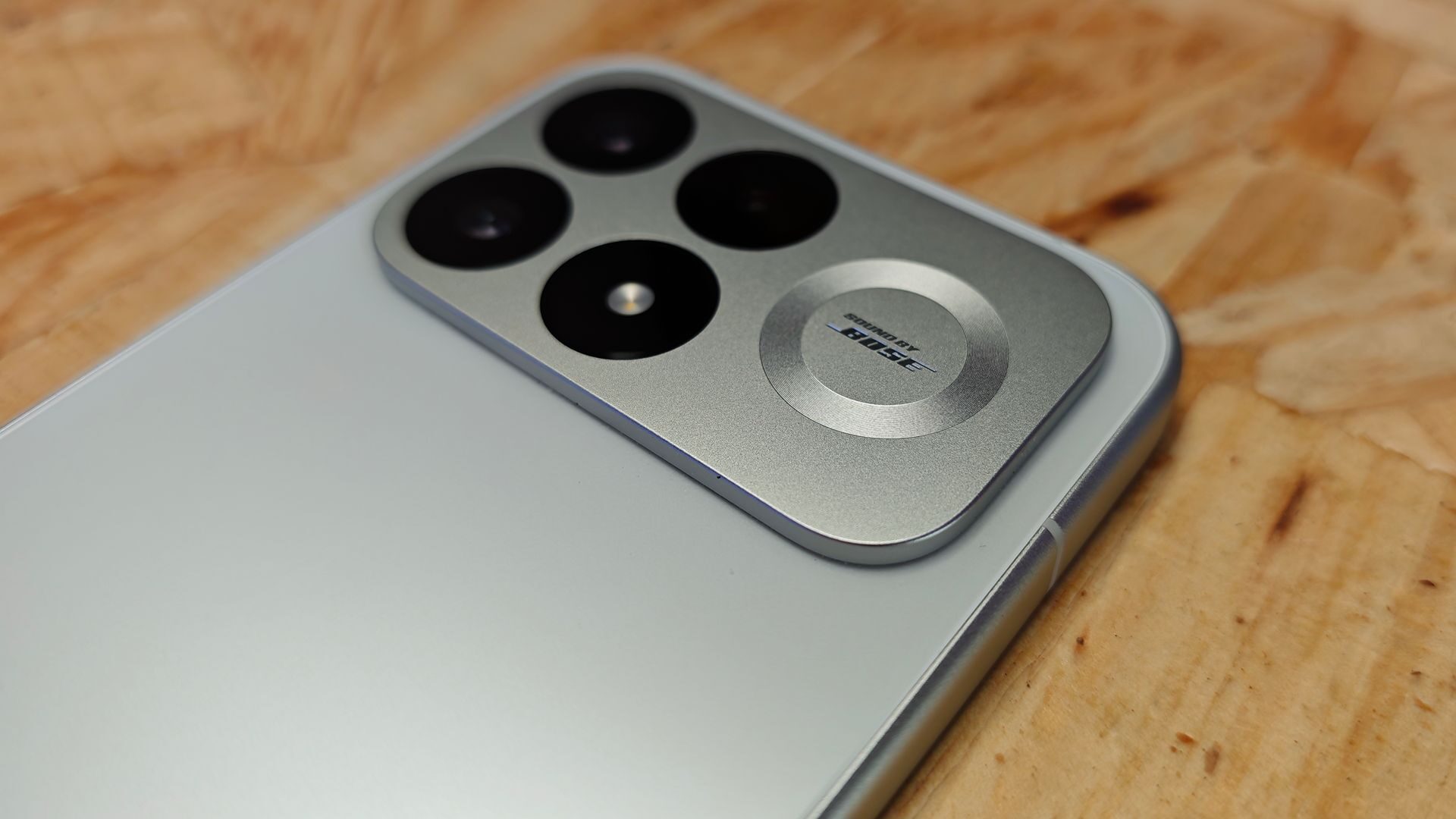
The design and style of the POCO F9 Pro feels very similar to what we saw created in the excellent F8 Ultra and F8 Pro. Back is the clean lines and sturdy construction that define the series, along with the now iconic camera bump that covers the top quarter of the rear panel. Available in Aurora Green, Black and the White received for review, the POCO F9 Pro is a sharp-looking phone.
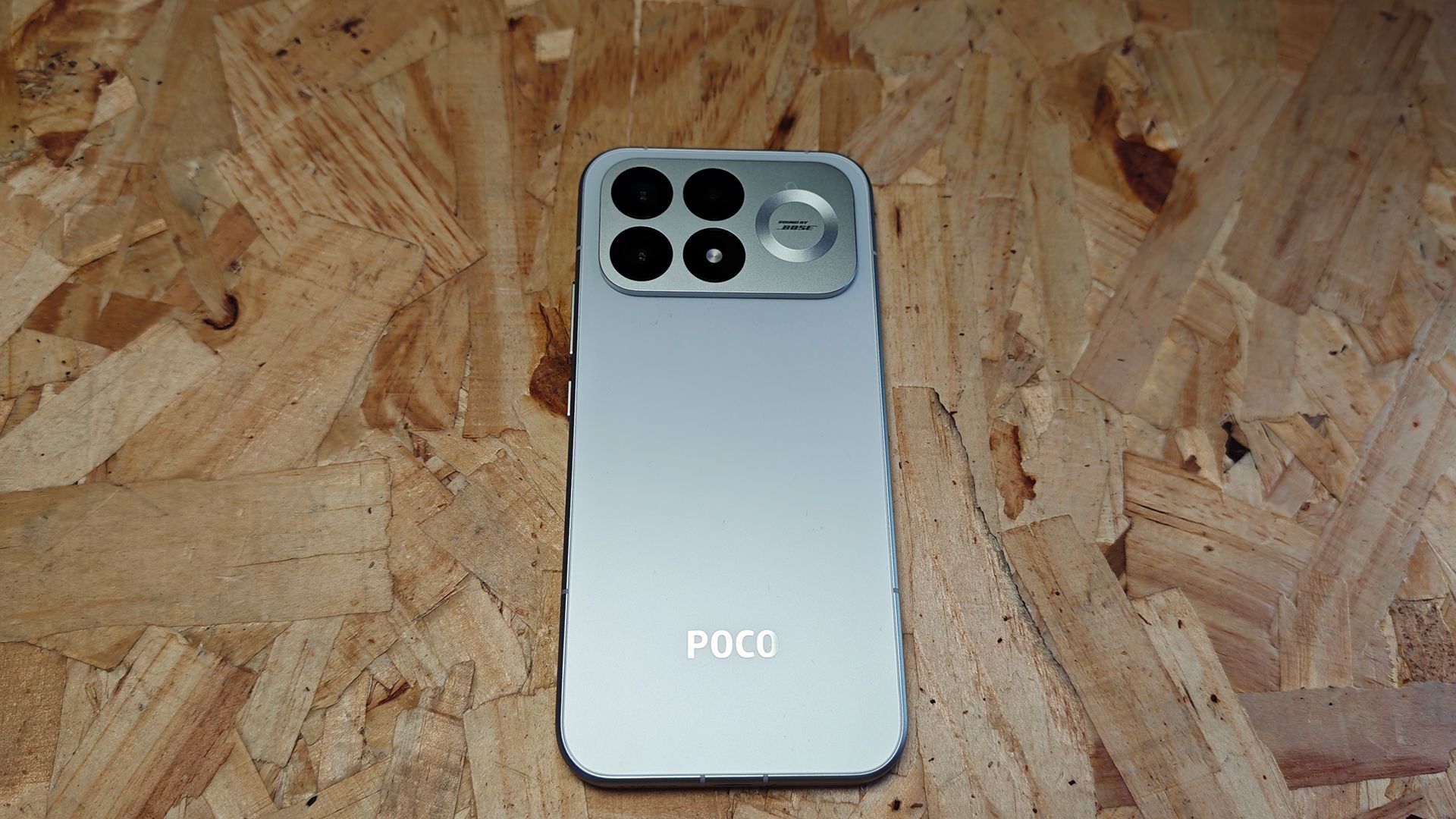
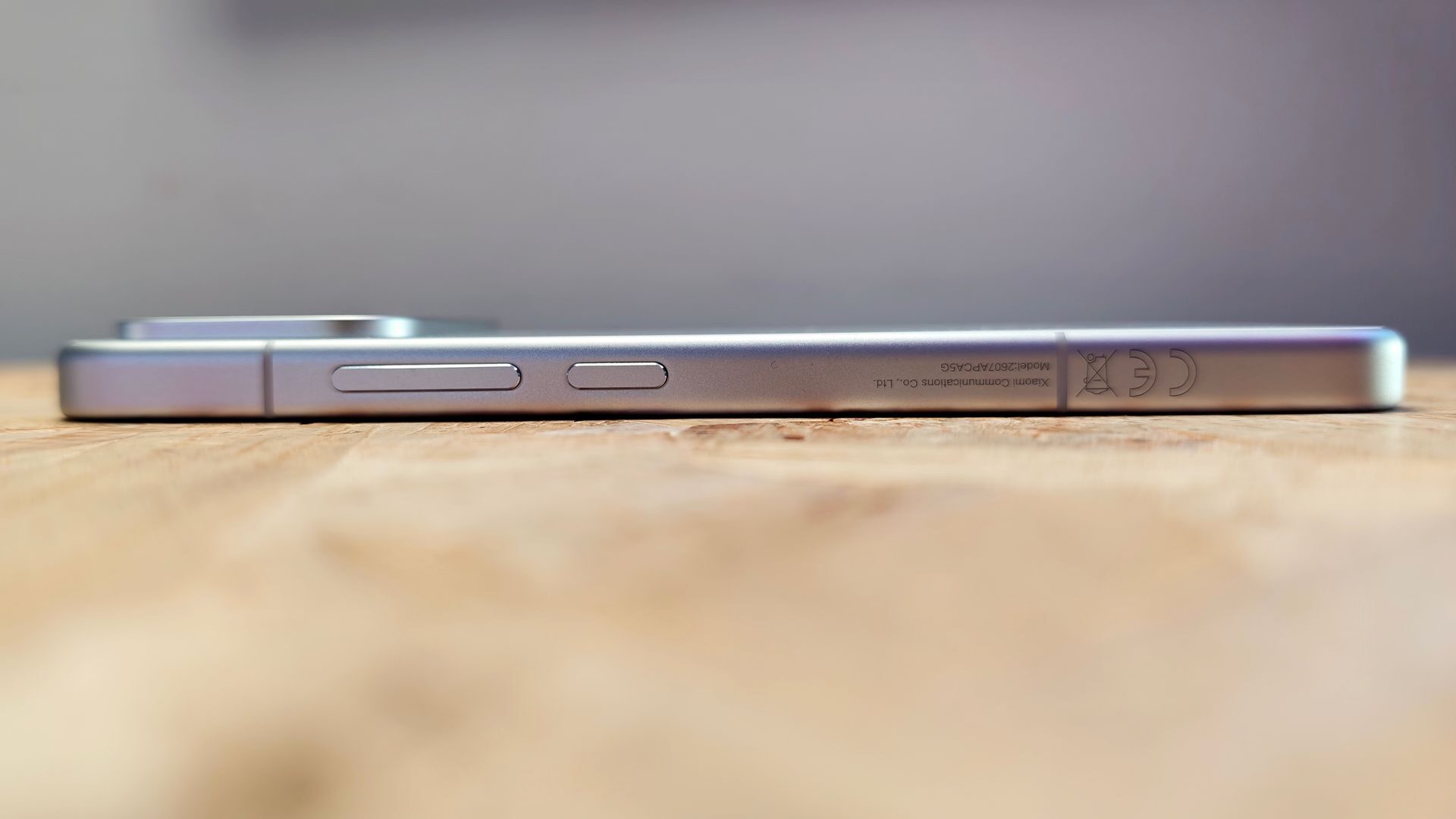
Having used the F8 Ultra over the past year, I’ve found that I am enjoying the slightly smaller form factor found in the F9 Pro as well. Measuring 157.49 x 75.25 x 8.79 mm and weighing 206g, it is lighter and more compact than the F8 Ultra but slightly thicker and heavier than last year’s F8 Pro. That being said, comparatively, it’s nice to be moving to a slightly smaller form factor.
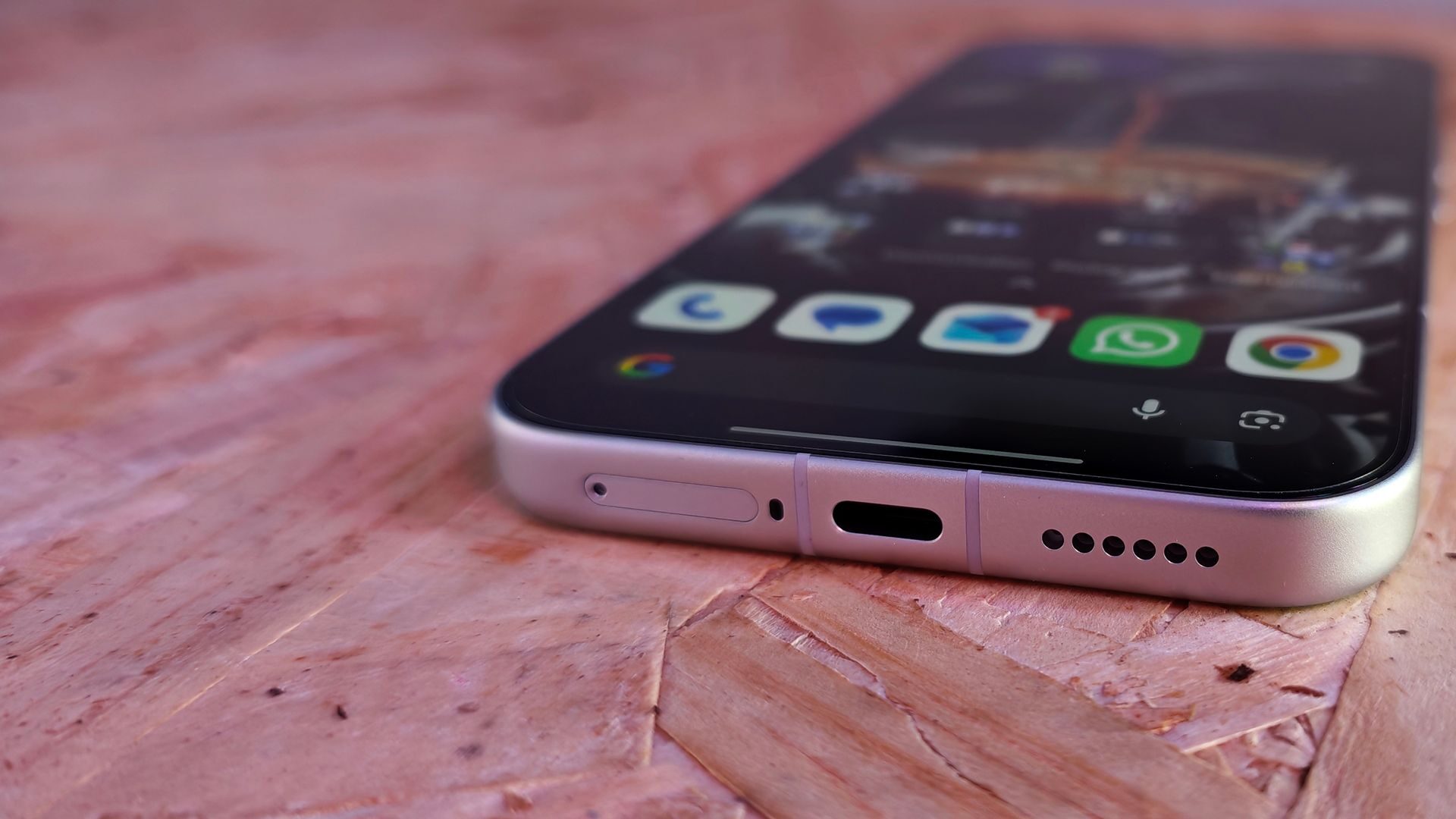
The display introduced with the F9 Series is an impressive work of technology. The M11 panel offers an impressive 185Hz ultra-bright AMOLED display. Measuring 6.59” (2510 x 1156), the F9 Pro screen is a thing of beauty to behold. The display can push an incredible 10,000-nit peak brightness over 1% of the display and 4,500-nit peak over 25% of the display, letting the screen leverage its HyperRGB properties when needed.
“The POCO F9 Pro is a powerful phone that can go toe to toe with most flagship phones on the market.”
For daily use, the F9 Pro offers a High Brightness mode of 2200 nits, providing excellent clarity in direct sunlight, with typical use brightness at 850 nits. This is a solid improvement over the F8 Pro, with a jump in both HBM and typical-use brightness. In real-world scenarios, I found it easy to view both text and video in direct sunlight with no issues.
With HDR+10 support, 12-bit colour depth, and the aforementioned 185Hz max refresh, the new M11 display panel provides excellent use cases for both content streaming and gaming. Of note during testing was the sharp and clean contrast of bright and dark scenes when streaming movies. The HDR+10 came through exceptionally well during these tests, making content streaming a joy on the POCO F9 Pro.
The 185Hz refresh, while impressive, is really only reserved for supported gaming titles, but is nonetheless a solid update over the F8 Pro’s 120Hz. In supported titles, though, I did note the increased smoothness when run side by side with my F8 Ultra. As more titles update to accommodate this new refresh rate, the F9 Pro will be ready to take them on without concern.
Returning to the F9 Series is the signature collaboration with Bose, offering solid audio for users. While the Pro is limited to Symmetrical stereo speakers vs the F9 Ultra’s independent subwoofer, the audio experience is still solid, though the lack of low-end is noticeable when compared to the F8 Ultra. For everyday use, expect a slightly brighter mix in your music listening and a well-defined, though low-end-lacking gaming experience.
In performance, the POCO F9 Pro has seen solid improvements over the F8 Pro. It features the Snapdragon 8 Elite Gen 5 V-series (SM8850-1-AB) processor, which pushes the prime core to 4.6GHz (up from 4.32GHz) and the performance core to 3.62GHz (up from 3.53).
The real boost in performance, though, comes in the inclusion of the VisionBoost D8 Chipset, first introduced in the F8 Ultra last year. This chip pairing, as experienced for the first time last year with the Ultra-level phone, is now available in the Pro level and is a testament to POCO’s history of refining and improving not just their top line in the F series, but bringing improvements across the whole series in a meaningful way.
Practically, this means the POCO F9 Pro offers marked improvements in gaming, processing, super resolution, and smart frame rate adjustments over last year, bringing it closer to the F8 Ultra’s performance. Notably, the POCO F9 Pro uses a V-series processor. From a CPU standpoint, both the Snapdragon 8 Elite Gen 5 and Gen 5 V series are comparable; the difference lies in GPU implementation.
While the Gen 5 takes full advantage of the Adreno 840 GPU, the Gen 5 V series throttles the performance slightly. Without going down the rabbit hole of comparable numbers, the short version is that the former leverages all of the Adreno 840 GPU’s 3-slice, 18 MB graphics cache, while the latter uses a 2-slice, 12 MB graphics cache. Regardless of the slight difference between the processors, the overall performance of the POCO F9 Pro is seriously impressive.
“The overall performance of the POCO F9 Pro is seriously impressive.”
On Geekbench 6, the POCO F9 Pro performs exceptionally well. Single-core and multi-core test results measured 3324 and 9734; a significant increase over its predecessor, which scored, on average, 2,288 (single) and 8,494 (multi).
In real-world performance tests, the POCO F9 Pro is exceptional. Everyday computing is exceptionally responsive with no notable delay. Background tasks, such as the aforementioned smart frame rate, brightness adjustments and super resolution, are impressively smooth as well. As an everyday phone, the POCO F9 Pro is a powerhouse.
While I was a bit concerned about the 12GB RAM for gaming, having grown accustomed to my F8 Ultra’s excellent gaming experience, I quickly found those concerns unwarranted. The POCO F9 Pro has no issue handling the latest resource-heavy mobile titles, easily holding 60FPS, and in the case of Call of Duty, an 185Hz refresh rate. Diablo Immortal, a staple in my testing cycle, performs incredibly smoothly at max settings without pushing the phone’s device load above medium.
I cannot express enough how great it is to see POCO pushing to bring their F Pro phone to a level comparable to most flagship phones. This design philosophy goes beyond raw performance as well and pushes into the phone’s camera ecosystem. In this regard, the POCO F series is pushing the limits on what a phone camera is capable of.
Examining the hardware, POCO is introducing a world first in the new 200MP main camera lens, available not only in the F9 Ultra but in the F9 Pro as well. It offers the impressive aperture of f/1.68 and a 16-in-1 super pixel system with impressive optical image stabilization. While it does require the phone to be in a specific mode to leverage the lens, the results are impressive.





In the shots of the coffee and turtle, two comparable photos were taken, one in 200MP mode and one in standard photo mode. While they look similar on the surface, it is the digital detail and subsequent data captured that makes the notable difference. For example, when I pulled the coffee photos into my photo editor, the first notable difference is sheer file size.
The standard photo, which is still impressive thanks to the POCO’s 50MP floating telephoto lens with an aperture of f/2.0 (60mm equivalent focal length), is 2.9MB. The 200MP version of the same shot is 20.9MB. When examining the shots at macro-level zoom, there is a notable difference in the data retained in the 200MP photo thanks to the super pixel technology.






This also translates to a staggering difference in resolution, with the standard shot measuring 4096 x 2304 px (16:9) and the 200MP shot measuring 16,384 x 9,216 px (note: the actual format for 200MP is 4:3; the measurement here is cropped to 16:9 for comparison – original height was 12,288). It’s a staggering amount of detail in a camera photo. The one caveat to the system is that your subject must be in a well-lit area, and it does take around ten seconds for the photo to finish processing.
While that means you probably won’t be leveraging the 200MP lens for everyday point-and-shoot scenarios, for those moments where detail is everything, the POCO F9 Pro can handle the demand exceptionally well. The shooting experience across the board is impressive, with the aforementioned 50MP floating telephoto lens handling everyday shots easily. Image stabilization is incredible as well, a staple for the F series. I’ve always been impressed with POCO’s camera system, and it delivers here once again.
The one notably missing lens on the POCO F9 Pro, which is present on the F9 Ultra, is the 50MP ultra-wide. The F9 Pro instead houses an 8MP ultra-wide lens with an aperture of f/2.25. While I do miss the sharpness of the 50 MP ultra-wide that I had in the F8 Ultra, the F9 Pro’s 8MP still provides a solid offering that does a solid job at capturing beautiful landscapes.




Video capture is excellent as well. The F9 Pro can easily handle capture at 40K60 with SteadyShot available at 1080p30. Autofocus and auto white balance are quick and responsive, with optional autofocus tracking also keeping up with faster-moving subjects. Overall, everything about the POCO F9 Pro camera experience is superb.
“The POCO F9 Pro is an excellent phone.”
The final area of testing for the POCO F9 Pro is battery life. It houses a slightly larger battery than last year’s release, with a 6330mAh battery. In testing, the F9 Pro delivers all-day use with a mix of productivity, video, music streaming, and light gaming. Back is the 100W wired hypercharge, as well as 50W wireless hypercharging, which easily brings the phone back up to full charge in under half an hour from zero percent.
Having now used the POCO F series phones for the past few generations, I can’t imagine not having fast charging. Finally, reverse charging, wired at 27W and wireless at 22.5W, provides users with an easy way to charge their other devices when out and about. Everything about the battery experience is exceptional and has become the standard for the POCO F series experience.
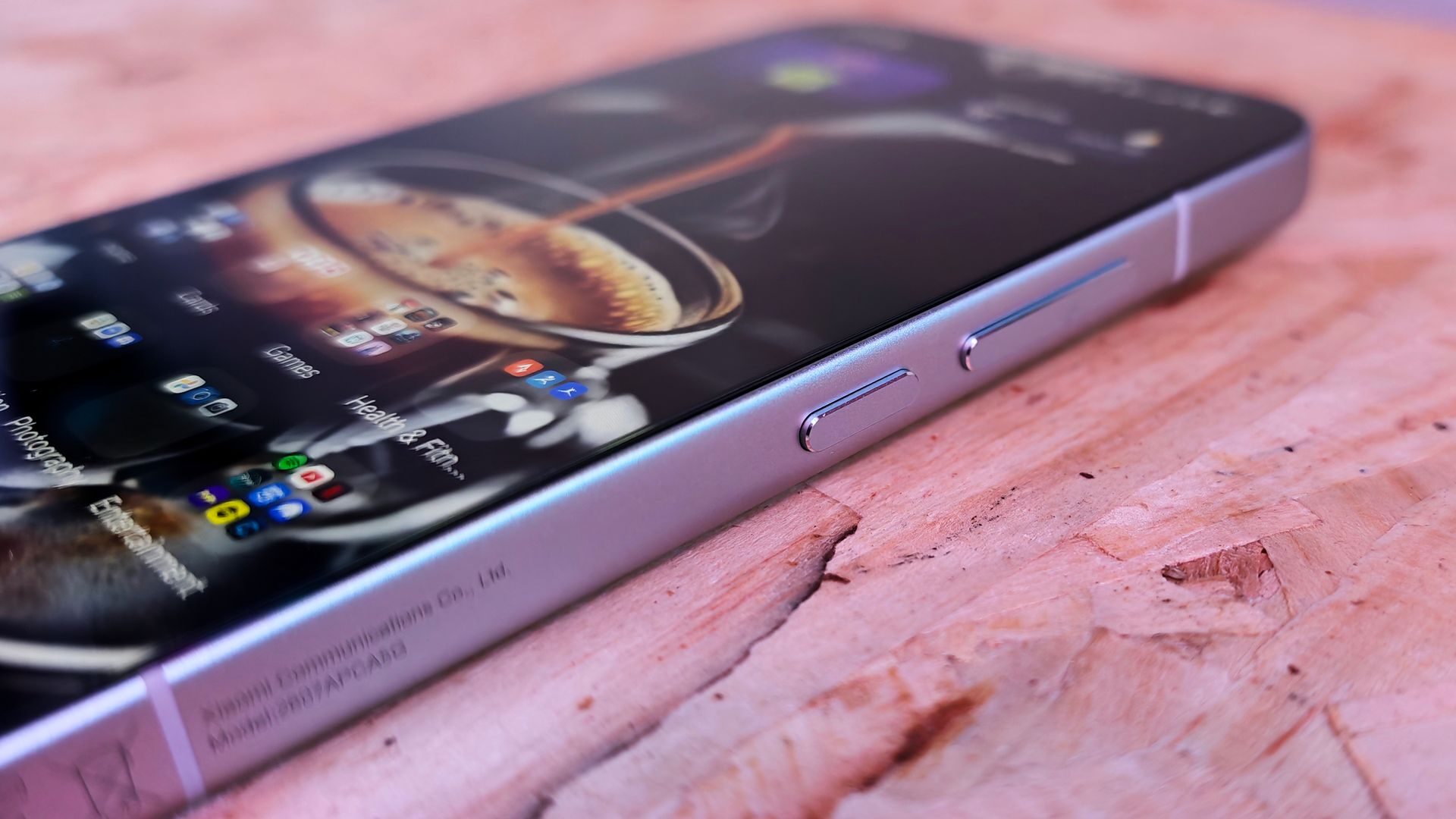
As for the operating system, POCO continues to leverage Xiaomi HyperOS 3, first introduced on the F8 series phone. It offers some great quality-of-life improvements over stock Android, such as a snappy Ultrasonic in-display fingerprint sensor, impressively fast AI face unlock, and a wide range of features baked into HyperOS over the past couple of years. While I typically shy away from the additional OS layer of Android, HyperOS has had a track record of being quick, smooth and non-intrusive in its implementation.
The POCO F9 Pro is an excellent phone. In many ways, it provides everything you would expect in a flagship phone. In some ways, it raises the standard, specifically in camera and display technology, providing an impressive phone for users to leverage. While the F9 Ultra pushes ahead in a couple of ways, the POCO F9 Pro measures up where it counts and that is why I highly recommend this as an excellent smartphone to consider.