

There comes a time in every TCG’s life where the next set release is much smaller than the previous releases, and that’s exactly what Riot Games has brought to tabletops with the new Riftbound: Vendetta expansion.
Previously, Riot Games injected as much of League of Legends as possible into cardboard rectangles to make characters come to life on the tabletop battlefield, but for Vendetta, they chopped out much of the ‘extras’ and stuck to a sharp playstyle with new keywords, new champions, and new legends for players to take over tabletops with. Riftbound: Vendetta is a smaller set, but cuts just as deep with excellent mechanics, designs, and upgrades for nearly the whole Riftbound landscape.
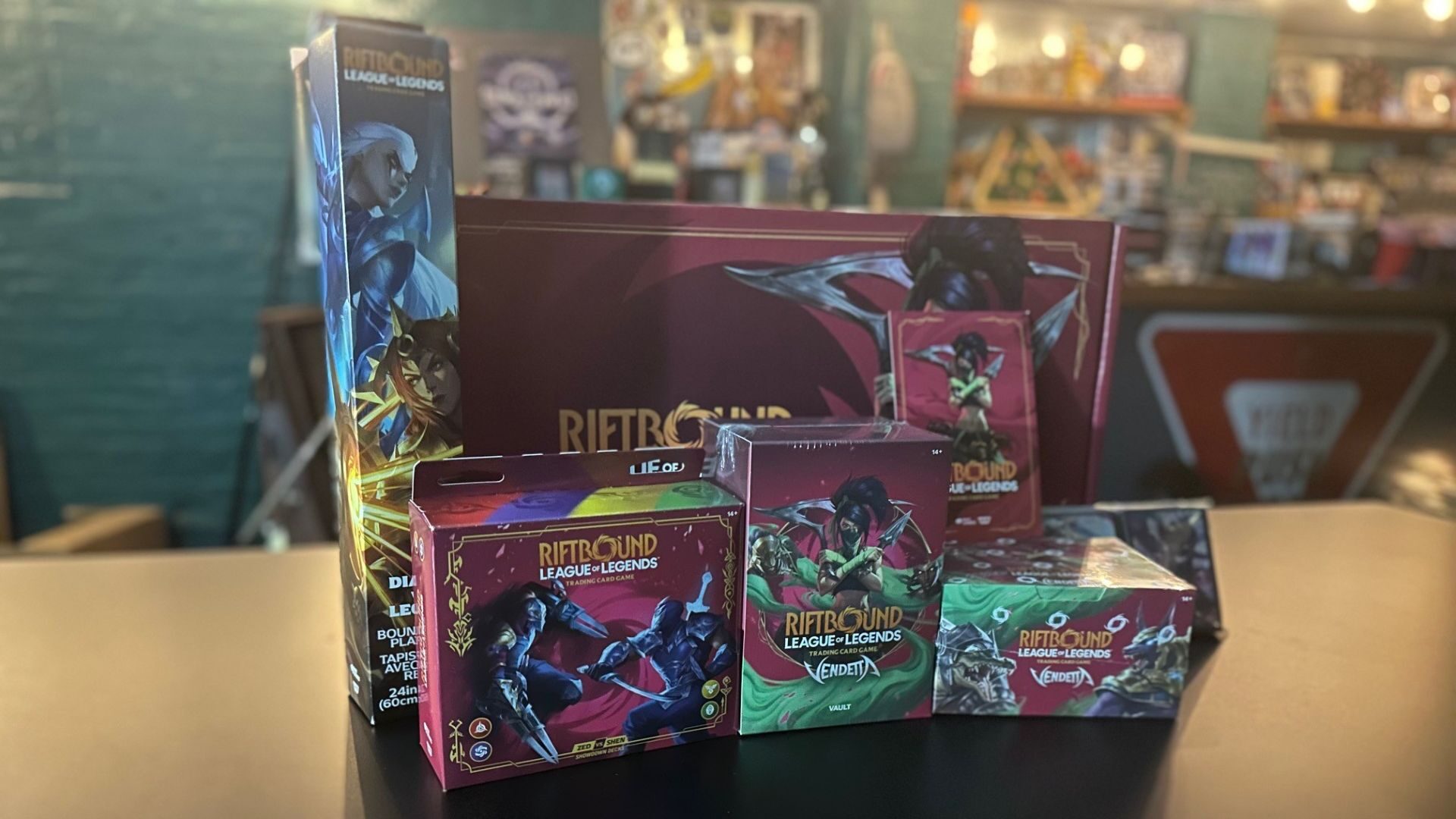
First things first, to get players acclimated with the new technical landscape Vendetta brings to the table, Riftbound has uncorked a new product which tethers both pre-constructed legend decks together. Instead of packaging both decks separately as has been the norm for the previous sets (think the Fiora legend deck), Vendetta has packaged them together and dropped the price, so fans have the easiest method available to test the new mechanics.
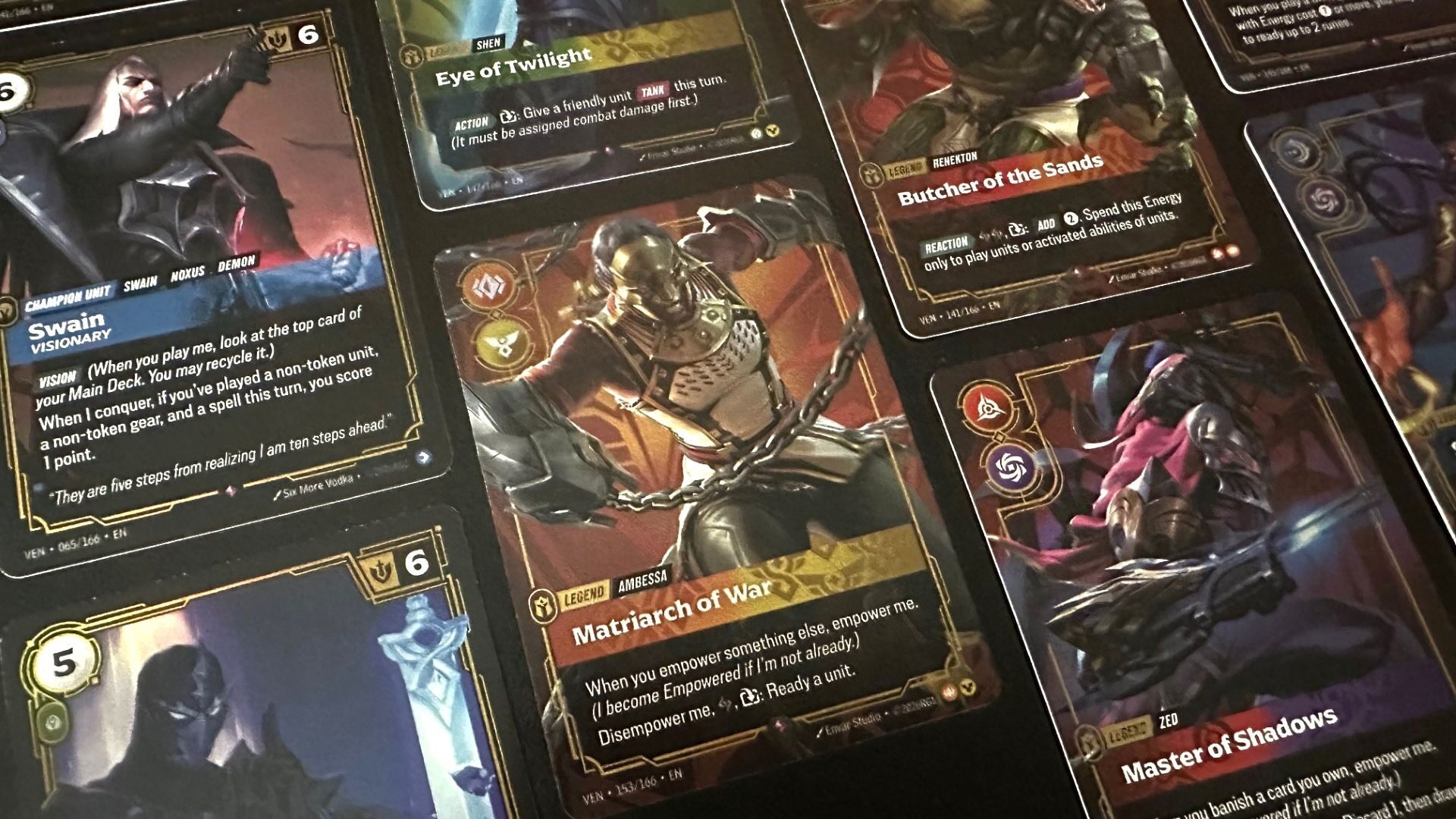
Headlining the two decks are the Legends Shen and Zed, and in keeping with Vendetta’s ethos of bitter adversaries settling their differences (as denoted by excellent over-numbered card designs) and inserting rich League of Legends lore under the card designs, Shen and Zed are bitter adversaries and became such after betrayal tore them apart after being raised as brothers in the Kinkou Order. Shen delivers a more reserved and defensive playstyle, giving units the Tank keyword with his ability. On the other hand, Zed uses a far more aggressive approach coinciding with his character’s development.
“Riftbound: Vendetta is a smaller set, but cuts just as deep with excellent mechanics, designs, and upgrades for nearly the whole Riftbound landscape.”
Zed, Master of Shadows uses the new Empower keyword to keep the game going and speeds up play by allowing more card draw if the legend is disempowered. This high-risk, high-reward style of play shows Riot Games means business when it comes to gameplay mechanics and making their storied characters fit their roles on the tabletop. This is a neat tip of the cap to League of Legends players and shows Riot Games places emphasis on their original character designs and attitudes. Even their character Domain identity is tailored to their personalities!
Aside from getting the flavour just right, the new mechanics deployed in games offer a whole new level of verticality to play and let Riftbound: Vendetta players really get as much use from their cards as possible. The new Burn keyword operates almost identically to the MTG keyword mill, as in it forces the player it targets to discard cards from the top of their Main Deck; however, if you run out of Main Deck, you sacrifice a point to your opponent and then shuffle your trash pile into your Main Deck and restart instead of outright losing like in other TCGs.
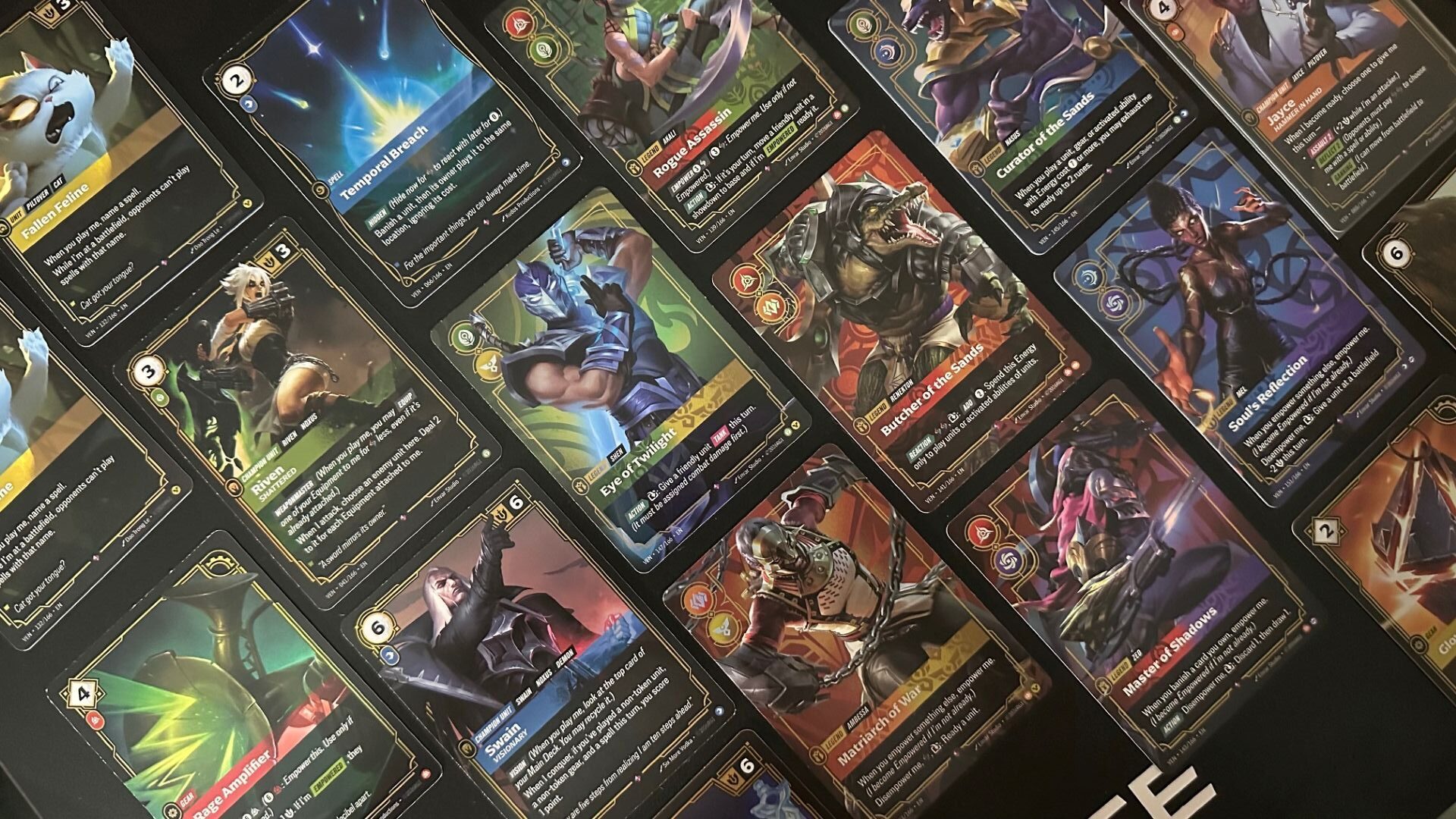
In tandem with Riftbound: Vendetta’s new Flow keyword (which allows players to play cards directly from the trash, then banish those cards), players can Burn cards and play them for much cheaper using Flow. Empower is the third and last new keyword, and it not only powers up your units and gear, but it stays Empowered until the card is Disempowered (see Zed, Master of Shadows example above) or leaves the battlefield/base entirely. Riftbound: Vendetta brought serious technicality to tabletops.
What Riftbound: Vendetta didn’t forget about is its growing roster of Legends. Since starting my Riftbound journey with the legend Rumble, Mechanized Menace, I felt the legend (and his Recycle/Mech-based gameplay) has been put in the corner and forgotten about, with how out of favour it has fallen compared to the rest of the meta (looking at you, Irelia, Blade Dancer). With Vendetta, new cards like Mesmerize, Temporal Breach, Iterative Design, Perfect Execution and Plaza Guardian have righted the ship slightly, giving Rumble more tools to compete with.
With my newly upgraded Riftbound: Vendetta Rumble deck, I was able to move Covert Informant to a space after Empowering the unit and was able to draw a card. Then, using Mesmerize, I was able to bring my Covert Informant back to my hand, netting me a Conquer point, a draw, and my Covert Informant was safely back in my hand ready to be played again. On top of that, Vendetta unleashes the mighty Plaza Guardian, a hulking mech beast that fits the bill for Rumble, Mechanized Menace.
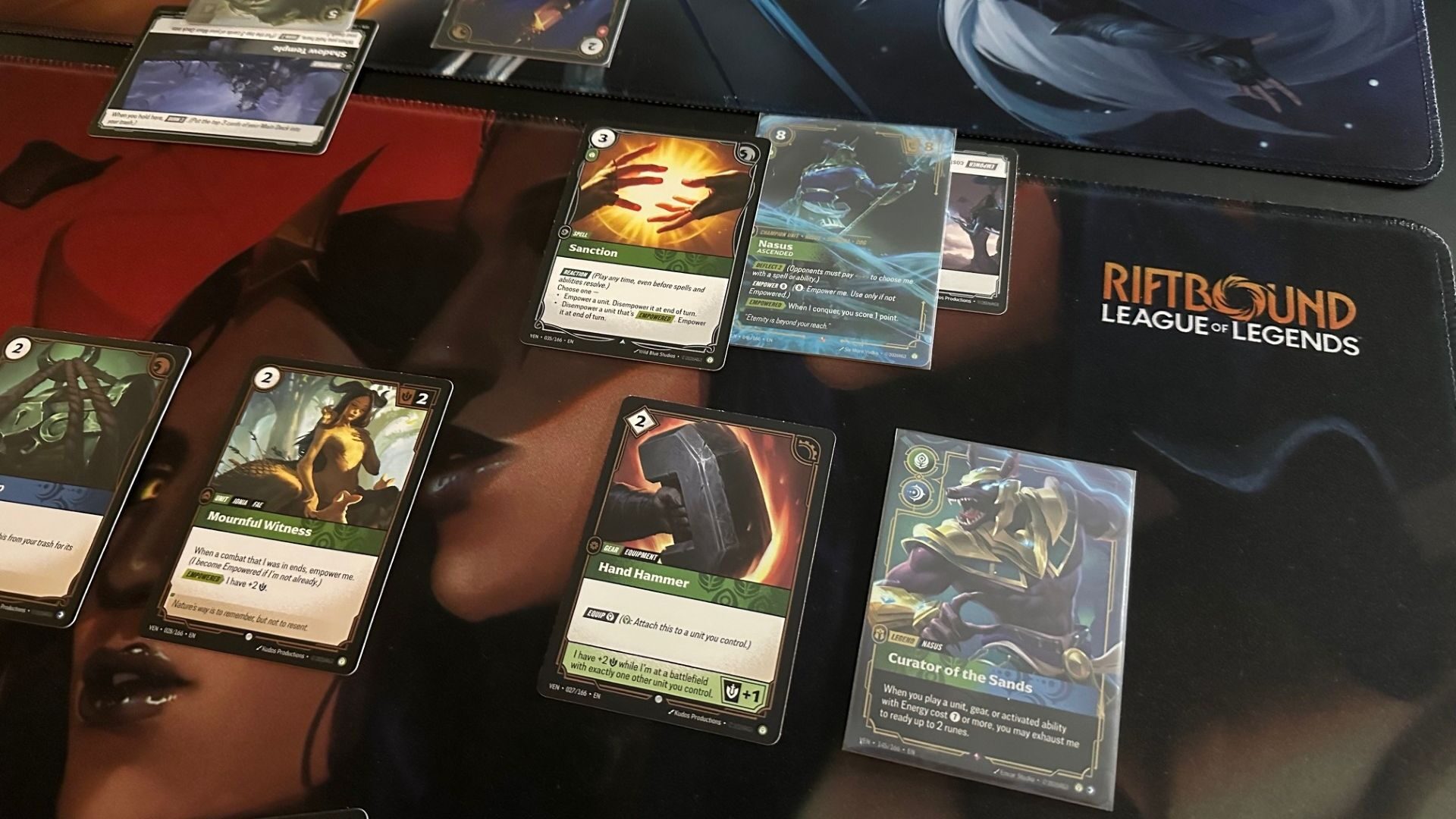
Let’s not pretend Riftbound: Vendetta didn’t also slam tables with the dreaded power creep. New legends such as Nasus, Curator of the Sands, and his adversary, Renekton, Butcher of the Sands, have brought faster playstyles to the equation. Nasus uses his ability to ramp two energy each turn if you play a cost that’s worth seven or more, and Renekton cheats out more energy for Rune Recycling.
These abilities are incredibly powerful, especially when players can search their back pocket for them at a whim. These two legends (alongside legends Zed and Shen) drastically outpace fan-favourites like Jinx, Loose Cannon from Origins, and Renata Glasc, Chem-Baroness (one of my favourites from Spiritforged). Nasus and Renekton’s built-in ability to deliver energy and ramp costs make it almost impossible to play Renata Glasc, as her ability just feels too slow in comparison, and Zed, Master of Shadows has the exact same Domain identity as Jinx, but is better in nearly every foreseeable way due to its synergy with everything offered in Vendetta.
That all being said, Riot Games’ insistence on having some of the best card stock on the market is worth mentioning. While building out a new Nasus, Curator of the Sands deck (a new favourite), I searched for extra copies of Emperor’s Divide and noticed even without protection Riftbound cards have nearly zero curving or shelf wear, and that’s including holographic variants. Riot Games has produced quality in their TCG, and it shows with Riftbound’s earlier sets. While some cards may feel less useful, they still present as pack-fresh, and that’s an achievement.
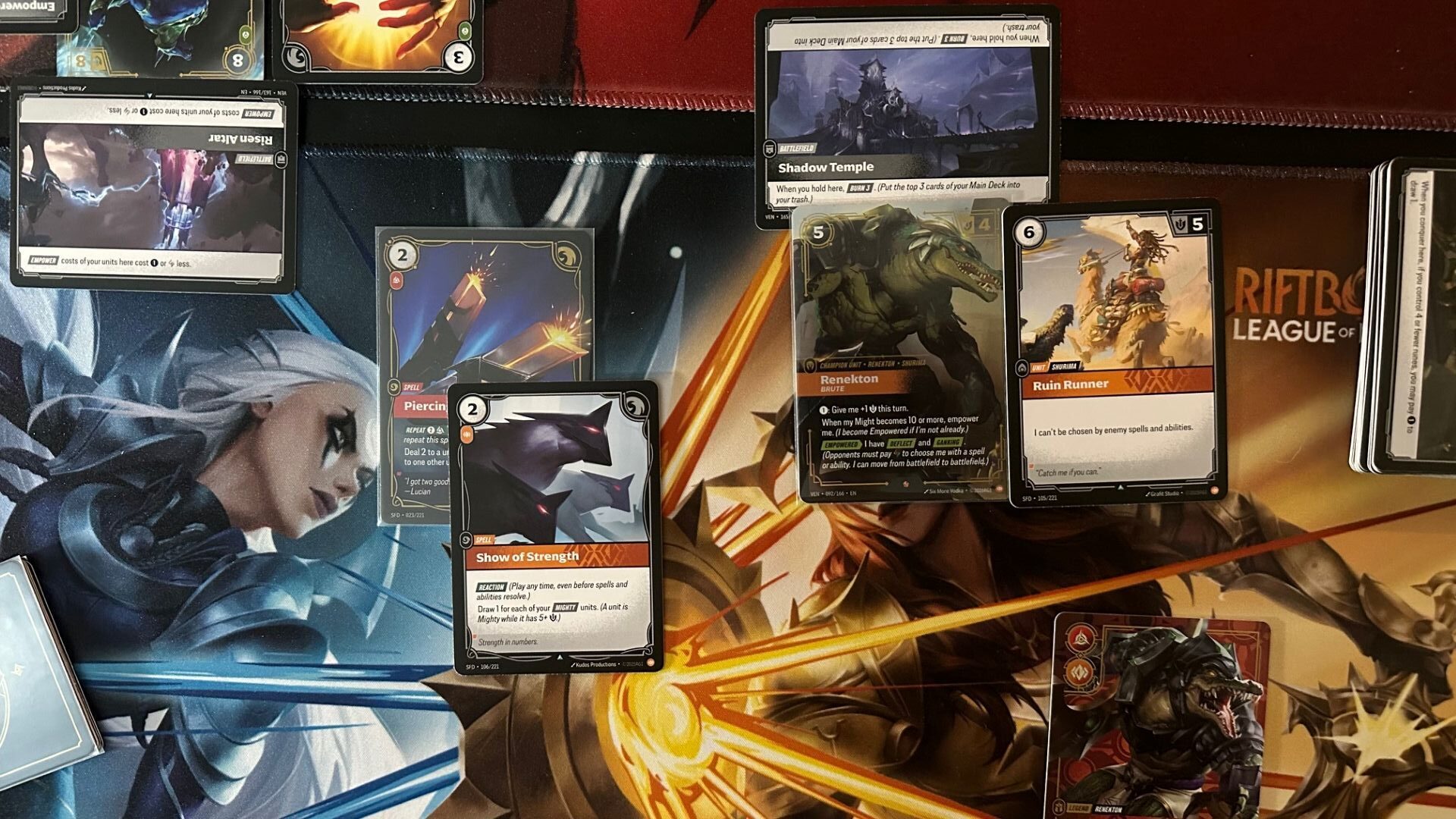
Riftbound: Vendetta is a smaller set, but Riot Games has made it have a massive impact. New keywords have swarmed tabletops, drastically changing how each Riftbound match is played. New excellently designed legends (like the meta-clearing Kennen, Heart of the Tempest) play incredibly well in practice, and older legends have received an abundance of new tricks to keep up with the meta.
However, although cards like Jinx, Demolitionist received a sick and stylish over-numbered reprint in Vendetta (alongside her sister, Vi), Riot Games forgot to bring the Legend herself into the meta with Vendetta (the same can be said for Garen, Might of Demacia, Lee Sin, Blind Monk, Leona, Radiant Dawn, and others from Origins and Spiritforged). While Riftbound is undeniably better with the new technicality, power creep has left some fan-favourites on the shelf.
Riftbound: Vendetta, although nearly a hundred cards less than other sets, still delivers a decisive punch to tabletops and is a great time to play.

- CHAMPION YOUR STRATEGY: Build your decks and your collection from premium packs filled with 7 Commons, 3 Uncommons, 2 foil Rares or better, 1 foil of any rarity, and 1 token slot. Each booster display contains 24 packs.
- EXPANDED CHAMPION ROSTER: Vendetta introduces fan-favorite League of Legends champions including Mel, Ambessa, Shen, Zed, Nasus, and Renekton. Bring iconic characters into Riftbound and expand your powerful strategy.