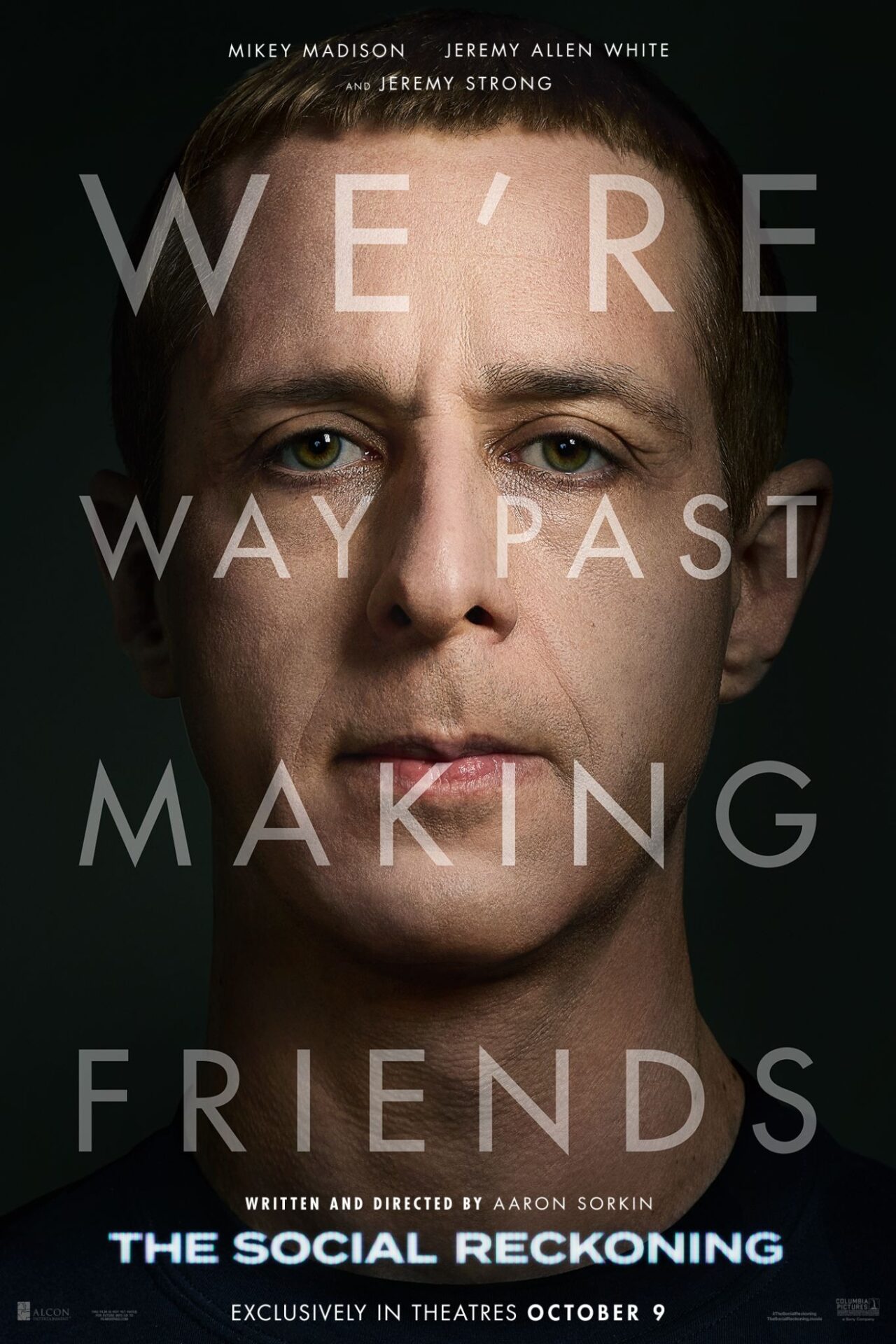

I was reluctant to care that The Social Network was receiving a sequel because I thought there would not be anything worthy of the dumpster fire that went into depicting how Facebook became what it is. However, Aaron Sorkin found a great pocket of history to cover the notorious social media company in The Social Reckoning. I did not expect this film’s narrative to pull from the courageous whistleblower ex-Facebook employee Frances Haugen, along with the January 6, 2021, Capitol riot, to show how Facebook’s algorithm changed.
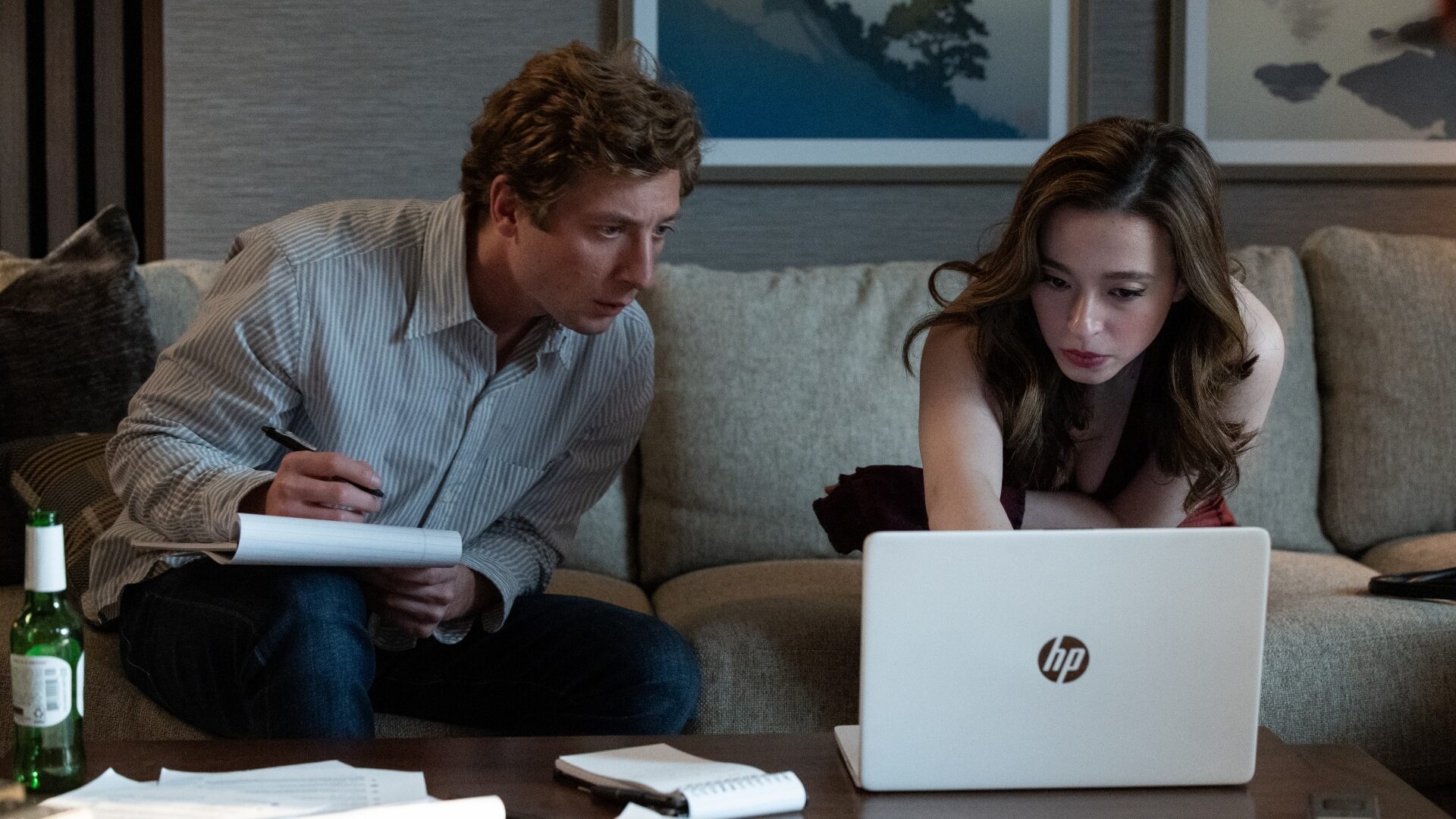
The Social Reckoning is inspired by true events and the whistleblower who started the social media reckoning we’re seeing play out today. This Sorkin original screenplay is a companion piece to the hit film The Social Network and a true David-and-Goliath story. Frances Haugen (Mikey Madison), a young Facebook engineer, enlists the help of Jeff Horwitz (Jeremy Allen White), a Wall Street Journal reporter, to go on a dangerous journey that ends up blowing the whistle on the social network’s most guarded secrets.
While this was a docu-drama and many will think this was mostly dramatized, The Social Reckoning told the story with plenty of the facts that the Wall Street Journal and Horwitz wrote about in The Facebook Files. Having Haugen as a consultant on this film must have been a great asset for both Sorkin’s screenplay and Madison’s movie version of Haugen. Sorkin’s story made more sense once I understood the scope of the incidents surrounding Facebook’s biggest historical scrutiny that ultimately led them to rebrand the company as Meta. It helped connect the social network to the rising issues surrounding misinformation and extremism.

The Social Reckoning was almost part-thriller procedural, and part-chamber drama—if the Mark Zuckerberg scenes only stuck to one setting. I felt like this film was missing more twists and turns that make David Fincher’s works like this one more electric. It looked like Sorkin tried to capture that special sauce but came up with a decent knockoff. The pacing was not a complete wash, as I liked how the timeline shifted between Frances and Jeff building up a case against Facebook versus the 2021 timeline where Mark and his legal team are prepping him to face Congress. Visually, it helped me keep track of what was going on.
The “Prologue” of the movie was a perfect one, connecting the dots on how Facebook began to shift as a platform that promoted hate speech and access for extremists to socially connect online. The way Sorkin captured time was smart and not cheeky, especially when the COVID-19 pandemic also took place during this time. There was no moment like, ‘Oh no, there is a global pandemic coming. We can’t run the WSJ story now.’ I thought the way it was brought up had a good build-up and increased the tension, particularly with how it directly affected Frances and Jeff’s investigative work.
“Madison in The Social Reckoning proved why she is an Academy Award-winning actress…”
Much of Sorkin’s directing and writing was in the subtle set decorating and editing. When the film juxtaposed the WSJ office with everyone wearing masks and practicing social distancing during the height of the COVID-19 pandemic, I loved how it then cut to people talking like it was a normal day in the Facebook offices—inadvertently showing that Facebook’s COVID-19 health and safety measures were not mandatory or following the CDC’s guidelines. On the flip side, I appreciated how this movie showcased the brutal lives of WSJ interns and how Jeff treated them like his guinea pigs and worker mice—a sad but rewarding reality of journalism.
Madison in The Social Reckoning proved why she is an Academy Award-winning actress because she brought both a vulnerable and fierce performance, depicting the real-life Haugen. Her ability to explain the technical details was a masterclass in acting, which helped show how White’s Jeff looks like a technological Neanderthal. On the flip side, White’s performance and chemistry with Madison were very fluid and natural. Unfortunately, I thought their chemistry was so good that it worked like a double-edged sword.
Coming out of The Social Reckoning, I could not help but be taken aback from the story by how charismatic Madison and White were on-screen. I saw that their relationship was meant to be between a journalist and a protected witness, but I felt like their on-screen chemistry made it borderline romantic as a by-product. I am confident that Sorkin did not intend that, but this aspect slightly took me out of the immersion.
“The score of The Social Reckoning was decent, with a great use of the timpani to audibly depict Mark’s might at the height of his power.”
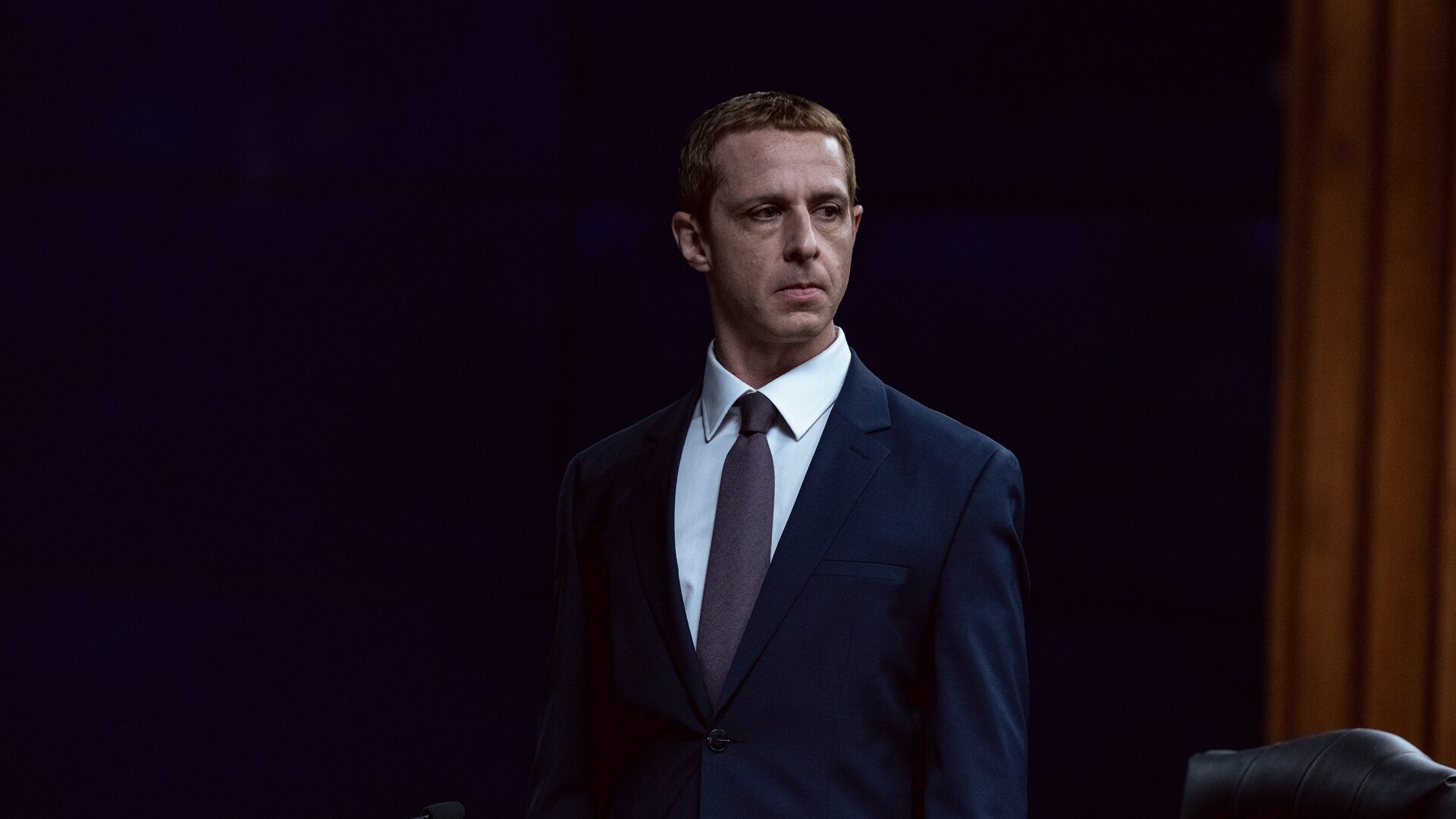
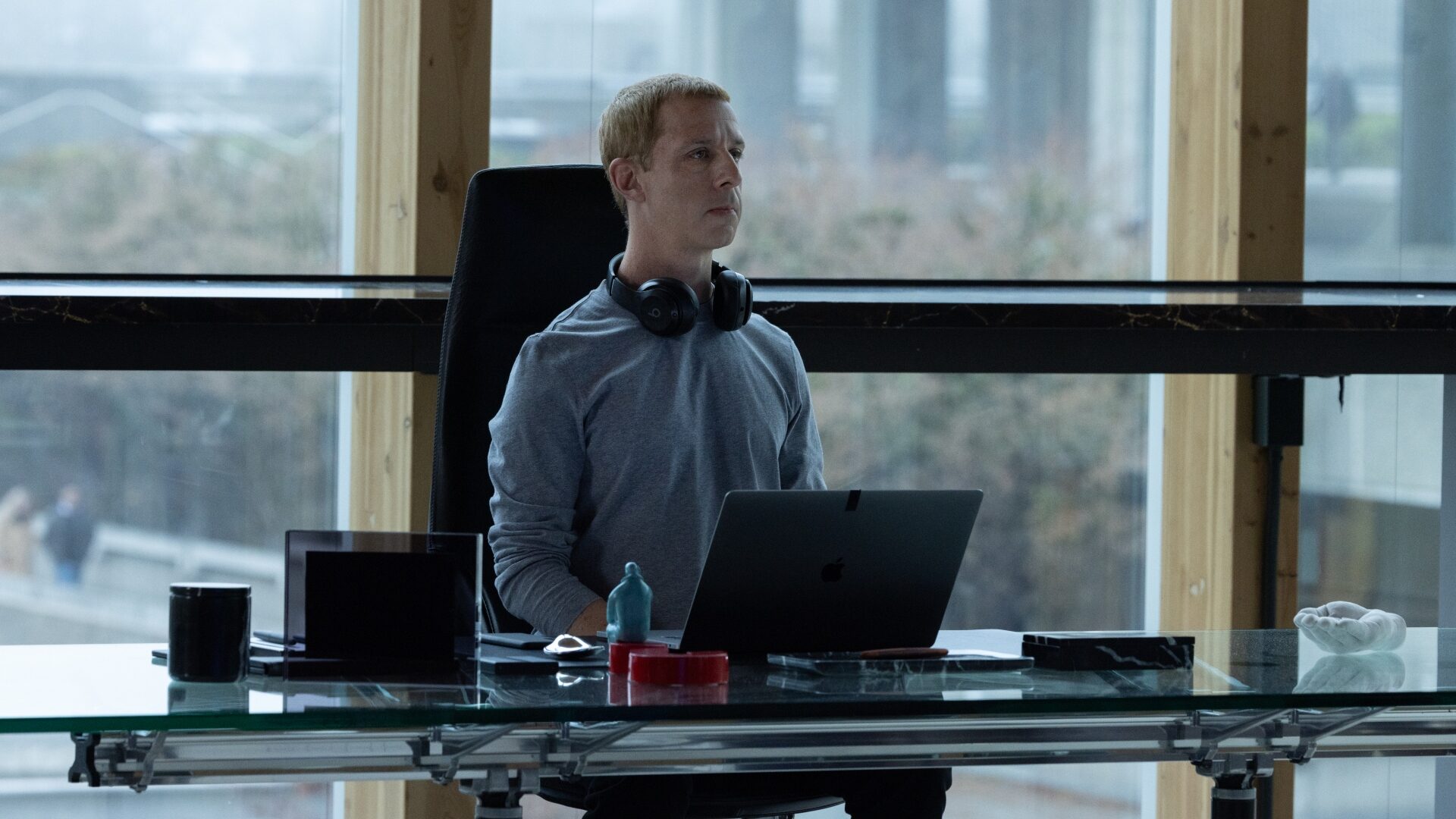
Meanwhile, Jeremy Strong’s portrayal of Zuckerberg was something else. Ignoring the strange blonde dye that did not help Strong’s performance, he brought another cold, commanding characterization. I felt like this was a safe role for him, and it worked because he is always able to deliver great lines with a deadpan face, something that works well for someone like the real Zuckerberg, who comes off in serious situations as robotic and unnervingly calculated.
I know Strong is adamant about being a method actor, but if Madison did not dye her hair blond to match Haugen’s real hair colour, I think Strong should have gone with a more natural hair colour that was not distracting. Still, he delivered his lines seamlessly and came off great against Bill Burr and Wunmi Mosaku’s roles, who challenged Mark’s Congress rehearsal tactics at every move. Billy Magnussen’s Teddy was also great, always
The score of The Social Reckoning was decent, with a great use of the timpani to audibly depict Mark’s might at the height of his power. On the flip side, the fast and slow piano notes for Frances and Jeff’s work provided delicate beats—for their extremely precise work to not get caught. The sound design was more meaningful, making the footsteps of those marching on the Capitol match those of Mark’s legal team preparing to fight the whistleblowing claims—similar to the foot stomping a bit in Christopher Nolan’s Oppenheimer.
The Social Reckoning shed light on an issue that may have been overlooked by the average person who was isolated and bombarded with so much news while in lockdown and/or coming out of the pandemic. With news and misinformation blasting everywhere, this story did not feel as shocking as it may have intended. But I think this movie is perfect as a biographical piece to show how powerful one woman like Haugen can be in toppling a major corporation like Facebook. At the end of the day, The Social Reckoning was a safe follow-up to The Social Network. If you want to learn about MSI (not the tech brand), go right ahead and watch this drama feature.