TCL has spent years building a reputation as the brand that gives buyers more TV for less money, and past models have shown how well its sets can deliver value, especially for mid-range shoppers. For 2026, the company has expanded its Super Quantum Dot (SQD) display technology across two price tiers that cover most buyers. Considering how much each model offers, there is more reason than ever to be excited.
The TCL QM7L TV starts at $1,199.99 USD for the 55-inch model, while the TCL QM8L TV starts at $2,499.99 USD for the 65-inch model. Both use the same basic panel technology, so the buying decision comes down to how much you want to pay for greater brightness, finer dimming control and more connectivity, rather than whether you can access the technology at all.
TCL SQD TV’s Shared Features
The 2026 TCL TV lineup brings a lot to the table, but the SQD layer is central to how these new sets work, and it functions the same way at both price points. Most bright televisions use backlights made up of separate red, green and blue LEDs. TCL instead shines blue LEDs through a layer of extremely fine quantum dots, which are smaller than those used in older sets, and adds a new colour filter on top.
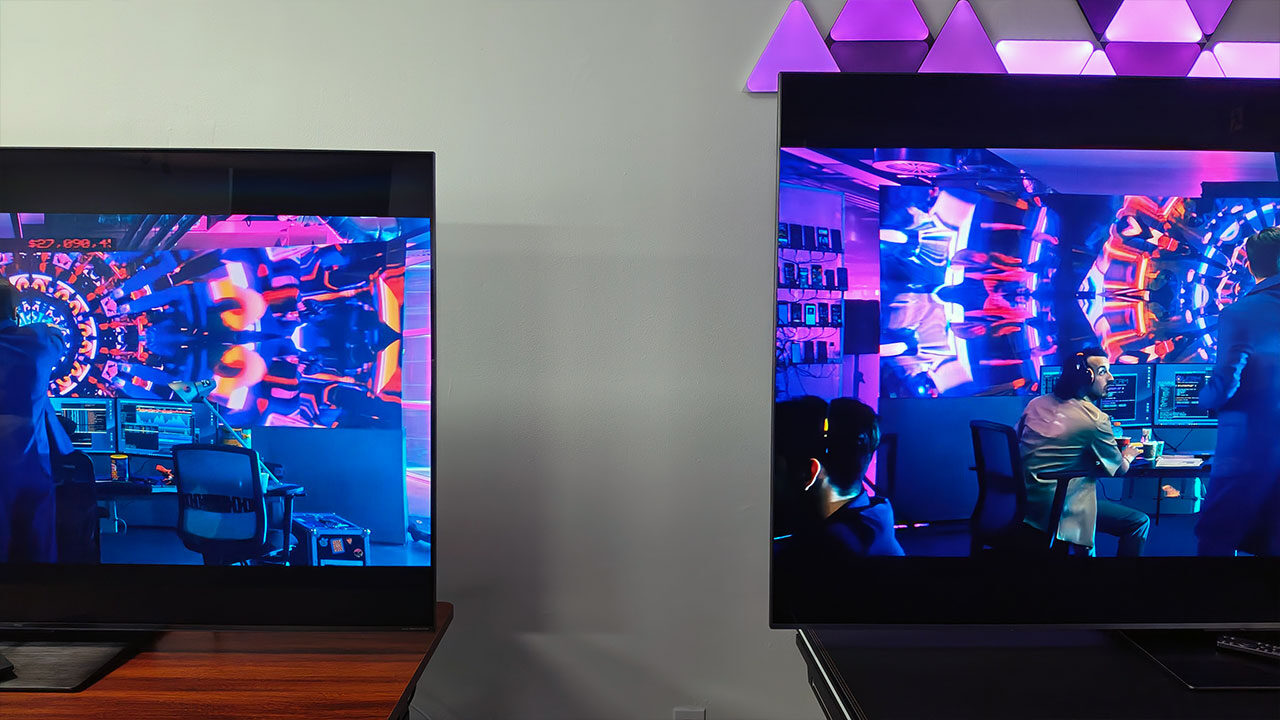
This produces purer white light for the panel to work with, resulting in more precise colour. Both TVs cover nearly all of the DCI-P3 colour gamut and a substantial portion of BT.2020, meaning buyers get better image quality and more accurate colour at a fraction of what they once had to pay.
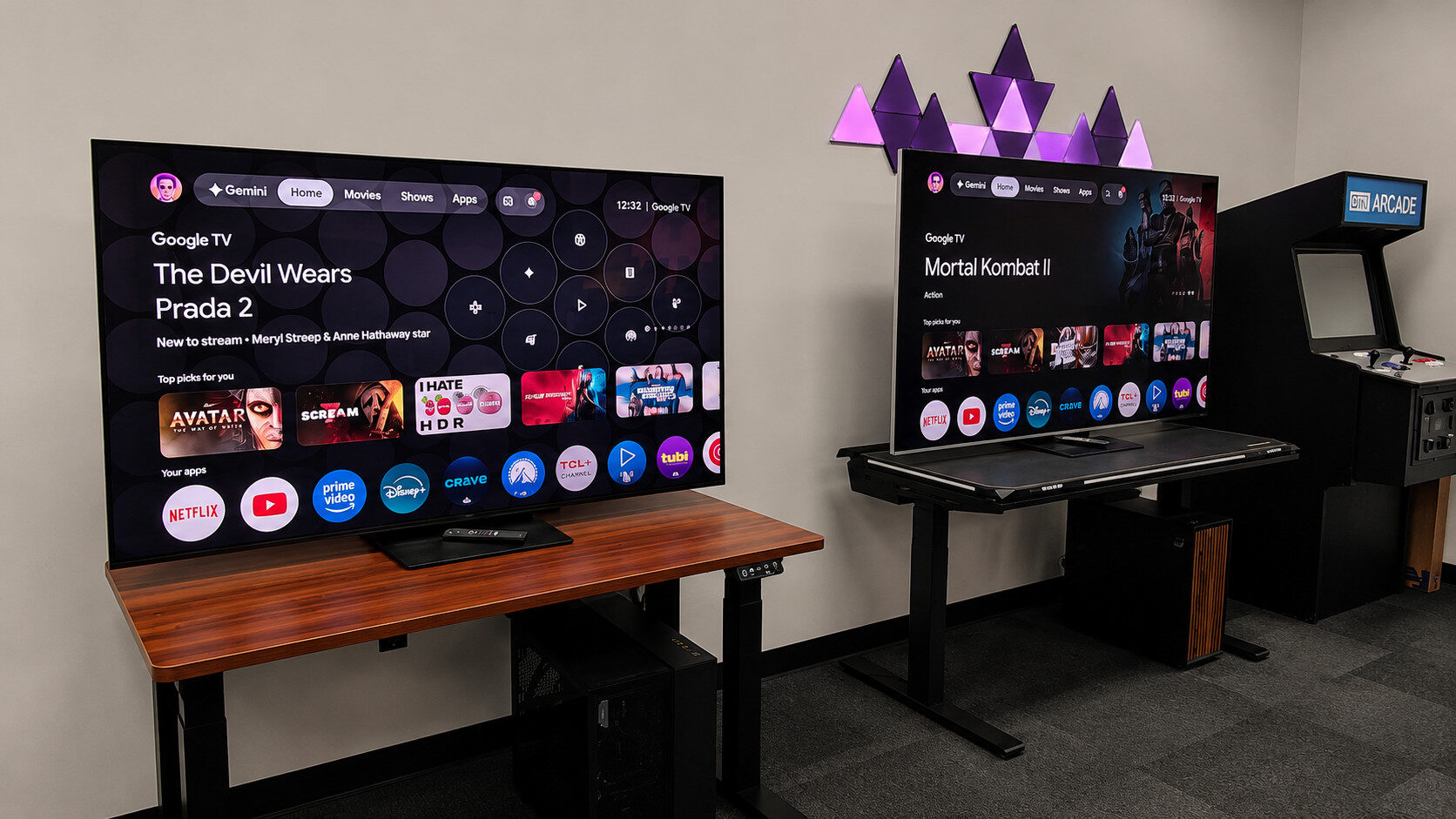
Both models use native 144 Hz VA-style panels with Mini LED backlighting, support Dolby Vision and HDR10+ and run Google TV with Gemini for hands-free voice commands. The interface feels incredibly modern, with a setup process that gets you up and running in under 30 minutes depending on what you want to install.
AirPlay, Chromecast and Bluetooth are included as standard. Audio on both models is tuned by Bang & Olufsen, with rear-mounted woofers and support for Dolby Atmos and DTS. It is better than most built-in TV audio, though a soundbar is still worth considering with either set. Gamers also get variable refresh rate, auto low-latency mode, and a 288 Hz option at lower resolutions, regardless of which model they choose, making high-frame-rate couch gaming more accessible than ever.
The TCL QM7L TV: The Sweet Spot
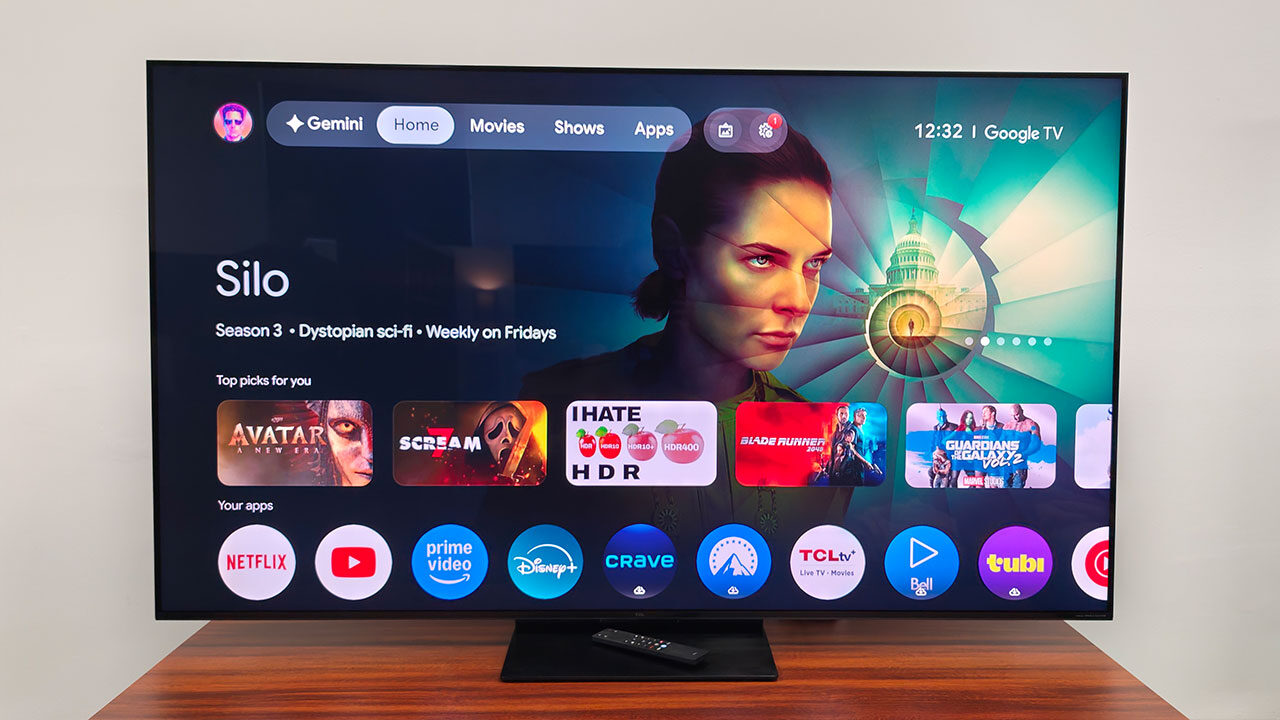
The TCL QM7L TV is where SQD technology reaches the mid-range, and it is where most buyers will find the best picture-to-price ratio. The frame is fairly thin, the smoked-chrome bezels look sharp, and the set feels more expensive than it is, though it does not offer the same clean, edge-to-edge look as some other options on the market. There are four HDMI 2.1 ports, but only two provide the full bandwidth needed for high-end gaming at 144 Hz.
Thankfully, neither overlaps with the eARC connection, so a soundbar will not take away a gaming input. Those ports are essential for getting the most out of a PlayStation 5 or XBOX Series X. The stand works well, but it stretches wide on larger models. The cost-cutting is more apparent in the finer details. Wi-Fi 5 feels dated in 2026, and there is no ATSC 3.0 tuner, so NextGen over-the-air broadcasts are off the table. That said, while Wi-Fi 5 is an older standard, it should still be sufficient for Netflix and other streaming services.
“The 2026 TCL TV lineup brings a lot to the table, but the SQD layer is central to how these new sets work, and it functions the same way at both price points.”
As mentioned, picture quality is the QM7L’s biggest selling point, and TCL manages to deliver a lot at a more budget-friendly price. The Mini LED backlight places up to 2,100 local dimming zones behind an HVA panel with a native contrast ratio of 6,000:1. The black levels are among the deepest I have seen from an LED-backlit TV at this price, even if they cannot match the inky blacks of an OLED model. TCL claims a peak brightness of up to 3,000 nits, with several picture modes designed to help viewers get the most out of HDR content.
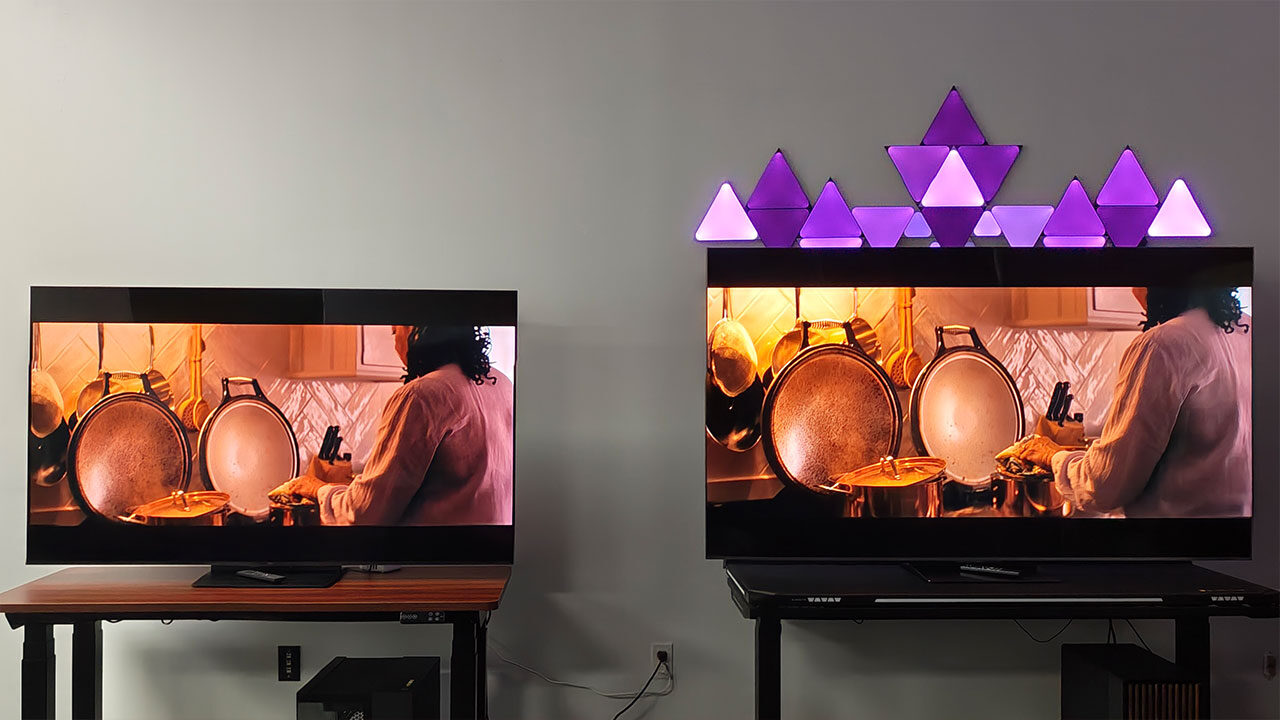
Colours look rich without appearing cartoonish, and skin tones hold up well in both SDR and HDR without taking on the unnatural look sometimes seen on less expensive HDR panels. There are some quirks. Very bright white highlights can develop a blue tinge, and out-of-the-box accuracy feels slightly worse than what I have seen on LG sets, though it is still very good for the price.
Blooming is better controlled than on previous TCL models like the QM67K, but hazy light bleed can still creep into dark scenes, especially in a pitch-black room or when viewing the screen from an angle. The display has a glossy rather than matte finish, so reflections can be difficult to ignore when windows are positioned across from the TV. If your living room is dark, you will love it. In a brighter space, however, you will need to plan its placement carefully.
For gaming, the QM7L covers nearly everything: 4K at 144 Hz on both full-bandwidth ports, FreeSync, ALLM and a game menu with picture modes and a virtual crosshair. For a console or a single gaming PC, it is an excellent display, but make sure you use the full-bandwidth HDMI 2.1 ports for the best high-frame-rate experience.
The TCL QM8L TV: Going All In
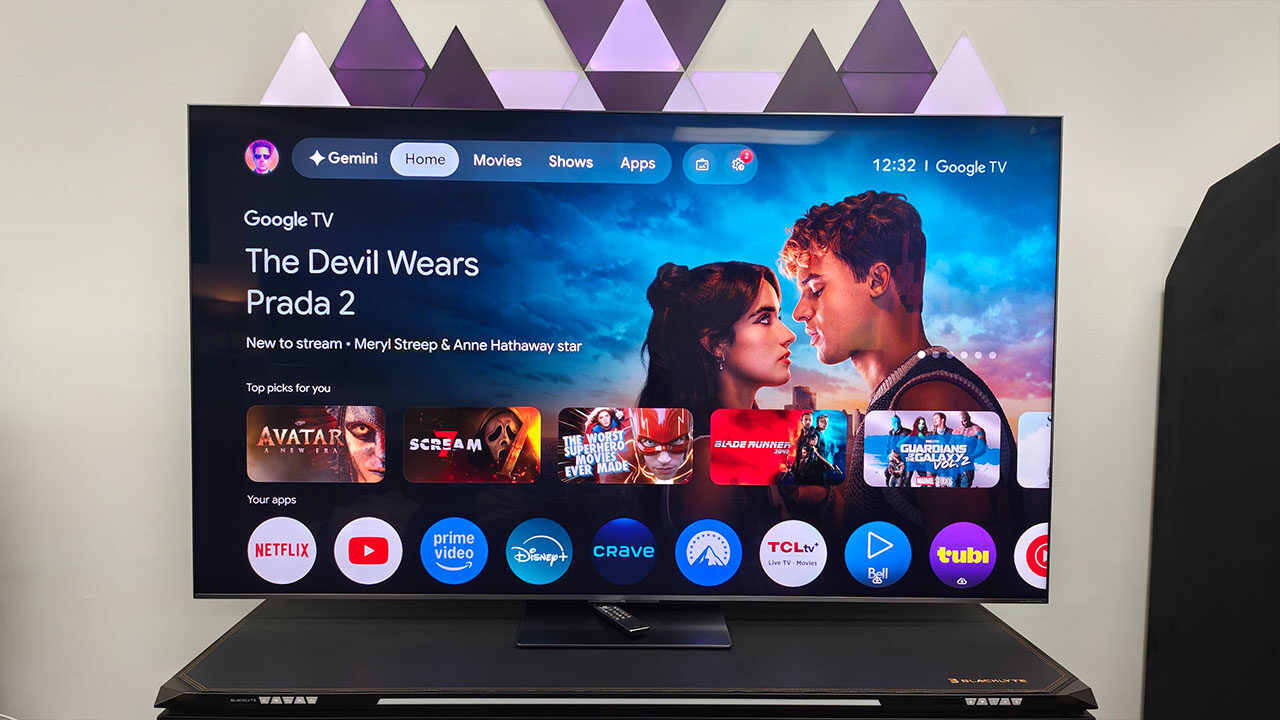
The TCL QM8L starts at $2,499.99 for the 65-inch model, with no 55-inch option, and reaches $5,999.99 for the 98-inch model. That is a significant price increase, but the QM8L addresses most of the issues found in the QM7L. TCL claims a peak brightness of up to 6,000 nits, double the QM7L’s rating. In our testing, the 75-inch model approached that figure, depending on the test pattern used. That makes it an incredibly bright set.
Since it also has a glossy screen, highlights, sunlight and fire appear with greater intensity, and the display can overpower glare in a way the QM7L cannot. It essentially brute-forces a bright image through glare that can sometimes be unavoidable. I did not expect the difference to be so noticeable until I tested it, but the effect can be striking.
The QM8L pairs its backlight with more local dimming zones and a 26-bit backlight controller, making blooming difficult to spot during normal viewing. By comparison, the QM7L still shows halos around subtitles and bright objects against black backgrounds. The QM8L also has a wide-angle panel, so colour and contrast hold up better when viewed from the side. This is a meaningful improvement for family seating arrangements, as the QM7L washes out quickly when viewed off-axis. HDR support also expands to include Dolby Vision IQ and IMAX Enhanced, along with a promised Dolby Vision 2 Max update this summer.
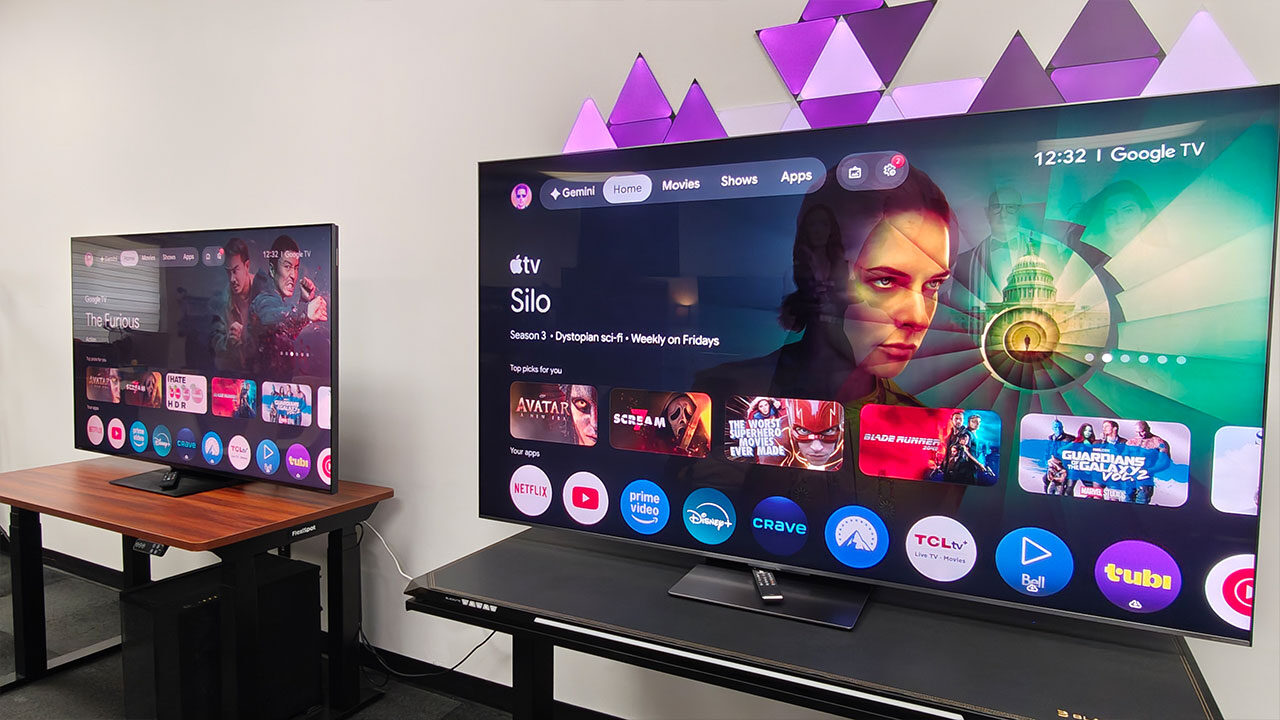
For gaming, all four HDMI 2.1 ports run at full bandwidth and support 4K at 144 Hz, so there is no need to plan which device connects to which input. FreeSync Premium Pro replaces standard FreeSync; the Game Bar adds a live frame-rate counter; and input lag is about 10 milliseconds. Together, those features make the QM8L an impressive option for gamers seeking a premium experience in the living room or home theatre.
The rest of the specification sheet helps explain why the QM8L commands its price. Wi-Fi 6 replaces Wi-Fi 5, an ATSC 3.0 tuner is included as standard, and the newer TSR AI Pro processor does a noticeably better job of upscaling older, lower-resolution shows and handling motion. The ZeroBorder design nearly eliminates the bezel, while the backlit remote adds a brightness rocker and a programmable shortcut button, contributing to a more premium overall experience.
The one misstep is the plastic central pedestal stand, which feels flimsy for a TV this heavy. However, its two height settings are a welcome touch for anyone planning to use the TV with a soundbar.
TCL SQD TV’s By the Numbers
| Feature | QM7L | QM8L |
| Starting price | $1,199.99 (55″) | $2,499.99 (65″) |
| Sizes | 55–98″ | 65–98″ |
| Claimed peak brightness | 3,000 nits | 6,000 nits |
| Backlight control | Up to 2,100 zones | More zones, 26-bit controller |
| Wide-angle panel | No | Yes |
| Full-speed HDMI 2.1 | 2 of 4 | 4 of 4 |
| Wi-Fi | Wi-Fi 5 | Wi-Fi 6 |
| ATSC 3.0 tuner | No | Yes |
| HDR extras | Dolby Vision, HDR10+ | Adds DV IQ, IMAX Enhanced |
| Gaming extras | FreeSync, game menu | FreeSync Premium Pro, FPS counter in game menu |
The Verdict
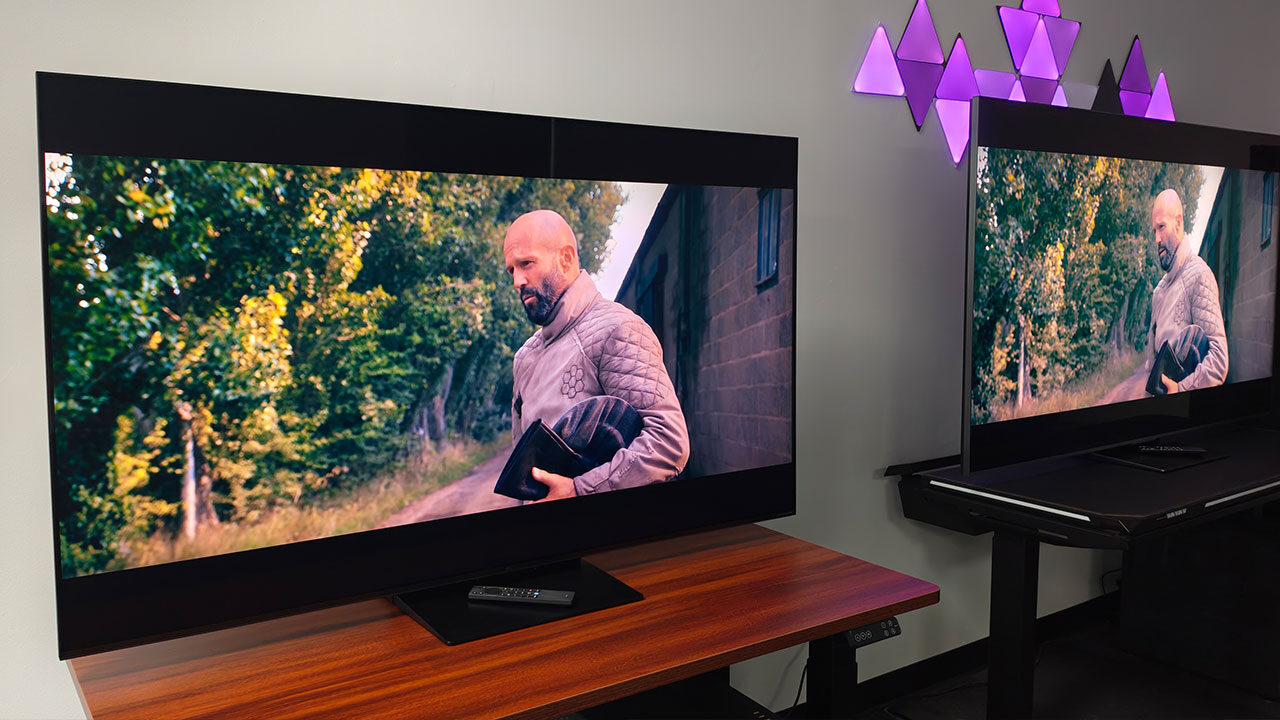
After giving both TVs a thorough look, I have to admit that TCL has made Super Quantum Dot technology feel accessible without sacrificing its potential. But with both models offering such strong picture quality, what is the point of spending more on the QM8L? My view is simple: buy the QM7L if your room is dark or moderately lit, your seating is centred on the screen, and you game on one or two devices. It is also the only way to get SQD technology on a 55-inch screen, since the QM8L does not come in that size.
The QM7L does have some drawbacks, including reflections, narrow viewing angles, dated Wi-Fi, and only two full-bandwidth HDMI ports, but none is a deal-breaker when you consider the picture quality and features available for under $1,200 USD.
On the other hand, if you have the budget, the QM8L is a fantastic option that addresses most of the issues found on the QM7L. It is better suited to bright rooms, wide seating arrangements and setups with several gaming devices connected alongside a soundbar or receiver. The extra brightness, wide-angle panel, cleaner dimming, four full-bandwidth ports and improved processing justify the premium for the right household. Together, they help make the TCL QM8L one of the best LED-based TVs we have tested at CGMagazine.
Honestly, TCL has delivered a fantastic all-around lineup for 2026, and its SQD range gives buyers the same core panel technology at two very different prices. The QM7L comes closer to premium quality than almost anything else near $1,200 and makes some smart compromises to reach that price, while the QM8L addresses its specific weaknesses for buyers with bright rooms and demanding setups, especially gamers. Although there are meaningful differences between the TCL QM7L and QM8L, neither is a bad TV by any stretch of the imagination, which is more than can be said for most lineups.