

TCL’s X11L turned heads earlier this year at CES 2026 with its massive screen, but it also cost more than $6,000, keeping it out of most living rooms. The QM8L is TCL’s answer for the rest of us, delivering a TV that feels like a flagship throughout the experience while remaining somewhat more accessible. It uses much of the same core technology but comes in four sizes that regular buyers might realistically save for. Sizes range from 65 inches to a massive 98 inches. After living with the 75-inch model for a while, I understand why this TV has become such a big deal this year and why many other options on the market simply do not compare.
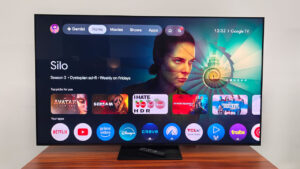
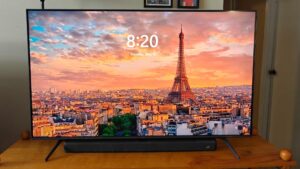
Unboxing the TCL QM8L reveals a well-built TV that looks and feels like a premium model. TCL calls it the ZeroBorder design, and it earns the name, with barely any bezel along the top and sides and only a slim gunmetal strip along the bottom. The picture stretches almost to the edge, making the screen feel larger than its size suggests. Speaking of size, the QM8L measures 61.7 by 37.4 by 2.0 inches without the stand and 61.7 by 38.8 by 14.5 inches with it. That gives the TV a modern but slightly bulkier profile than some of the models arriving in stores in 2026.
My one gripe is the stand, and I have had the same issue with many TVs in this price range. It uses a central pedestal that adjusts to two heights to accommodate a soundbar, which is handy, but the plastic construction feels out of place on a TV this heavy and expensive. It does not match the rest of the build and feels less sturdy than the metal stands I have seen on TVs from Samsung and LG. At 62.61 pounds without the stand, I would have liked the pedestal to feel more substantial.
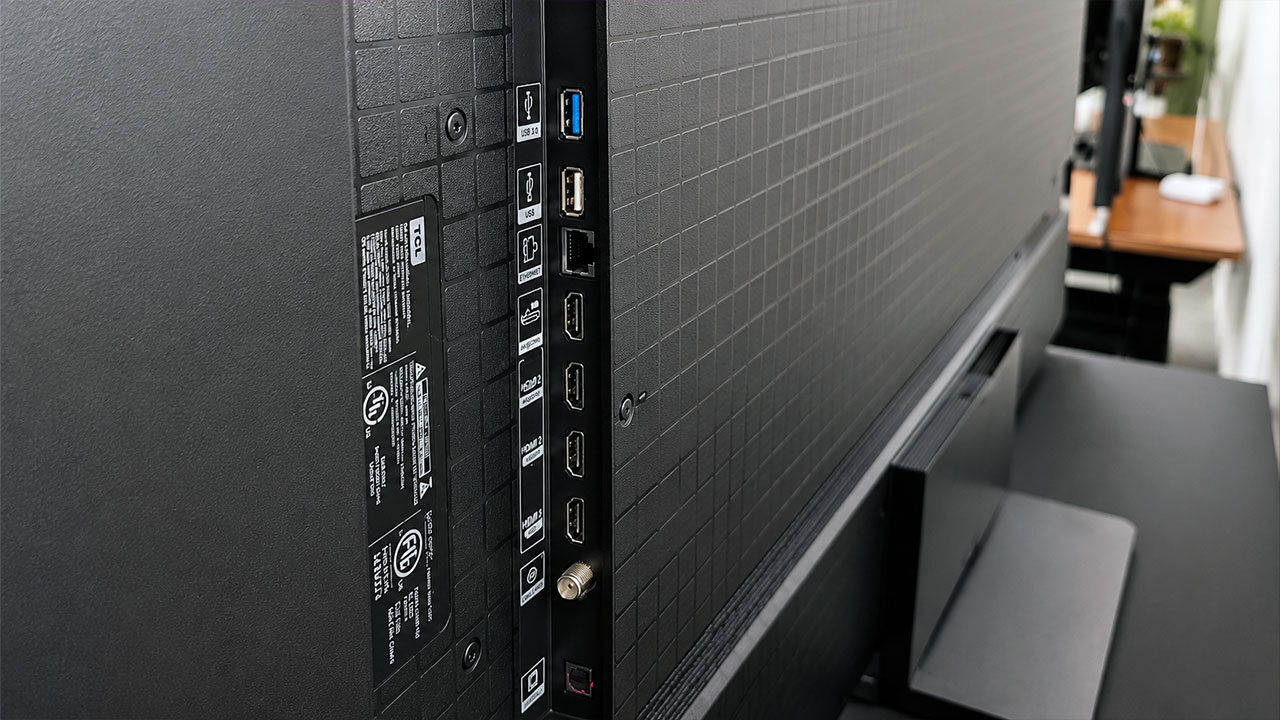
The remote fares better, with backlit keys, a brightness rocker, a picture mode button and a programmable shortcut button. It provides easy access to most of the controls you need daily, including dedicated buttons for YouTube, Prime Video, Netflix, Free TV and TCL TV. Around the back are four full-bandwidth HDMI 2.1 ports, all capable of supporting 4K at 144 Hz, with one doubling as the eARC connection.
“Given everything they have packed into the TCL QM8L TV, it is easy to recommend if you want a bright, colourful TV without paying flagship prices.”
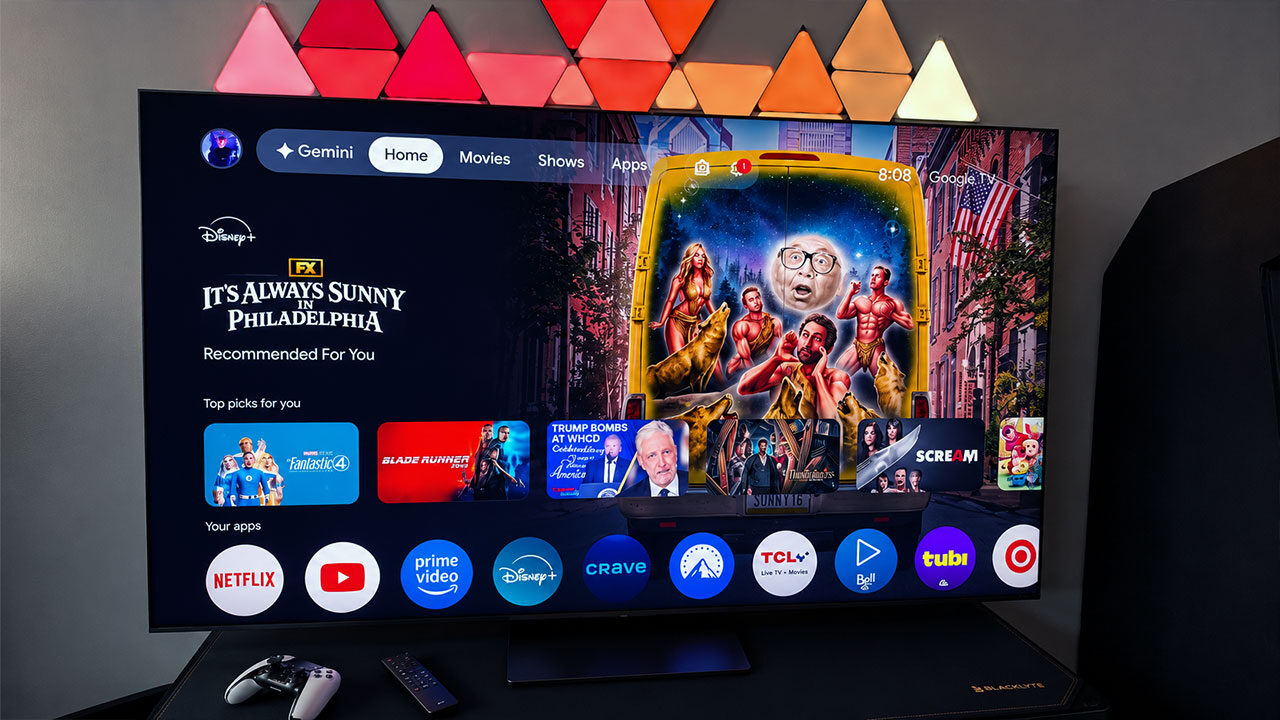
There are also two USB ports, Ethernet, optical audio, an ATSC 3.0 tuner, Wi-Fi 6 and Bluetooth. Google TV handles the smart features, with Gemini built in for conversational voice searches, while the new TSR AI Pro processor manages upscaling and motion smoothing behind the scenes. It cleans up older, lower-resolution shows better than I expected.
The major selling point of this year’s model is TCL’s new Super Quantum Dot layer, or SQD. It is worth explaining because it is actually pretty neat, especially for TV enthusiasts like me. Most bright TVs today use backlights made up of separate red, green and blue LEDs. TCL keeps things simple by shining blue LEDs through a layer of extremely fine quantum dots, much smaller than those used in older sets. A new colour filter is added on top, producing purer white light for the panel to work with. That purer light results in richer, more precise colour. It is not an entirely new idea, but rather a more refined version of technology already used in quantum-dot TVs.
While it may share the same panel technology as the less expensive QM7L, the TCL QM8L TV really earns its keep in brightness and contrast. TCL claims a peak brightness of up to 6,000 nits. In my testing, brightness ranged from about 3,700 to more than 5,500 nits, depending on the test pattern used. That still puts the QM8L among the brightest TVs available right now, and the difference is visible as soon as you turn it on.
Thousands of local dimming zones and a new 26-bit backlight controller keep all that brightness in check while delivering a truly stunning picture. Blooming, the halo that sometimes appears around bright objects against a dark background, is difficult to spot under normal viewing conditions, even in scenes with fire or bright text on a black background. The panel also supports Dolby Vision IQ, HDR10, HDR10+, HLG and IMAX Enhanced out of the box, with Dolby Vision 2 Max promised in a future update. Its wide-angle VA design also maintains colour and contrast well when viewed from the side.
The TCL QM8L covers nearly the full DCI-P3 colour gamut and a substantial portion of the wider BT.2020 colour space. It is not perfect out of the box, though. I noticed that reds and blues ran a little hot, especially in Standard picture mode. Filmmaker Mode measured much more accurately, even if it still fell short of true reference-level performance. Most casual viewers will not notice or care, and a little manual calibration cleans up what remains. Honestly, this will be more than enough for most people to enjoy a movie or play a game. Very few viewers need true reference colour, and there are other options on the market aimed directly at that audience.
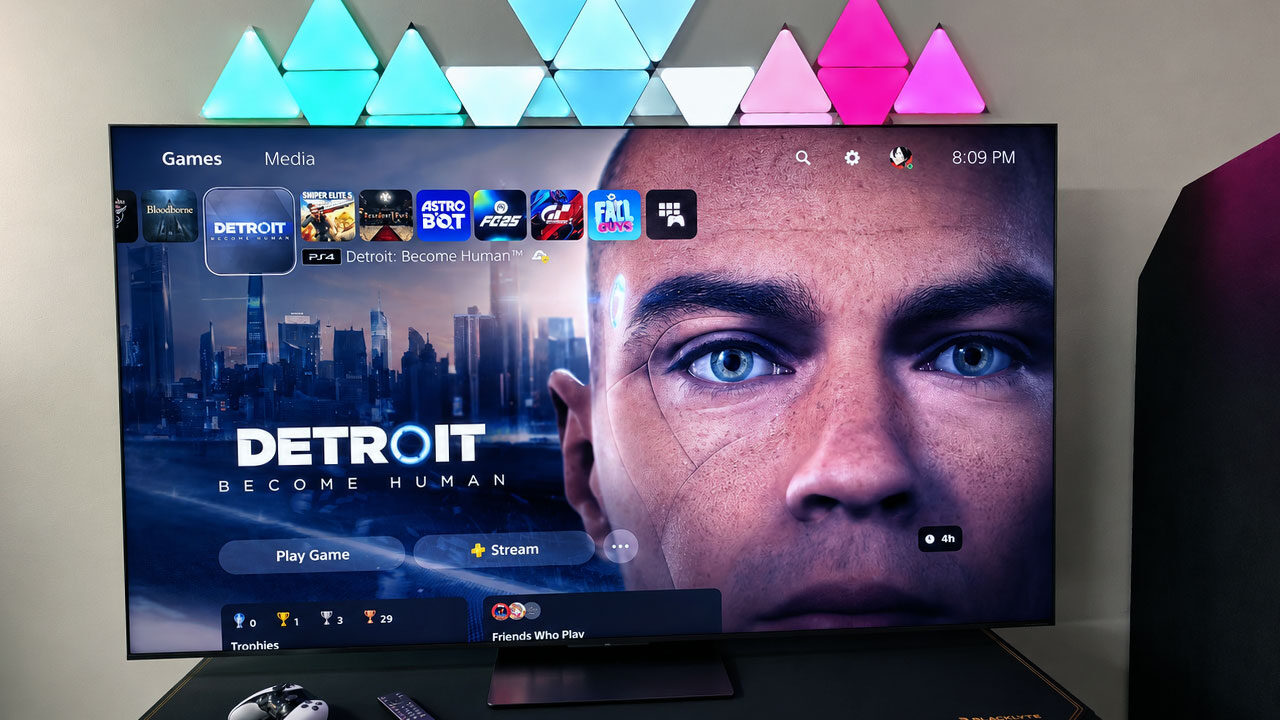
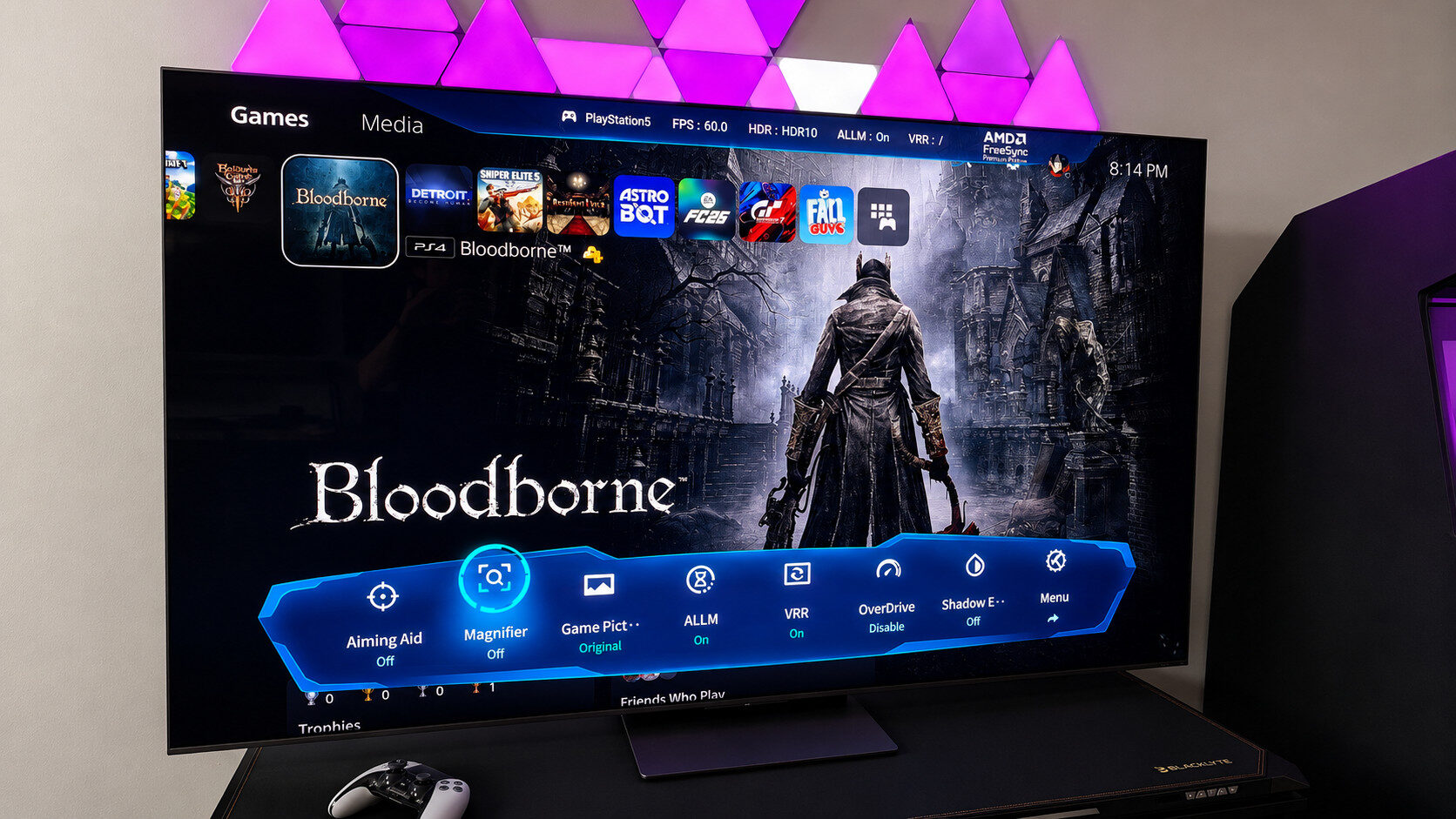
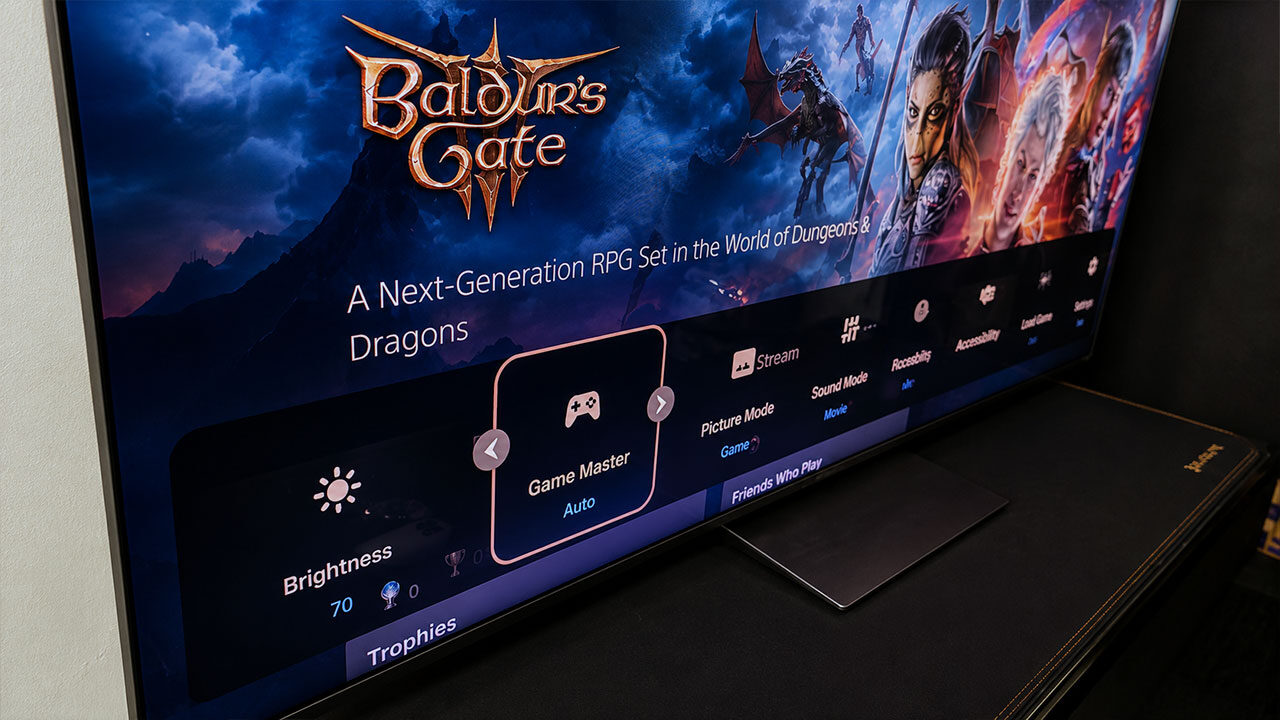
While I will note the limits of the QM7L’s gaming features in my coverage of that TV, the QM8L addresses most of those complaints. All four HDMI ports support 4K at 144 Hz with variable refresh rate and AMD FreeSync Premium Pro, as well as 1080p at 288 Hz for competitive titles. That means you can dive into a match of Counter-Strike, Valorant or League of Legends on the big screen. Auto low-latency mode switches the TV into Game mode as soon as a console powers on, with input lag measured close to 10 milliseconds, and a Game Bar overlay makes quick adjustments, such as enabling an FPS counter, easy to access during a session.
Sound comes from a Bang & Olufsen-branded system, and it outperforms most built-in TV audio, with clear dialogue and a bit more low end from the rear-mounted woofers. It still will not replace a proper soundbar for movie night, though TCL sells a wireless subwoofer and supports its FlexConnect speaker system for anyone who wants to expand the setup later. Considering the system’s design and speaker placement, I was impressed by how good the TV sounded. Action sequences, dialogue and even complex musical scores had the right level of impact. There are limits to what is possible within the slim body of a flat-screen TV, but the TCL QM8L TV delivers solid sound within those constraints.
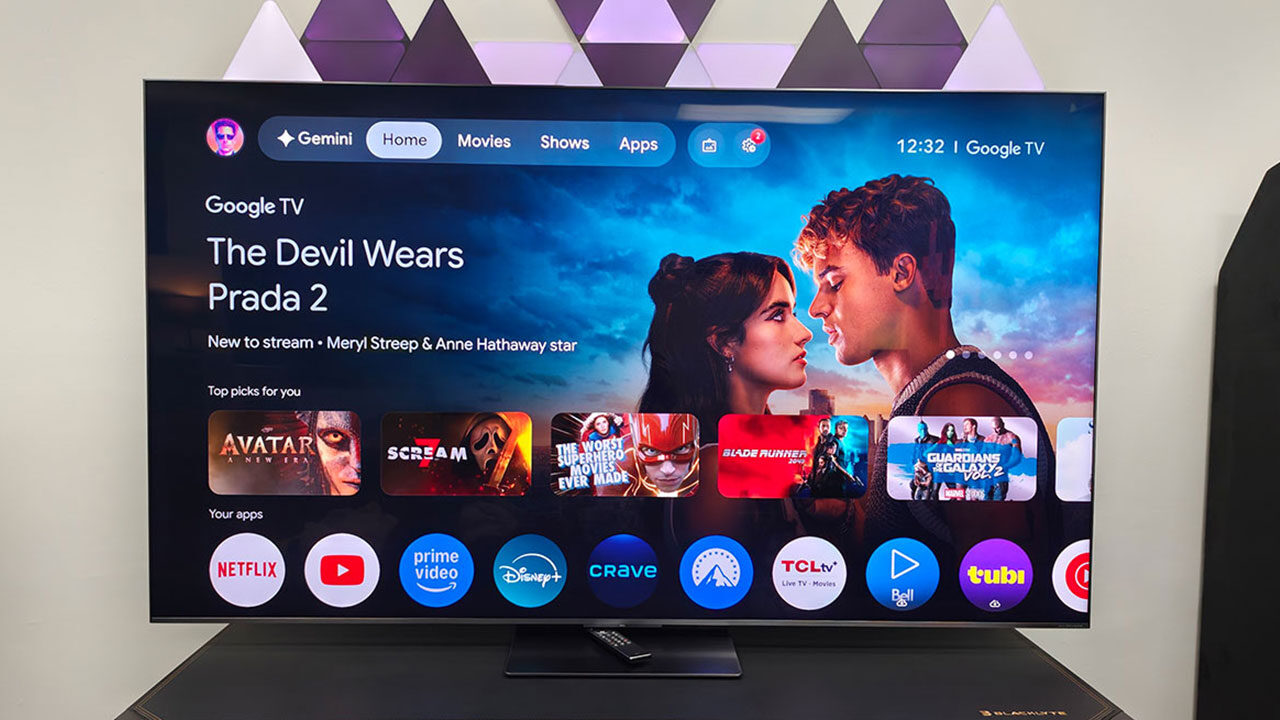
There is a catch to everything this TV brings to the table, and that is the price. The TCL QM8L TV starts at $2,499.99 for the 65-inch model and climbs to $5,999.99 for the 98-inch model. This is not a cheap TV, although sale prices may be lower. At the time of writing, the 75-inch model was listed on Amazon for $1,699 USD, making it a compelling option.
Compared with last year’s QM7K, you get a wider colour gamut, twice as many full-bandwidth HDMI ports and tighter backlight control for close to the same price. Given everything they have packed into the TCL QM8L TV, it is easy to recommend if you want a bright, colourful TV without paying flagship prices. The stand should be sturdier, and the colours could use more restraint out of the box, but neither issue gets in the way of what is otherwise one of the best and most well-rounded TVs we have reviewed in a long while.

- SQD-Mini LED: As the ultimate Mini LED TV, it integrates the expansive TCL Deep Color System with the breakthrough TCL Halo Control System to ensure the most brilliant, pure, and immersive viewing experience possible.
- TCL Ultra Color Filter: TCL’s Ultra Color Filter with fine 5 nanometer particles (vs. standard 60 nanometer particles) bring every scene to life with pinpoint, pixel-perfect color accuracy.