
Arc System Works is turning the fighting game genre on its head with its newest release, MARVEL Tōkon: Fighting Souls. Moving away from the traditional 1v1 or even 2v2 fighting style, the game features 4v4 gameplay, with a single combined health bar. The game also shies away from the usual Marvel comic style fans know and love, and instead introduces a gorgeous anime-inspired Japanese art style, making MARVEL Tōkon: Fighting Souls something truly unique.
Ahead of MARVEL Tōkon’s full release this month, CGMagazine was able to speak to the team behind the game via email. From Arc System Works, we spoke to Producer Takeshi Yamanaka and Game Director and Lead Battle Designer Kazuto Sekine, and from Marvel Games, we spoke to Senior Product Development Manager Michael Francisco. The trio was able to speak to the inspiration behind MARVEL Tōkon’s unique art style and 4v4 gameplay, as well as some insider details on how our favourite Marvel characters fit into the fighting game.
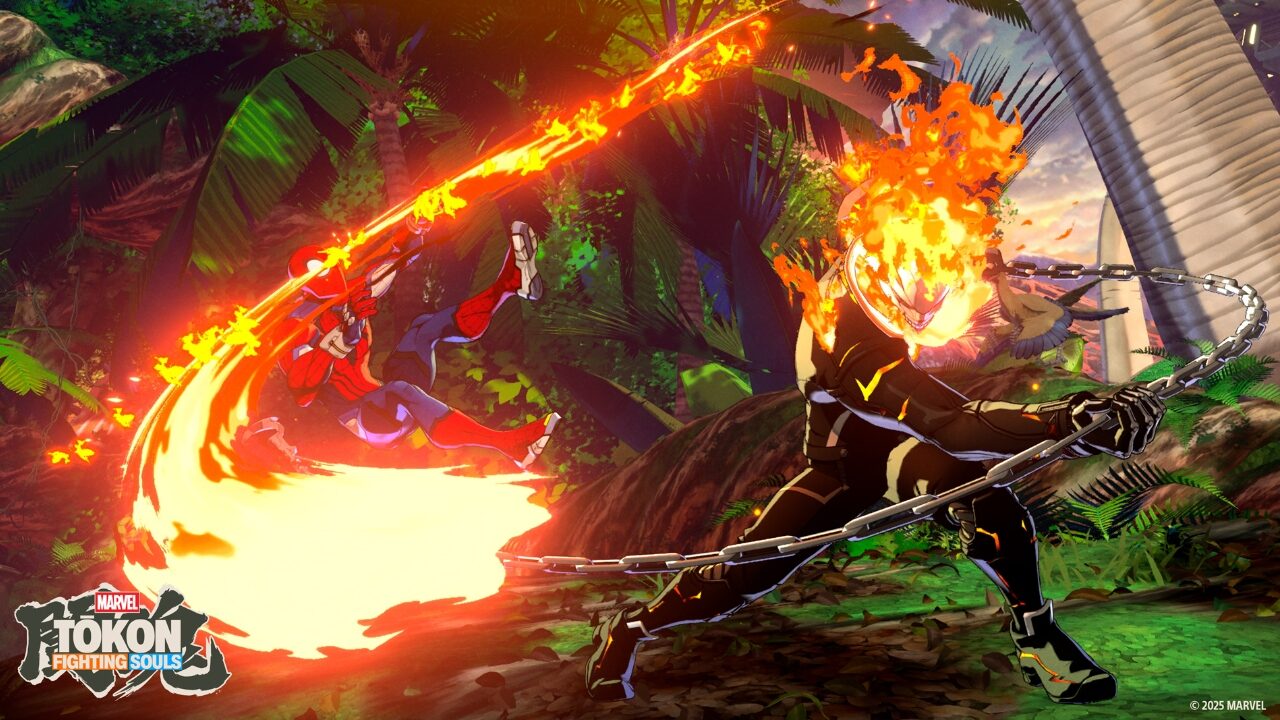
The art style for MARVEL Tōkon is very different from any other Marvel titles we have seen. Where did the idea to go with more of an anime-inspired design come from, and how will we see Marvel character designs reimagined because of the style?
Takeshi Yamanaka: During the early planning stages of the projects, we studied the comics’ style aesthetics and presented those to our partners on this project. But as a result, Marvel told us, “No, this is not what we’re looking for.” They told us that we should go with an approach making the most of our experience through a Japanese anime style and do our own thing.
We understood through this conversation that what Marvel wanted out of this project is something that has not been seen in their past works yet. This is where one of the strongest mottos of this project came into place: “From Japan to the World,” which led us to lean further into our own style and sensitivities.
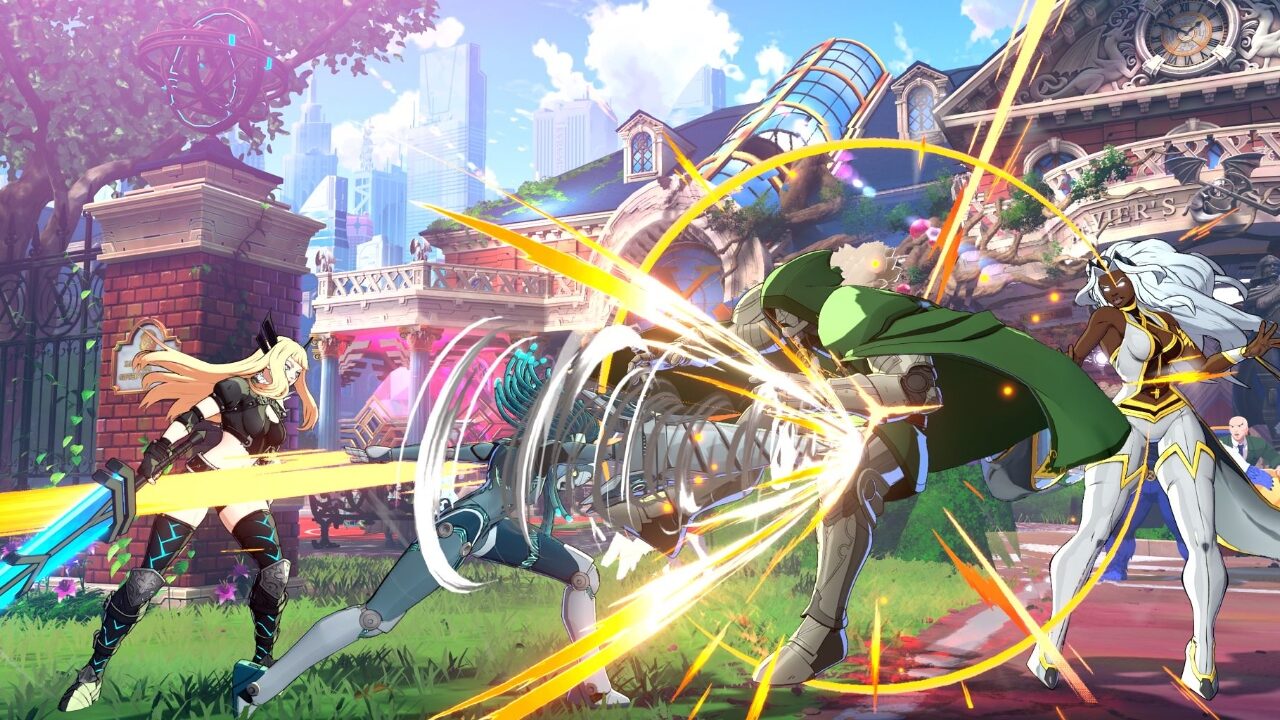
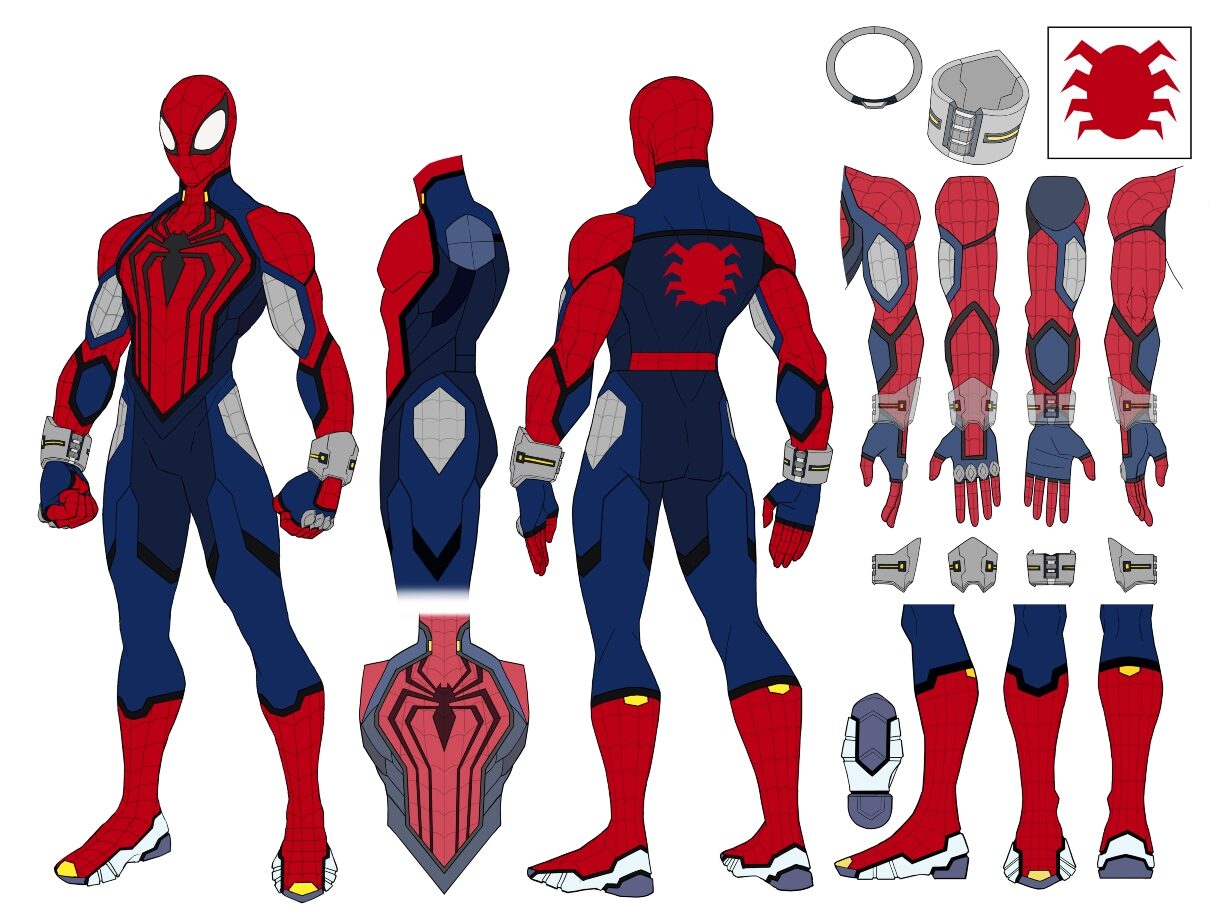
Kazuto Sekine: Following the motto “From Japan to the World,” we aimed to express our utmost respect towards the original character designs while adding some Japanese flair. In this case, it meant applying the anime and fighting game art styles that are characteristic of Arc System Works. In other words, it was an exercise of keeping the essence of these characters intact while viewing them through the lens of our interpretation.
This ratio between legacy design and new interpretation does vary depending on the character, but we also made alternative costumes to keep an overall balance between traditional and new.
Michael Francisco: At Marvel Games, we preserve and champion the unique DNA of every developer we work with. Like most fighting game fans, we had fallen in love with ArcSys’s beautiful anime art style, so we encouraged them to fuse that essence with Marvel characters and worlds to create something familiar, yet unmistakably original. We asked ourselves: what if ArcSys and Marvel had a baby? And that baby could do an infinite? And thus, MARVEL Tōkon: Fighting Souls was born.
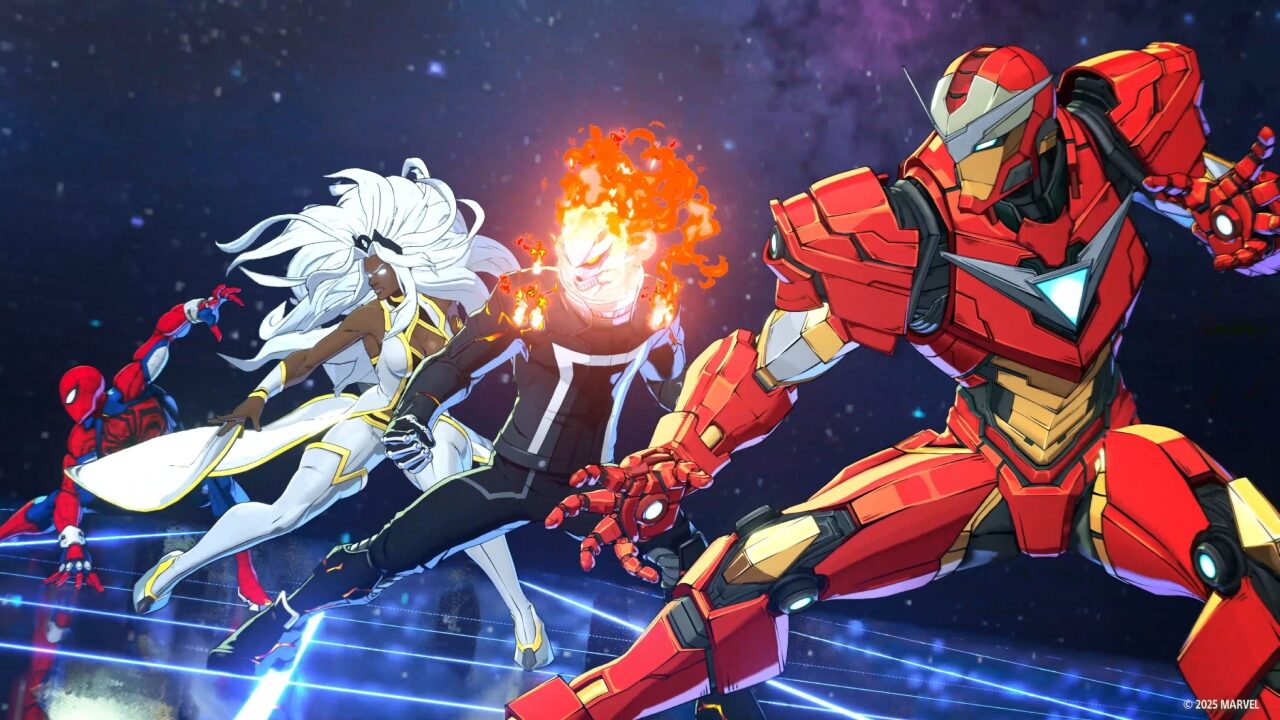
What can you tell us about the Story Mode in MARVEL Tōkon: Fighting Souls? We have heard there will be one.
Takeshi Yamanaka: Indeed, there is one called “Episode Mode” included in the game.
Kazuto Sekine: It consists of parallel stories about the 5 teams, including the Fighting Avengers, making their way to challenge the Champion. It consists of both motion comic panels and battle phases so players can enjoy both story and gameplay playing this mode.
Michael Francisco: In the MARVEL Tōkon: Fighting Soul’s Episode Mode, the Champion descends upon the Earth seeking the ultimate battle. He is an Elder God obsessed with fighting, and that obsession keeps him immortal. He offers one simple proposition for Earth: participate in a combat tournament to determine the Earth’s strongest fighter…or face annihilation! If our heroes (and villains) give Champion a battle to remember, he’ll spare this lowly space rock we call home. But is there more to this sinister game than just sport? You’ll have to play to find out.
Episode Mode is a story told through motion comics illustrated by a spectacular team of manga and comic artists. They are Hiro Mashima, Betten Court, Yusuke Osawa, Mike Deodato, and Ema Lupacchino. There are five chapters, each following a different team, but all masterfully written by Kieron Gillen and the narrative team at ArcSys. It’s a love letter to both comics and manga as a true marriage of East meets West.
Marvel is a brand that has touched many lives. What was it like bringing a brand with so many fans to life through gaming?
Takeshi Yamanaka: When working with existing IPs, we have as a prerequisite to know about and to love the works as much as we can. However, I have to admit that before the start of this project, the only things I was familiar with Marvel were the Avengers and Spider-Man movies.
That’s why when we started looking into this plan, I gathered company staff who were very knowledgeable about Marvel works and asked them to teach me about them. Following their advice, I caught up with most of the movies and the main comics series in about two months.
Kazuto Sekine: Marvel is an IP that has been connecting for a long time with many people all around the globe, including myself. As such, and the same applies for the other titles we have made, we put our utmost care and lots of love while developing it.
In a way, it is like they trusted us with their baby, so we needed to make them think they were right to do so by expanding on the charm Marvel characters innately have and making them look as cool and/or cute as much as we can.
Michael Francisco: 12-year-old me still doesn’t believe that we’re working on a Marvel fighting game! A lot of us work in the video game industry because of our love of fighting games and the fighting game community. We want to thank the fans for the opportunity to give back to the community that inspired our careers. We hope you enjoy the game as much as we had fun making it!
Of course, superheroes make great characters for the fighting game genre. Were there any characters you knew you absolutely had to include in the early stages of MARVEL Tōkon? How did Arc System Works decide who to include and who to leave behind?
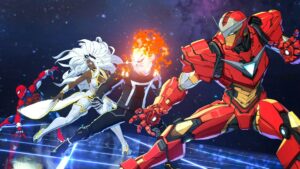
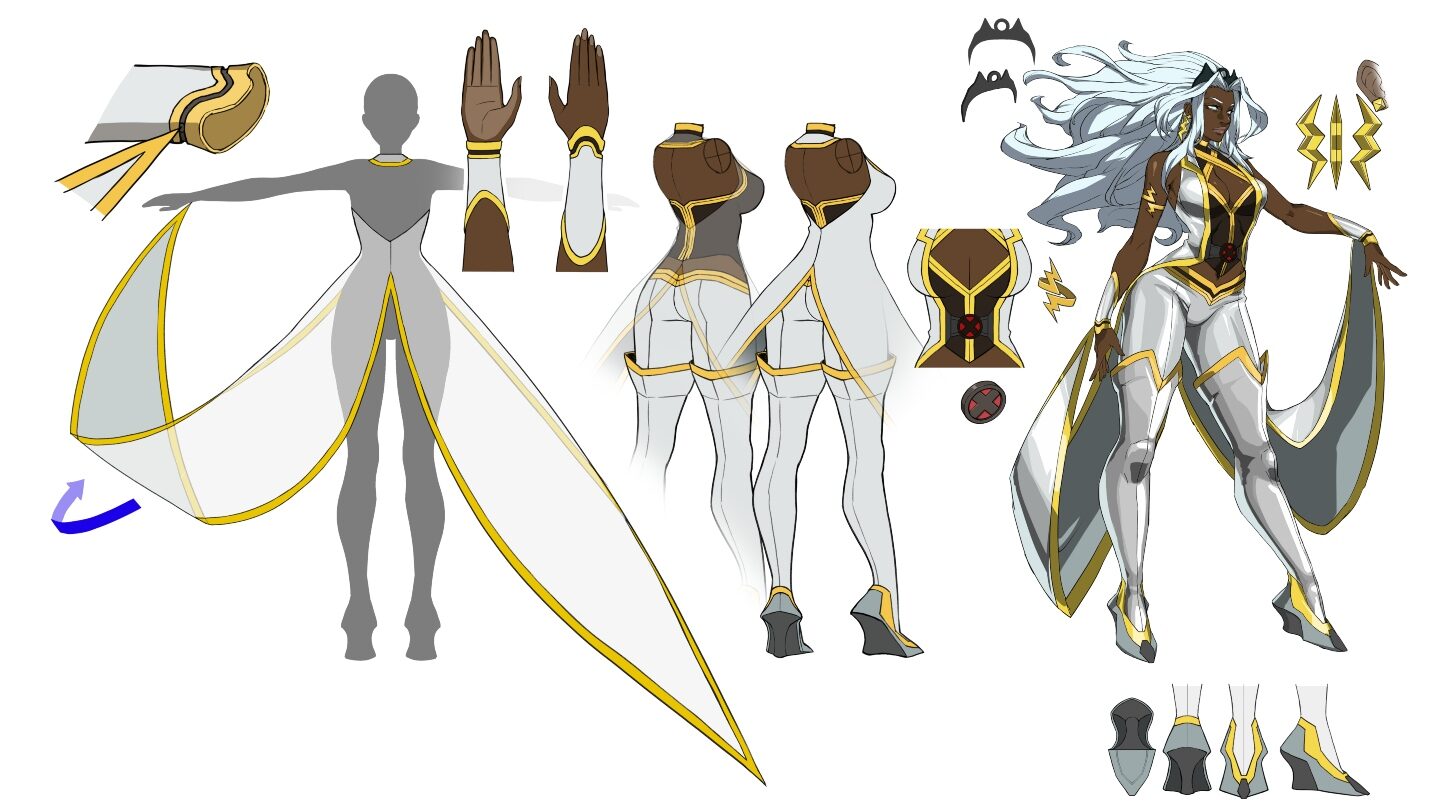
Takeshi Yamanaka: We definitely wanted to include the most iconic Marvel characters in the game, those who are the main faces of their works, including Captain America, Iron Man, Spider-Man, Storm, etc.
Kazuto Sekine: Concerning the base roster, Arc System Works proposed multiple lineup proposals that consisted of characters chosen because they were known by everyone, others because they had potential to bring something unique and interesting through their specific abilities, some because they have never been featured in fighting games, and even more niche characters not widely known by the public.
On top of this, we discussed further with Marvel and PlayStation Studios on who we should include, and ended up with this specific initial roster. I can’t name them, but during these discussions some other characters that didn’t make it into the roster did check all the boxes to be serious contenders for being featured in the game but were put aside this time to strike an overall good balance between characters.
I, for one, would be glad if we could have a chance to show them too, someday.
Michael Francisco: There were three important questions we asked ourselves when considering the roster. First, which characters are the most popular icons of the Marvel Universe? Second, which characters could offer interesting mechanics? And third, what are some surprises we can deliver? Assembling the roster was threading the needle between these three criteria.
From what you are able to reveal so far, can you give us some examples of unique moves or mechanics from any of the characters?
Takeshi Yamanaka: Every character has their unique moves and game mechanics. Among them, the ones that stand out the most in my opinion are Deadpool for the action side and Magneto for the game mechanics side.
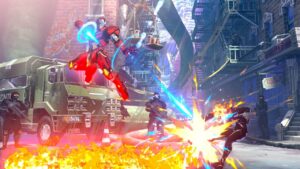
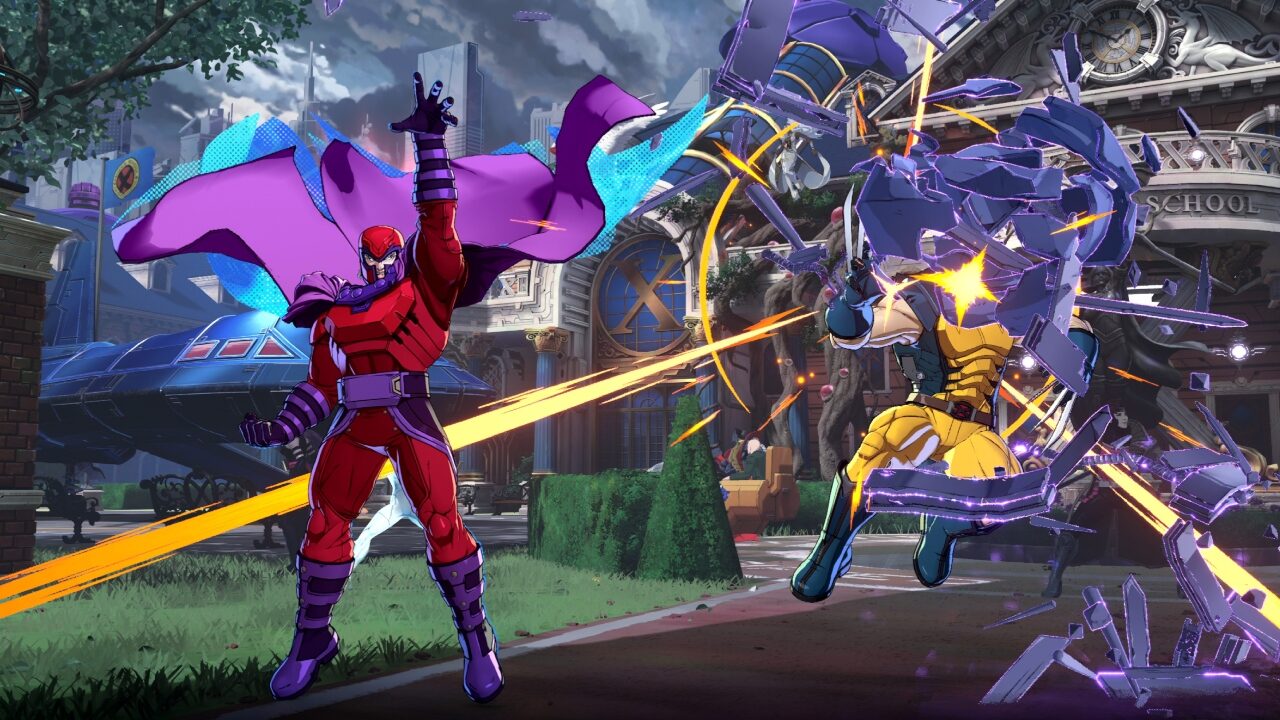
Kazuto Sekine: We wanted to have Magneto feel as close as possible to the original material, so we made him fight using objects from the stage backgrounds. His Unique Skill consists of launching debris at his opponent, and the look of said debris changes depending on which stage players are fighting on.
For example, in New York he will launch cars, while at the X-Mansion these cars would be replaced with masses of metallic objects such as bins. Every character in the game has points like this; we put special care into things like Green Goblin’s glider, Deadpool breaking the 4th wall, etc…There are so many examples of this that we can’t wait for you to discover!
“In the comics, Ms. Marvel is often seen as an underdog who surprises people with her youthful determination. I like the idea that she keeps people guessing in MARVEL Tōkon: Fighting Souls with the threat of a devastating command grab.”
Michael Francisco: Every character has an attack called Unique Skill. It’s a dedicated button that gives you access to mechanics that are specific to that character, sometimes accompanied by their own meters to manage. It’s a fantastic way to learn each character’s personality and playstyle. Some of my favourites include Hulk, Ms. Marvel, and Carnage.
Hulk’s Unique Skill allows him to charge his Gamma Gauge. Each tier on the Gamma Gauge grants him a speed and damage boost until he’s an unstoppable behemoth. At max level, his Ultimate becomes an omnidirectional attack that tracks the opponent anywhere on screen. Quite literally, the angrier he gets, the stronger he gets!
Ms. Marvel is the grappler of the game, but also has unorthodox movement through her Unique Skill. When she pulls herself toward the opponent, she can react faster than the opponent, allowing her to either continue her attack pressure or mix it up with her command grabs. Once you see the Ultimate grab activate, it’s too late to jump!
In the comics, Ms. Marvel is often seen as an underdog who surprises people with her youthful determination. I like the idea that she keeps people guessing in MARVEL Tōkon: Fighting Souls with the threat of a devastating command grab.
And finally, Carnage’s Unique Skill allows him to infect the opponent with a Parasite Bomb. Because he can detonate the bomb at will, it creates a lot of dramatic tension as if you’re being stalked by a serial killer. Players can use that to keep the opponent on edge! ArcSys are masters at gameplay that tells a story, and working with them reminds me why video games are such a cool artistic medium.
What was the approach to making MARVEL Tōkon feel like its own game and distinct from other fighters while still respecting what has been established?
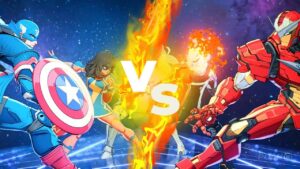
Takeshi Yamanaka: In Japanese, we have an expression named “Onko chishin,” meaning learning from the past to understand the present. We applied it here by leaving in what was best in past works and adding new elements. For Tōkon, we started with a new and fresh concept of having 4v4 matches, to which we added our unique technological and visual flair to make it a truly unique experience from the past games.
Kazuto Sekine: Every company that has worked on Marvel-related titles, including fighting games, has proposed their own interpretations of the characters. As for us, we are aiming to make something that is both a “new Marvel fighting game” and also a “new tag battle game.” As such, while we were cautious of preserving the identity of each character, we also aimed to create a new gaming experience.
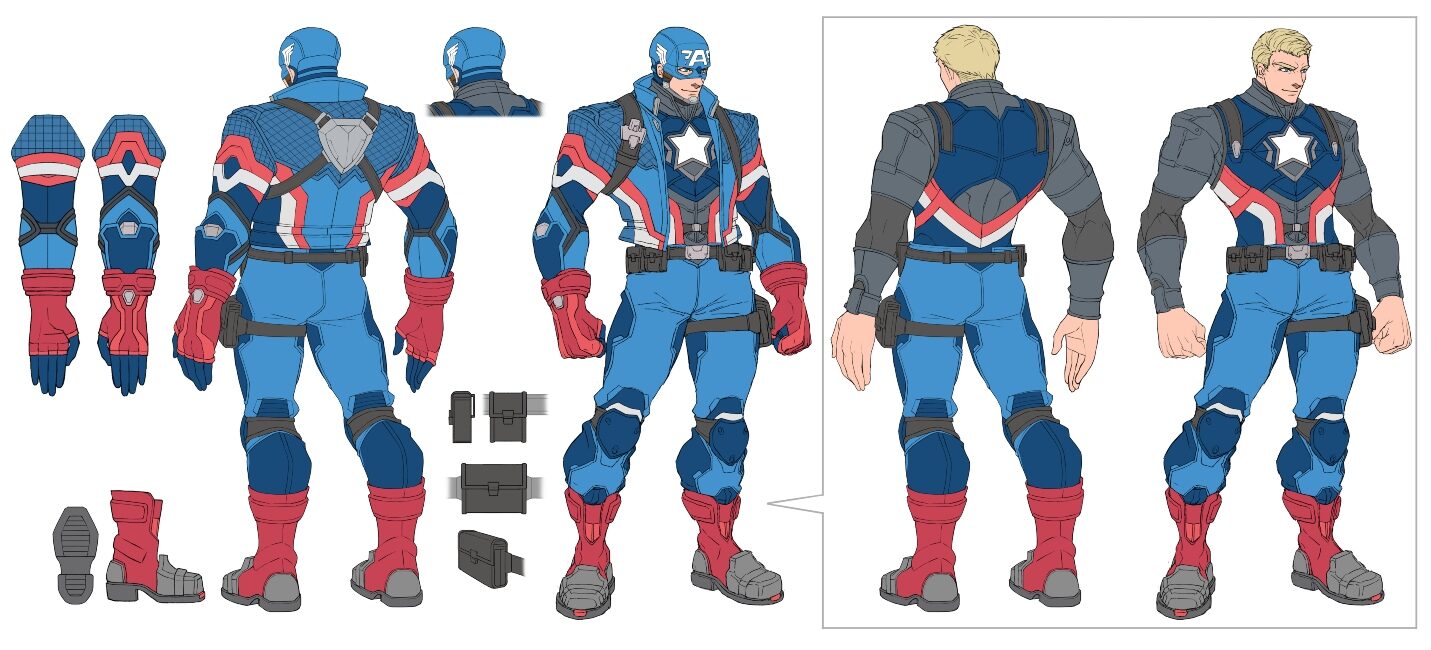
Michael Francisco: We’re all fighting game fans ourselves, and we admire the history of each Marvel character and their playstyles. Each design aims to deliver what fans expect but with a clever twist. For example, Captain America is known to throw his shield as a projectile that returns.
How do we take that to the next level? What if he can rebound his shield mid-combo or mix up the opponent by bouncing the shield in tricky trajectories? And thus, his Unique Skill was born. That same philosophy is a design pillar across the cast.
Having a 4-character tag fighter is a very ambitious approach to the fighting game genre. Why was this move important to MARVEL Tōkon’s development, and was there ever a plan to release this as a standard 1v1 or 2v2 during pre-production?
Takeshi Yamanaka: We first had a look at 1v1, 2v2 and 3v3 battle systems before having a tentative pitch with 3v3. However, seeing Sekine’s passion and enthusiasm for “creating a new Marvel” and our CEO Kidooka encouraging him, from a producer POV, my first thoughts of “maybe we are going to fail” turned into “Sekine is definitely going to make it.” So I placed my trust in him, which led us to the present 4v4 system we currently have.
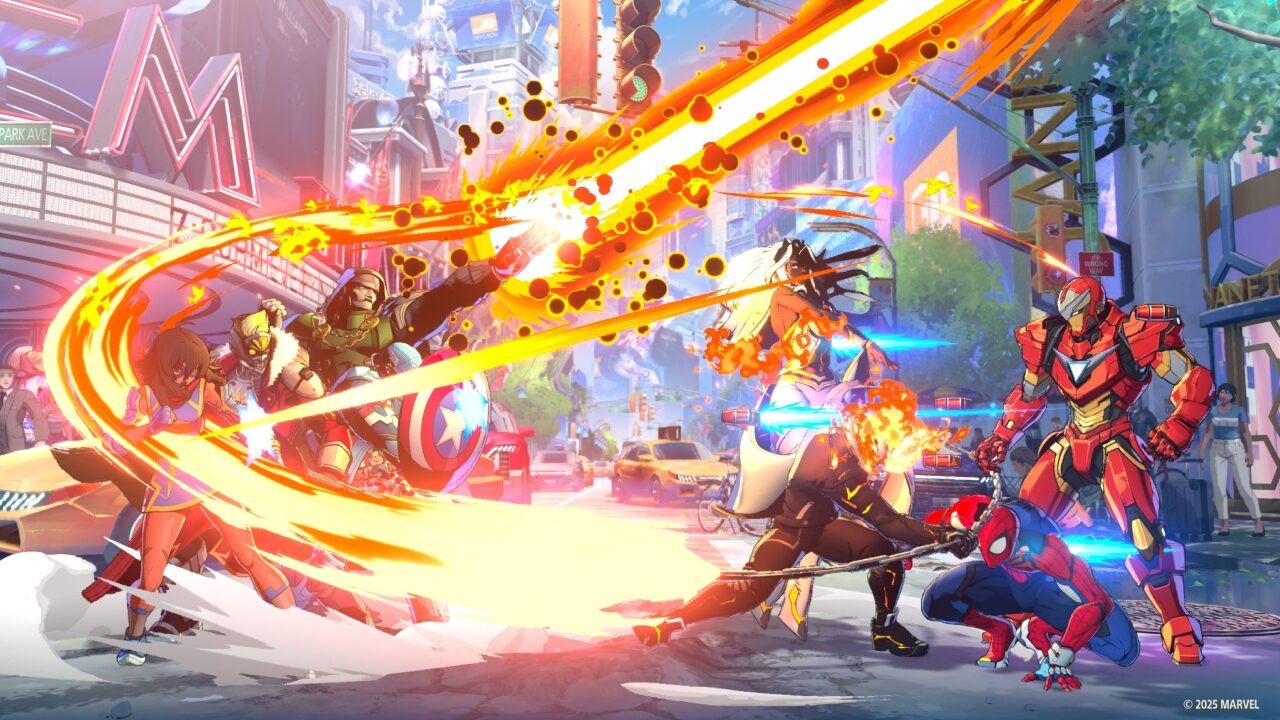
Kazuto Sekine: The starting point of the vision for this game comes from us reading the comics and watching the movies, with battles starting with only a few participants before new fighters enter the fray as battles get more intense until the climax.
This is the kind of flow and impact we wanted to recreate with our 4v4 system. Even now, I remember Yamanaka’s, Michael’s and our partners at PlayStation Studios’ faces when I brought up this proposal, as their eyes widened with surprise. Strongly believing we would be able to get the same kind of surprise effect with the audience, I strongly advocated the game to be 4v4. As for if it was going to succeed? Well, this was my job to make it happen (laugh).
Of course we also looked at other patterns like 1v1 or 3v3, but it didn’t really resonate with us at the time. There’s of course, many particular things you can do on a 1v1 structure, but as we really wanted to bring a sense of team battle to the fans, we ended up choosing this 4v4 system.
Why the choice to go with one health bar instead of one for each character in MARVEL Tōkon? How does it work?
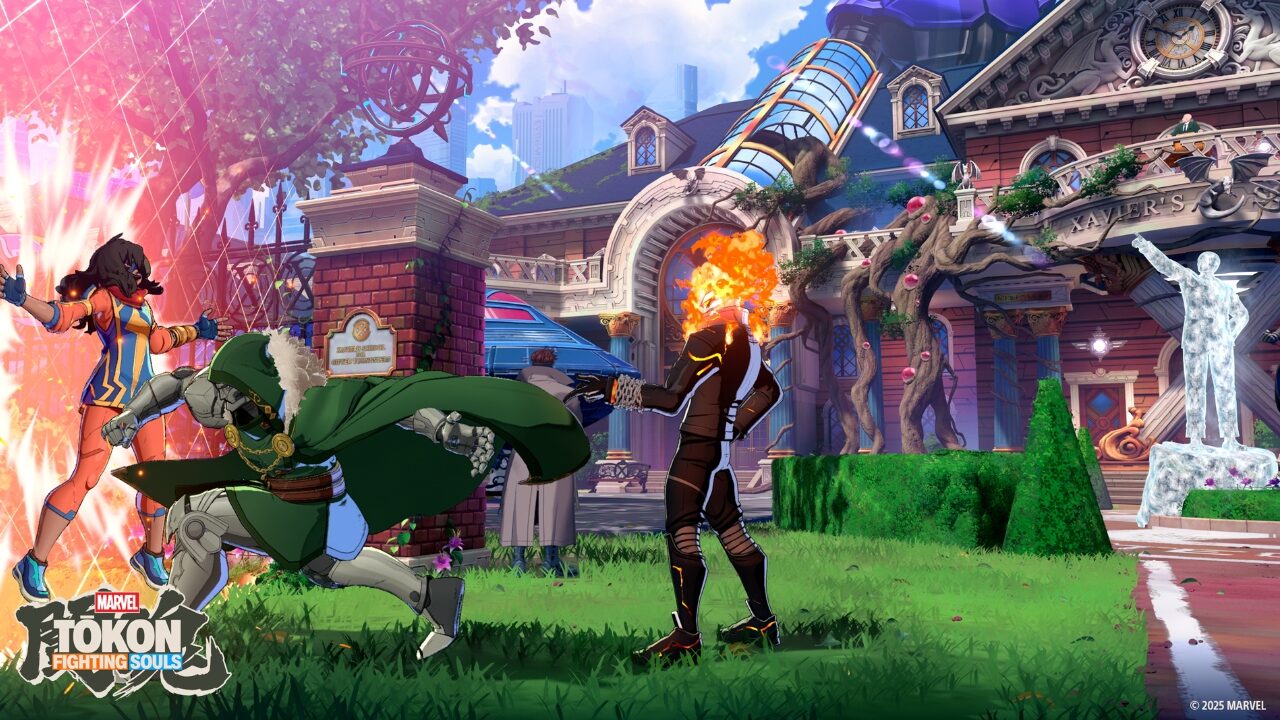
Kazuto Sekine: My first intention is that I wanted to lower the entry bar tag games sometimes have. In the long term, there’s of course a lot of fun to be had by learning multiple characters, but at first, it can be really challenging. Especially if you’re going with teams of four. This is why I think a gentler approach to the game is to ask players to first only learn one character and then maybe two, three or four.
I have played many tag battle games before making this one and often thought that their ruleset, while being very polished, could also be kind of too much of a rigid formula at times, thinking “Isn’t there something else we could do with this?” Which was how we came up with this system of starting on 2v2 and expanding to 4v4 as the battle unfolds with a common health bar for the whole team to share.
Marvel is a really popular brand that caters to many; how do you design a battle system that’s approachable and accessible enough for casual players to enjoy who are familiar with their favourite heroes, but complex enough that pros can dive in?
Kazuto Sekine: Sometimes concerns arise among fighting game players that when controls are too streamlined, the game overall ends up being too simple. On the other hand, having the player frustrated about some moves not activating when they intended is also a problem, meaning this approach can be beneficial to veteran players too.
Also, there’s something I’d like players not to misunderstand: we are building the game to be simple to get a hold of, but we’re not building it to be easy, as depth of gameplay comes with the number of decisions you have to make and how many situations you can be faced with.
However simple or accessible the controls may be, if you end up hesitating and as such not being able to make those decisions in time, the battle may not go in the direction you’d intended. This is one of the main attractive points fighting games have.
As such, balancing this is not something Arc System Works started doing from DBFZ or GGST, but from the very first Guilty Gear through the BlazBlue series, and still learning up to today as part of a big continuation spanning over the years.
And to close, just for fun, who is your favourite character in MARVEL Tōkon: Fighting Souls (from what we know so far)?
Takeshi Yamanaka: While it’s something I’m often asked, it’s really difficult to answer. The one character with which our design spin defined the overall visual direction of the game was Iron Man, so I definitely feel a special bond with that character. As for the ones I grew to love onwards, I’d say Peni Parker and Blade.
Kazuto Sekine: I love them all! (laugh) My main job is to craft the overall system, so only choosing a few characters would be honestly a bit difficult. I can just say that we put an equally great amount of care into each of them!
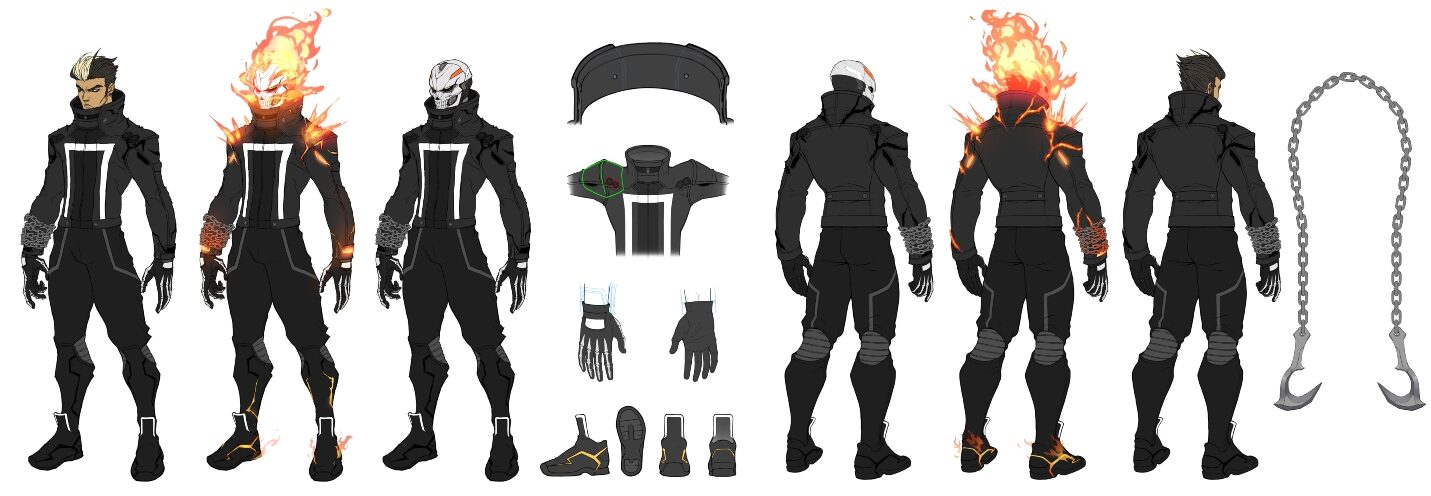
Michael Francisco: Every character has a special place in my heart, but if I had to choose one, I would choose Ghost Rider. Ghost Rider’s Unique Skill allows him to manage his Vengeance Gauge. The higher the gauge, the more powerful he becomes! However, rev his engine too high, and he’ll be left in a vulnerable state. I think this beautifully illustrates Robbie’s inner conflict — he struggles to control his inner demons, but sometimes he needs to let the monster out to do some good.
Marvel comics are action-storytelling. Often the strength of the medium is communicating emotion through visuals alone. What ArcSys has done with Robbie’s mechanical design shows us the video game equivalent!
MARVEL Tōkon is now available for PlayStation 5 and PC.

- Assemble your team of legendary Marvel characters in the ultimate 4v4 tag team fighter from PlayStation Studios, Arc System Works and Marvel Games.
- Experiment with team compositions to discover new combos, synergies, and strategies. Blast your way through dynamic stages based on iconic Marvel Universe locales, some featuring interactive stage transitions.