Desktop fabrication sits at the centre of xTool’s ambitions, and the company develops laser cutters, engravers and creative tools for people making everything from personalized gifts to products for small businesses. Based in Shenzhen, xTool positions its hardware alongside software, accessories and community support, aiming to make production more approachable without requiring an industrial workshop.
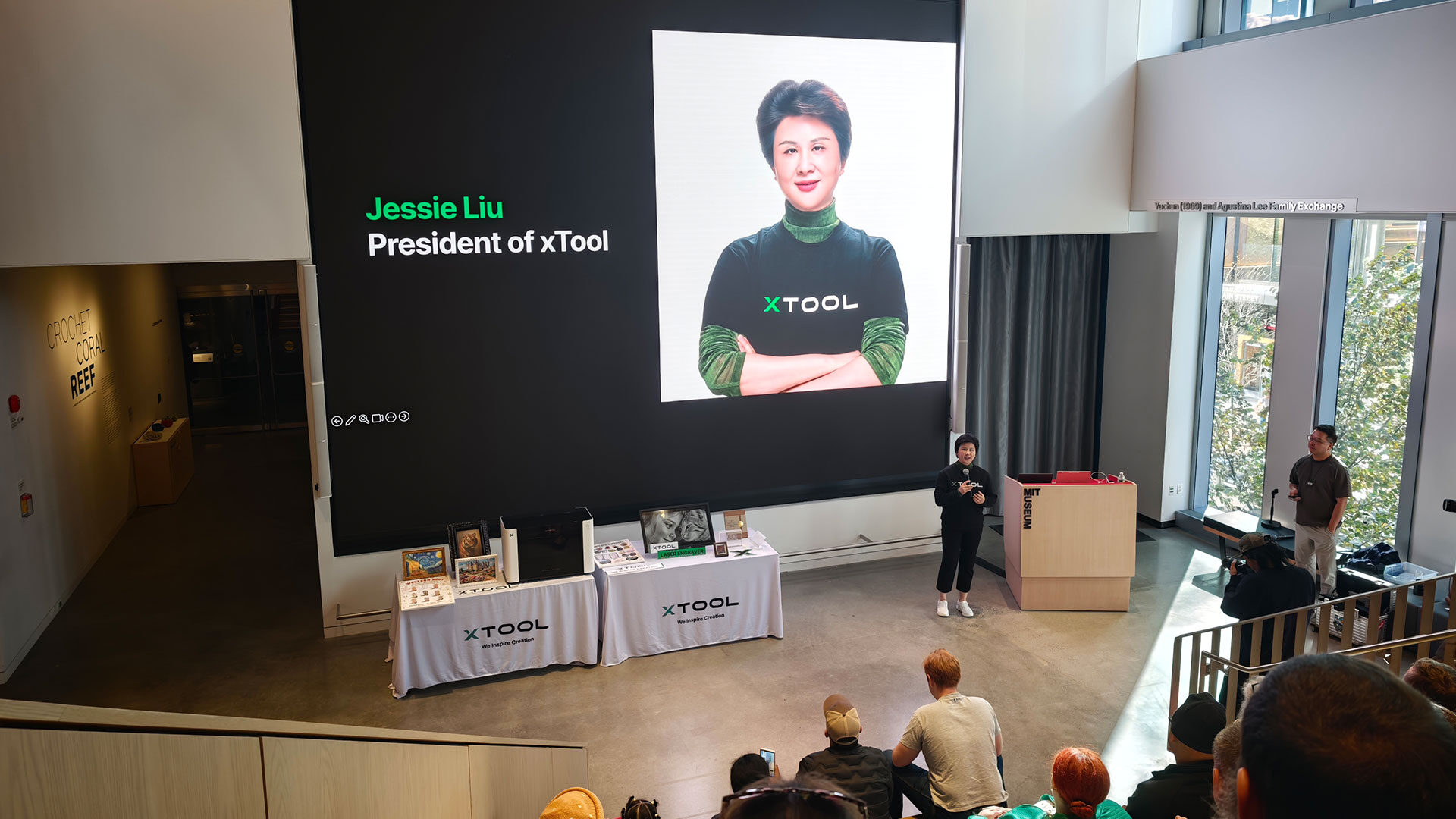
Helping lead that effort is xTool’s president, Jessie Liu, who moved from investment banking into entrepreneurship. Her work includes presenting the company’s international expansion strategy and its “Make It Here” initiative, which pairs desktop manufacturing technology with local demonstrations, education and support for makers.
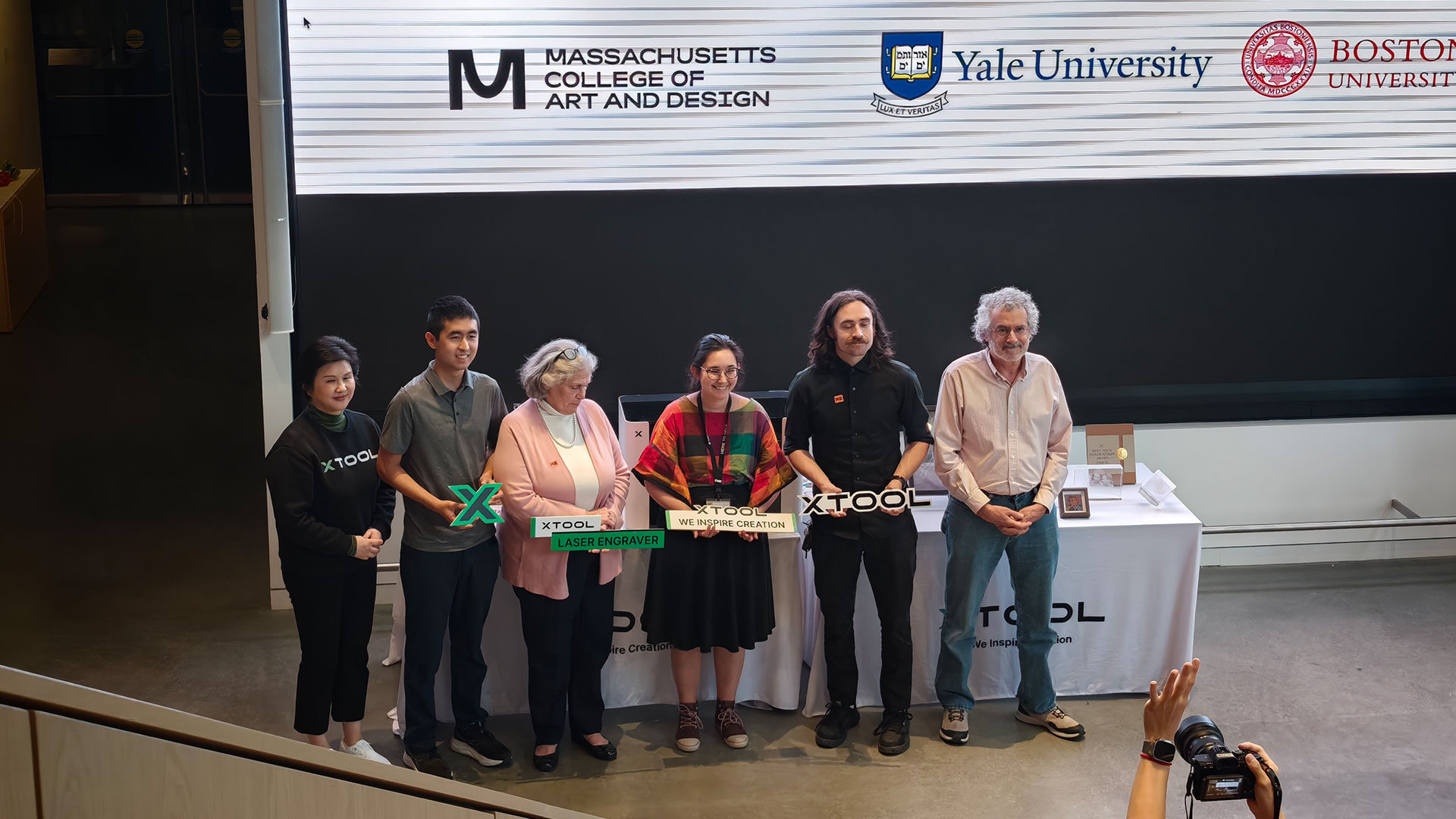
CGMagazine spoke with Liu ahead of an event at the MIT Museum showcasing how desktop tools can be used in some amazing and unique ways. Taking time out of her busy day, she discussed the thinking behind that approach, what accessible fabrication can mean for independent creators and where xTool goes next. We began by looking back at how the company started.
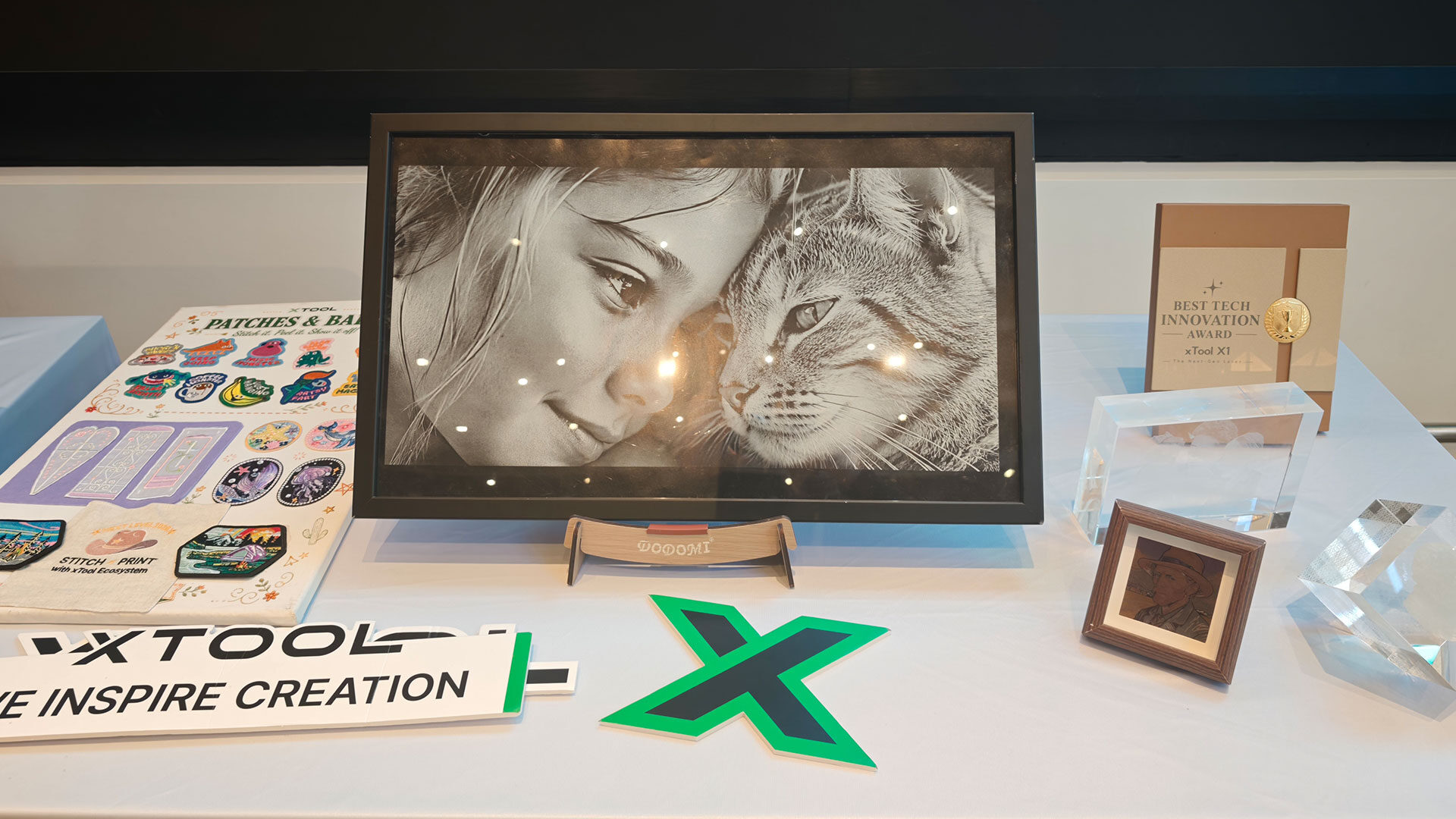
xTool is a company that has helped makers and fabricators get started in an industry that was much harder to break into five or 10 years ago. How did xTool get started, and how did that fit into the company’s original vision?
Jessie Liu: So, I think it started six years ago. That was, I think, in 2020. Before that, our business was focused on STEM robotics. It was also, I think, number one globally, but there was a ceiling for that business.
Around the end of 2020, our founder, Jason, realized there was significant demand for desktop laser machines because Google searches showed a jump in interest. But on Amazon, when he read people’s comments, there were a lot of problems that the players at the time, the other companies, couldn’t solve. Consumers and creators using the machines were complaining about a lot of things. They were very hard to use, and the machines were more like toys. They couldn’t really make the business work, right?
So he decided that maybe we could try to produce a much better product for small business owners and creators. We spent probably a year developing what I think was a generation-leading product. Around the end of 2021, I think, we brought our first product to market. It was the D Series machine. From then on, Jason cultivated a culture in the company where we focused so much energy on understanding what customers actually need, what problems they want to solve, and what the current products don’t solve.
We even had 100 engineers in 2022 developing a VOC system, a voice-of-customer system, for our own use. That system automatically gathers customer comments online, including Reddit, Amazon, Facebook, and other platforms. Jason himself spends at least one hour every day reading the original comments. Even today, he’s still doing that. Sometimes, at midnight, he’ll send a message to our management team saying, “Okay, I read a customer saying this. This is not good. We should solve this within a week. Please, everyone.”
So, from the first product xTool released to the next, how much did the company evolve based on customer feedback and what users were asking for?
Jessie Liu: Yes. So every year, that’s another thing about us: we improve our products very quickly. Every year, we develop a few new products. For example, I think in 2022 and 2023, it was two new products each year. Then in 2024 and 2025, it was around four products each year.
Last year, in 2025, we launched six new products, and it will be the same this year, with six new products. So we move very fast. For example, in 2022, we launched the F1. The “F” represents fast. I’m not sure whether you’ve tested it out.
I’ve not used it, no.
Jessie Liu: Why is it called fast? Because before that, we realized that all the laser machines on the market, including ours and our competitors’, were using gantry systems, right? So the laser head moves slowly, even though it has a large working area.
Then, in 2021, Jason and the team, by reading customer comments, realized that many small business owners go to things like market shows to do business on-site, right? So they need a very fast machine to do that work. That’s why, in 2022, we developed what I think was the world’s first laser machine based on our system, which solved the speed problem.
Then, when we launched the product and started reading customer comments again, we realized many customers needed to work on non-flat surfaces, such as curved surfaces. But at that time, none of the machines on the market could handle curved surfaces well. So we developed more software algorithms and spent about eight months solving that problem. At the end of 2022 or early 2023, I think we launched the F1 Ultra. The Ultra has the capability to engrave and cut on curved surfaces. That’s how we kept improving and moving very quickly.
Then a lot of customers said they wanted to work with glass. That can create a lot of commercial value, but there wasn’t a laser machine that could do it well. The key reason is that only ultraviolet lasers can do that kind of engraving, but an ultraviolet laser head is very expensive.
Yeah. How much is it?
Jessie Liu: It usually costs more than $2,000 US just for the laser head, and that would make the product unaffordable for our customers. They are not factories. They’re not big corporations.
So, in 2024, we started looking for suppliers that were willing to innovate with us. At that time, there were no consumer laser-head suppliers willing to do that. They thought there was no way to make an ultraviolet laser head affordable, and they didn’t know how large the market was. With this kind of innovation, you have to spend maybe a few million dollars or more on R&D first, right? So they didn’t want to take on that uncertainty.
What we did was go to exhibitions to find laser-head companies from other industries. Fortunately, we found a professor who had started an industrial laser company three years earlier. At the time, he was focused only on industrial laser applications, but his team was very good with ultraviolet technology. So we came together with him, and I think in 2024, we also invested in his team. They then spent six months working on it and cut the price of the ultraviolet laser head from around $2,000 US to maybe $500.
He actually changed pretty much the entire structure of the ultraviolet laser head, and then we adopted that design. We launched the F2 Ultra UV at the end of 2025. It was a big hit and has been one of our bestsellers ever since. With the X1, you can swap all five laser heads, and one of them is ultraviolet.
If you buy the F2 Ultra UV on its own, it costs around $5,000. But with the X1, you can swap between five different heads. We want to make the cost even lower for customers who want access to these capabilities, especially small business owners.
xTool seems to be bridging the gap between home users and small businesses without quite moving into full industrial territory. It sits somewhere between those markets. Where does xTool see its products fitting? Does the company want to reach all of those users, or simply make the tools accessible to whoever wants them?
Jessie Liu: Yeah. So I think our strategy for the next few years is that we still want to focus on consumers and small business owners. We don’t want to move into the industrial space right now because we feel so many companies already serve that market. But before us, few companies spent significant amounts on R&D to serve small businesses and consumers.
We think small business owners, especially, deserve machines that are cost-efficient, space-efficient and very easy to use. It pretty much democratizes the supply chain for small business owners in many countries.
Now we are serving more than half a million small business owners across 80 countries, and I hear a lot of their stories. Sometimes there isn’t a clear distinction between consumers and small business owners. A lot of our small business owners are single moms or people with disabilities. We’ve heard so many different stories.
I talk to them, and they were able to spend just a few thousand dollars to get this machine, including all the accessories, software and examples showing them how to make a business work. Usually, within four to six months, they can recover all their costs, make a decent profit and earn a decent living, right? That inspires us to continue serving them.
How has xTool been embraced by the growing number of people entering the maker market, whether they’re selling at craft fairs, creating products for YouTube or simply making things on their own?
Jessie Liu: Oh, gotcha. Yeah. Fundamentally, we feel that people and companies want customized products. That demand was suppressed before. It’s like Uber before Uber came out. If there were only taxis, not many people could afford them, and it was also difficult to find one, right? So the demand for taxi services was limited. But after Uber came out, that demand could finally be met.
Basically, it’s the same thing. We believe that because companies like xTool can provide easy-to-use machines that are affordable for small business owners and people at home, more people can get involved. Some can even have a full-time job while building a business through Etsy or their local community on weekends or at night.
We also see customization and local fabrication growing quickly. Having a good supply of machines and solutions helps the entire business grow much faster.
And we feel that, in the future, we can make the products even smarter. AI benefits the industry because it can make these products even easier for our customers to use.
Yeah, exactly. You’ve expanded into a number of different markets. As you mentioned, xTool started with laser cutters and engravers, but the company has moved well beyond that. I’m testing the O1 right now, and I’ve also seen the apparel printer and several other products. What’s next for xTool, and why does the company keep expanding into so many different areas?
Jessie Liu: Yes. When we were working on laser machines, we were actually number one globally in 2024. But we realized there was a problem. Laser machines can’t create colour, right? But colour is also a fundamental need for people. So that’s why, in 2024, we started exploring how we could bring colour to our customers. That’s when we started expanding into what we call creative 2D-to-2.5D printing.
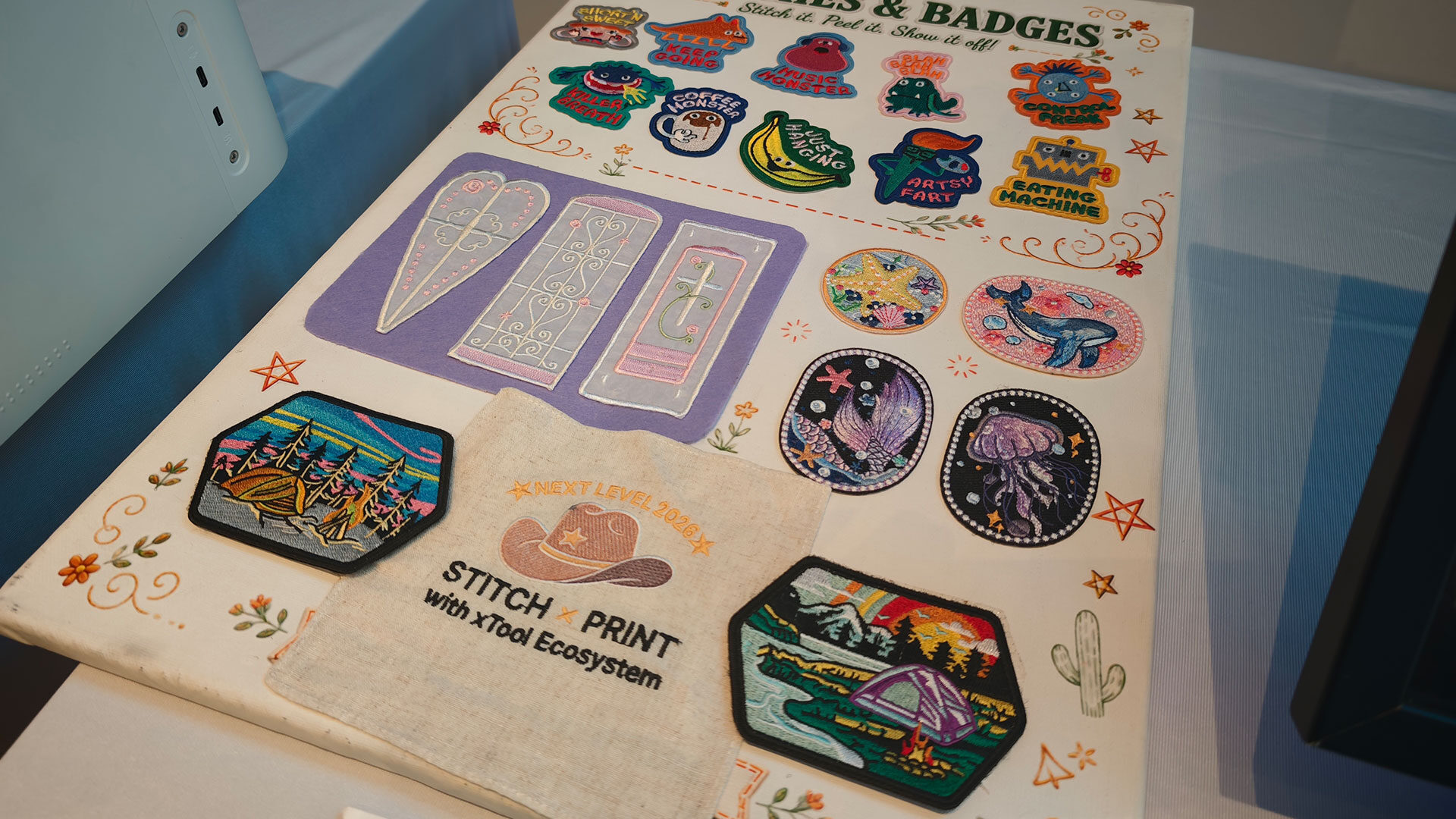
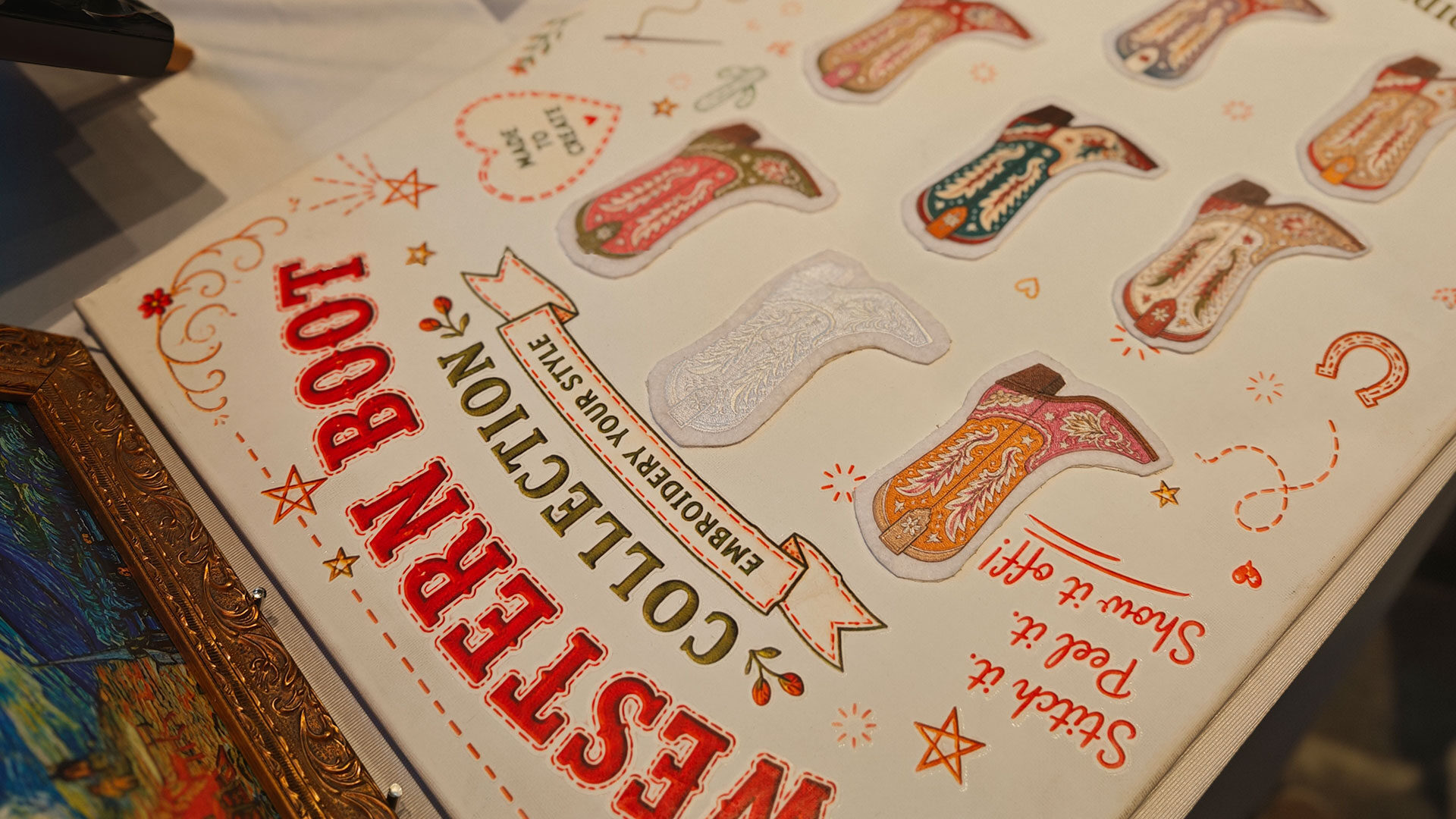
We launched a digital machine in 2025, and then the O1 this year. Going forward, we’re going to work more around 2D and 2.5D printing and also combine that with laser machines. For example, the M2, which you have already tested, has colour capabilities. Of course, we’re also going to launch more products that can work better with things like the O1. For example, I think about a month from now, maybe in late November or early December, we’re going to launch an embroidery machine.
So it has really expanded into a lot of areas that, as I mentioned earlier, would have been incredibly difficult for a small business owner to get into five or 10 years ago. Something like embroidery, for example, used to be prohibitively expensive to take on at that scale.
Yeah. We feel that the entire desktop creation tools segment still has a lot of room for innovation and new products. So next year, we expect to launch a few more completely new products.
That’s fun. Now, I want to go back to something we talked about earlier: the xTool experience, from taking the product out of the box to actually making your first project. What do you think the secret is to getting people started so quickly, and what has xTool figured out that other companies either didn’t do or lost along the way?
Jessie Liu: I think there are a few things. First, we think the most important thing is that the product can be generation-leading every year. That’s very important, right? Second is to invest a lot. Great products need significant R&D investment. We have 1,000 engineers in the company right now. Half are hardware engineers, and half are software engineers. It’s a huge cost, but only significant R&D investment can bring technological innovation.
So, for example, the X1 has laser-swap capability to solve the dilemma between speed and size. That’s because of technological innovation and significant R&D investment. Third, we are highly focused on the user community. We have about half a million small business users and maybe another half million consumers, right? So we put a lot of effort, both online and offline, into bringing value to them. For example, online, you know Atomm.com? We think that’s important because it lets users create designs at their fingertips.
Offline, we have these truck events in Europe and the U.S. We actually bought two big trucks, one in Europe and one in the United States. They travel to a different state or region every one or two weeks. In each town, we organize a large event that is free for the public. Several hundred people come, and they can try all our machines on-site and learn how to use them.
Since last year, we have also organized this squad system. We invited around 1,500 of our existing small business users to become squad members. In the past, they operated their businesses out of their own garages and served their communities by doing customization work.
Now, in those same garages, they can show our new machines and give demonstrations to new customers. They can also train new customers on how to use those machines. If the new customer is a consumer and there is a problem with the machine, they can also offer support. We support all of this, of course.
So all of those events and efforts make the user community very active. It’s not like you’re buying an air conditioner. After you buy it, you’re done.
Actually, three weeks ago, we invited 40 of our past customers to China.
Oh, that’s very cool.
Jessie Liu: What did we do? We invited them to our headquarters. We paid for all the flights, everything. They could experience all the new machines, then used them to create all kinds of nice craftwork and put on a live show globally on YouTube. We also took them travelling and gave them medals because they did such great work. In the past, those customers created a lot of beautiful artwork that they showcased on YouTube.
So this gives our community a very good feeling because they get continuous education on how to use the machines, right? We have more than 10 Facebook groups. Each group has anywhere from 5,000 to 100,000 users. If one user has a question, many others answer. So all of this is about community work. We actually put a lot of effort into supporting that community. I think we have at least 80 employees focused just on community work.
A lot of people see this technology online, watch YouTube videos of people using it, and get excited about jumping in themselves. What would you tell someone who is interested but still on the fence and isn’t quite sure where to start?
Jessie Liu: So, first of all, we encourage them to think about what kind of products they want to make and then choose the right machine. If they are general consumers, they can start with a lower-cost machine first and try it out. Don’t spend too much money.
Then they can go online to Atomm or join one of the different groups. On Facebook, every machine has its own group.
So it’s very easy for them to get support. We also encourage them to showcase what they’ve made on Atomm or other platforms. After they’ve used the machines for a couple of years, they can upgrade to other models. It’s a continuously supportive community.
Thank you so much. You’ve been very insightful.