
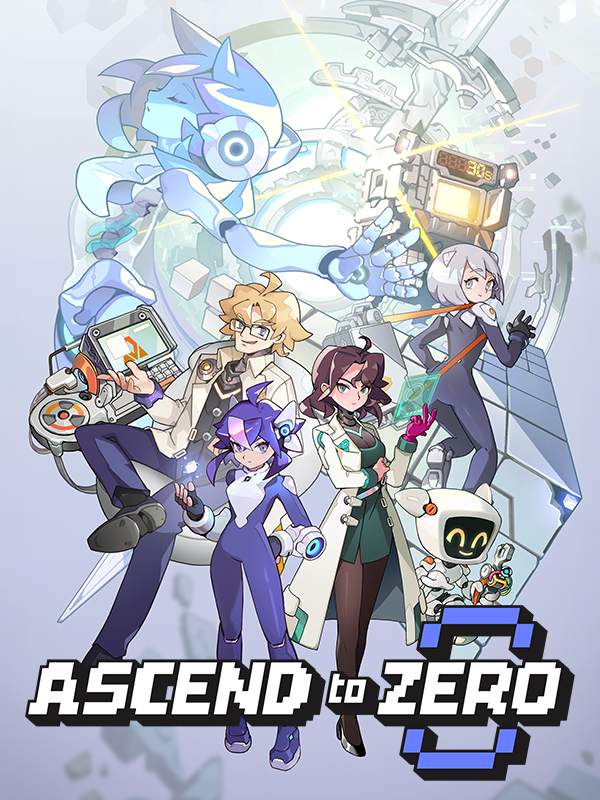

Roguelike genre fans have been feasting in 2026. Almost monthly, a new indie roguelike appears from the shadows to steal countless hours from unsuspecting fans, trapping them in seemingly never-ending loops that inject adrenaline straight into the bloodstream. Roguelikes emphasize gameplay, and that’s exactly what Flyway Games accomplishes with Ascend to ZERO. Ascend to ZERO is a culmination of solid sound, visuals, and design, wrapped neatly in a roguelike that can hook fans for hours.
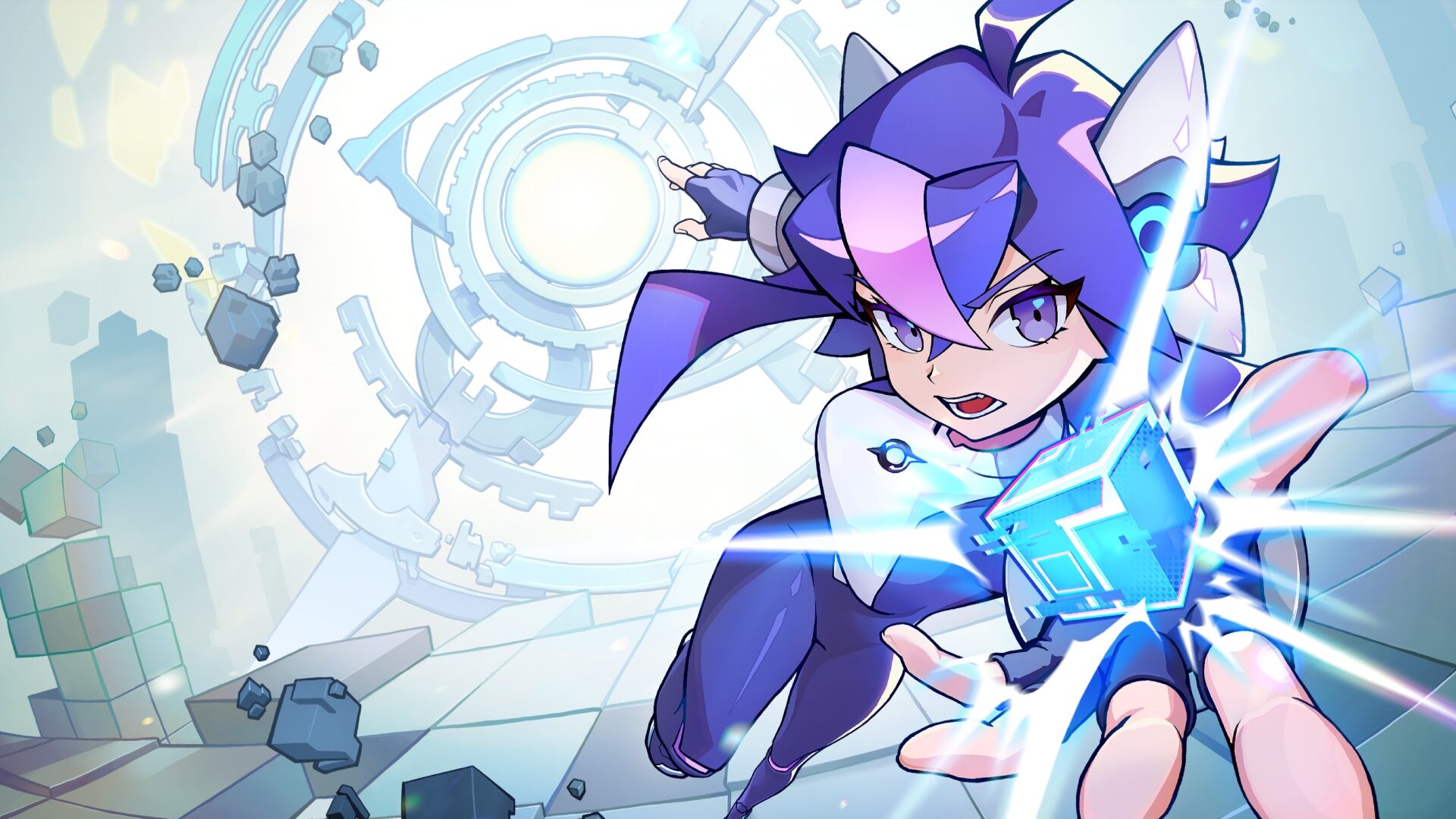
Ascend to ZERO kicks off instantly by showing you the ropes and the characters you will meet on your adventure. You are neatly tossed into a flashback as Ascend to ZERO’s good-guy equivalent to GlAd0s (its name is ????) shows you the ropes and explains why you’re here. Like The Rogue Prince of Persia, this is where you learn your Chrono Child can stop and start time at the press of a button. This is also where you learn the world is in ruin, and all your friends have died from catastrophe. Ascend to ZERO asks the player to travel back in time before calamity, and save your friends and the ruined world before it happens.
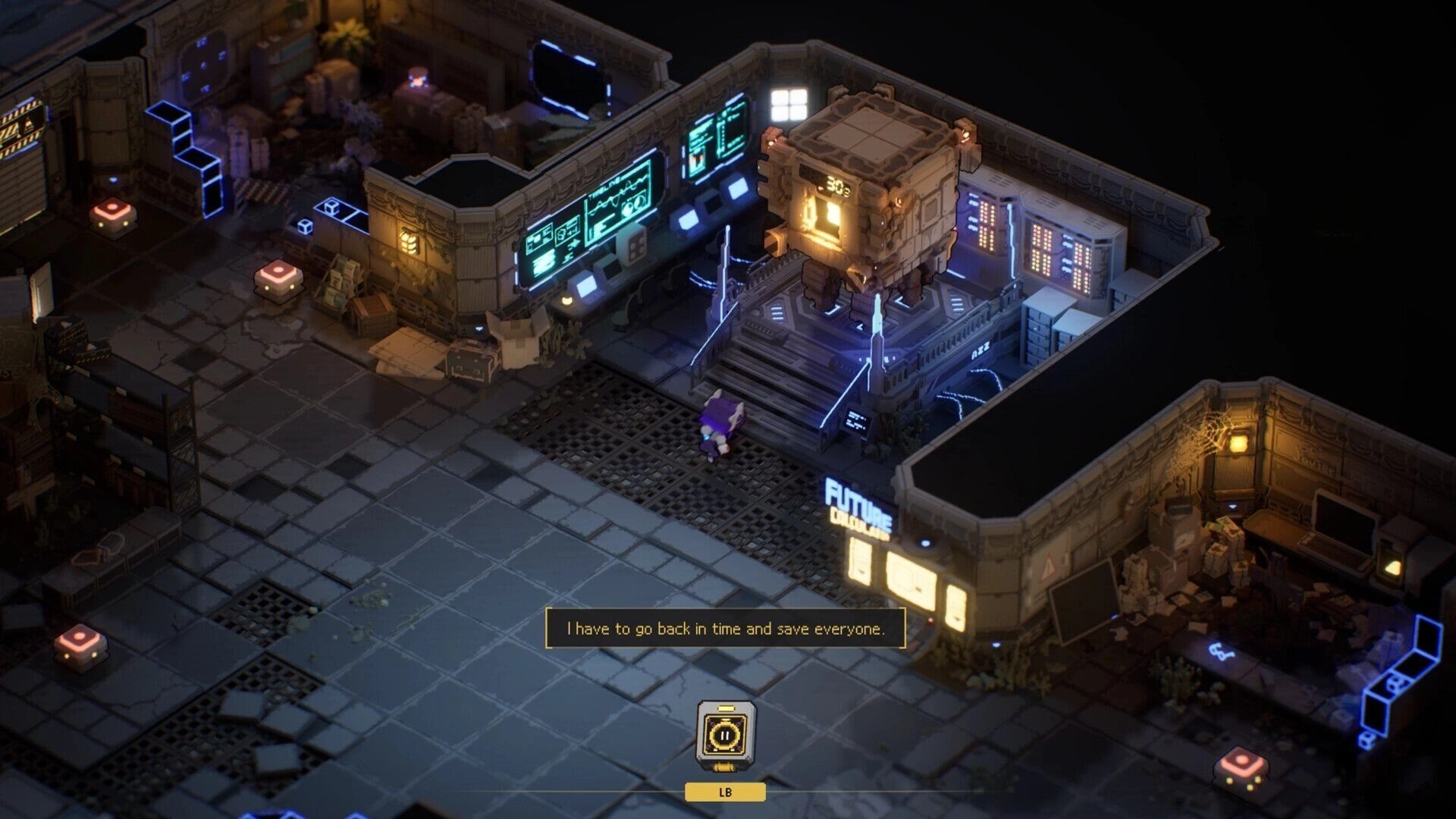
While this does sound like the synopsis of nearly every sci-fi time travel B-movie, or any one-off episode of Family Guy, Flyway Games makes time management the title’s main feature, and it stands out from the rest of the roguelike pack due to it. In Ascend to ZERO, you are racing against the constantly dwindling clock to finish missions on each dive to the past, and missions feel important because of this. This is bullet hell with a time limit, and I dig it.
After each dive into the past (and possible failure), you return to your hub that slowly increases in population from the people you save from the past. Each Ascend to ZERO NPC has its own purpose, and your efficiency increases during runs with the help.
NPC Gabriela helps upgrade your latent abilities that are permanent for each time machine run; Seis allows you to purchase equipment, weaponry and even a bazooka—you get the picture. Your Chrono Child wields a variety of weaponry on par with Nier: Automata’s 2B, and she uses them the same way; you can even snag weapons like a crowbar (maybe a nod at the hero Freeman). My favourite is the knife, as it appears to be a small blade duct-taped to the head of a broom handle. Flyway added charm to this ascension.
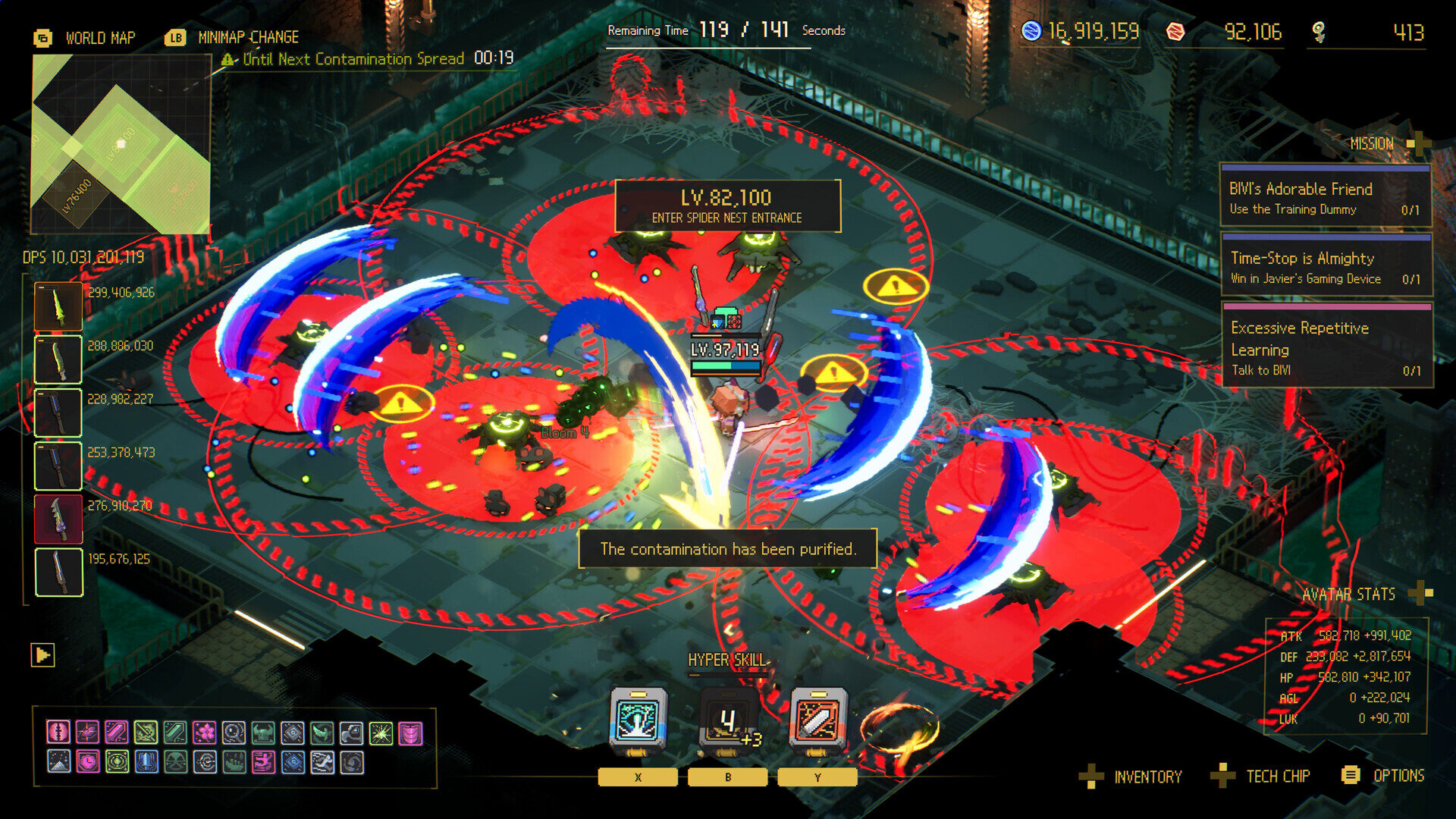
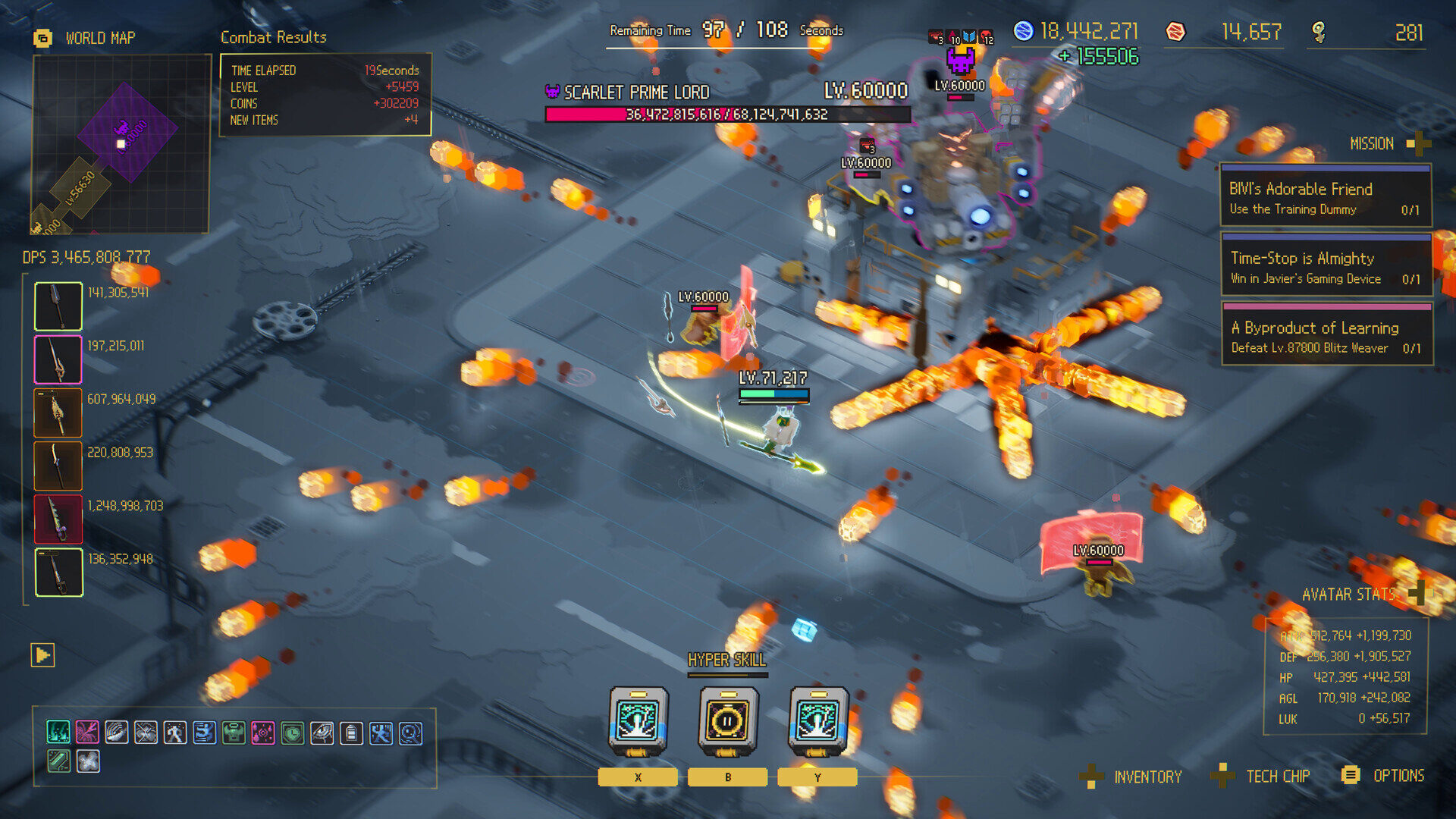
Where Ascend to ZERO really struts its stuff is during each time-machine dive. Each dive goes down the same non-generated hallway filled with enemies, and designed to kill your Chrono Child. The RNG curveball in this ascension is where ???? helps you by gifting you random items, and when enemies spill items on the floor. This different approach allows you to try many new builds and really lets you break the game.
“Ascend to ZERO is a culmination of solid sound, visuals, and design, wrapped neatly in a roguelike that can hook fans for hours.”
After a certain mission concludes, you can change avatars, and instead of the Golden Gunslinger and the Chrono Child (all of the names appear to also feature gratuitous alliteration), I favoured the Blade Blossom, as her main ability shreds rooms full of enemies with a swift katana strike. Ascend to ZERO lets players tinker with their build, equip new avatars, gadgets and other items to really put a beating on the past, and each player can tailor their gameplay experience to how they want to play. Flyway doesn’t tell you what’s right and wrong; you must figure it out, and it’s a genuine trip when combos in your build work.
In practice, I was able to put absolute punishment on the rooms of Ascend to ZERO as the upgraded version of Blade Blossom. After upgrades, you can unlock their ultimate ‘Hyper Skill,’ and it’s a souped-up version of the character’s signature (or final) move when time stops concludes. The way Ascend to ZERO’s systems work feels more like chess than action, as your run lives and dies with your build. Bad builds can’t be saved by superb gameplay this time around, as the constant timer will end your run if you don’t move.
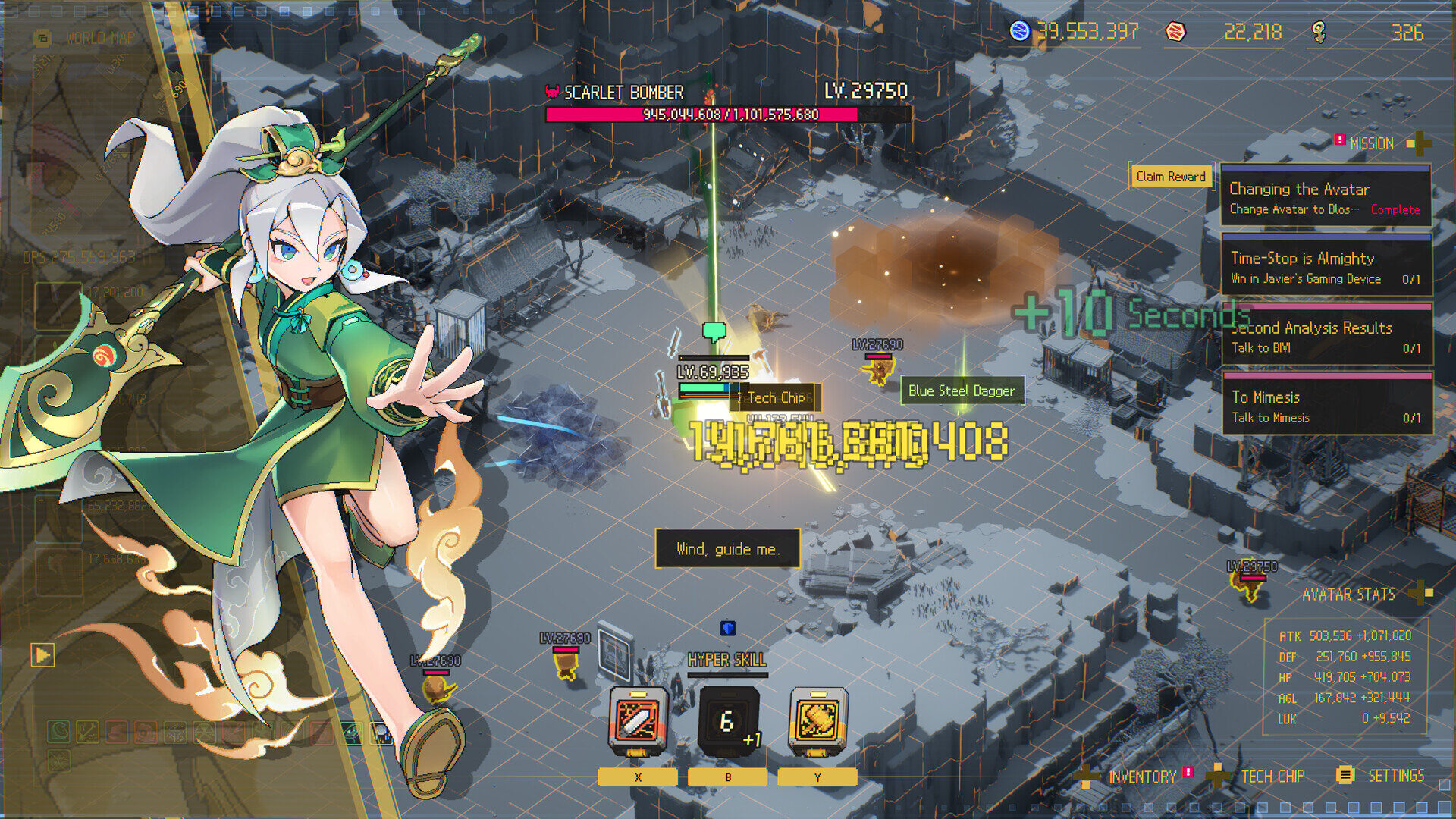
Where Ascend to ZERO falls short is its enemy design and in-game art style. Since Gundam launched their SD line, I found the items just like the words: Super Deformed. This is how I view the characters of Ascend to ZERO, and I can’t shake it. That being said, this may be “a me” problem, and character portraits are detailed and look very impressive. To me, this makes the pixelated big-headed character designs stick out more in the wrong direction.
When on a mission to the past as a timeline janitor, each room becomes very easy to map and read because the title uses preset stages instead of generated stages like Hades or Diablo IV uses for its dungeons. While this works awesomely when making a new character build and trying it against the hordes of Ascend to ZERO, it unintentionally shortens the nuance to each room, making it truly feel like you are doing the exact same thing over and over again (at least until you finish each overarching level).
On top of that, while Ascend to ZERO has a brilliant premise and a solid gameplay loop hastened by a well-received time limit, it somehow follows the same formula used by other roguelikes (beat a room, get a power-up, repeat). This bleeds into each run, making all runs (even the victories) feel less impactful. While these gripes aren’t game-breaking by any means, they made my experience less enjoyable.
Ascend to ZERO looks good, it feels good, and it is a good time, especially for fans of the genre. Flyway Games’ focus on gameplay shows, as each function in Ascend to ZERO works exactly as intended and feels great in practice. The team’s decision to give players a time limit really puts Ascend to ZERO in its own category in a good way, with excellent gameplay, build designs, and sound work that gives the entire experience a unique identity. However, repetitive dungeons, conflicting art styles, and a safe equation stop this title’s ascension to great, considering the genre is now flooded with new options. For roguelike fans, Ascend to ZERO should be given a serious look.