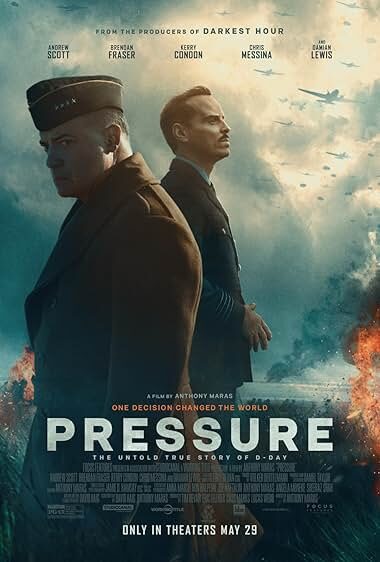

Pressure is based on a stage play of the same name by David Haig, who served as the co-writer of the script for this film. In the tense 72 hours before D-Day, and with the fate of the free world hanging in the balance, the film follows General Dwight D. Eisenhower and Captain James Stagg as they face an impossible choice: launch the largest and most dangerous seaborne invasion in history or risk losing the war altogether.
Almost everyone knows what happened on D-Day—June 6, 1944—but does anyone remember the weather around that time? Pressure shed light on an overlooked aspect in successfully planning and executing D-Day: the weather. One of President Eisenhower’s most famous quotes was shown by the end of the film: “We had better meteorologists than the Germans,” in response to a question about the success of D-Day.
While most of those who attended history class know of D-Day, a rare few knew how it almost happened on a different date. This film perfectly captured a significant moment and the people who were pivotal to the success of Operation Overlord (D-Day codename). The one-hour and 40-minute runtime was enough to build the tension and drama needed to tell this small story within World War II’s six years of devastating battles.
The opening of this film was a perfect tone-setter for the rest of the film, living up to the name—Pressure. Codename Exercise Tiger/Operation Tiger was one of the rehearsals for D-Day and a complete disaster. It was a massive failure and a huge responsibility on Eisenhower’s shoulders, as hundreds of men lost their lives from friendly fire and miscommunication. I liked this initial premise because it showed that the Allies and Eisenhower were seeking a major win, such as the successful execution of D-Day in Normandy, France.
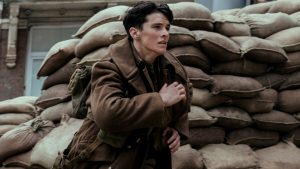
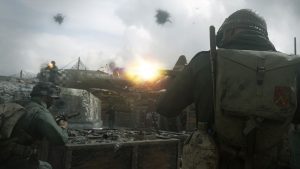
The cinematography of Pressure was top-notch, with so many cloud time-lapse shots! While this film felt like it did not need a huge budget, aside from paying for some big names, it did not feel cheap. I thought since this war movie was about meteorological predictions for D-Day, we would not actually see any World War II scenes. Surprisingly, the film managed to show some off with smart blocking. And it was a smart decision to use real-life footage captured on D-Day as well.
“Scott and Fraser put on an acting masterclass.”
Coming off his hot Oscars composer streak with All Quiet on the Western Front and Conclave, Volker Bertelmann scores Pressure. The way Bertelmann scores with violins at the forefront always invites a menacing presence. There are a few key light piano moments in either the sombre parts or parts where Stagg’s curiosity peaks. Overall, I found the score in this film the least creative among his latest Oscar-winning movies, but distinct enough to be recognized and felt.
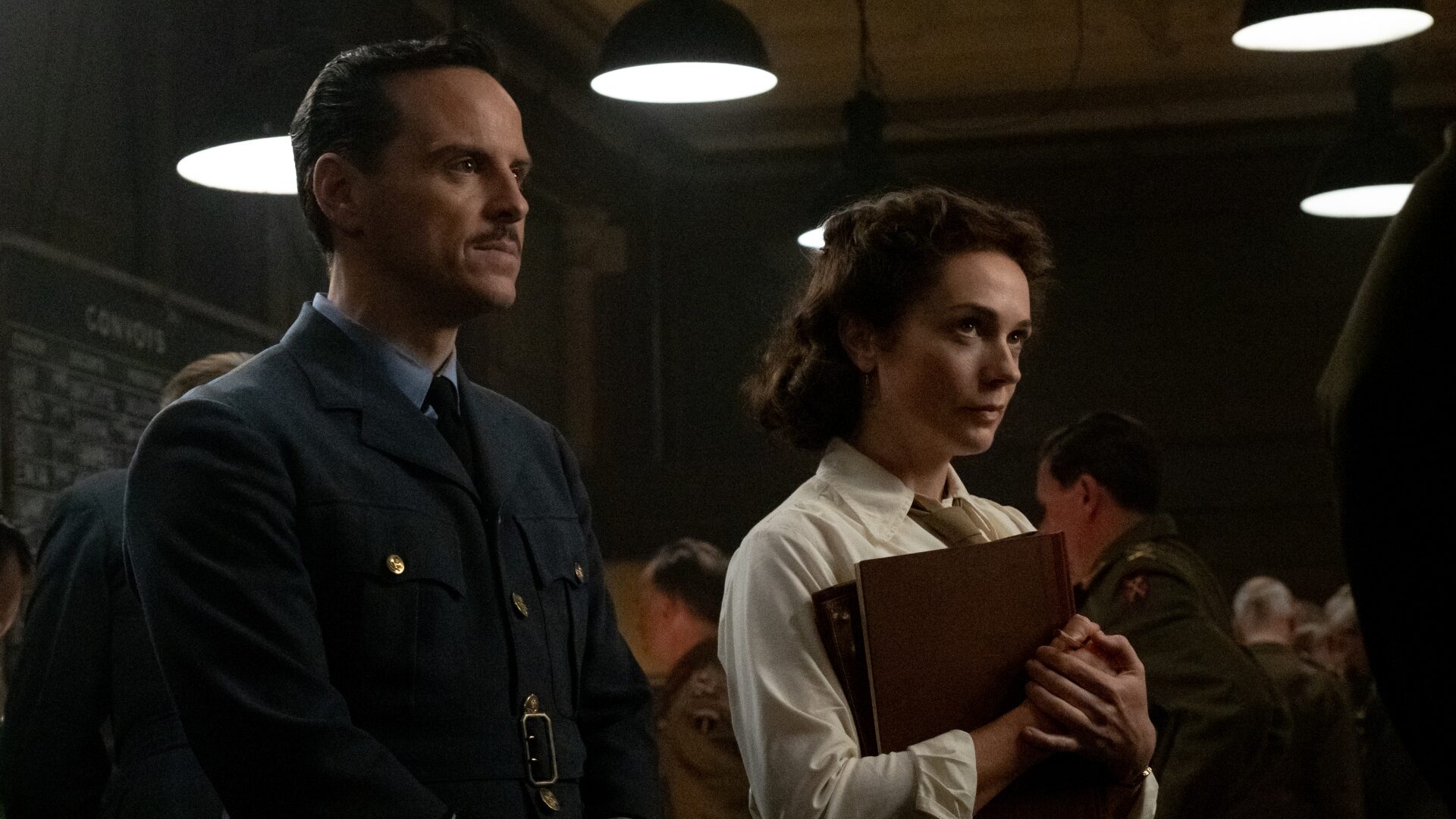
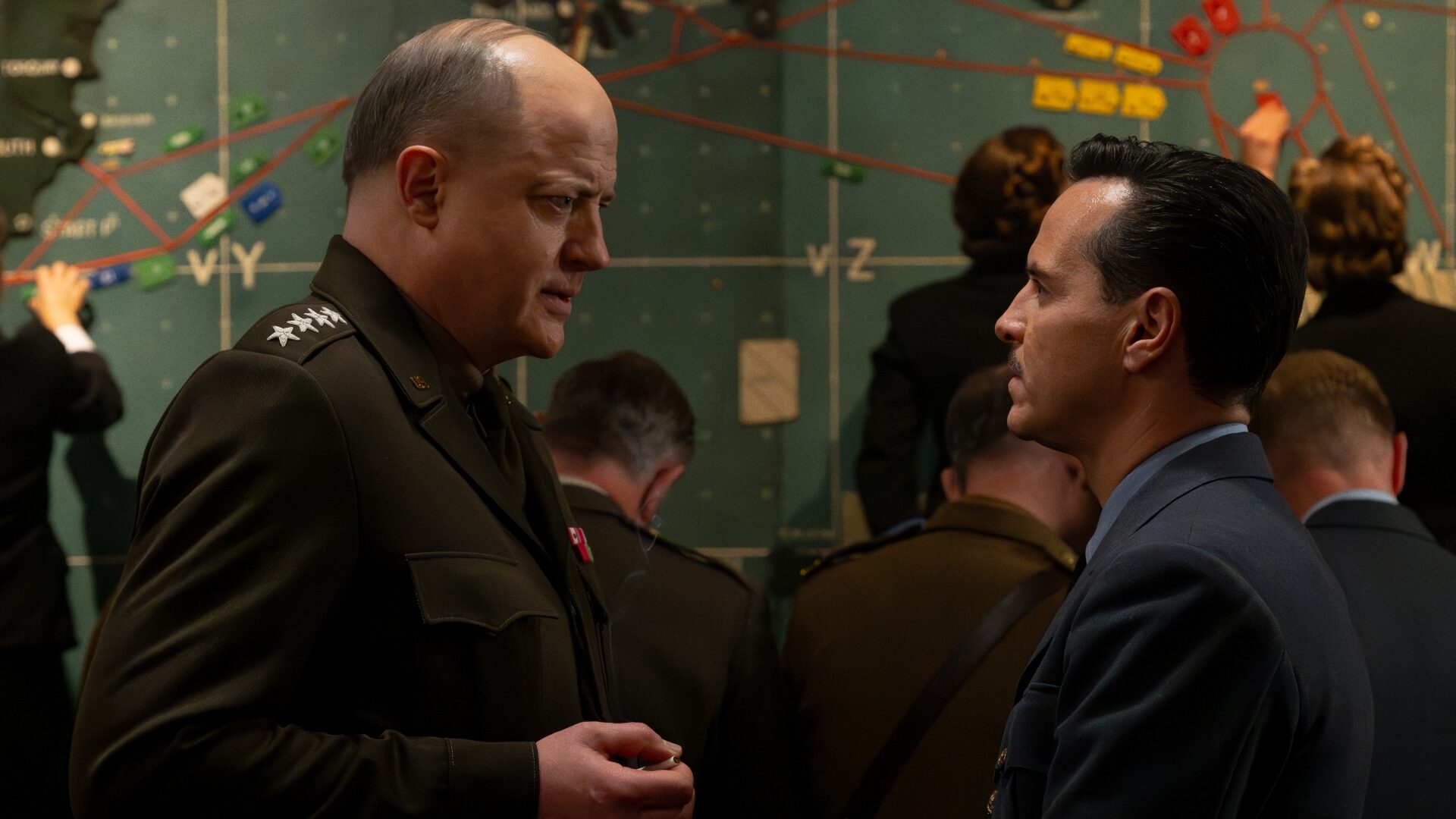
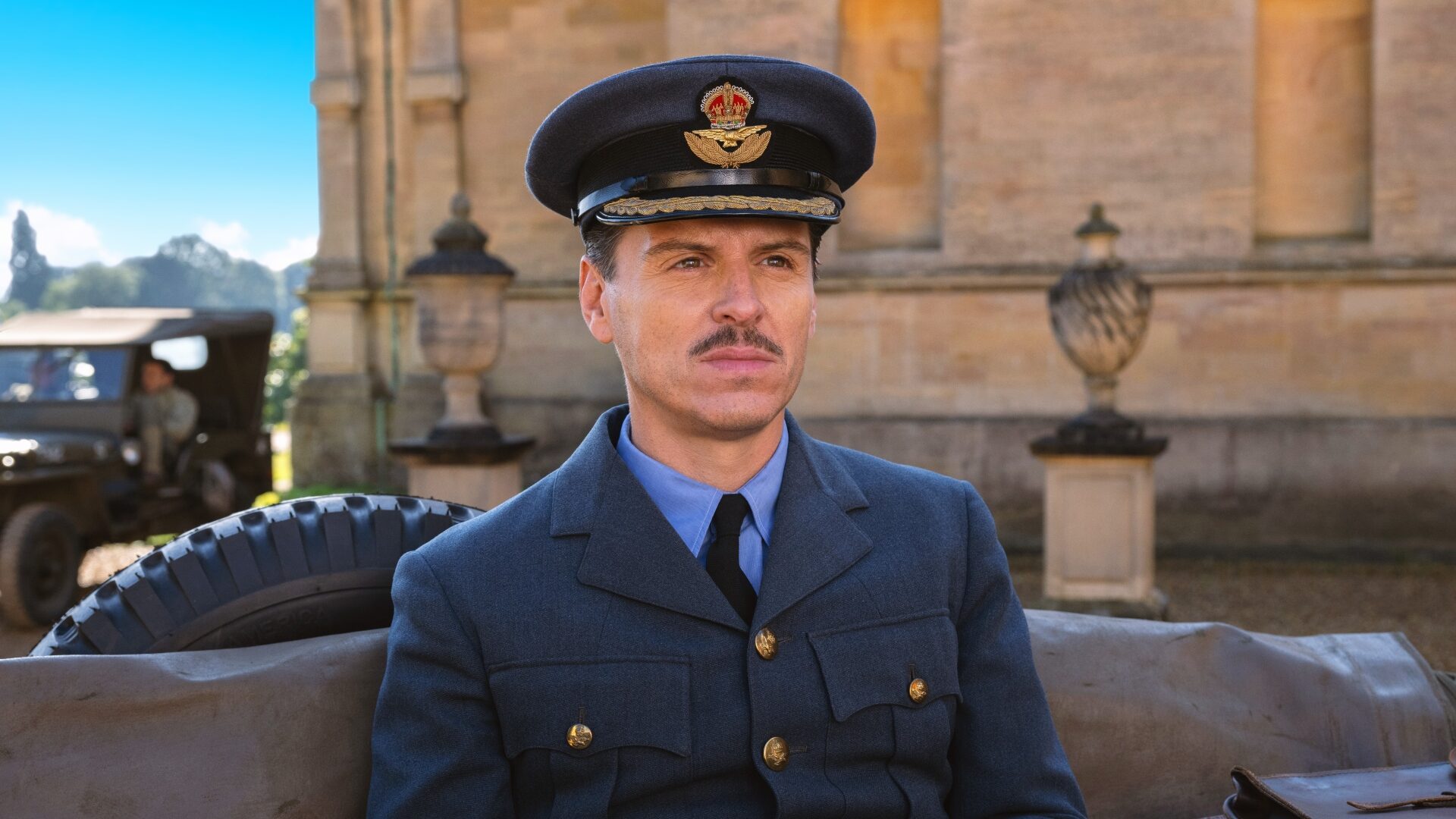
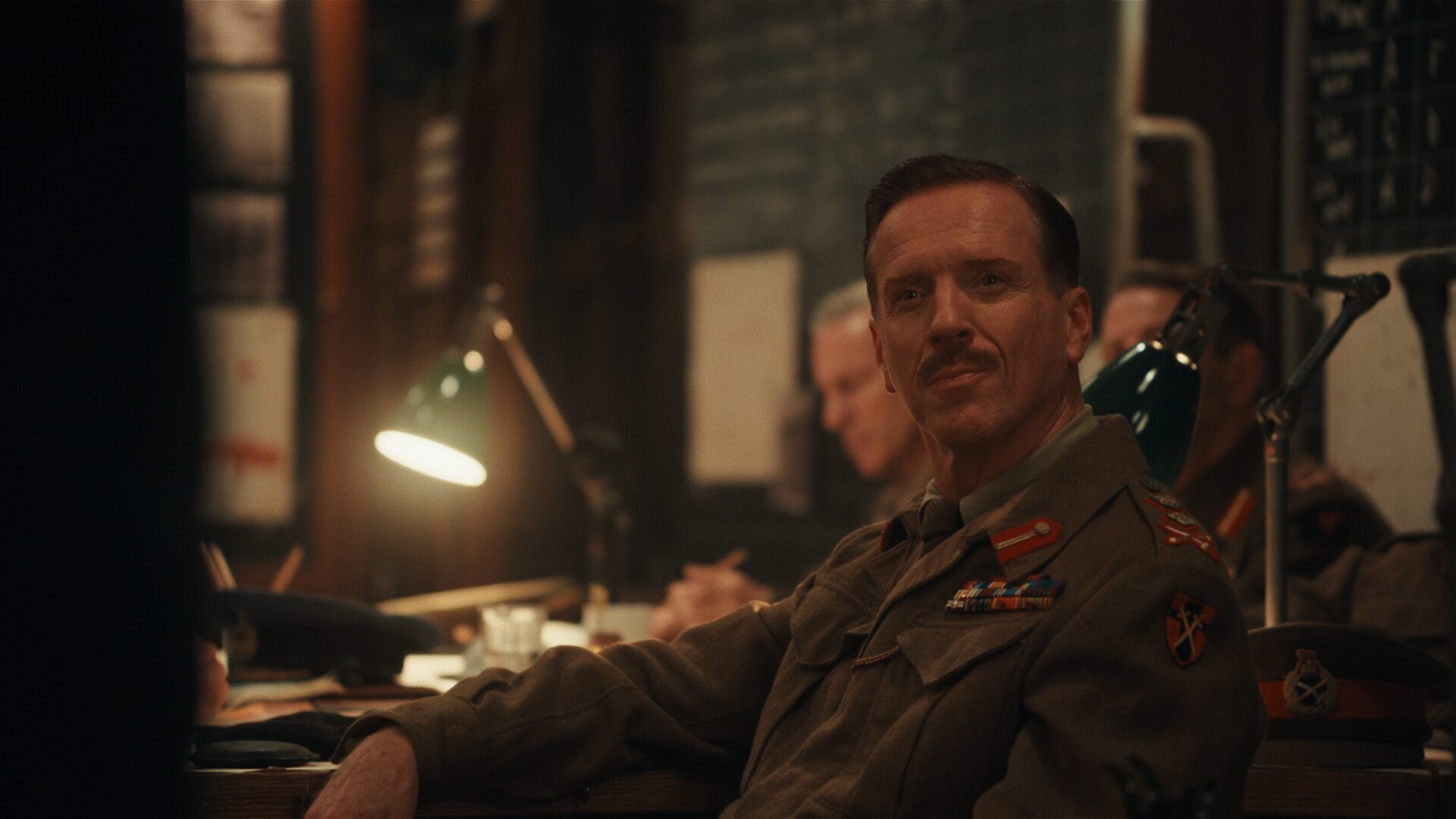
For the most part, Andrew Scott, Brendan Fraser, Kerry Condon, and Damien Lewis played their parts to perfection. Chris Messina’s Irving Krick butting heads with Stagg as meteorology rivals was not what I expected from the two actors. It was cool to see antagonists in a World War II film duke it out in a more civil manner than pit warring sides against one another. Condon, as Eisenhower’s assistant, Kay Summersby, worked so well with her one-on-one conversations with both Scott and Fraser.
I could not pin down what U.K. accent Lewis was putting on for Bernard “Monty” Montgomery, but it perfectly fit his snobby, arrogant character. It was off-putting at first, and stayed off-putting and douche-y, making me want to punch the man more than Stagg did. Still, I found he surpassed his limits while Messina felt like he was playing any of his other roles. I wanted more out of him in this time-ticking story where everyone can feel their hearts beating out of their chests.
On the other hand, Scott and Fraser put on an acting masterclass. Both actors brought one of the rawest emotional depictions of real people I have seen in a while. I could never imagine an angry Fraser in any of his roles, but there is always a first. Pressure brought out that full anger in Fraser, and it worked to drive up the impending decision to send hundreds of thousands of men to Normandy.
Pressure contained all the elements of a good historical fiction film, from a captivating story and premise to its entertaining cast. While some liberties were taken a bit too far, the faults are minuscule. If you are into historical dramas about World War II, this should be up your alley. The bonus is having a star-studded cast to back it too.