
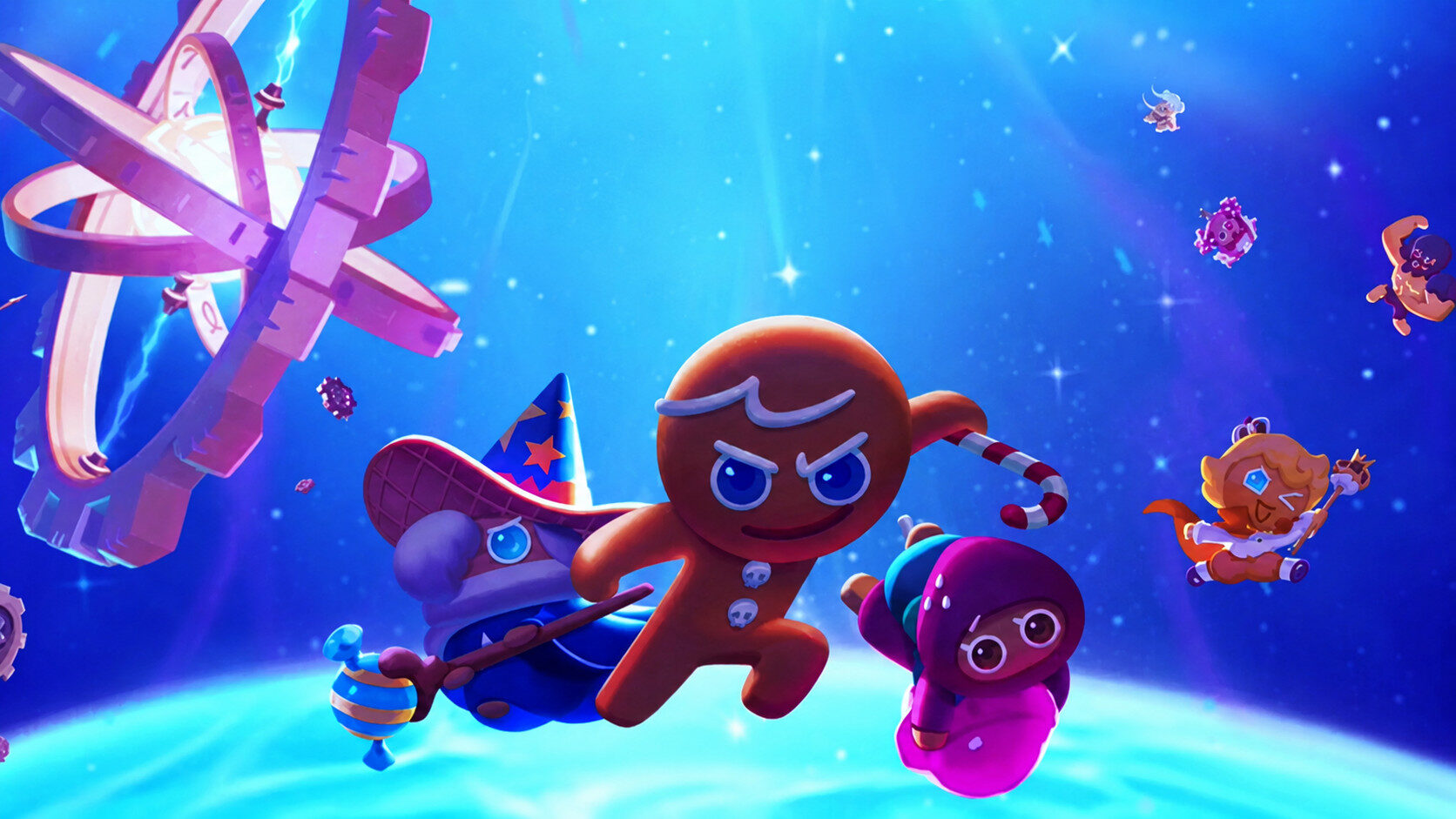
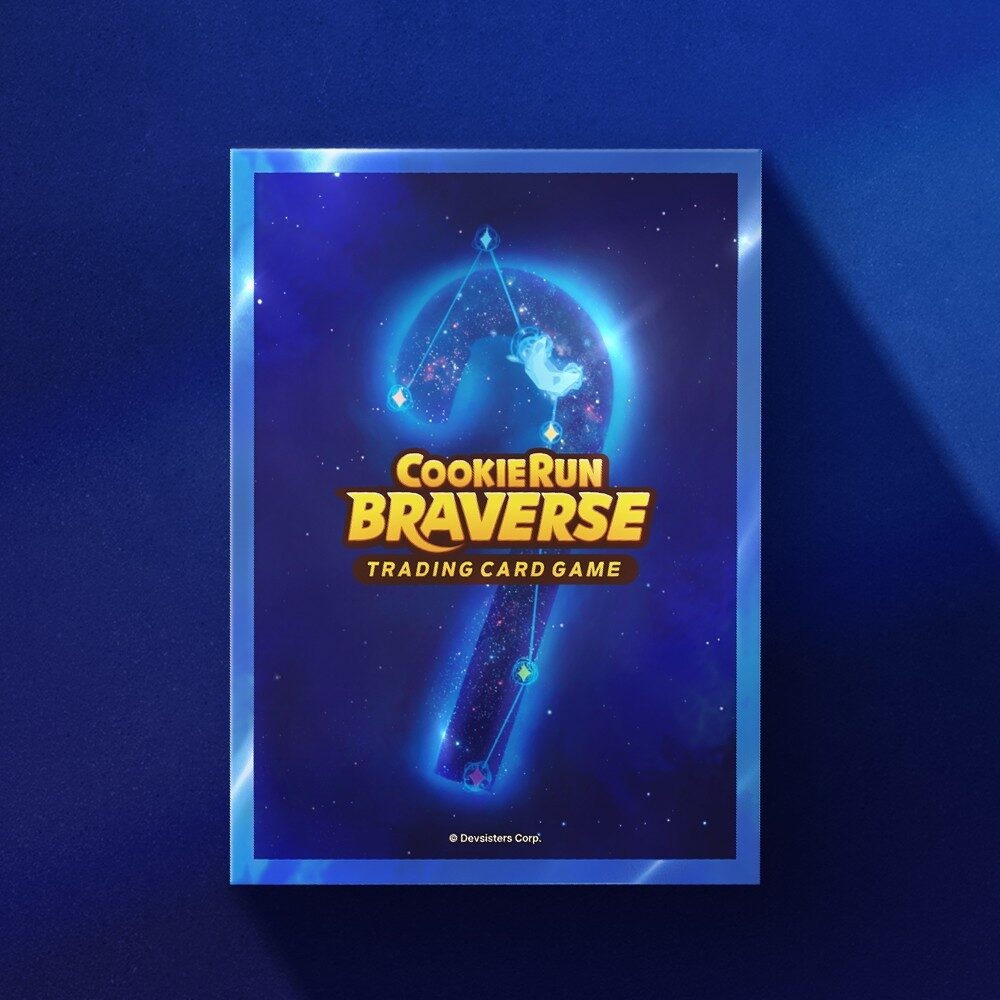

CookieRun: Braverse Trading Card Game fills the gingerbread-shaped hole in the trading card game market. It’s a solid TCG, working well as quick games between other more demanding games like Magic: The Gathering, or for younger kids looking for their first card game. The art is cute, and the game offers a surprising amount of depth. While the flip effects could use some more diversity, CookieRun: Braverse Trading Card Game is a great way to introduce someone to trading card games.
A game of CookieRun: Braverse Trading Card Game usually takes about 15-20 minutes. For a TCG, it’s an ideal length, letting you hop in and rip through a handful of games in less than an hour. I’m an avid TCG player, with Magic the Gathering and ONE PIECE being my main two currently. CookieRun: Braverse Trading Card Game may be the simplest out of the bunch, but it’s also the most accessible.
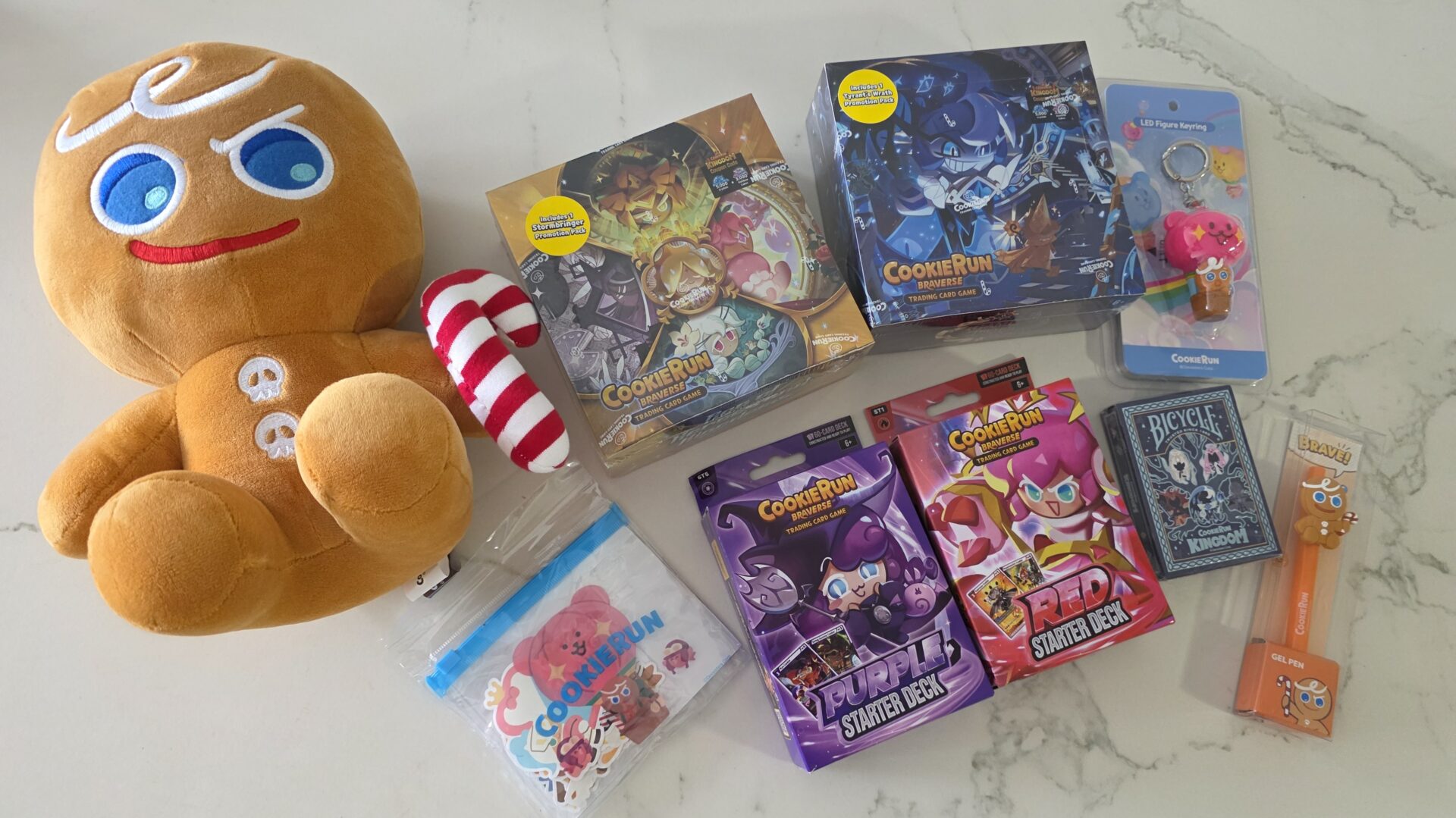
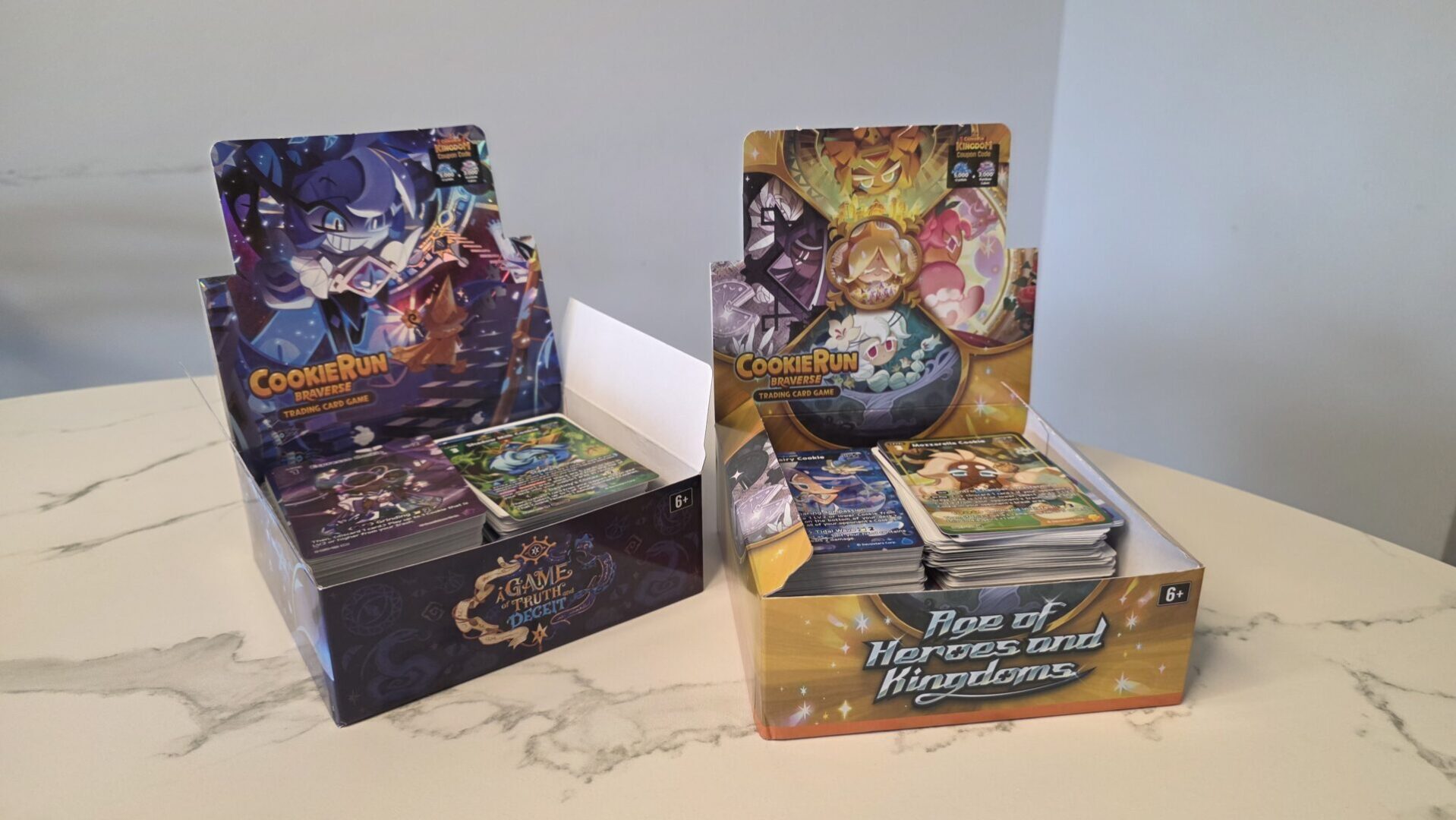
For review, I was sent two starter decks (Red & Purple) and two boxes of the Age of Heroes and Kingdoms and A Game of Truth and Deceit sets to check out. The starter decks include 60 cards, with the Red deck being an aggro deck, while the Purple is built around disruption and discards. The Red deck features a lot of cards that deal damage quickly, with higher damage output across attacks and skills. Purple, on the other hand, removes enemies easily while also making the other player discard cards from their hand.
“CookieRun: Braverse Trading Card Game fills the gingerbread-shaped hole in the trading card game market.”
Both decks are solid and play well against one another; neither felt comparatively weak or broken. For those looking for an easy way into the TCG, both of these starter decks feel like viable introductory decks. None of the cards are overly complicated, and most make sense on the initial read. There are six colour types in total (Red, Yellow, Green, Blue, Purple, Pure), each offering a different play style.
Game flow in CookieRun: Braverse Trading Card Game is simple, but the way the cards interact adds a good bit of complexity. The game board is divided into several areas: Battle, Support, Break, Stage, Deck, and Trash. The Battle Area is where your Cookies (monsters, basically) go, with a max of two on each side. The Support Area acts as your mana base, tapping cards to pay costs for attacks. The Break Area has your fainted Cookies and also acts as the scoreboard. The Stage Area holds Stage cards when played, while the Deck and Trash are self-explanatory.
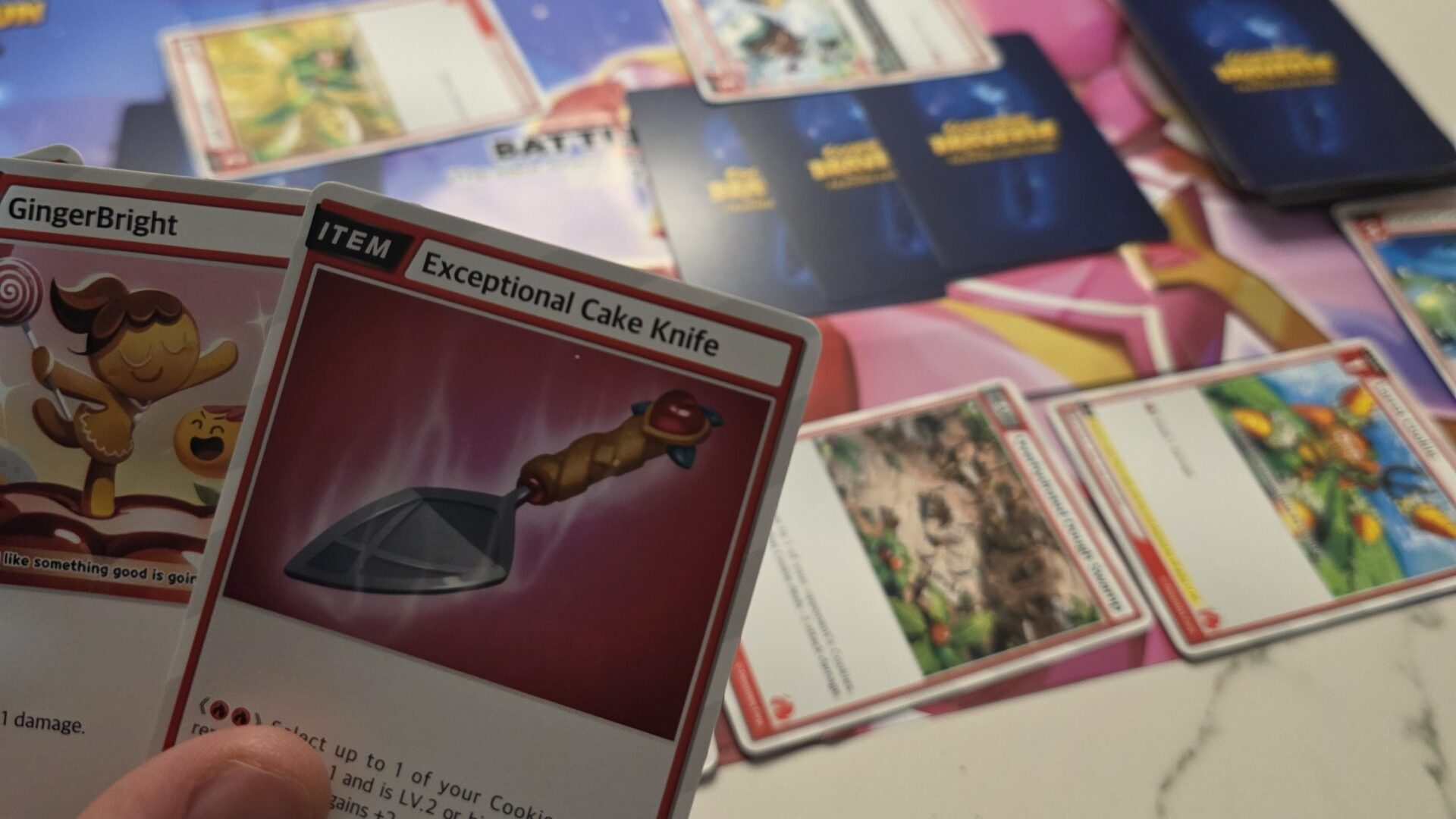
Each card is separated into one of three types: Cookie, Item, and Stage. Cookie cards do the fighting, adorable baked creations ready for war. Each Cookie has a level, HP, an attack, and some have skills or flip effects. While the cards themselves don’t cost anything to summon, each attack does have a mana cost, along with the skills. When a card’s HP drops to 0, it goes into the Break Area, its level contributing to the win condition. If a player’s side reaches level 10, they lose.
For example, the Espresso Cookie is level 3 with 5 HP. Their attack deals 3 damage and requires 3 fire mana to cast. They have a skill that raises their damage output by +1 if your break area is Level 6 or higher. It’s a solid card with high damage output and health that gets even better when you’re in more dire straits.
Item cards, on the other hand, offer a myriad of effects. Some raise damage, others lessen it, while some can remove cookies from the field entirely. Stage cards can be used over and over again, with the Burning Jelly Volcano stage, for example, raising attack damage for a Cookie.
For the mana base, there aren’t any specific mana cards like the DON!! Cards in ONE Piece or the land cards in Magic: The Gathering. Any card can be added to the support area to use as mana, with them offering one mana of their corresponding colour. This adds a ton of flexibility to play, letting you choose which cards to use for their abilities and which to offer to the support area. There is one thing to keep in mind: if your Cookie faints, and you can’t replace it immediately with another, you’ll lose.
“CookieRun: Braverse Trading Card Game may be the simplest out of the bunch, but it’s also the most accessible.”
The secondary win condition creates a really interesting push/pull scenario. You need to have at least one Cookie down at all times. Do you play a second, and if so, when? Do you immediately replace a second Cookie with another body on the field, or do you wait until your turn so you can use them sooner? New lines open up as you consider timing, but for those who are newer to TCGs, the cards offer enough to be able to make some great plays and win some rounds.
Where CookieRun: Braverse Trading Card Game falters the most is in its flip effects. Whenever you play a Cookie, you take as many cards as they have HP from the top of your deck and put them face down underneath the Cookie. As they take damage, the cards get flipped. If they have a Flip effect, it activates immediately.
While this sounds interesting on paper, there are only two Flip effects across all the cards I’ve seen, including the booster boxes. One restores 1HP for the Cookie if you discard a card (unless they die in the attack), another lets you draw a card. That’s it. They’re both fine effects, but when they’re the only ones coming up, they don’t really alter the game flow much. The HP recovery can be solid, but when you’re about to take out an opponent’s Cookie, and they heal up multiple times, and an attack just becomes meaningless, it gets frustrating.
“Game flow in CookieRun: Braverse Trading Card Game is simple, but the way the cards interact adds a good bit of complexity.”
I like the Flip effects and really like the idea behind them, but they don’t offer enough variety. This makes them completely predictable and ultimately pointless. If there were a greater variety of effects, the game would flow much more interestingly. They don’t need to be overly complicated to keep the game’s simplicity intact, but there should be more than just two.
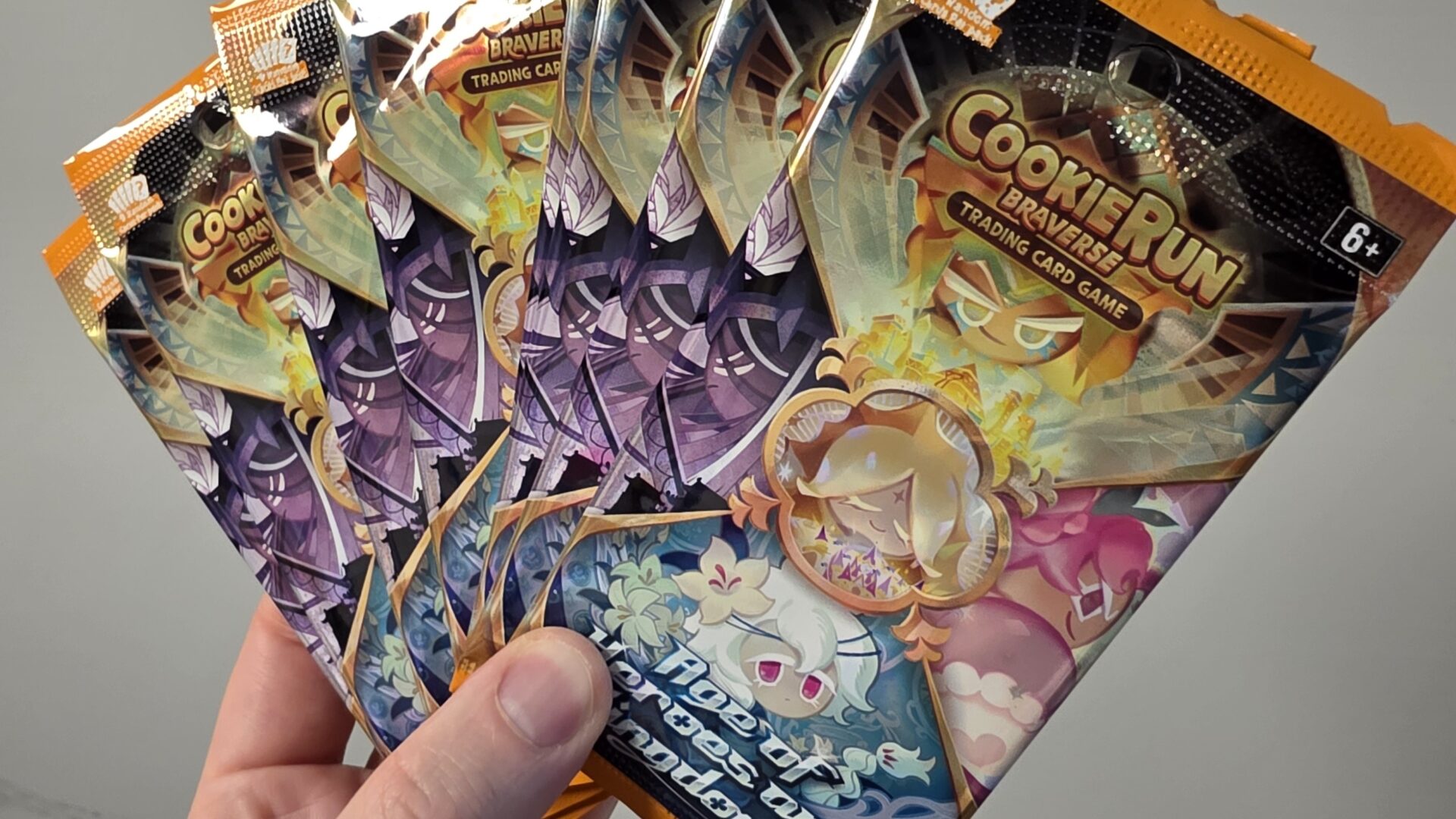
The booster boxes, especially alongside the starter decks, offer a ton of new cards to build with. There are some really interesting Cookies here, with really awesome art styles. Some go full anime, looking like your favourite waifus and husbandos. Each of the booster boxes have their own theme and introduces new mechanics that shake up deck building. Age of Heroes and Kingdoms is themed around Ancient Cookies with extraordinary powers. It introduces Equip cards, new Item cards that can be equipped to Cookies to provide sustained effects, such as increased damage or HP.
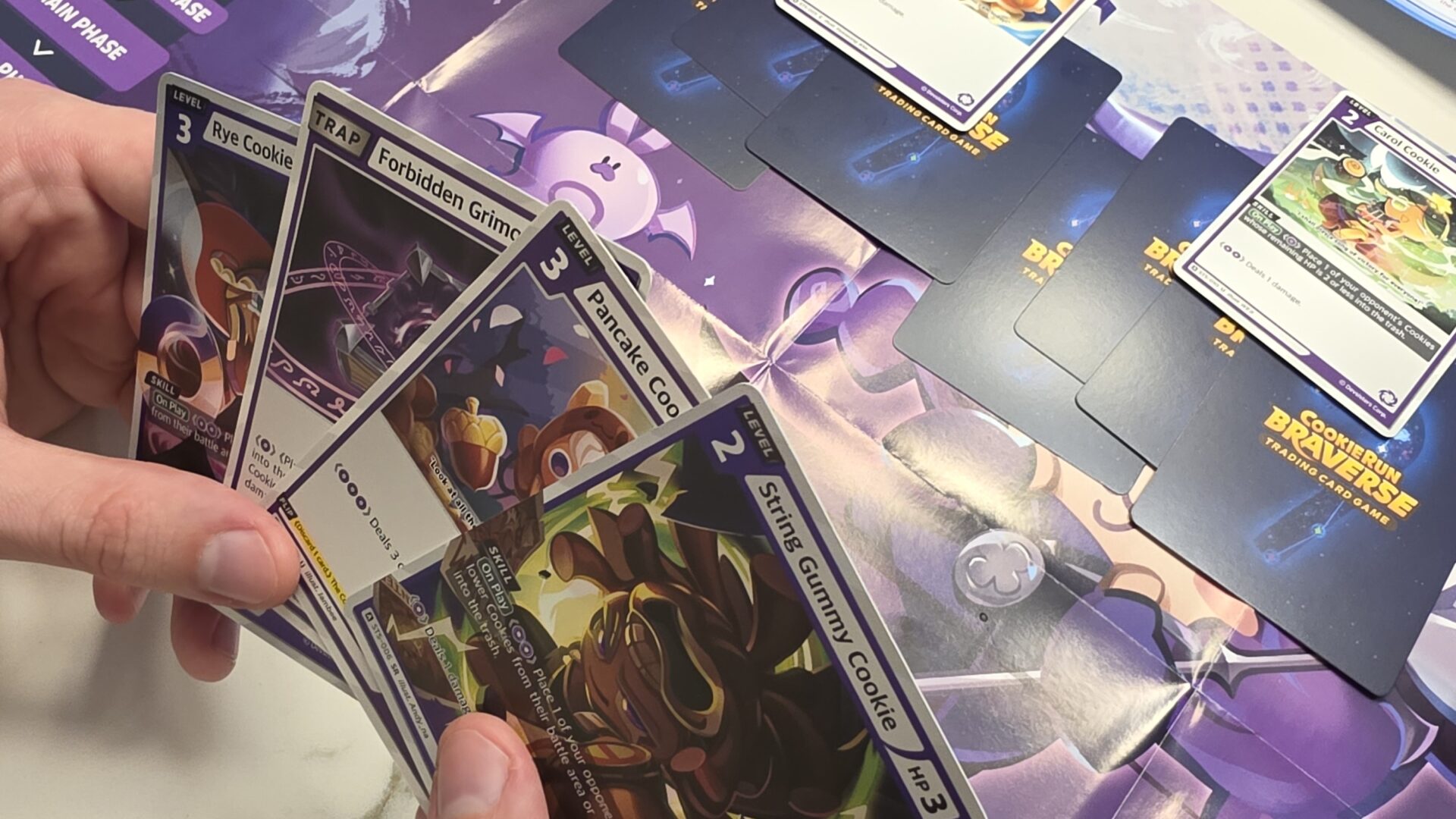
The A Game of Truth and Deceit set is themed around new Legendary Cookies and introduces EXTRA cards. EXTRA cards actually make up an extra deck that goes alongside your regular deck. They have special trigger conditions that allow them to be played, and can make a significant impact when used properly. The conditions are pretty specific, with the Shadow Milk Cookie, for example, requiring a specific number of cards in your opponent’s support area and that a specific number of cards were moved from your support to trash on the same turn.
Each box offers a varying amount of rarities, ranging from Common (C) to Ultra Rare (UR). The SR full arts are cool, with the Cookie art expanding past the card borders. SEC rares have different textures on the Cookies, making them stand out from the rest of the card. Both sets have a ton of variety in their Cookies and accompanying skills, making each of them a worthwhile upgrade for those looking to expand past the starter decks.
Overall, CookieRun: Braverse Trading Card Game is a solid TCG for younger audiences and beginners, or those looking to slip some quicker, simpler games between longer rounds of its more complicated contemporaries. The game flow is interesting and offers a surprising amount of depth; the cards are colourful and cute, and even if the flip effects are few, it’s a fun addition to the TCG library.