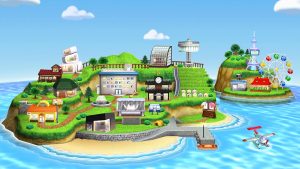


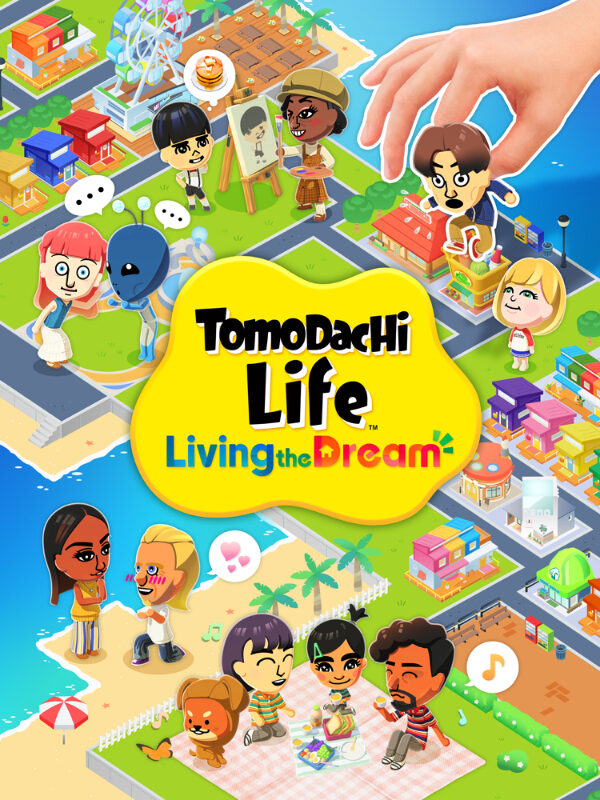

It was a welcome surprise to see Tomodachi Life: Living the Dream during the March 27th, 2025, Nintendo Direct. After the apparent failure of Nintendo’s first attempt to break into the mobile market with Tomodachi-adjacent: Miitomo, I would’ve suspected general investment in the series was minimal.
My experience with the original Tomodachi Life was a bit strange. I had initially passed on it in 2014 because I didn’t see the point in playing another 3DS life-sim when I was still well invested in Animal Crossing: New Leaf. I finally tried it around 2015, and while I was quite enamoured of its quirky style at first, the lack of hands-on gameplay left me bored pretty quickly.

Tomodachi Life: Living the Dream is a bit of a mixed experience—especially if you played its 2014 predecessor. While it’s certainly more active than its predecessor, and I feel like it wants to be a bit more creative, it also feels a bit safer and more predictable. It wants to give the player a lot more agency in how their Miis interact, but at the same time, it loses a bit of what made watching them interact interesting.
“Tomodachi Life: Living the Dream is a bit of a mixed experience, especially if you played its 2014 predecessor.”
If you saw either the February 2026 Direct, then you’ll know what to expect with Tomodachi Life: Living the Dream. While it retains a lot of the same DNA, it certainly feels like Animal Crossing: New Horizons has had a big influence on this sequel. Similar to its predecessors, players still make Miis, give them distinct voices and personalities; however, this time around, they set them loose to live on an island and watch as they walk around and interact with each other.
Players have a lot more authority over how Miis interact this time around, as they can now physically pick up any of their Miis and directly introduce them to others or have them interact with objects. While this does give players a lot more agency over their Miis and can lead to amusing interactions, it’s also a bit of an inconvenience. In all the hours I played—dipping in and out and giving the Miis time to breathe and live on their own—it never seemed like characters introducing themselves or forming friendships on their own, that is to say, without my prompting a connection, or activating a cutscene.
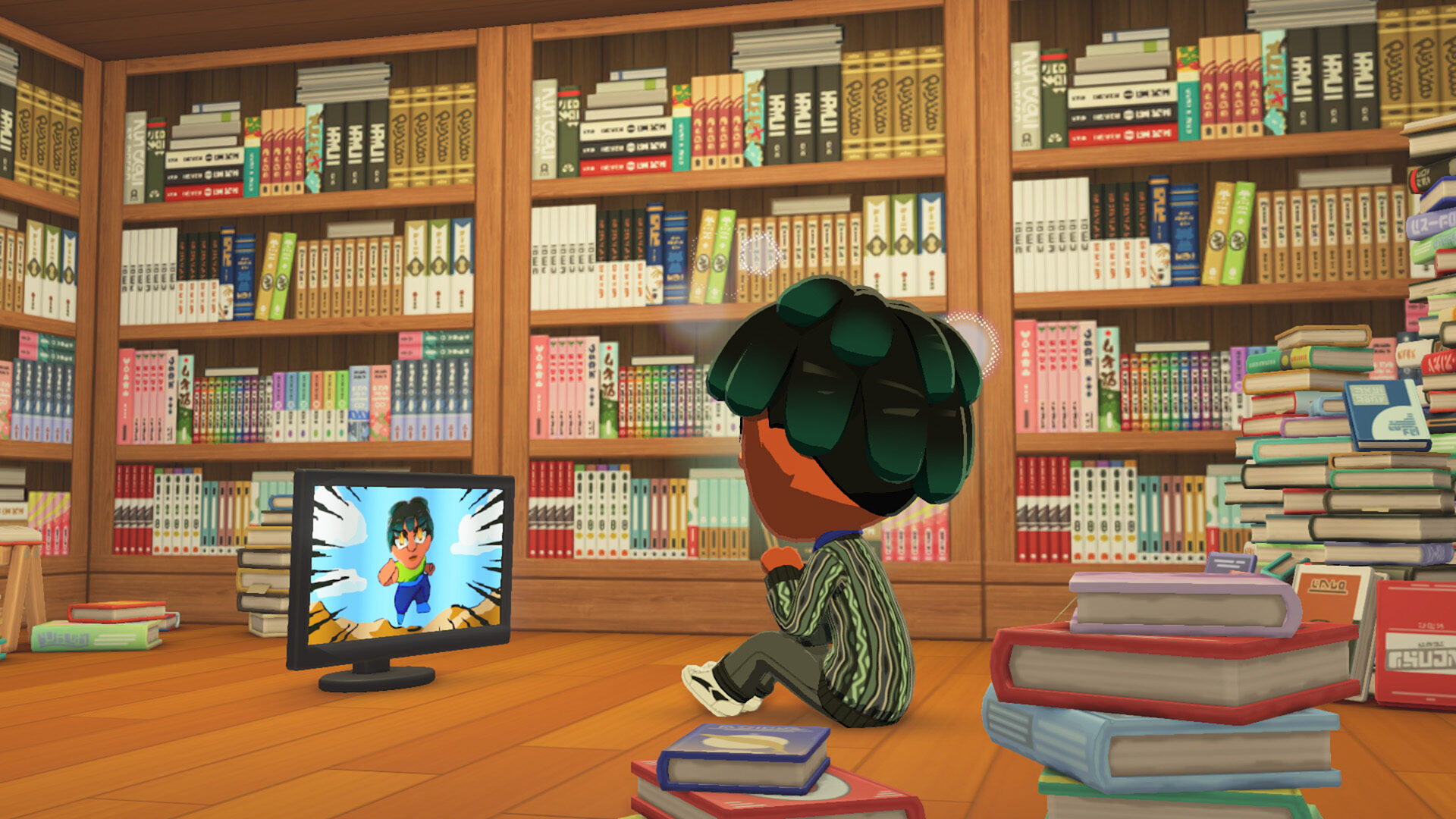
It might sound like a nitpick, and I know this was the case with the previous game, but needing to have every new Mii be selectively introduced to every single character living on the island can start to get incredibly tedious, especially as resident numbers began to grow. Not only that, but I started to see a lot of the same introduction cutscenes over and over, to the point where I began skipping them, which felt like a problem to me because a lot of the charm of the 3DS Tomodachi Life was its illusion of random interaction.
It just seemed a bit to me like, for a game that is positioning itself to be a bigger version of its predecessor, it ends up feeling a bit smaller due to a lack of hands-off, intuitive design. While that isn’t to say Miis won’t sometimes suggest wanting to meet islanders they don’t know, the game could’ve felt so much more alive if it happened more organically, or even when players weren’t looking.
The other big innovation Tomodachi Life: Living the Dream offers is a suite of creative options for Mii and Island customization, however this too feels like something of a double-edged sword. While creating Mii Replicas with the tools available in the Mii Creator was always an art unto itself, unlike its predecessor, this game clearly takes a page from Miitomo—allowing users to apply “Face Paint” to their Miis to allow for more detailed characters.
This allowed me to add characters like Pearl and Marina, Mario and Luigi, and the classic Reggie and Miyamoto with much more readability and ease of creation. In addition to this, as was shown in the Tomodachi Life: Living the Dream Direct, the second major aspect of customization is the “Palette House,” which allows users to create custom designs for a wide range of items.
The Palette House created some conflicting emotions in me. At first, I really appreciated the level of creative freedom Tomodachi Life: Living the Dream wants to give to its players. Like several recent Nintendo life-sims, it’s presenting players with a digital canvas upon which to create a cornucopia of things for both their island and Miis, with the only limit being their imagination. But at the same time, that’s kind of the problem—for players who are less creatively inclined, the actual options the game gives them feel pretty limited.
“Tomodachi Life: Living the Dream is still a fun and silly little game.”
This extends, in a small way, to what Miis get when they level up. Unlike its predecessor, where the majority of rewards for Miis levelling up were treasures for them to interact with—alongside songs, new interiors, or phrases—in Tomodachi Life: Living the Dream, there’s a much more robust selection of “traits” for Miis to be given to expand their personality. And while this makes individual Miis more distinctive, it doesn’t really seem to affect interactions—at least as far as I’ve seen.
By comparison, items which can spark silly interactions between Miis have really been pared down, which seems like an odd step backwards considering the scope of this sequel and the power of the Nintendo Switch. It, once again, feels like a double-edged sword—where players are given a lot of creative options for fleshing out their Mii characters, but don’t really get a lot of unique ways to see them interact.
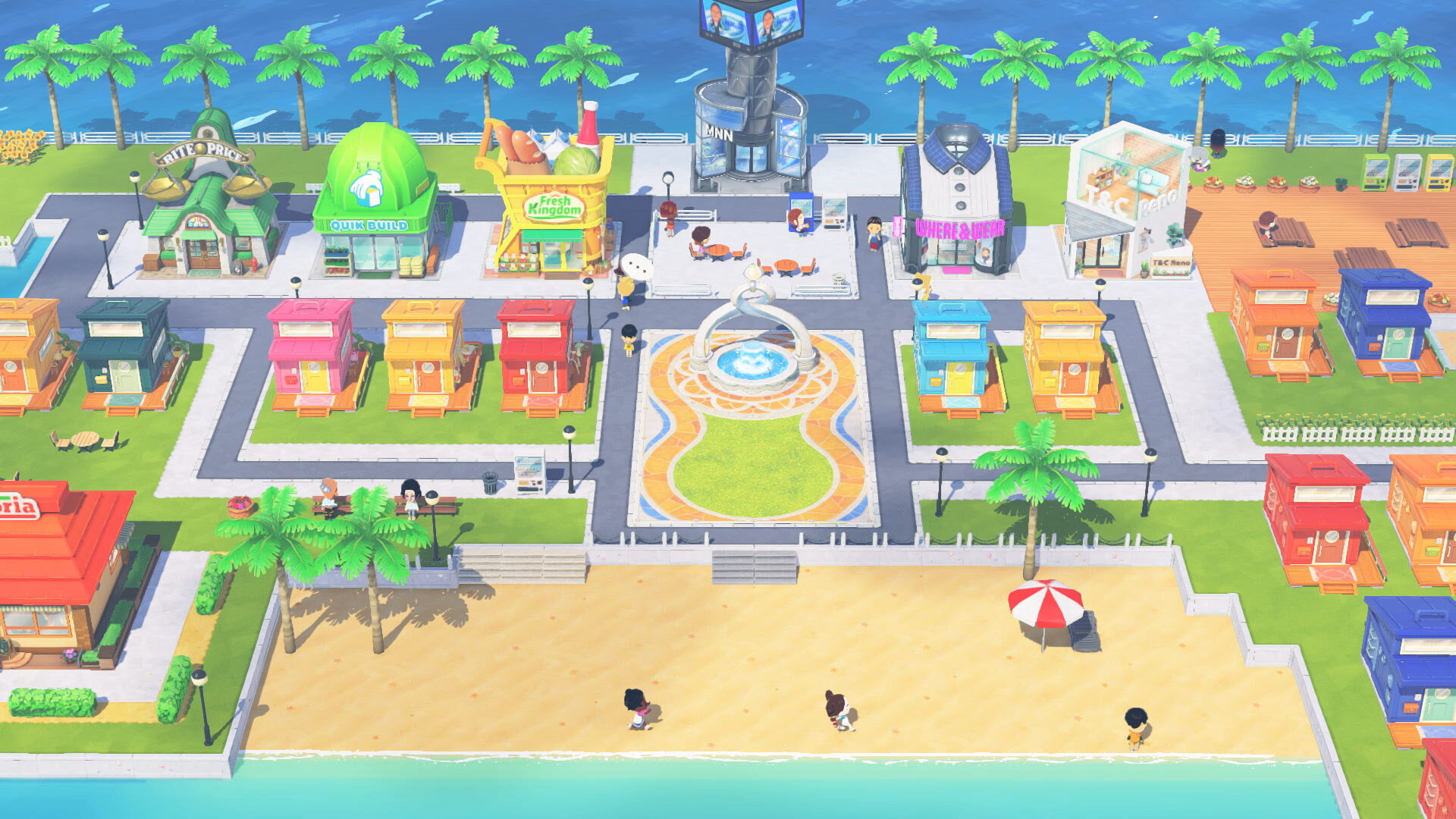
I honestly don’t want to seem like I’m coming off too negatively here because, at its core, Tomodachi Life: Living the Dream is still a fun and silly little game. I think that, much like with its 3DS predecessor, if you spend a little too much time with it like I had to for the purposes of writing this review, it becomes a lot easier to see its shortcomings—and that’s not the way it’s meant to be played.
If you take it for what it is, it is a pretty expansive sequel that does have a lot of fun and silly moments—particularly when you’re not looking for them. Even at moments when I was feeling the most critical about it, I did feel compelled to jump into it every couple of hours. And despite my criticisms, I did find myself enjoying using the Palette House to make little creations and add them to my island.
However, I can’t help but feel like, even in short bursts, Tomodachi Life: Living the Dream does feel a little less imaginative than its predecessor. That, despite the creativity and lighthearted silliness it does possess, a bit of what made its predecessor great has been sacrificed to give the players tools to make their own fun. It’s not an effort in vain, I can assure you, but I just hope that some post-game patches help flesh this out a little more.

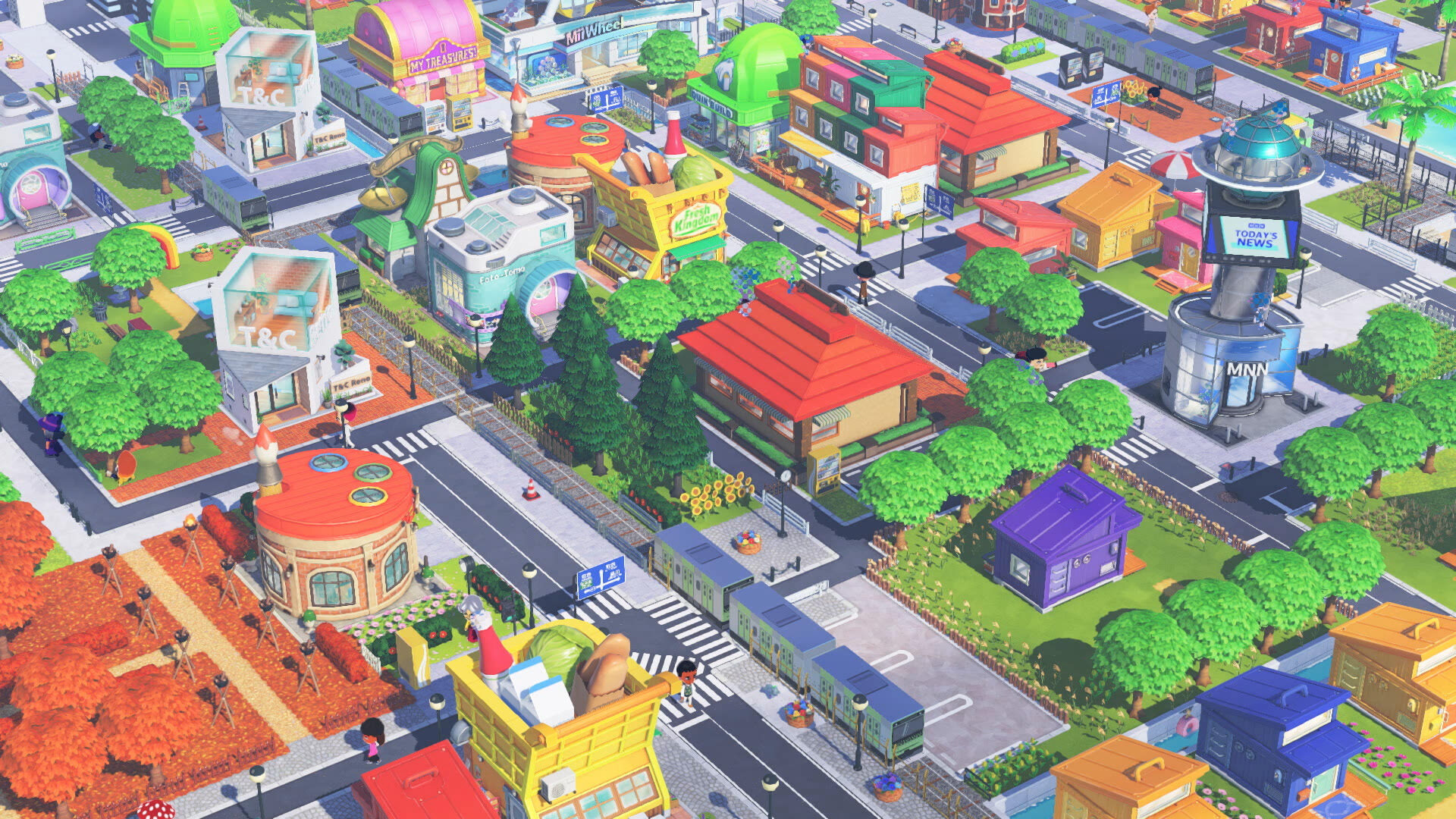
And visually, Tomodachi Life: Living the Dream is a big step up from its predecessor, maintaining the simple and silly style but elevating it with the power of the Nintendo Switch. Colours are much brighter, and the whole game has a cel-shaded aesthetic that makes it feel much more like a living cartoon. Miis, Items, and environments are presented with much greater clarity and detail, and are consistently shown in 1080p, both on and off the dock.
However, unlike its predecessor, Tomodachi Life: Living the Dream has a somewhat dialled-back selection of music. Obviously, this isn’t really a fault of the game, since most of Tomodachi Life required individual screens for all its features. Since this sequel is happening mostly on one map in “real-time,” it doesn’t need as varied a soundtrack—though shops and events still have unique themes. The main “Island Theme” is a bit more relaxed than its predecessor while maintaining a fun, poppy motif that matches the game’s laidback quirkiness.
Tomodachi Life: Living the Dream feels like two steps forward and one step back. Its commitment to creative freedom is certainly admirable, and at the end of the day, it does enough of what its predecessor did right to be an enjoyable experience. But I can’t help but feel like it kept some of the things Tomodachi Life had, it would’ve been the best entry in the series.