

One of my first thoughts when starting to review Call of the Elder Gods was I now have so much egg on my face you could slap me with a frying pan and call me an omelet. After expressing some fatigue with the concept of Cthulhu, I review not one, but two games in a row bearing his influence. I guess I’m just CGM’s Cthulhu guy now, such is the pull of the Old God’s influence.
Obviously, I’m kidding since the work of H.P. Lovecraft, problematic though it is, does provide creators with interesting and fertile ground for some truly unique experiences—both in terms of narrative and gameplay. Call of the Elder Gods lands somewhere in the middle for me. It’s a game with some interesting ideas, but it falters a bit at the all-important execution.
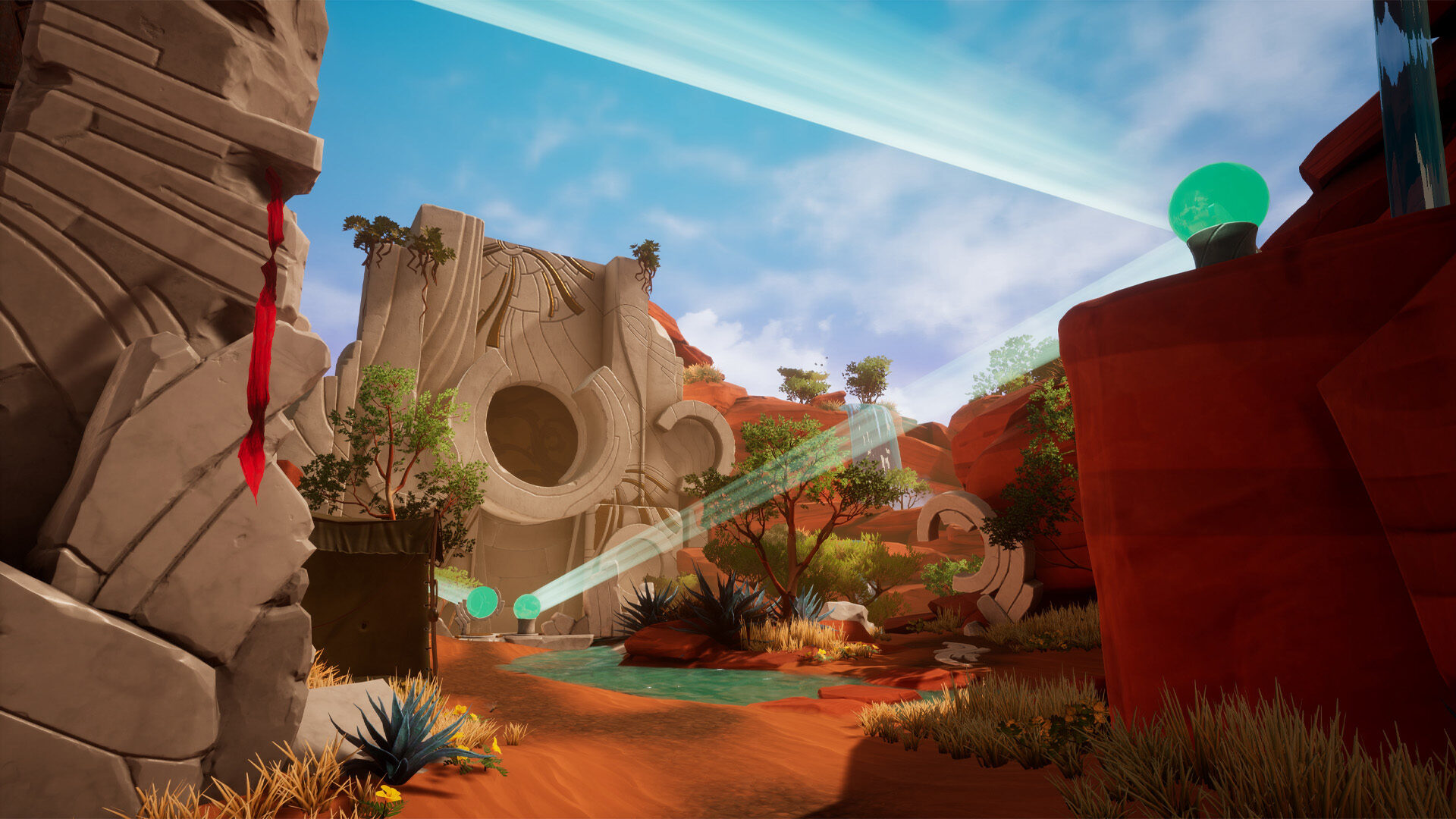
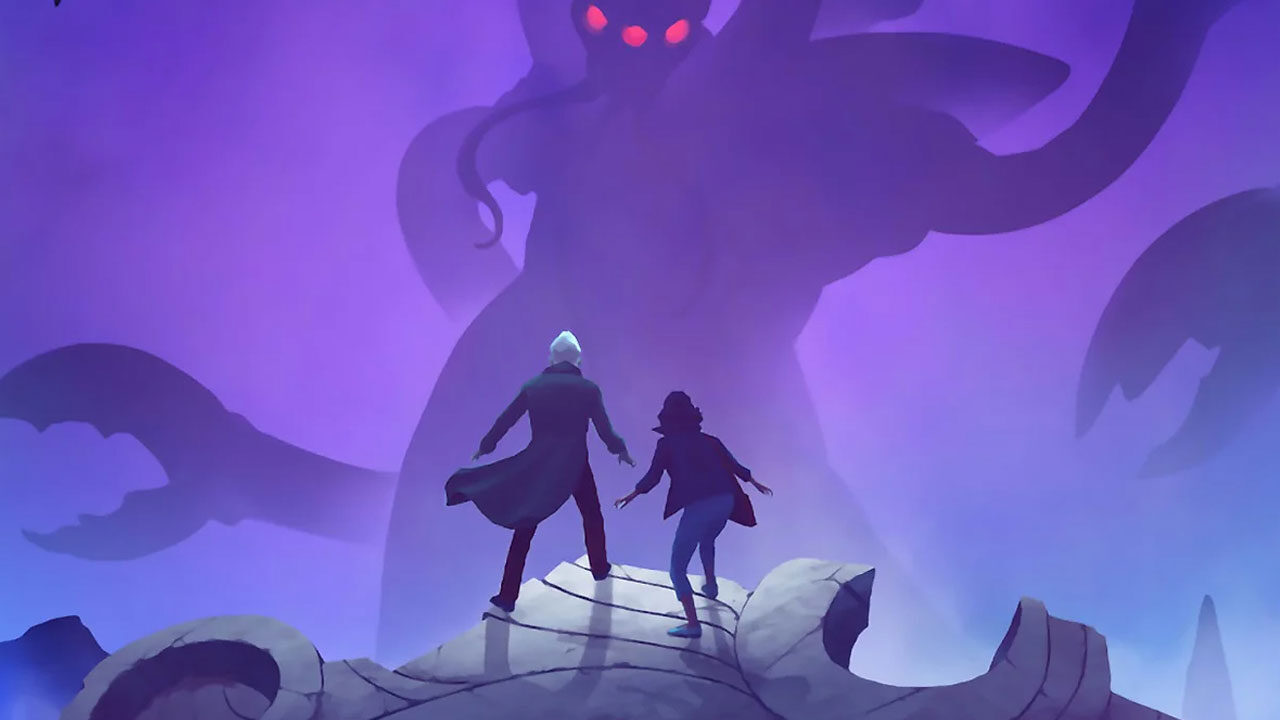
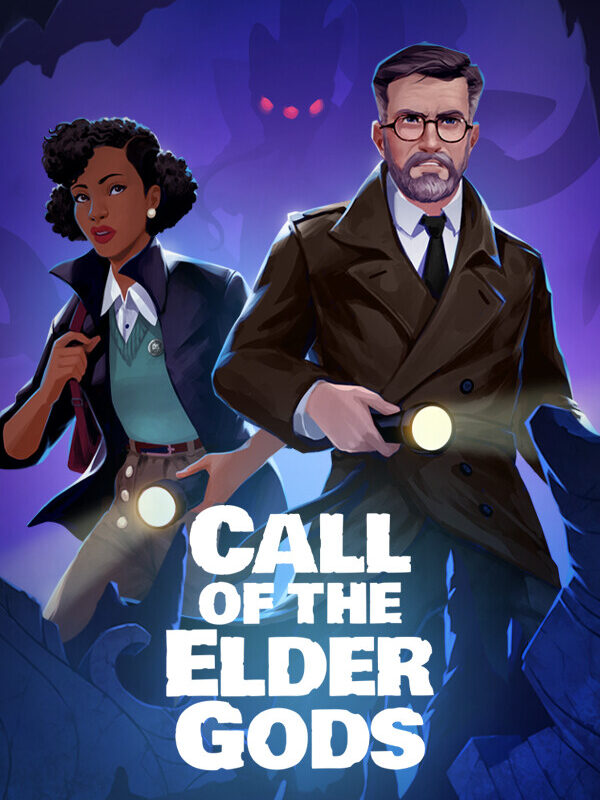
The story of Call of the Elder Gods concerns Evangeline Drayton, who has been plagued with strange dreams of an ancient civilization and a mystical artifact. After suffering a months-long case of amnesia, she seeks out Professor Harry Everhart of Miskatonic University, who experienced similar conditions. Upon discovering him unconscious in his home, and the artifact from her dreams shattered in his possession, the two set off on a whirlwind adventure to solve this eldritch mystery and lay to rest the beasts of their pasts.
“Call of the Elder Gods’ gameplay is serviceable.”
It’s a fairly compelling story, packed with intrigue and interesting characters, and while not featuring Cthulhu specifically, it is based on The Shadow out of Time. Despite being a sequel to Call of the Sea, it functions well as its own standalone narrative. The game actually asks you before you start if you played the sequel, and since I hadn’t, I figured it would give me a big exposition dump before the beginning of the game. But it seems to weave its previous narrative into the proceedings pretty cohesively, since I never noticed any laborious backstory delivery.
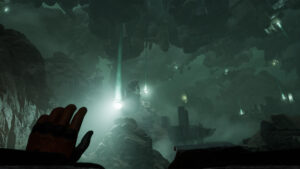
However, my issue with Call of the Elder Gods narrative lies in the way it’s told, namely through its protagonists. Broken Record time—these protagonists cannot shut up about every little thing they come across. I knew it was going to be bad when the game began in a strange, otherworldly realm and after Evangeline saw an actual dinosaur, she remarked on her surroundings with, “Where am I? This is not the Earth.” All I could do was roll my eyes and say, “Gee…what gave it away?”
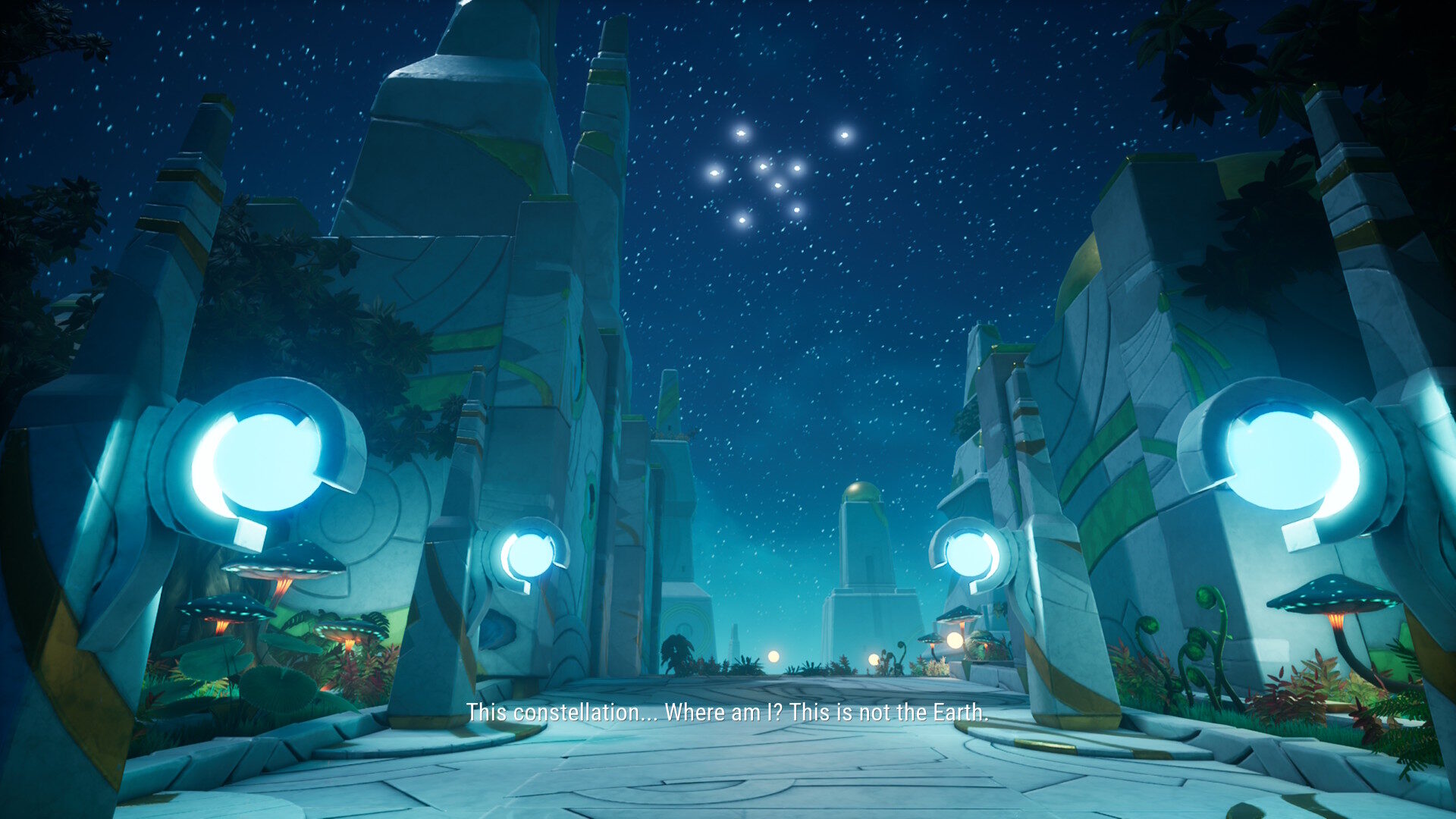
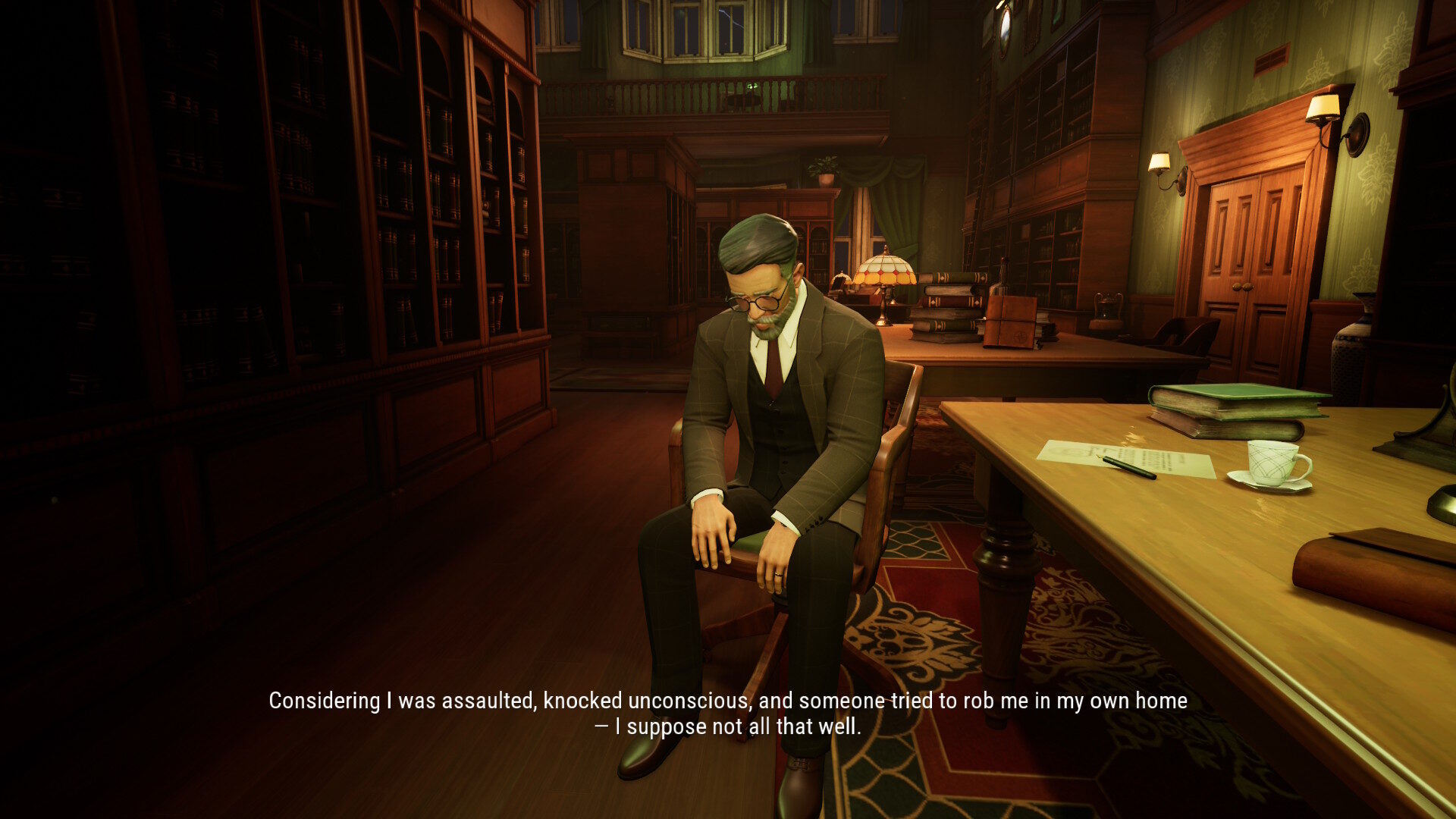
This continued to the point of genuine frustration when every contextual item prompted a response from Evangeline or Harry. Even in-game documents don’t give players a chance to read them before one of the characters loudly remarks on their content—I mean, if you’re gonna have your characters say everything they think, at least let players put the notes down first. It just seemed so profoundly ill-advised; this is supposed to be a puzzle game, its story is supposed to be a mystery. Why suck any mystique or intrigue out of it by not allowing the player to interpret anything and form their own conclusions? The game never gave me a chance to experience the story, loudly interjecting at any moment I even tried.
“Visually, Call of the Elder Gods utilizes a simple, almost painted aesthetic that makes it feel a bit more fantastical and dreamlike.”
And the truly aggravating thing is where you could see that, with some restriction, the constant character commenting could’ve been competent. There’s actually a third narrator in this game: Harry’s deceased wife, Norah—who was the protagonist of Call of the Sea—who is narrating the story proper, while adding bits of her own commentary. In more than a few moments, when one of the characters made a comment, Norah would make a funny quip on it or somewhat correct the interpretation.
I didn’t understand why the story wasn’t built around this idea in a more structurally stable way. Rather than having the two characters comment on EVERYTHING, have Norah narrate the more important moments of the story, and have her quip on some of the things the characters said—without having them comment on EVERYTHING. It would still maintain the sense of a story being told like a book being read, while still allowing players to form their own opinions, and maybe have them challenged here and there by the game’s narrator.
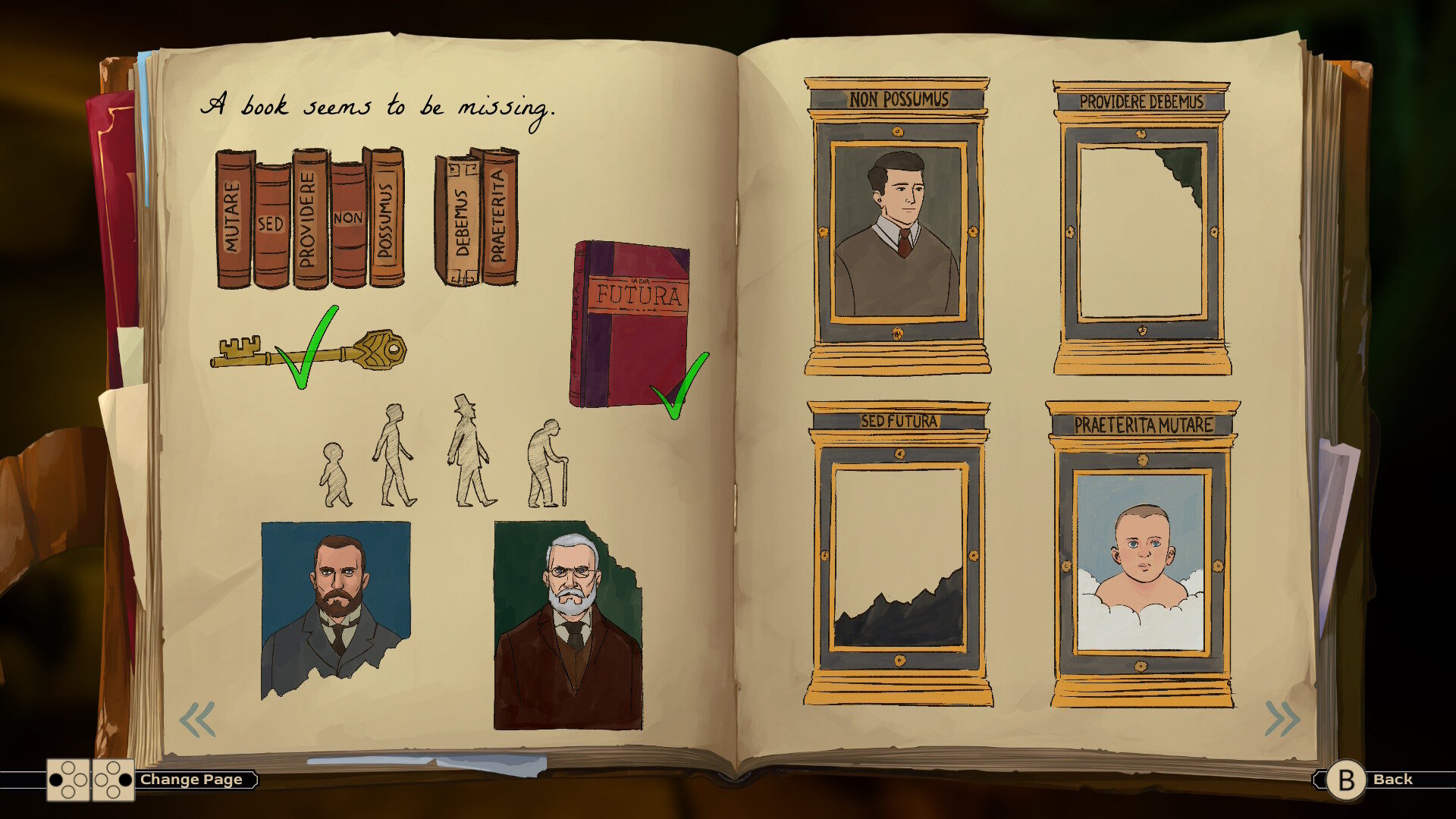
Call of the Elder Gods’ gameplay is serviceable. Players explore fairly open environments while solving puzzles along the way. Some of the puzzles are pretty straightforward, while others require a bit of trial-and-error, but none of them were ever so obtuse that they became obnoxious. It helps that the game is pretty generous with its note-taking and always lets players review the information they have to solve puzzles.
“Despite being a sequel to Call of the Sea, it functions well as its own standalone narrative.”
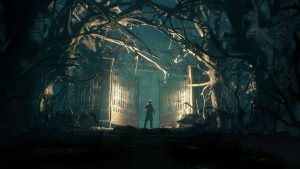
Visually, Call of the Elder Gods utilizes a simple, almost painted aesthetic that makes it feel a bit more fantastical and dreamlike. Since so many of the puzzles are directly tied to the environment, every new location is richly detailed and consistently dynamic. However, it is yet another example of a Nintendo Switch 2 game that doesn’t really do a lot with the hardware—often experiences some frame rate drop, and a few reduced textures on intractable objects.
The visuals are backed by a pretty decent soundtrack that suits each mood perfectly, building tension and creating a sense of adventure where necessary. And despite my complaints about the overused expository dialogue, when the characters are actually given moments to converse, the voice acting is well-delivered and believable.
Call of the Elder Gods is certainly not a terrible game, but it’s a little too easy and a little too annoying to rise above being just okay—for me at least. The foundation of its story is solid, and its puzzles are approachable enough that I’m sure a lot of people will enjoy it, but for my money, there are better puzzle and narrative games out there.