
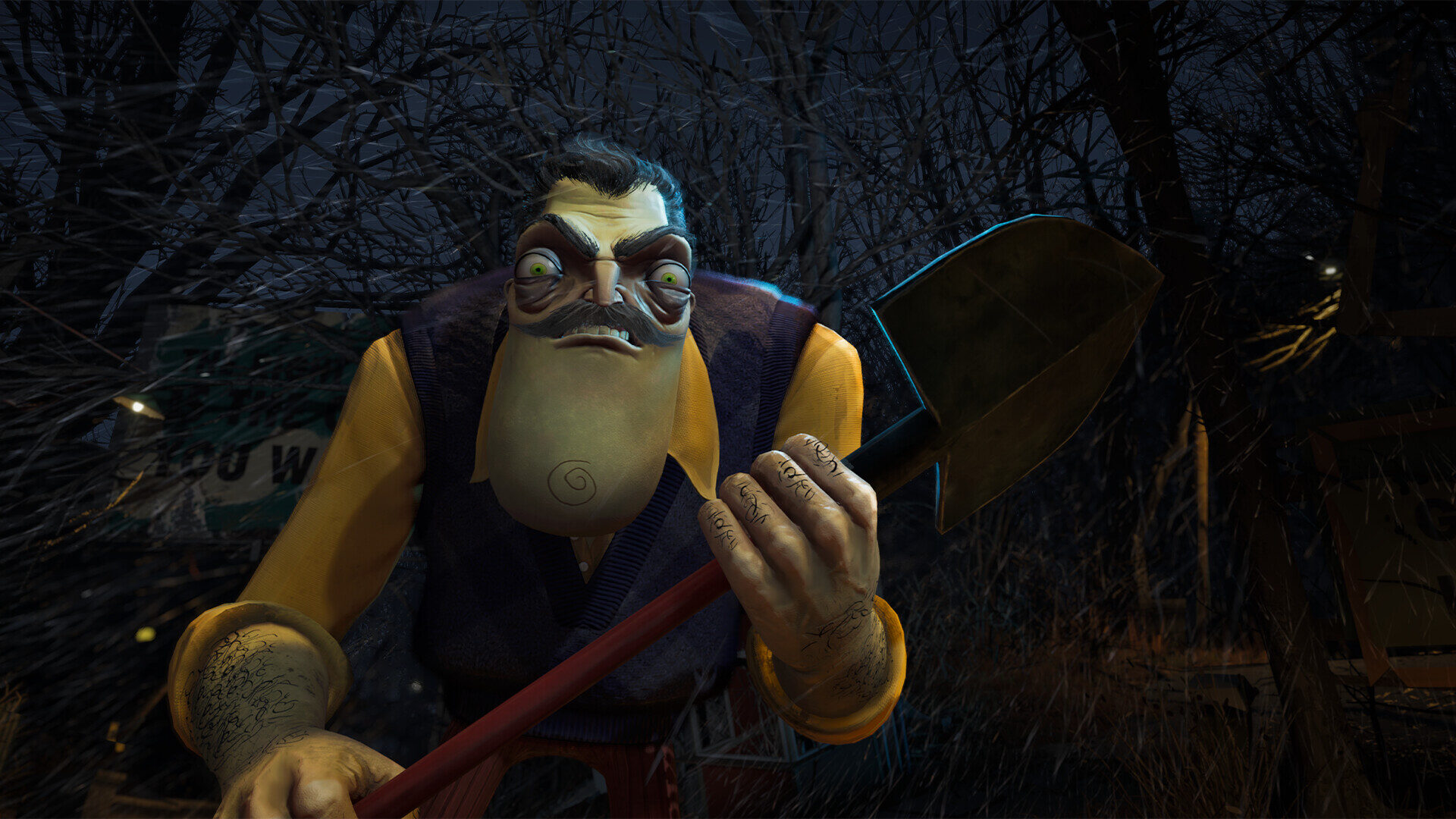
The Hello Neighbor franchise has been around for over a decade now, spanning games, books, comics, and even a movie is on the way. It is hard to believe that all of this came from the mind of one guy, the series’ creator, Nikita Kolesnikov. He up and quit his job nearly 12 years ago and never looked back, and now he is back for Hello Neighbor 3, after a brief hiatus during Hello Neighbor 2.
At gamescom 2026, I was able to sit down with Kolesnikov in a Tinybuild booth completely decked out for Hello Neighbor 3. He was incredibly down to earth, and it seems his entire experience surrounding the Hello Neighbor franchise can be summed up in one word: “weird.” We talked about watching his series take off and branch into other mediums, creative control and what has changed as we head into Hello Neighbor 3.
Tell us a little bit about you and your overall role with Hello Neighbor.
Nikita Kolesnikov: Hi. Yeah. My name is Nikita. I’m the creator of Hello Neighbor. It’s a little bit hard to answer what I do. I do everything from art to management, a little bit of coding or whatever. I basically do a little bit of everything.
How many people work on the Hello Neighbor team now?
Nikita Kolesnikov: Currently it’s 16 people.
Oh, that’s a small group. Good for you! That’s awesome.
Nikita Kolesnikov: Yeah, well, the first game was done with four people, so it’s great.
For those who don’t know, tell us a bit about the Hello Neighbor series and where we’re heading in Hello Neighbor 3.
Nikita Kolesnikov: Okay. So, just a quick recap. The first Hello Neighbor started as a first game for me. As I say every time, when I say my first game, sometimes people say they did some prototypes, but it was the first game they shipped. For me, it was literally the first game I worked on. That’s why it took a lot of time and energy to do.
When the small team started in 2015, by 2016, when we started to publish demos, it skyrocketed in popularity. We released the full game in 2017. By that time, it grew beyond my control. By that time, we already worked with TinyBuild, which helped us market the game. It grew beyond my control. It turned into spinoffs, cartoons, books, comic books, toys—whatever. Right now there’s a movie in production. It’s crazy.
And right now we’re on the third game. As I said, there’s a lot of mediums happening. For some of them, I did consulting work. In other ways, I helped come up with some ideas, but generally it’s much bigger than myself. But the third game is some sort of direct continuation of the first one, because this is me hands-on doing something that I did with the first game.
On a personal level, if Hello Neighbor was your first game, you’ve been doing this now 11 years or so, going into 12. How does it feel to have your first project skyrocket like that?
Nikita Kolesnikov: Yeah, that felt weird. Because for me, going into game development was some sort of life-changing experience. I was an artist since childhood. I was drawing characters from cartoons with paper in front of the TV. Over time, I felt that games were for big guys, and I’m just here. But when I went into my early 20s, I felt like my life was going nowhere. A dead end was approaching very rapidly.
I saw a Steve Jobs speech—I don’t know if it was MIT, I don’t remember—and it inspired me so much to turn my life around. The next day I was like, “I quit. I will do games.”
It sounds like we have Steve Jobs to thank for Hello Neighbor.
Nikita Kolesnikov: Yeah, that’s interesting. And I feel like when I started to do games, I started as an artist initially for a very small thing. Then I did sprites for a mobile game or something. I thought maybe closer to my 50s I would do one game that would be somewhat popular and that would be the best course of my life.
But then four years later, I did a game. It was all over YouTube. You scroll YouTube—this was 2016—and it’s like all Hello Neighbor. I felt really weird, but weird in a different sense. I thought I would feel overwhelmed with joy, something surreal. I felt like, okay, this happened, and it doesn’t feel like I thought it would feel.
You were talking about a movie in the works and cartoons and all these things. How much creative input do you have on all of those mediums for Hello Neighbor?
Nikita Kolesnikov: Well, it really depends. A lot of talented and creative people work on a lot of stuff. Everyone who works has their own creative vision. It’s not that it revolves around me, but sometimes with the movie I can give feedback on visual style or atmospheric elements or something else. It’s not that I’m hands-on on everything, but I’m also not trying to be hands-on. If I pushed for “let me show you,” I would never sleep. So I’m trying to focus 99% of my energy on Hello Neighbor 3 because this is my passion.
So the Hello Neighbor games are your first baby in all of that.
Nikita Kolesnikov: Yeah, yeah.
Is it strange to have people have creative input over something you created?
Nikita Kolesnikov: That’s interesting. It’s kind of 50/50. Of course sometimes it’s weird, but I see things like—I don’t own anything. It lives its own life. But on the other hand, for me, games are art in a way that is a personal product of emotion. I don’t really hold on to ideas or things.
I remember when I was a junior in school, when I was young, I always drew comics. I never had anything at home. I always gave them out to people. “Oh, that’s a nice comic book,” and now here’s yours. So it’s pretty easy for me not to hold onto ideas. But again, I have Hello Neighbor 3, which for me is my own isolated experience.
Have you considered moving away from Hello Neighbor into a different game? Do you have ideas in the works?
Nikita Kolesnikov: Yeah, well, I have a lot of ideas. Sometimes I scroll my phone with notes, and some of them I ask, “When did I come up with this?” But generally I have a lot of ideas. Even though the game is called Hello Neighbor 3 and there’s obviously a neighbor, for me technically it’s kind of its own thing.
It stands on the same principles that, whatever game I would do, it would have the same soul, if that’s the right way to put it. It doesn’t matter what package it’s wrapped in. As long as it delivers the things I want to deliver to people, then it works. It doesn’t matter how you pose it.
Speaking about Hello Neighbor 3 specifically, it’s been nearly ten years since the first game. How has the series evolved from the beginning?
Nikita Kolesnikov: Well, the easiest is to compare the first game to the third game. There’s two paths of evolution. The first is the general technical and engineering way, but also artistic and narrative. When the first game was created, I had never created anything. No one on the team had. It was a pale shadow in comparison to what I imagined it could be. In this case, the third game is a lot of stuff I didn’t know how to do.
Now I know how to do them, and I can do them confidently, which is really nice. It’s a beefier version of what it was supposed to be. But also the core of Hello Neighbor is freedom and looking for your own creative ways to do things. In the first game, it was there, but the third game pushes it to 11. So it evolved in that way. It’s a fuller version of this.
You’ve made the choice to move to more of an open world in Hello Neighbor 3, right? Why choose to do that? Is it because it’s easier now, or did you want to see something different from the series?
Nikita Kolesnikov: Well, the first game is also open world, but the whole world is just a backyard and one house. It’s open, but it artificially limits your movement. For the third game, there are certain ideas and technical things we want to achieve and certain technologies we want to use from other ideas we have. It naturally formed into a small open world. It’s not like we said, “Let’s do an open world game.” It’s just, let’s do this, let’s do that—oh, it has to be an open world.
What does that bring to Hello Neighbor 3 now that you have a larger open world compared to the others?
Nikita Kolesnikov: As I said before, this freedom. What I really love about Hello Neighbor—rewind a little bit. When I worked on the first game, The Legend of Zelda: Breath of the Wild came out. What they did pretty well is that the world is open; there’s a castle with Ganon. You can go there and try to go to the final battle immediately. You’ll probably fail without all the skill, but you can do it. This feeling of freedom—you can climb any mountain, there’s no limits. I was crazy about this feeling of freedom. I couldn’t play any other games after because I felt like my hands were tied.
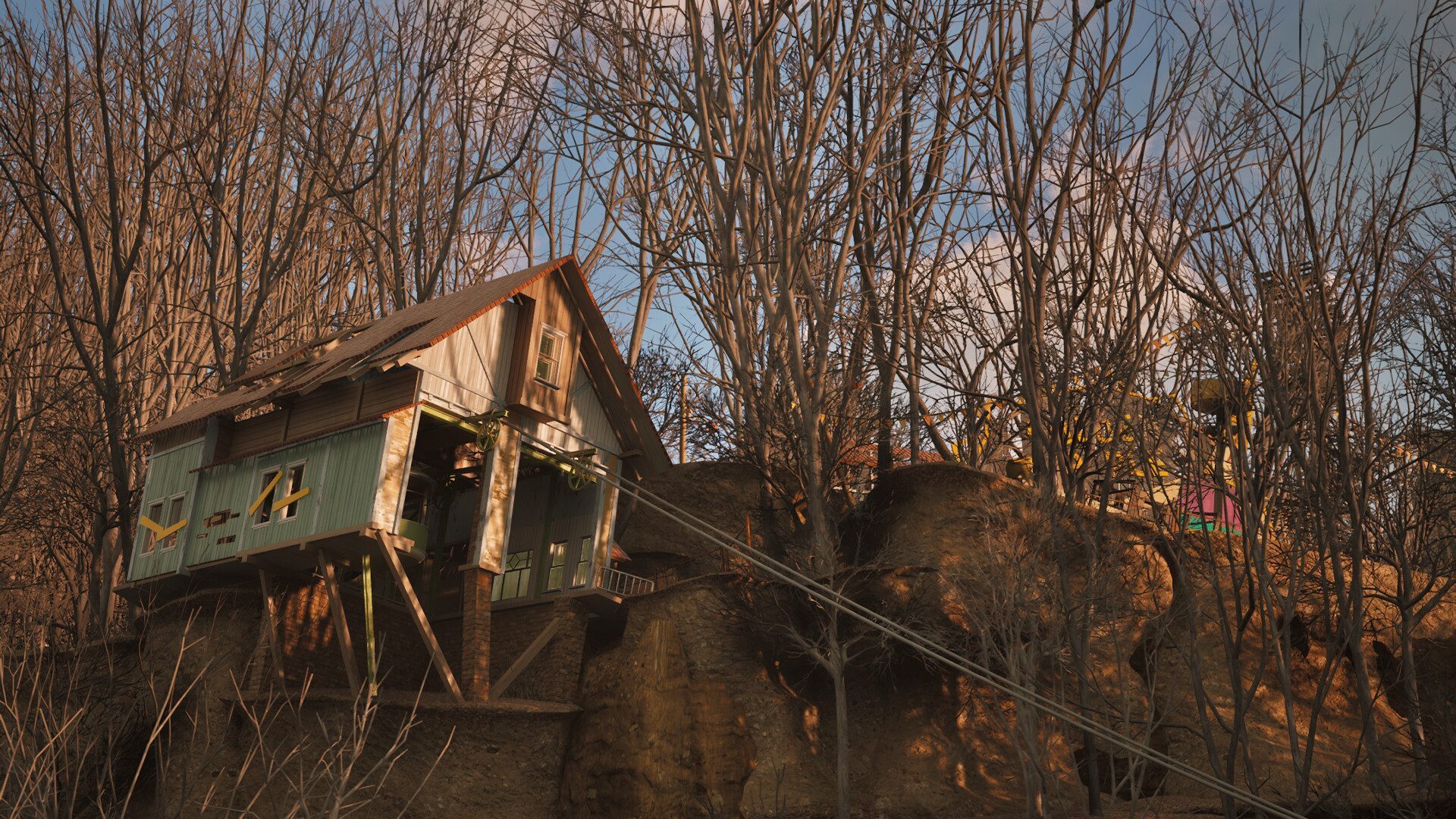
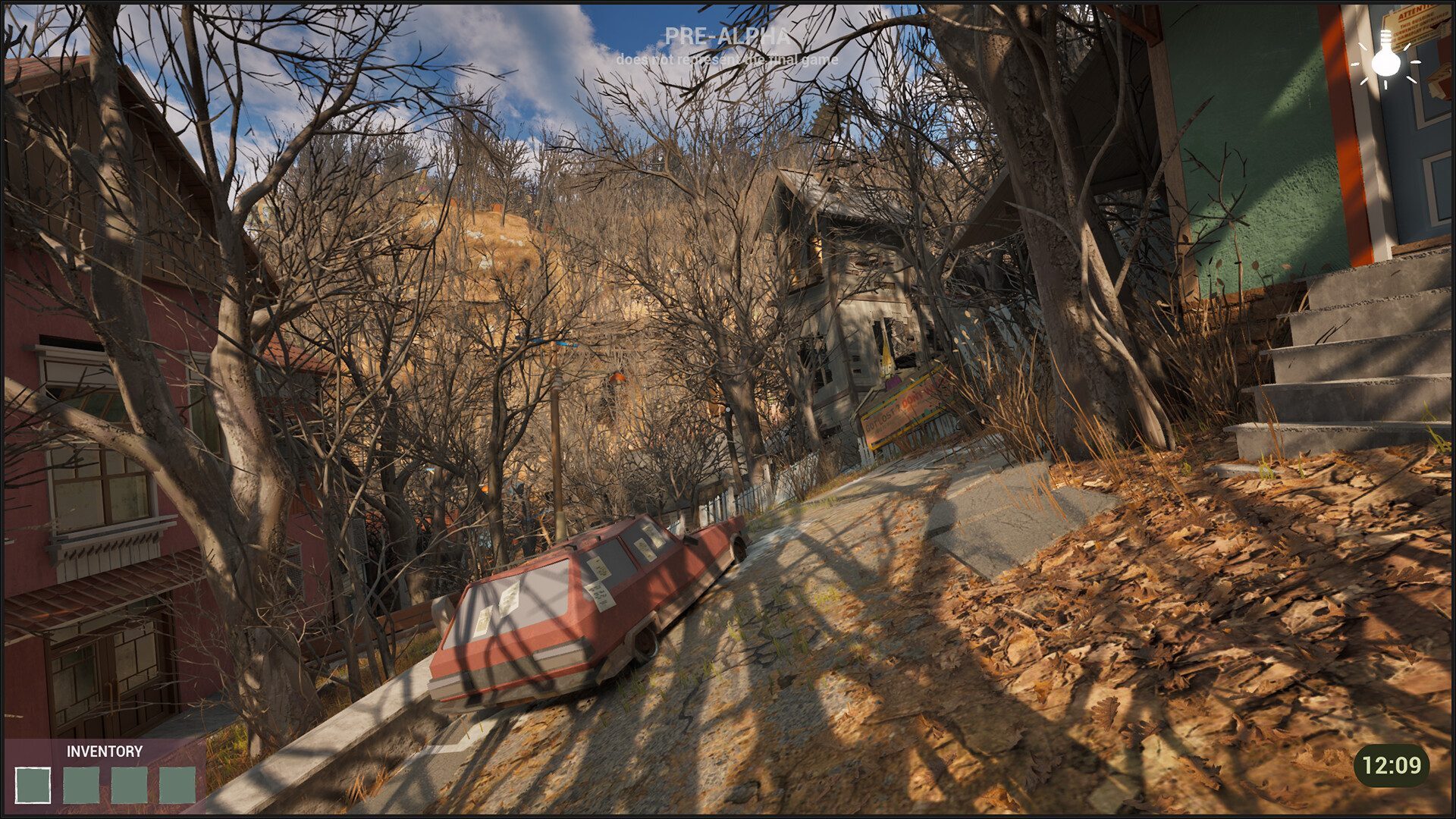
So freedom is a kind of common sense. It works the same way. It gives this feeling of freedom that other games, at least for me, never do. If you see this in the video, every building you see, every roof, every cliff, every ravine—you can go anywhere. If it’s there, you can go there. There’s no fake buildings. That’s why I don’t like playing games like GTA. You would love to go inside every building, but it’s not about that. This game is about this. If you see something, you can go there, you can take it, you can break it, whatever.
Researching Hello Neighbour 3, I read that all the residents and everybody in the game are living simulations. What does that mean and how does it work?
Nikita Kolesnikov: That’s a great question. This is the hardest technical challenge, but also something we’re really proud of.
I’ll start with the technology. It’s based on a game called F.E.A.R. In F.E.A.R., there was an engineer on the AI team who developed a system called Goal-Oriented Action Planning. To explain it simply: usually in games, artificial intelligence uses behaviour trees. They choose actions based on certain checks—should I check this or do that? But this action planning system works differently. The character gets a goal, and then they reverse-engineer the actions required to reach that goal.
It could be anything. They need to eat. So they think: I need to eat food. Do I have it? No. I need to equip it. Do I have it in inventory? No. Check memory—where is it? Get it. They create this chain of things. This allows very flexible, adaptive behaviour.
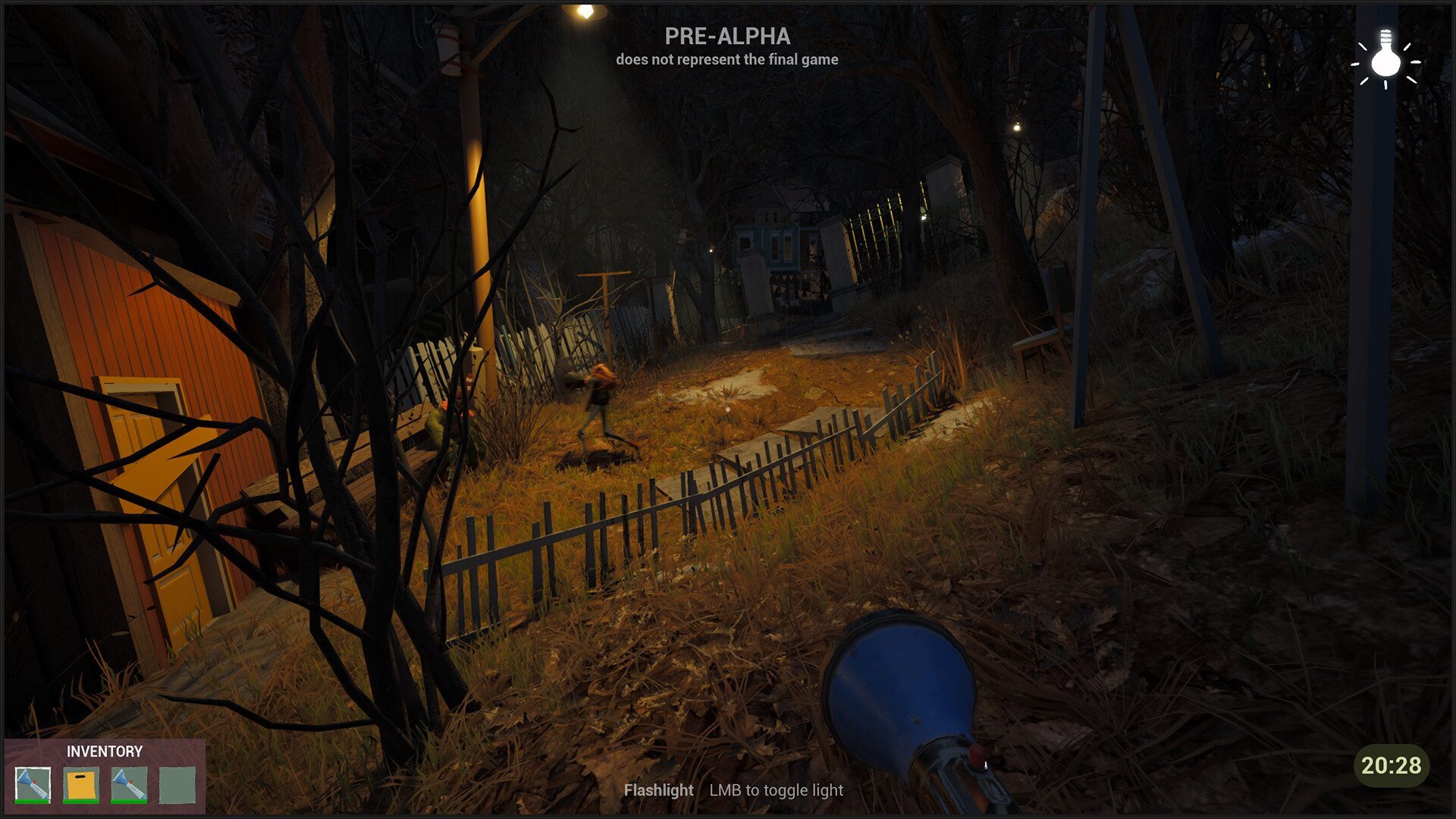
We implemented this action planning. The game is set in a limited time frame—30 minutes. But in the game world, it’s a day and a half. When the day starts, each character has their own storyboard. They have their own story, and they try to reach it. There’s no predetermined path or routine. They have things they have to achieve. In a sense, they’re like players also.
Once the session starts, the simulation starts. They’re like, “Okay, now I need to fix my car.” They go fix their car. We don’t have direct control over what they’re doing. We can set their memories—what they know about certain items, how they behave—but then they’re on their own to figure it out.
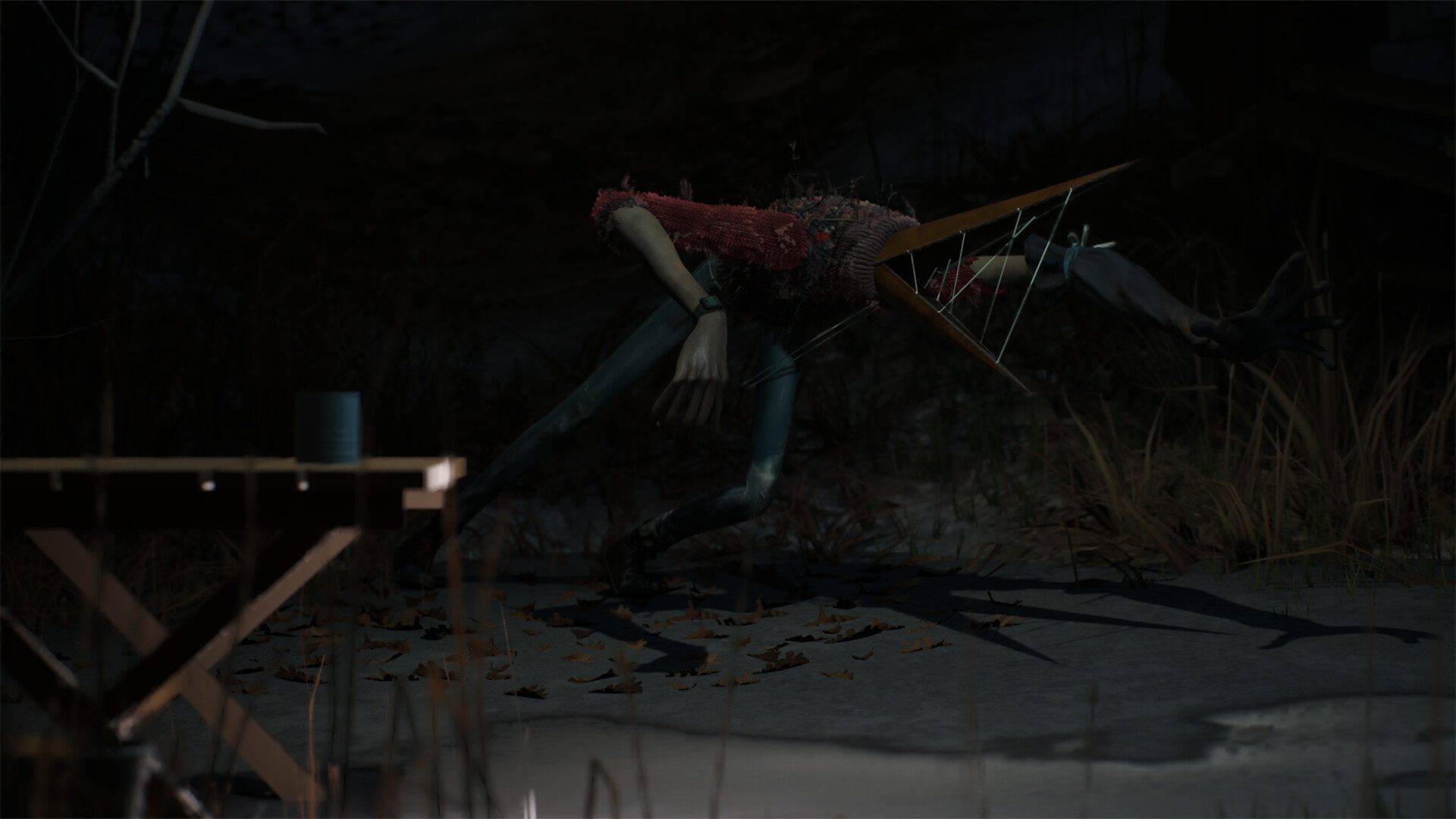
This creates a living world—maybe that’s too much to say because it’s eight people in a small town—but they do their own thing. They interact with each other and with the player. The player changes something, it creates a butterfly effect. In comparison, if you look at Skyrim, you shoot an arrow, it lands in someone’s head, and they’re like, “Oh, what’s that sound?” and return to routine. Here it’s not like that. Everything goes into chaos eventually. They do this, then that; it affects this. There’s no way you can break it unless there’s a bug. Everything will evolve into something.
So does that mean every time you play through Hello Neighbor 3 it’s going to be different depending on what you do?
Nikita Kolesnikov: Not exactly. About this time frame—when 30 minutes is finished, the game starts from the beginning. The session starts from the beginning. Similar to Outer Wilds. From the player’s perspective, the player collects knowledge and skill, similar again to Breath of the Wild. The player knows how to operate the game to finally beat the boss, even though initially the game never prevents you from trying. It’s the same roguelike nature. You play over and over, but all the knowledge you collect carries over.
All the notes and narrative elements carry over. You continue to go forward. If you do the same things, or if you do nothing, the session will unfold similarly. But as long as you try to do stuff, it starts to go a different route every time. It’s not random. One of the pillars of the AI is to never pick a random item. It always picks clauses or whatever. There’s no randomness. Everything gets calculated. But it’s very easy to shake the system.
The Hello Neighbor series is at three games in ten years. Some games take more than ten years to come out, period. What has the reaction been from the community around this game?
Nikita Kolesnikov: That’s interesting. The second game—I didn’t work on the second game. I was on the first and then the third. A lot of people in the community want to see what could be almost a direct continuation of the first game. I’m really excited about it.
We really wanted to be as open as possible. Not only to be transparent, but also to show what development is like. So we started to share from the very first prototype we had. It was very rough. There was prototype one, two, three. The fourth one was called pre-alpha Pro version. We released it for free for people to try.
I think people are pretty excited about it. Of course there will be people who hate it—whatever you do, you can’t please everyone. But generally, from what we gather, people are excited.
And for that online community, a lot of the questions popping up are: are we going to see characters or people from the first game or the second game? Can you tell us anything?
Nikita Kolesnikov: Some story beats I try to—
I understand. Thought I’d give it a try.
Nikita Kolesnikov: No, I can’t. Look, of course there’s a Neighbor. Yes. Of course there’s a new version of the Guest, which was present in the early version of number two. And there’s definitely going to be the protagonist of the first game. I showed on Discord the house of the protagonist from the first game, implying he will be in the game. So yeah, he will be.
And just on a personal note from you—if you started this with a Steve Jobs speech and quit your job—what would you tell people who are trying to get into this industry now or have a dream? What advice would you give to people who could be like you?
Nikita Kolesnikov: Well, not to be very cliché, but whatever purpose you feel you have, you’ve got to follow it. Because without it—without being too dramatic—what’s the point of living? You only live once. Let’s make the best out of it, even if it’s really hard.
And the last question, just for fun: what is your favourite thing about Hello Neighbor 3 that you can share with us? Whether it’s a mechanic, a character, a tree you really like—what are you really excited about?
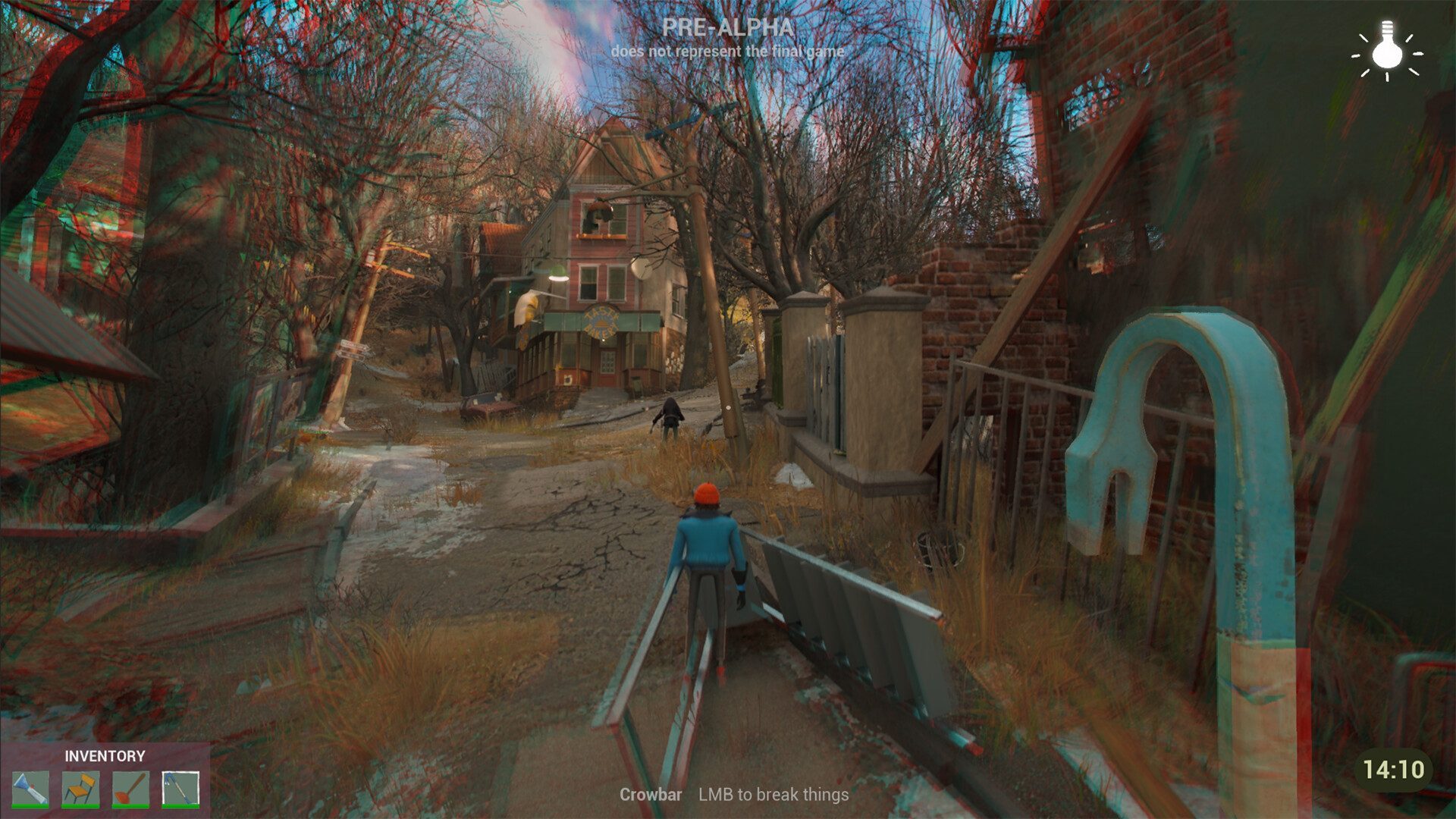
Nikita Kolesnikov: Wow. It’s hard to pick. But maybe one thing really important to me: the atmosphere we’re going for. This melancholy, uncanny thing. It comes from a lot of times, it grows from when people are children, when we don’t know anything about the world. As we grow up, everything can be a little bit scary, and it creates certain memories. When we grow up, we can have uncanny experiences that are actually memories from our childhood, which we sometimes cannot connect properly.
This thing we go for is about this feeling, this atmosphere. For me, I had a rough childhood, but there was a time each summer where I could spend with my grandmother. It felt like a very rural village. I had very fond memories, but also very uncanny, very old memories from it. This melancholy, fading-away memory—I’m really proud we’re able to achieve this. It was really hard, but the artists we have worked together to make it work. And we made it work.
I’m really excited because sometimes, without even trying to beat the game, you just walk around and you feel this. There’s a lot of characters there. Very cool.
Hello Neighbor 3 does not have a release date yet, but you can wishlist it now on Steam.