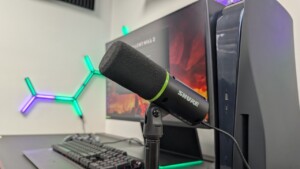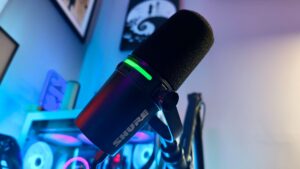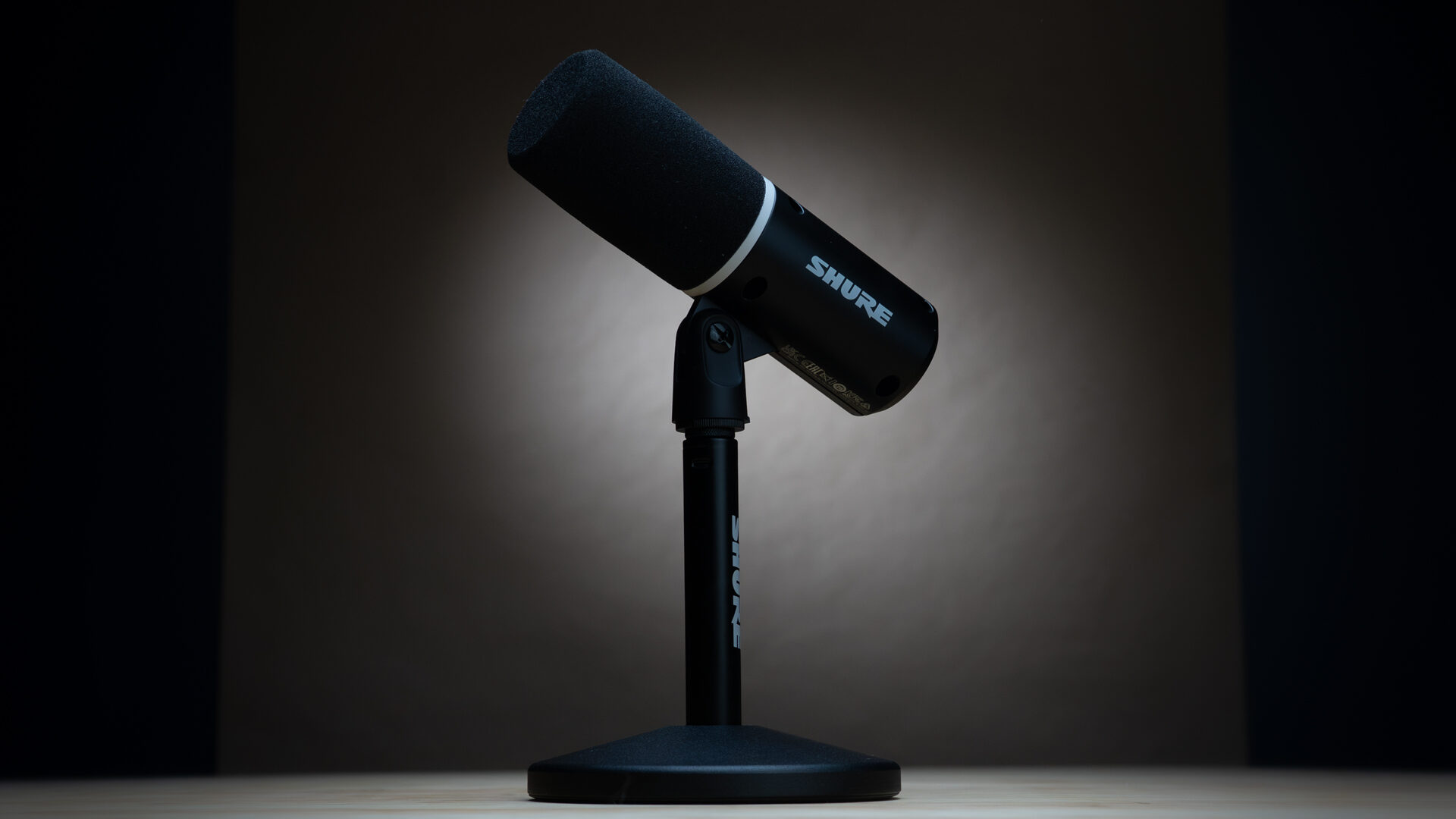


If you’ve ever watched a gaming stream, chances are you’ve seen a Shure MV6. Its understated cylindrical design and deep, crisp sound have made it one of the most recognizable gaming microphones of the past few years. That’s no small feat for a consumer-level microphone that sits at the affordable end of a product line. But after a few years on the market, Shure has refreshed the design with the MV6 USB Gaming Microphone Gen 2.
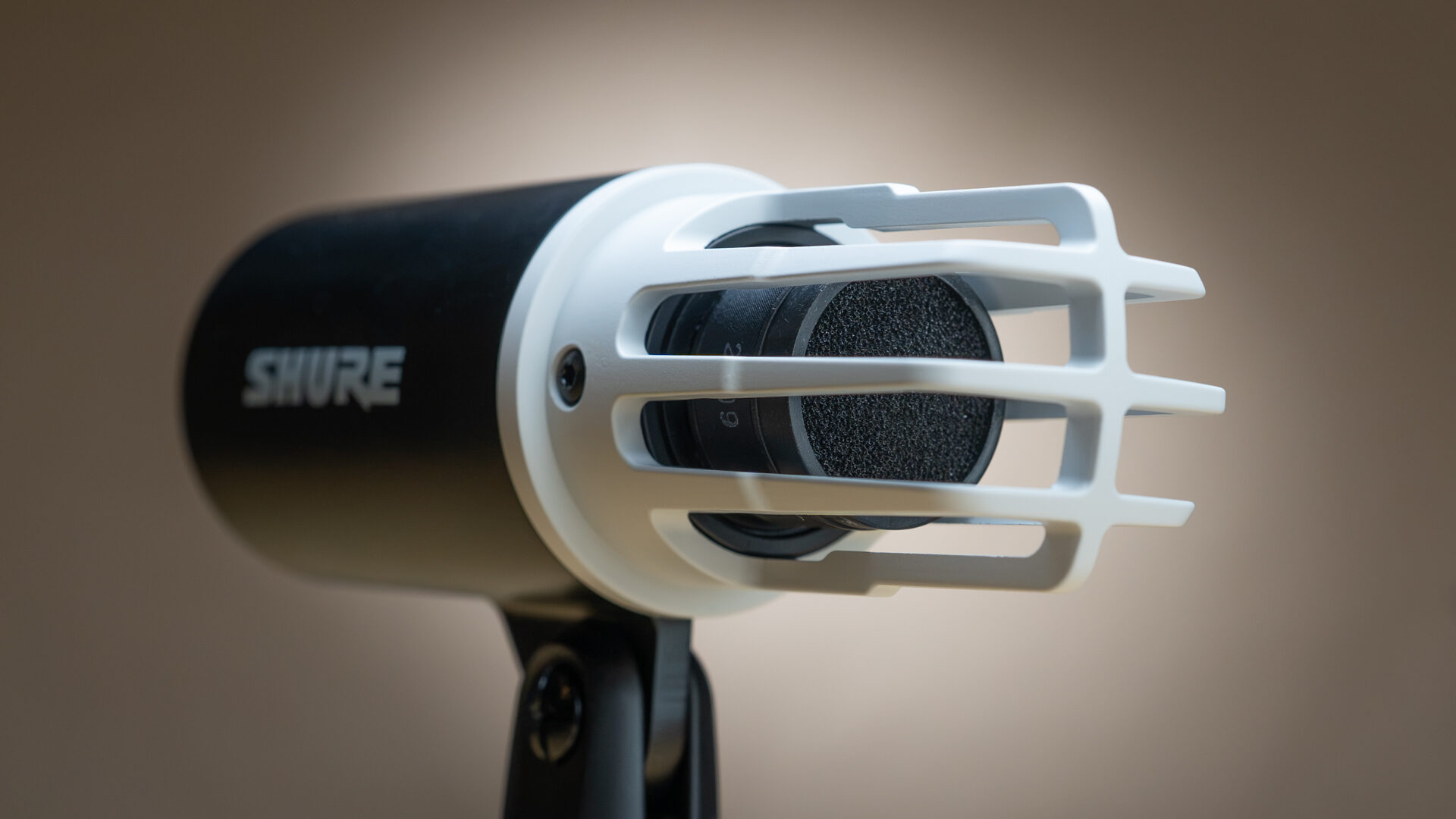
The Shure MV6 Gen 2 shares the same bones as the original model but comes with software improvements, onboard noise reduction, a new white colourway, and a longer 2-meter USB-C cable. Luckily, the microphone body and included desktop stand are still made of metal. I’m so used to product refreshes coming with cheaper materials that I was genuinely relieved when I felt how heavy it was.
Shure calls this an entry-level mic, but I think that’s a pretty wild claim. There are companies out there selling decent USB microphones for under $100. If you’re looking for clean audio, anything at that price point will do. To be accurate, the MV6 Gen 2 is the entry point to pro audio. You’re going to get the rich, detailed recordings you’d expect from a professional podcast mic, but with fewer tools and less dynamic range to work with. The signal has enough slack to push around, but you won’t need anything more powerful than Shure’s MOTIV Mix app to customize it.
The MV6 Gen 2 is high-end audio for gamers. The mic is optimized for sitting on a desk away from your face, rather than on a boom arm inches from your mouth. The difference between this mic and Shure’s more expensive offerings is its focus on clarity over gain-hungry presence. But if that’s what you’re after, the tools in MOTIV Mix can go a long way toward recreating it.
“The Shure MV6 Gen 2 shares the same bones as the original model but comes with software improvements, onboard noise reduction, a new white colourway, and a longer 2-meter USB-C cable.”
After dialling in my settings, I can always tell I’m using a winning mic when people in games start asking questions like, “Are you a streamer?” or, “Why is your mic so clear?” With the MV6 Gen 2, I got those questions, but also accusations of using a soundboard or being an AI because, “Bro, no one sounds that smooth.” These attacks were new, but I took them as a sign of quality.
Most of the changes in the MV6 Gen 2 can be found in its digital signal processing (DSP). Sweaty gamers will find the new adjustable auto-level feature particularly helpful. Users can pick a high, medium, or low decibel target and a fast or slow adaptation rate, and the mic will use those settings to keep your volume stabilized around the target. The transition is very smooth and never overcorrects, even when I did my best impression of a screeching tryhard.
One new addition I’d like to see brought to more MOTIV mics is the customizable tone curve. MOTIV usually uses a Dark-to-Bright slider, but the Gen 2 now has an Advanced tab with a 5-band EQ. Frustratingly, the EQ is limited to +6 to -10 decibels and moves in 2 dB increments, but it’s still an improvement. It’s not enough to bring the MV6 Gen 2 into podcast-mic territory, but it offers enough flexibility to make it more competitive with other gaming mics. My favourite proprietary app for controlling a USB mic was NZXT CAM, but seeing as how NZXT has removed the mic section from its website entirely, Shure may have an opening to take the crown.
The most impressive change to the DSP is the updated Denoiser. Instead of a simple toggle, users now have a sliding scale to dial in the aggressiveness of the filter. As a maximalist, I kept mine at 100%, which was nice since it’s not something I can usually do. One of the tragedies of having a lower voice is that denoising software tends to apply signal processing to speech, giving your recordings a distorted, robotic character.
That’s a problem I’ve even had with my favourite mic, the Shure MV7i. In this case, the Denoiser didn’t affect my voice at all. It cut out the sound of a water heater, a dehumidifier, and tiny feet running around upstairs. While it didn’t cut out my mechanical keyboard, it did reduce the rumbling echo that resonates through the hollow tubes of my mic stand.
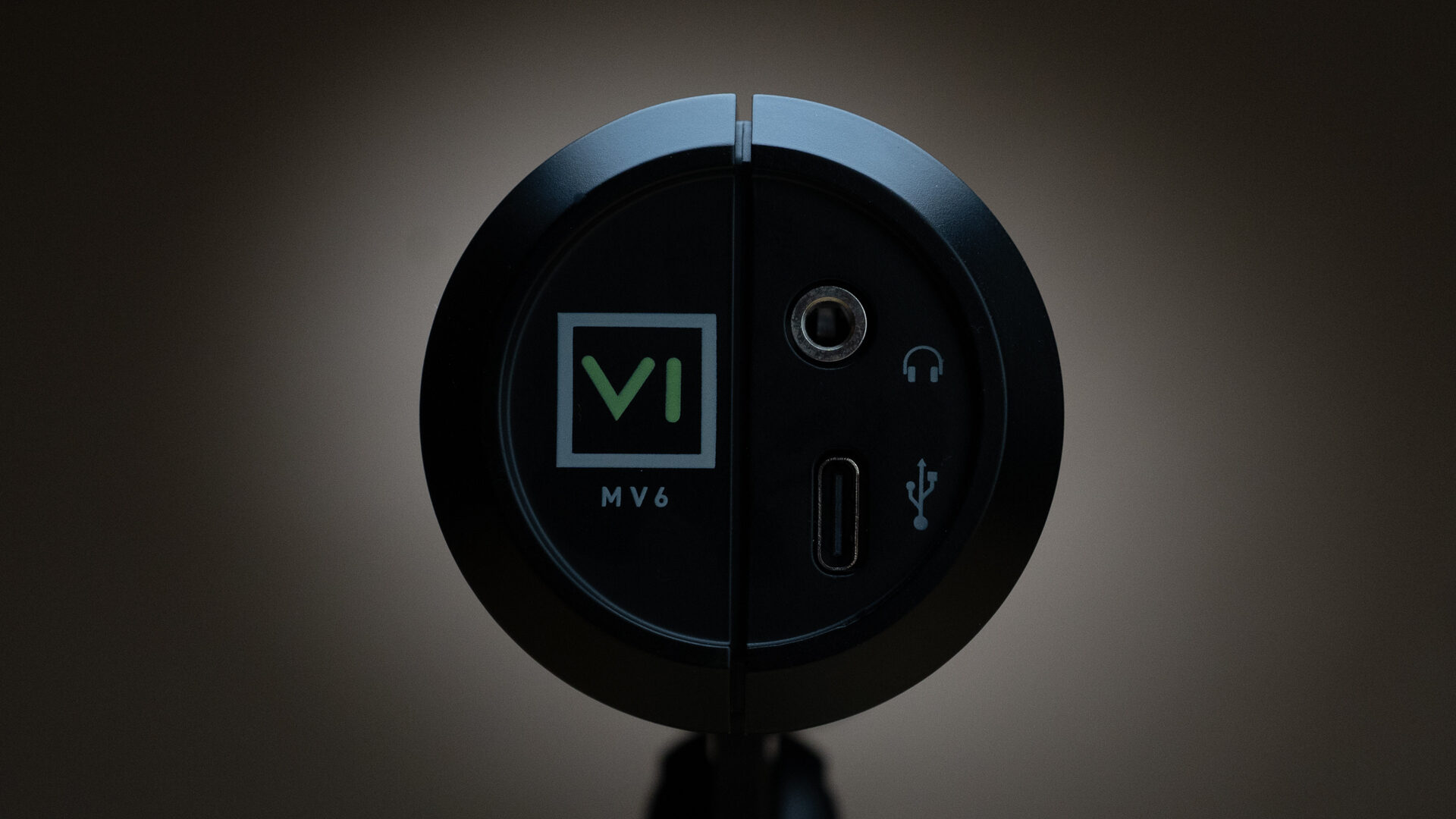
Like its predecessor, the Shure MV6 Gen 2 is about as premium as a gaming mic gets. But its price puts it head and shoulders above other top-end streaming mics. At $169, it’s fifty dollars more than a HyperX QuadCast 2, and sixty dollars more than a Blue Yeti or a Maono PD300X. But what are you actually getting for the money? The answer comes down almost entirely to build quality.
All mics in this price range sound great under ideal conditions, but how they hold up in actual use is a whole other story. Some designs, like the NZXT Capsule Elite, have a resonance problem. As you type, the mic body picks up vibrations that can end up overwhelming the capsule. The Maono PD300X tries to solve this same issue with a shock mount, which somehow makes it worse.
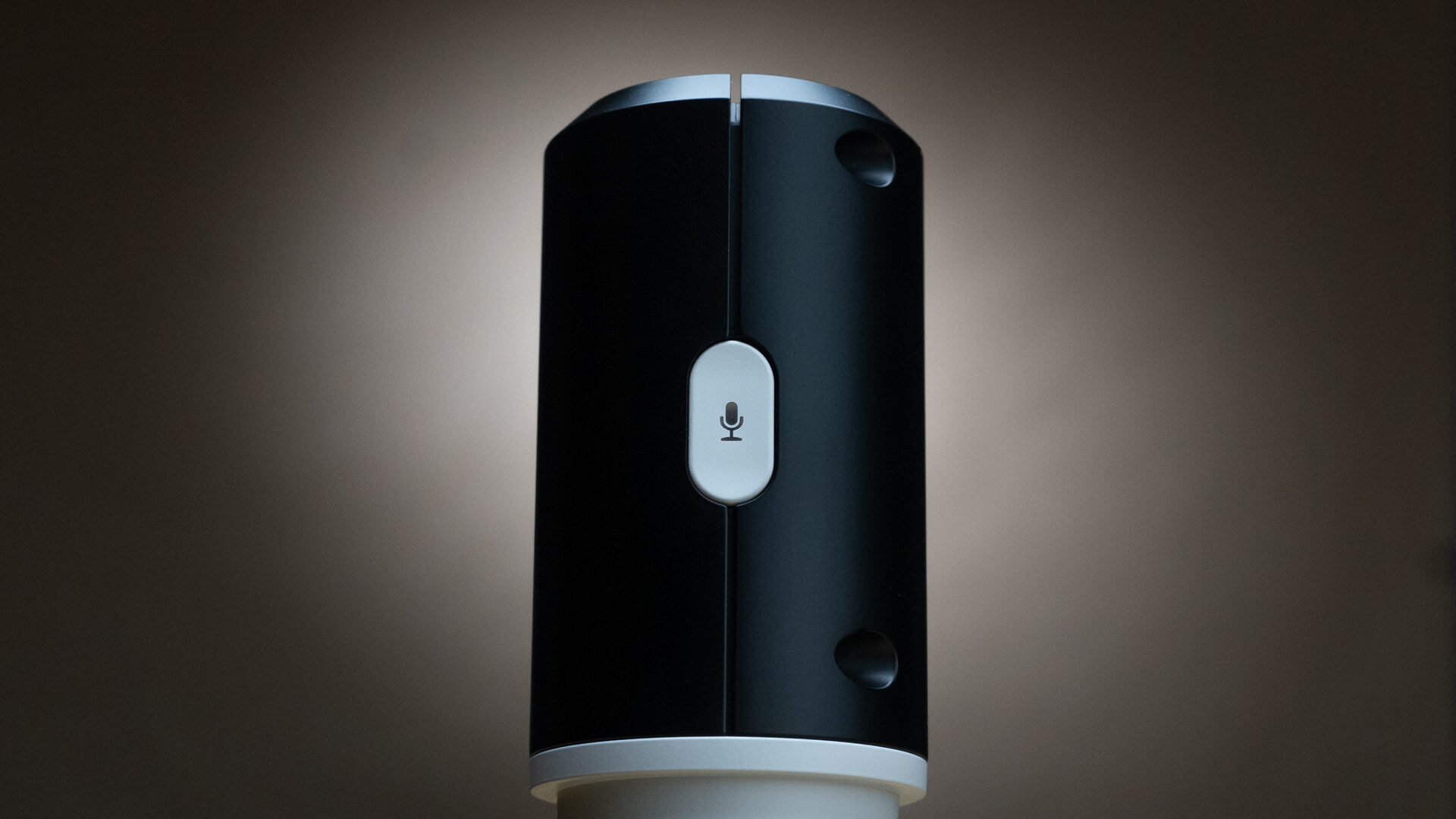
Shure’s solution was to make the MV6 Gen 2 really solid. Its mostly metal construction makes it easily the most substantial gaming mic I’ve ever used. The handling noise is still much louder than something like an SM7B or an MV7i, but it’s also a quarter of the price. Even without the Denoiser, resonance buildup from typing isn’t really an issue. Vibration still carries up the mic stand; it just doesn’t build up in the mic body.
All it took to eliminate the vibration was jamming some polymer clay into the hollow shaft of the mic stand. Which, in retrospect, kind of irked me. This is a top-of-the-market gaming microphone whose otherwise excellent performance was kneecapped by not including a rubber plug.
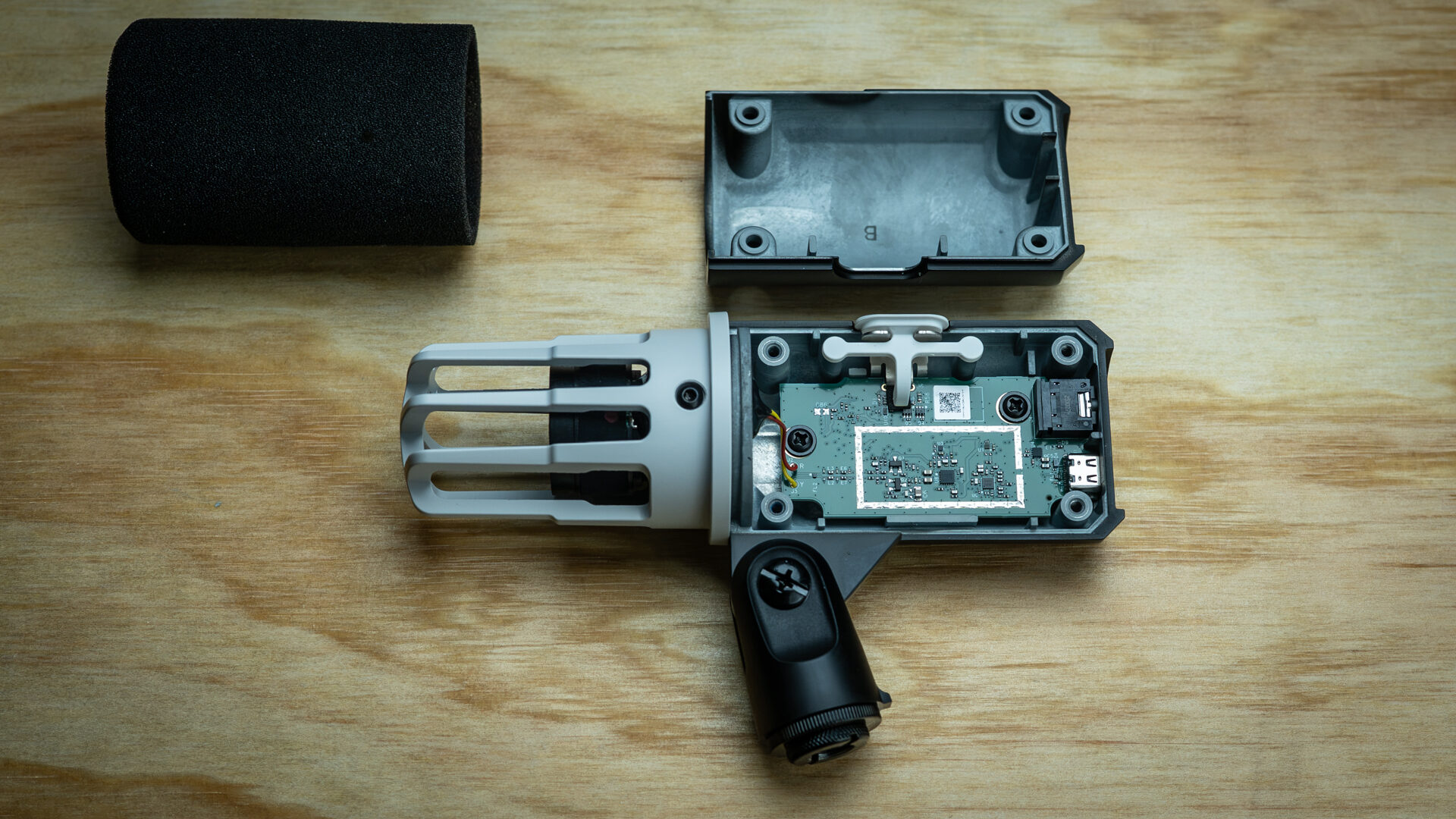
That polymer clay mod took me down a whole rabbit hole that ended with foam insulation added to the inside of the mic. Which goes without saying, I don’t recommend doing this. This was for science. I won’t get into the process here, but with a little common sense and about $2 worth of material, I managed to insulate away a bit of the remaining handling noise. The software was still doing the heavy lifting, though.
Here’s the important takeaway: you don’t need special tools to take this mic apart; you just need a screwdriver. Even at the consumer level, Shure is building mics that can be maintained, repaired, and modded. This shouldn’t be a big deal, but at a time when so many electronics are designed to be so disposable that they’re effectively rented, Shure is making something you can actually own. And at a quality level you’ll want to keep.
The MV6 Gen 2 is a great example of why Shure has become such a trusted name. They’ve taken a proven product that was already at the top of its class and made it better in ways users actually asked for. This kind of quality comes with a high price, but the benefit is that you’ll only have to pay for it once. If you’re looking for a microphone that gets you close to podcast-level audio quality for gaming streams, the Shure MV6 Gen 2 remains the best option under $200.