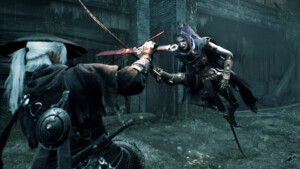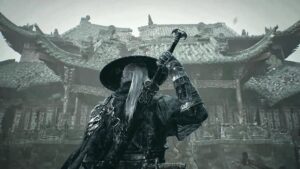

When Phantom Blade Zero first debuted, my awe was quickly reigned in by flashbacks of gaming’s most misleading game trailers that eventually forced publishers to add disclaimers to trailers to differentiate legitimate gameplay from pre-rendered cutscenes. Thankfully, after S-Game invited me to play five hours of Phantom Blade Zero’s near-final build, I am extremely relieved and excited to announce that the game is not only as good as it looks; it’s even better.
As a huge fan of action games, these past couple of years have felt like a peak in the genre that hasn’t seen this consistent string of great releases in years. Games like Onimusha: Way of the Sword and Control Resonant have effectively been smashing and cutting the itch for satisfying parrying and creative abilities. After those releases turned out incredible, I was not sure if another action game would be able to grab my attention, but then I played Phantom Blade Zero.
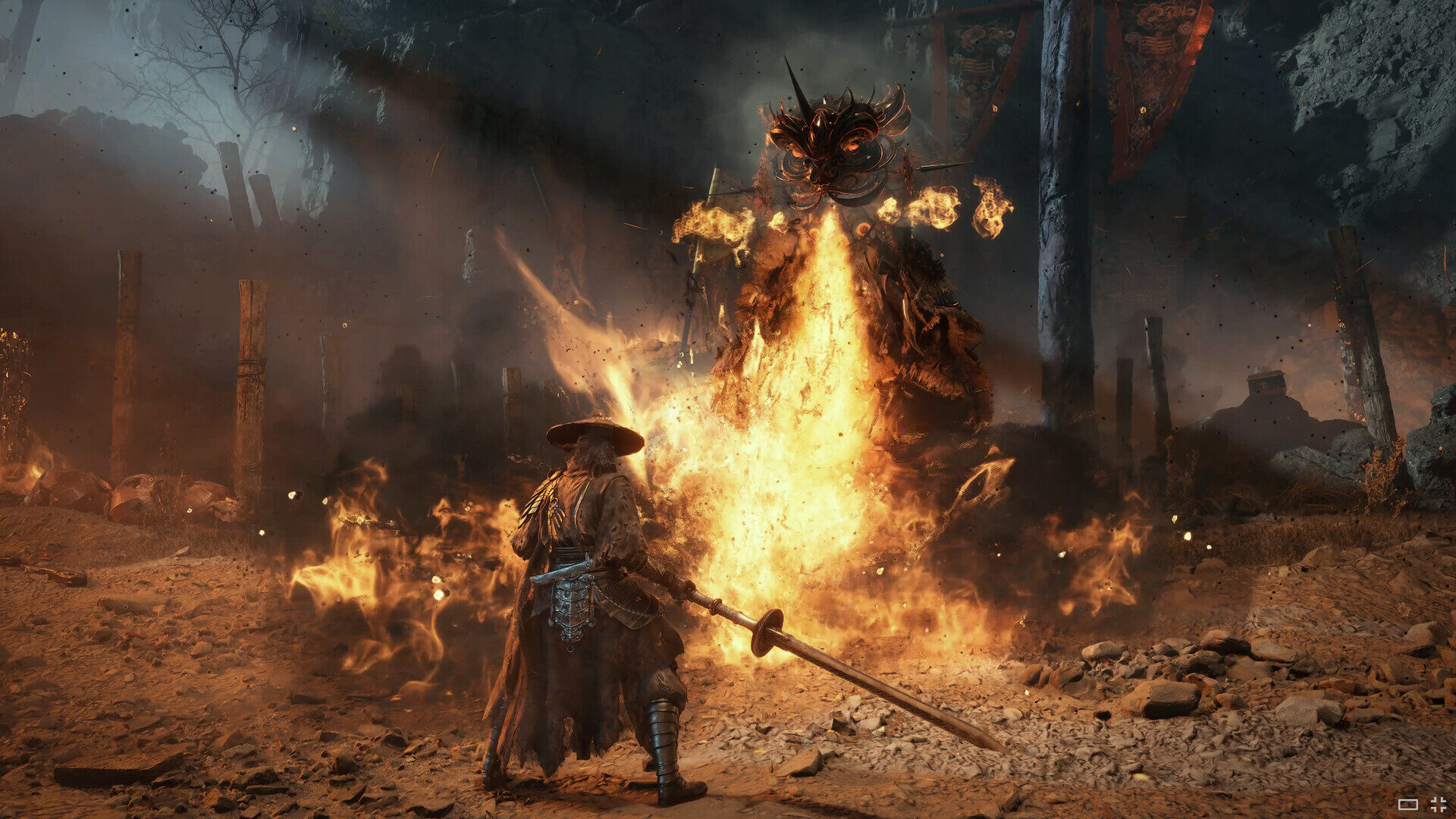
The Chinese indie developer, S-Game, invited CGMagazine to Los Angeles, California, to play a near-final build of the highly anticipated Phantom Blade Zero. There, I and several other outlets were allowed to play the first of the game’s eight chapters, as well as preview some of the game’s coolest bosses. And the game took little to no time to present a challenging, yet exciting action experience with plenty of gameplay variation.
Before I jump into what makes the game’s combat mechanics stand out, context must be added in order for part of the action’s depth to shine. The game begins with a younger Soul at a more peaceful time of his life, taking a walk through a beautiful Chinese forest. Even though the visuals look like something I’d expect from today’s top-tier current-gen or even something from next-gen video games, it was completely playable and solid proof that all the beautiful previews of the game have not been bluffing.
The first chapter of the game started with a scenic and linear tutorial that thankfully never felt like it was insulting the player’s intelligence. After the basics of movement, dodging, parrying, and attacking are explained and practiced, the game’s story instantly jumps ahead and kicks up the drama. I don’t want to spoil the details of the game’s explosive opening, but it quickly establishes that the combat itself is faster than FromSoftware’s beloved Elden Ring and Dark Souls games. And S-Game couldn’t help but include an epic first boss fight that does not end well for the game’s playable character.
After Soul’s heart was fatally wounded, he was healed by the mysterious but foreboding Flesh Sculptor. Soul was given a replacement heart but a time limit of 66 days before it stops working, putting Soul on a mission that’ll require him to confront his past.
To the benefit of the player, it’s a past filled with a murderous group of supernaturally powered and extremely skilled martial artists who are prepared to challenge Soul, and maybe even provide some of the best boss battles of the genre. On the first playthrough, the 66-day time limit is purely a narrative tool that doesn’t affect gameplay, but with Phantom Blade Zero’s new game plus mode, players will only have 66 lives to beat the game with.
Phantom Blade Zero’s first sections that make up chapter one are titled Against The Flow and Steel And Steam. During my time with the game, it was the perfect venue to practice using Soul’s sword skills to further grasp the game’s basic mechanics, which feel like the perfect combination of some of the most influential action games of all time.
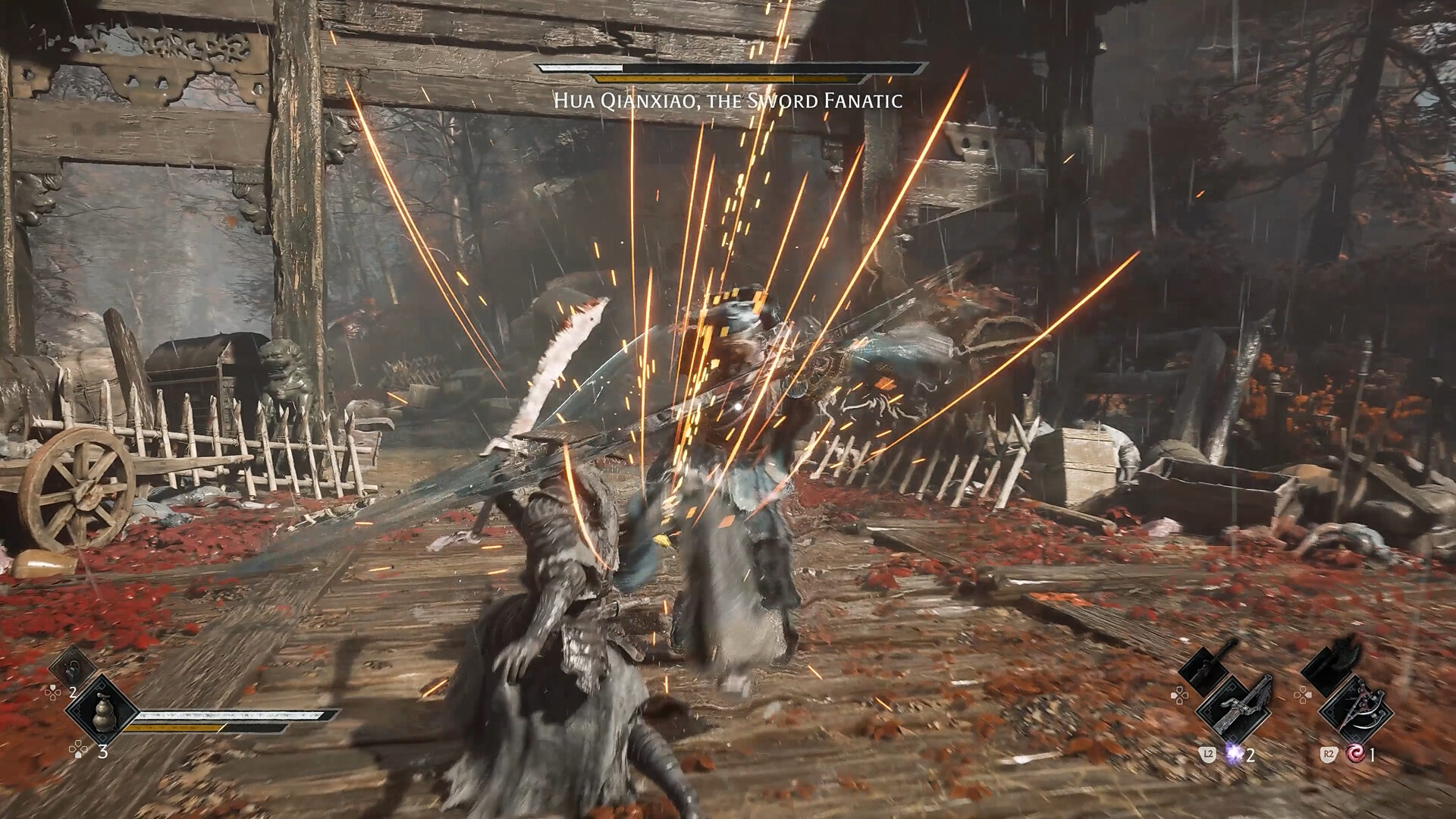
Soul and all of his enemies have both a health bar and a separate meter called Sha-Chi. It acts like a stagger gauge that is also tied to Soul’s ability to guard. Keeping pressure on enemies, parrying attacks, and landing enough heavy attacks shrink the enemy’s Sha-Chi meter, and once it’s gone, the opportunity presents itself to deliver a stylish instant kill attack or huge amounts of damage, depending on the power of the foe.
Parries provide a lot of Sha-Chi damage to enemies, which gives extra incentive and reward for players who have great timing. From what I played, nearly all battles could be played with Soul’s sword with a focus on parrying like Sekiro: Shadows Die Twice, but as soon as more weapons present themselves, incentive to experiment with different playstyles grew significantly.
“S-Game’s dedication to action and strong level design is sure to put them on everyone’s radar and Phantom Blade Zero in the running for one of the best action games of the year, maybe even the decade.”
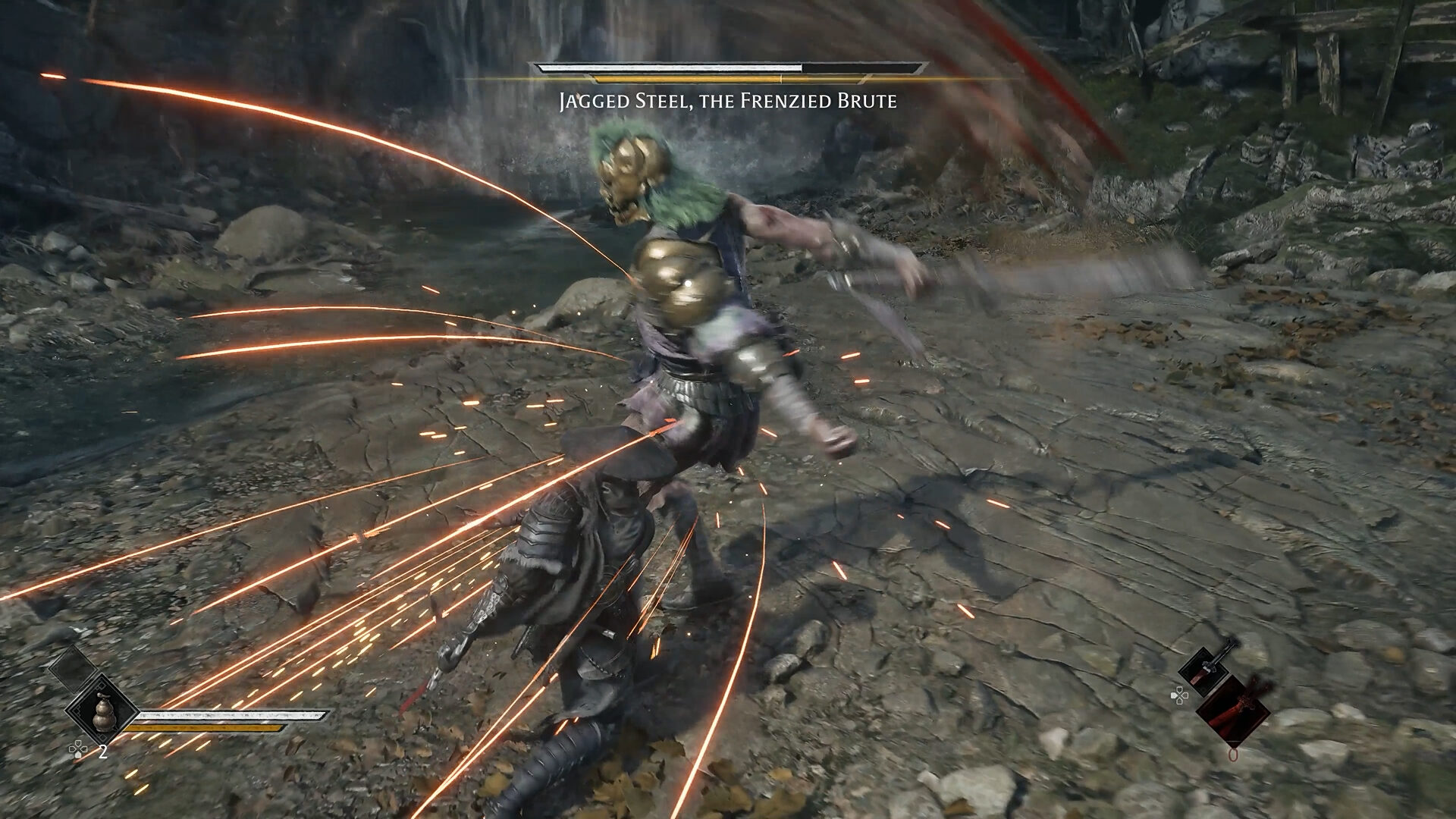
Chapter 1 does not drag its heels in giving Soul more than his sword to play with. The first weapon that players will need to earn from one of the game’s first bosses is the much heavier Jagged Blade. It’s a lovely and gruesome introduction to another layer of depth Phantom Blade Zero’s combat delivers. The new weapon allows Soul to dish out loads of bleed damage that fills an invisible meter that delivers huge chunks of extra damage if built up. Providing yet another avenue or gameplay build option for players to enjoy.
The player is able to quickly swap between weapons and is even incentivized to do so thanks to the action resetting Soul’s Sha-Chi meter. It proved extremely helpful during the game’s most intense battles. Each weapon I was able to practice with had unique range, combos, and even upgrades. And with many of the world’s most talented martial artists providing motion capture for the game’s weapons and bosses, each of the game’s 30 primary and 25 special “Phantom Edge” weapons is a treat to witness because their animations are authentic and easily some of the best I’ve ever seen in a video game.
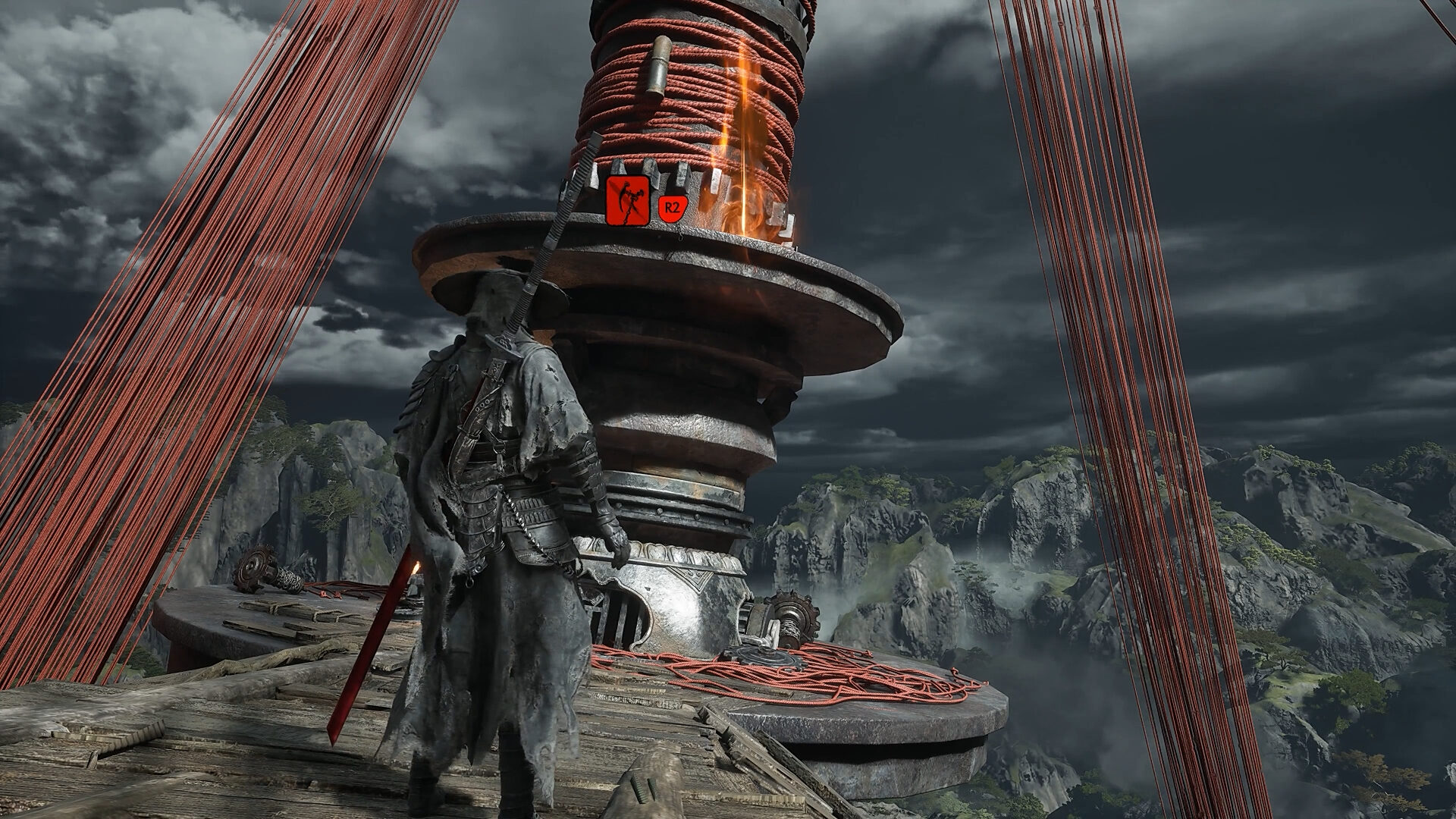
Phantom Blade Zero can feel linear at times, but its branching paths lead to many secret areas containing upgrade materials, consumables, and even optional boss battles that I was nowhere near levelled up enough to take on. It helps make the world exciting to explore, which is something a lot of today’s games struggle to accomplish. Another element S-Game thankfully borrows from the best Soulsborne games is its map design that contains clever shortcuts that connect areas to one another, which was incredibly handy because the game can be tough, especially some of the bosses.
During the first chapter of the game, I fought around half a dozen bosses, with several of them requiring at least a dozen tries to defeat. Judging from others’ reactions around me, I was not the only one who had their own hero’s journey to get good at the game.
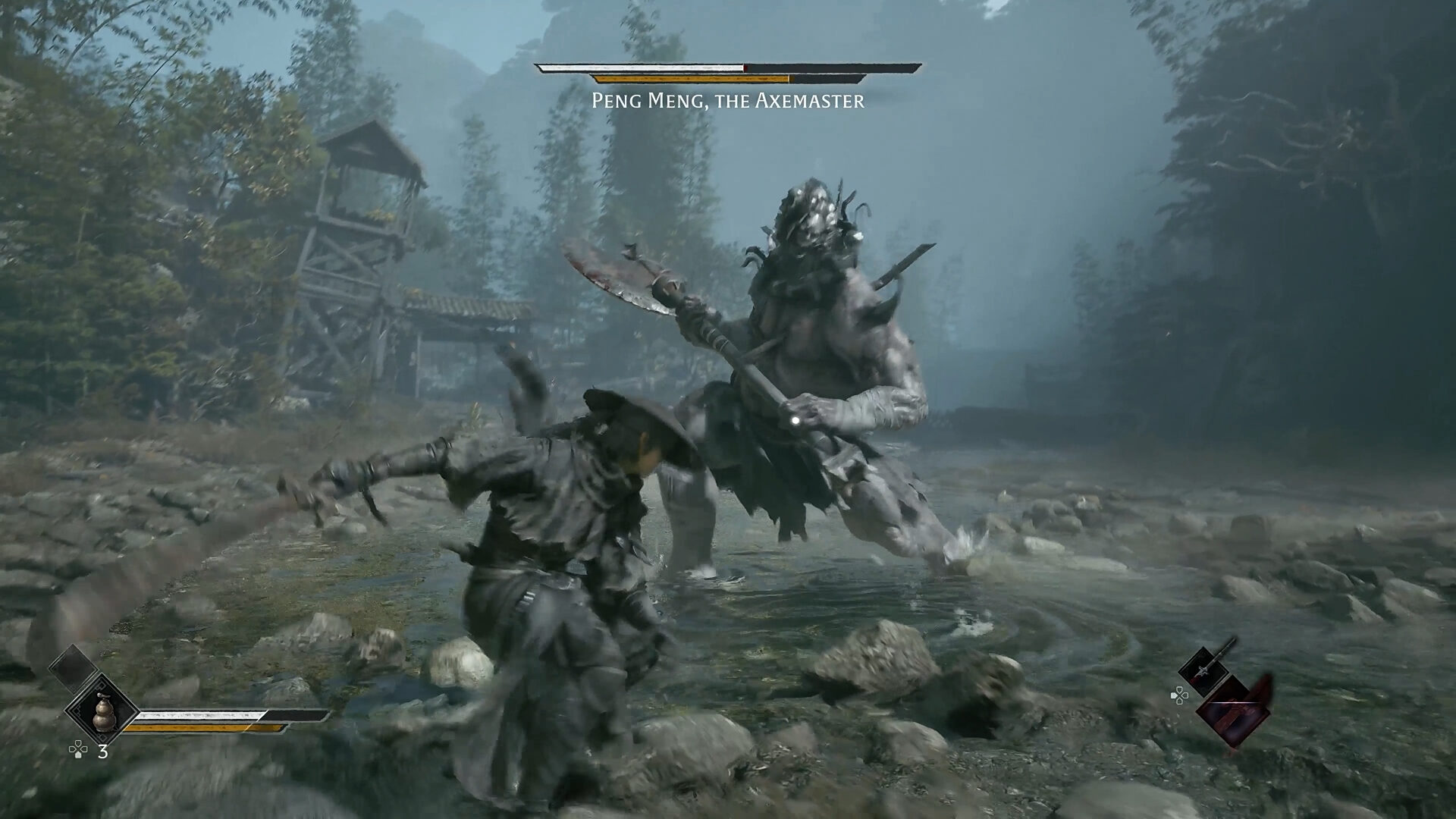
Each boss felt very unique in both their attacks and the tactics required to fight them. The first boss that required me to lock in was Peng Meng, the Axemaster, whose formidable strength and exceptional range delivered more deaths than I’d like to admit. However, their defeat unlocked one of my favourite additions to the already varied combat: the Dread Axe, a heavy weapon known as a Phantom Edge that acts much like an ultimate attack.
The Phantom Edge weapon that I was able to experiment with allowed me to grip my huge axe with levels of intensity so grand that dirt and aura began to erupt around me. In another moment where the sound design shines, it accentuates that attack with an extremely satisfying ring that grows in intensity until the charge button is released and the giant axe comes down on the unfortunate enemy or area-blocking obstacle in your path.
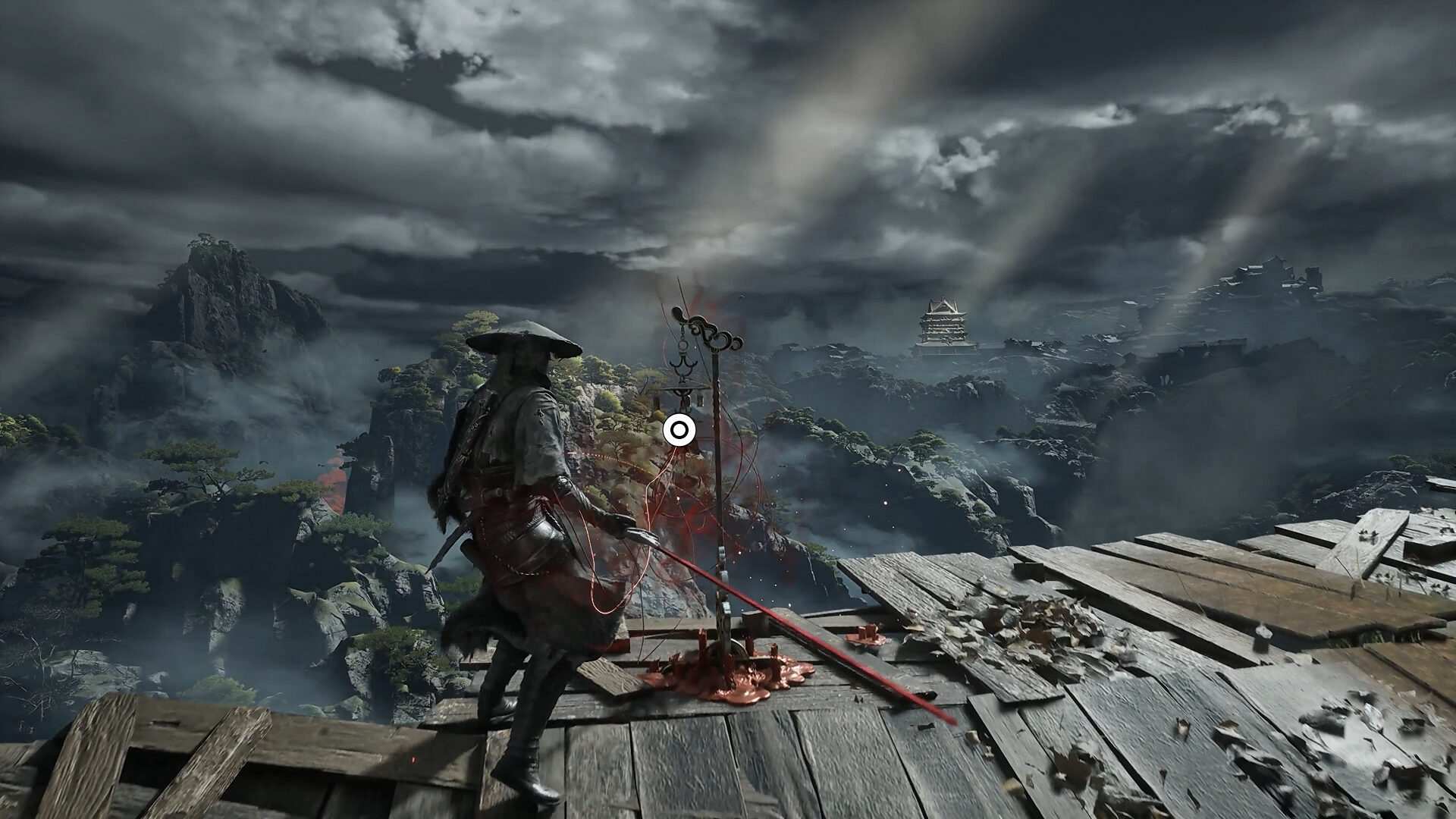
With my many paragraphs attempting to explain how fun and full of options Phantom Blade Zero’s combat is, I do not mean to shortchange how beautiful its environments and levels are, and how rewarding they can be to explore. Besides valuable upgrade materials and optional bosses, exploring can yield access to one of the game’s side quests. It was a priority for the team at S-Game to build fewer side quests that are more dense with plot and excitement, or as the game director Mr. S explained, “Since Soul only has 66 days to live, he isn’t wasting his time helping nannies find a missing pet.”
By the time that my preview with Phantom Blade Zero concluded, I’d triumphed over multiple bosses that thoroughly kicked my ass, began to understand the game’s expansive combat options, and explored a world that I am more than anxious to see more of, and the extravagant bosses waiting for me. S-Game’s dedication to action and strong level design is sure to put them on everyone’s radar and Phantom Blade Zero in the running for one of the best action games of the year, maybe even the decade.
Phantom Blade Zero releases on October 28, 2026, on Steam, PS5 and the Epic Games Store.