
Magic: The Gathering is now one of the longest-running TCGs, and it has undergone many changes over the years. In recent years, it has gone beyond the confines of the Magic universe into different properties. The most recent collaboration is with Marvel, and it is a major one. Taking cues from the comics people around the world have grown up with for years, Magic: The Gathering | Marvel Super Heroes introduces new mechanics, classic heroes and villains, and looks to be a massive shift for people who love comics and the world of Magic.
While at Summer Game Fest, I got the chance to speak with the senior game designer at Wizards of the Coast, Daniel Holt, to talk all about Magic: The Gathering | Marvel Super Heroes and what it brings to the game. From the new Commander decks to the specific new mechanics the set brings to the game, we go over all the new aspects the set introduces and why this could be the perfect time to dive in if you have been on the fence about Magic: The Gathering.
Wizards of the Coast has done numerous collaborations for Magic in the past. What makes Magic: The Gathering | Marvel Super Heroes special, and why should people be excited?
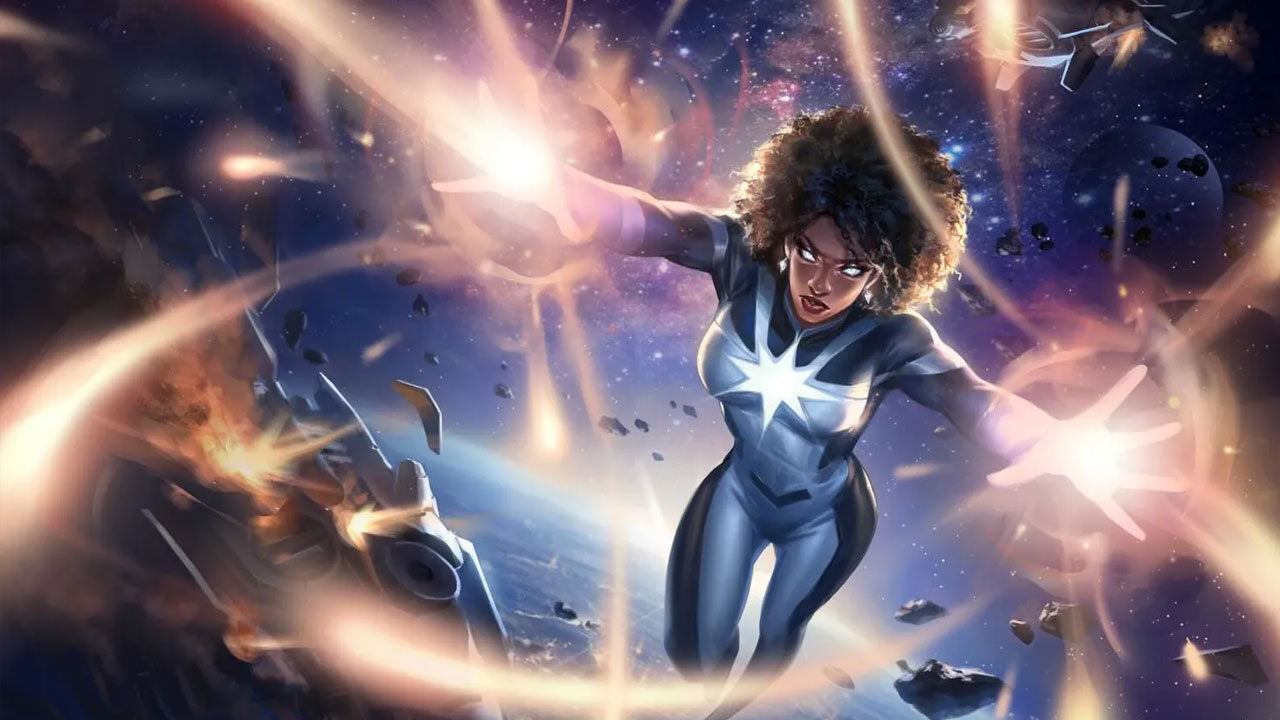
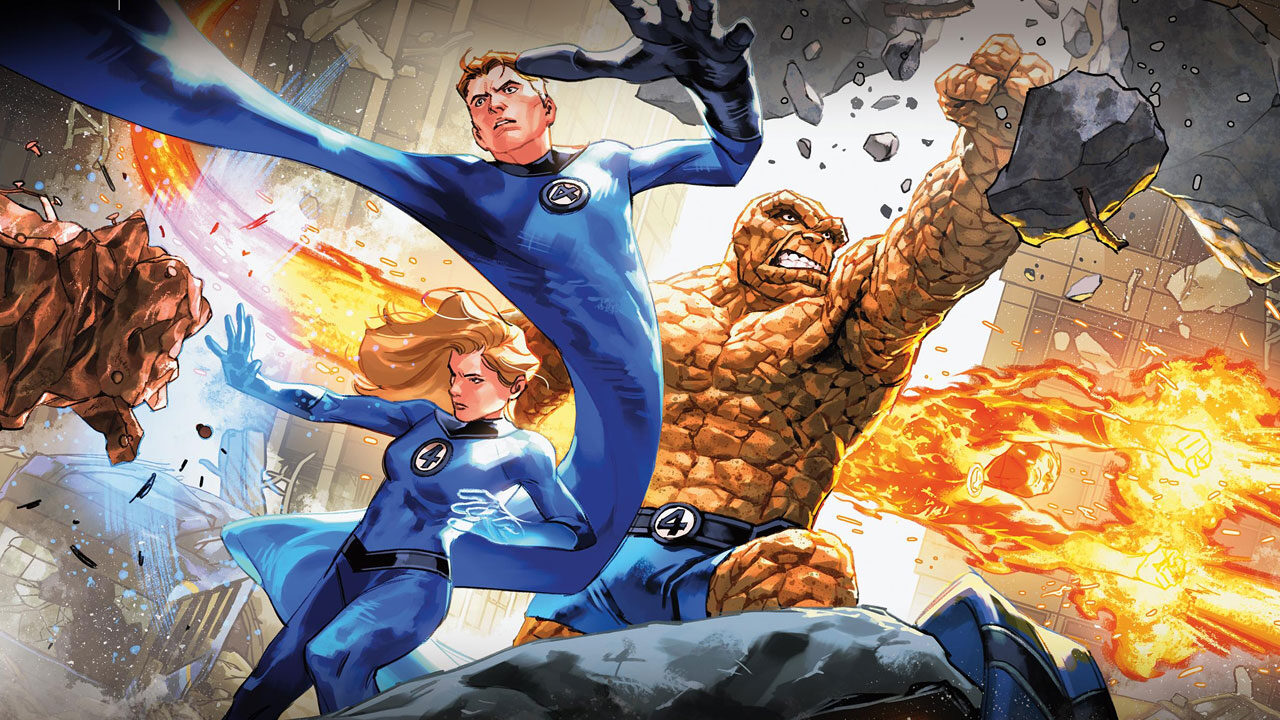
Daniel Holt: Yeah, I think Marvel, especially this set—you know, we did Spider-Man first. Everybody loves Spider-Man. This one’s so expansive that your favourite hero, if it’s not Spider-Man—Spider-Man’s here too—if you have a favourite superhero, it’s probably here. I love the Fantastic Four. I’m repping their merch right now. I got to make a whole Fantastic Four Commander deck that is being brought in right now. Invisible Woman is my favourite superhero of all time, and I got to make a Commander deck with her as the face. So, I know, with all these legendary characters, people are gonna get their favourite character. They’re gonna build a whole deck around their favourite superhero.
You mentioned during our game that there are some new mechanics in the Magic: The Gathering | Marvel Super Heroes set. Can you guide us through what is new and what features people should be excited about?
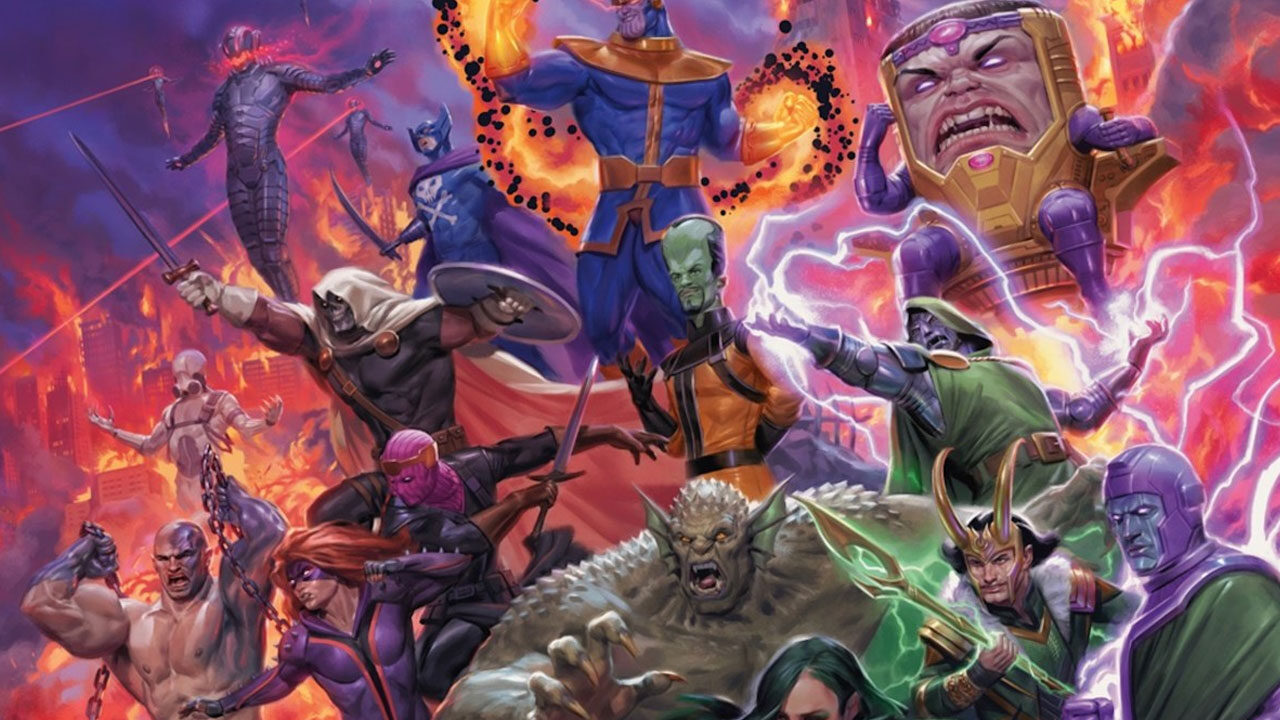
Daniel Holt: Yeah, so in the main set, we have a couple of new mechanics. Let’s talk about the villain stuff first, because that’s fun. We have Connive. That’s where you—it sounds right, like, the flavour is very real. You’re looking for the right card, you discard, and if you discard a nonland card, you get to put a +1/+1 counter on [the creature], so your villains get stronger. You’re growing your villains over time; they’re scheming.
And then they have the Plans. This is representing famous stories where the villains are planning to do something. Whenever you achieve their task, you get a plan counter, and with enough plan counters, you sacrifice the enchantment, and the big thing happens. They achieve their destiny. For the heroes, you have a power-up. This is going to be an additional cost. It’s an activated ability, but it’s reduced if you activate it on the same turn by the casting cost. So, if you do it right away, it’s a lot cheaper. Over time, you get a one-time effect, you get some counters, and that’s showing them powering up over time.
There’s also Teamwork. This is representing the heroes working together, so when you cast the spell with teamwork, you can tap your creatures of a certain power number, and because you use teamwork, the spell is stronger. You get more abilities, more effects.
And then there’s also now transforming modal double-faced cards—have to get that correct—TMDFCs, we always call them. That is where you can either play it—we’ll use Bruce Banner and the Hulk, for example. So, you can either play the front side as Bruce Banner, you can play the back side as the Hulk, or you can play Bruce Banner earlier and later pay mana to flip him into the Hulk. So, you really get whatever point of the game you’re at, whether you’re in the early stages with their [non-superhero] identity, or later in the game, you can just come right out.
Now, millions of people play Magic: The Gathering. It is a huge game, but Marvel and the superhero genre reach a far broader audience than MTG’s traditional player base. For someone who has watched others play Magic from the sidelines and is now thinking, “I love Marvel, maybe I will give this a try,” why is this the right moment to jump into the game?
Daniel Holt: I think it’s a really good spot in the game right now. We have so many different formats to play, whatever type of format you want to play, whether it’s casual Commander, whether it’s in the vein of 1v1 or the more skill-testing, like Limited, where you’re drafting stuff. So, it’s always a good time for that. But I think, like with every Universes Beyond, if it’s something you see that you love, you get to play it in Magic‘s biome. Whether it’s Marvel, Turtles, Final Fantasy, like every Universes Beyond. We add to the lineup something that is someone’s favourite, and now they can play Magic with that iteration.
Magic can be daunting. It can feel like a tough game to get into. What have you done to make it easier for new players, especially someone who sees Magic: The Gathering | Marvel Super Heroes and thinks, “I love this. I want to play Magic, but it looks intimidating. Where do I start?”
Daniel Holt: Okay, so with Marvel specifically, there are so many outlets. There’s a Beginner Box that’s a guided tutorial experience where it will teach you, turn by turn, how all the different effects in Magic are played. Once you finish that tutorial—I’ve done several of those today—you can go play a game of Magic on your own, really, and be just fine.
What we just saw [when we played] were the Welcome Decks. We shuffled them together and played them as is, but they’re also sort of a guided experience. These you can get at your LGS for free. Just get a copy of the deck and play with your friends. After that, there are precons, like the Commander precons. If you want to learn Commander, for example, you can just pick up a precon. It’s ready right out of the box. You can play with your friends.
I’ve designed these in a way so that complexity is not as high as some custom-built decks. You should be able to shuffle this up and fairly [quickly] learn how to play, if you don’t know how to play it. Jumpstart is included with Marvel, where you grab two booster packs, shuffle them up, and play. It’s just ready out of that. There’s no deck building. That’s gonna feel more like Limited, like Sealed or something, without the hoop of building a deck.
Then, naturally, there’s Draft and Limited. You can go to a Prerelease and do that, and then finally there’s Standard or other Constructed, like Modern, etc., to kind of curve into after that. So, there are so many avenues, especially with this, that we hit all the different speeds.
For someone who buys one of these Magic: The Gathering prebuilt decks and starts playing, what should they do next? Should they buy packs? Should they expand beyond this set? Where do they go from here?
Daniel Holt: So, if you buy the Commander deck, it’s perfect right out of the box, but if you want to keep going, what I like about Universes Beyond is that when you buy it, it’s a single package. When you buy this Fantastic Four deck I’m holding, it’s all themed to characters, friends, some enemies, or frenemies of the Fantastic Four.
It’s all built around that, but then you can go update it with cards from Magic that weren’t in here, cards from other Universes Beyond, and make it really your own deck. You can go buy packs from the main set and upgrade them with the cards from there. There are more Fantastic Four members in the main set that you could update the deck with. There are just a bunch of different avenues you could take.
For someone who is looking to get into Magic, do they go to the local card shop or go online? How do you recommend getting into this?
Daniel Holt: Usually, it’s that you have a friend in the group that’s like, “I love Magic,” and then they bring more friends, and that’s always the best. Kitchen table Magic at home, grab a Commander pod, play a board game at home. But yeah, your local game stores, I’m sure they have Magic nights, Friday Night Magic, local tournaments, Store Championships, things like that. Wizards lists Friday Night Magic, Store Championship and Commander among official Magic play/event terms. (MAGIC: THE GATHERING)
There are just so many different events. If you go to your local game store and, like, MagicCon is around—I know that’s a bit bigger, and we only have a couple of those per year, but if it’s in your city or near you, you could easily go. But yeah, it’s just wherever you can find them.
Now, for people who are more experienced or who know Magic well, and they don’t necessarily like Marvel, why should they care about Magic: The Gathering | Marvel Super Heroes? What is in there for them?
Daniel Holt: So, it’s still a core Magic set, and there’s a lot of new cards here that are doing unique things that might appeal to them from a Magic player perspective. Maybe they don’t have a favourite character in Marvel, or they don’t know much about Marvel, and they’re like, “Oh, but this card reads really cool,” or it inspires them to go build a deck with it, and maybe they like the character after that.
Because, in Magic, there are no videos, there are no movies. Back in the day, I fell in love with Champions of Kamigawa. I love everything from that plane. I want to learn more about that. So, you pick up a Marvel deck, you’re like, “I love this card.” They can go watch the movie, they can fall in love with characters, and then see them in other representations.
But one final question: how did the Magic: The Gathering | Marvel Super Heroes set come together? What was the planning stage? How did it become “We need Marvel in the Magic universe,” and from that, actually become a real set?
Daniel Holt: I mean, I like to think that Mark Rosewater just yelled loud enough. Honestly, you met the man; he loves Marvel. I can hear him in the other room on a recording. No, I think it was just such a nice blend. It was, you know, Magic, such a large IP. Marvel has all of these worlds and characters to offer. It really made a nice overlay.
And the thing about things like Marvel, like games like Final Fantasy, etc., coming into Universes Beyond, players kind of expect certain things, and the mechanics make sense. So, there’s less of a hoop to jump into. When you see a Thor character, you know he flies. All these characters that fly, they fly in our game. Thor’s thunder does lightning damage, so the Lightning Bolt with Thor on it does three damage. Everything just kind of clicks, so it’s a lot easier to understand.
Now, are there any plans to go beyond Magic: The Gathering | Marvel Super Heroes?
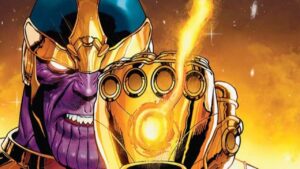
Daniel Holt: Well, I can’t say anything, you know. We’ve done Spider-Man, we’ve done Marvel. Here, there are a lot of characters you may have noticed weren’t brought into the set, and there are a lot of favourites out there, and we’ve done two Infinity Stones so far, so that should give you an idea.
There you go. Thank you so much.
Daniel Holt: Yeah, thank you.
Magic: The Gathering | Marvel Super Heroes officially releases on June 26, 2026.