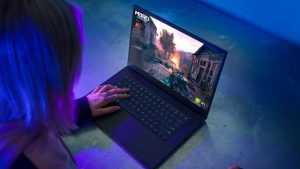


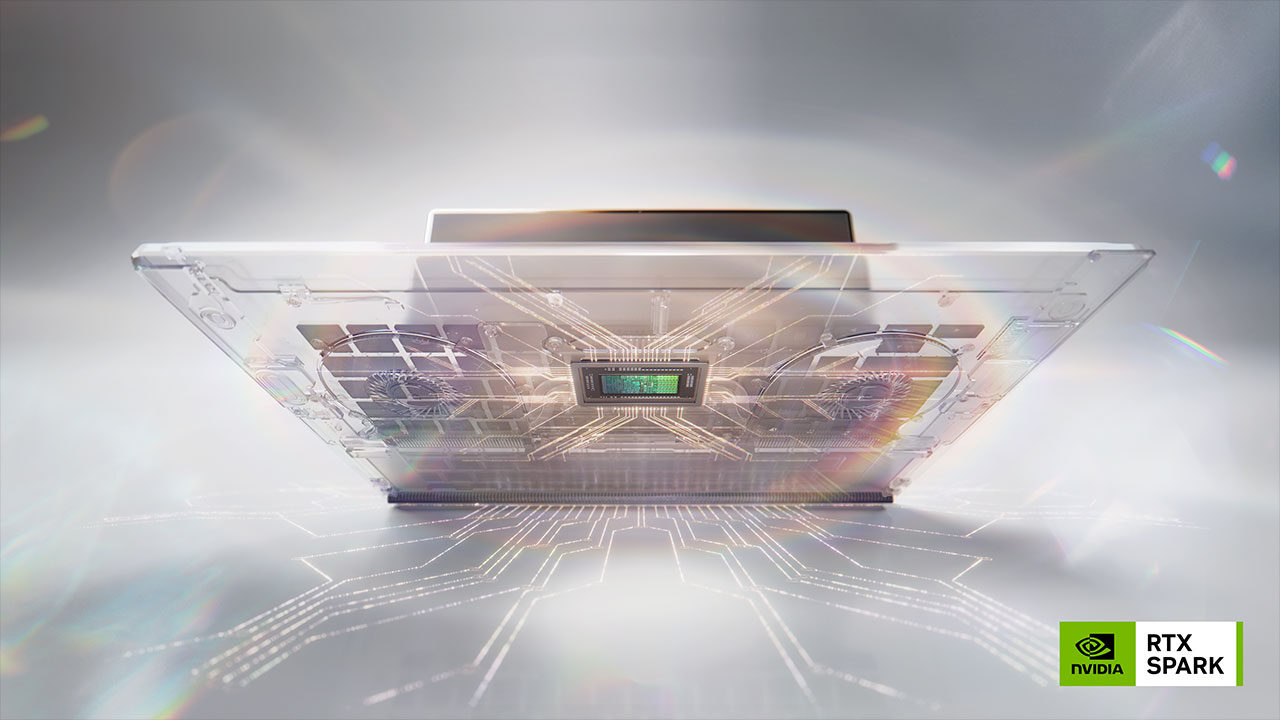
NVIDIA used Computex 2026 to make one of its boldest moves yet, unveiling the RTX Spark, a new Arm-based chip aimed at laptops and compact PCs.
Computex has long been a place for PC tech giants to reveal new and exciting announcements that look to change the face of personal computing, and NVIDIA came out swinging with the announcement of its new SoC. It delivers the power of an RTX 5070 while enabling AI, content creation, and gaming on an incredibly mobile platform.
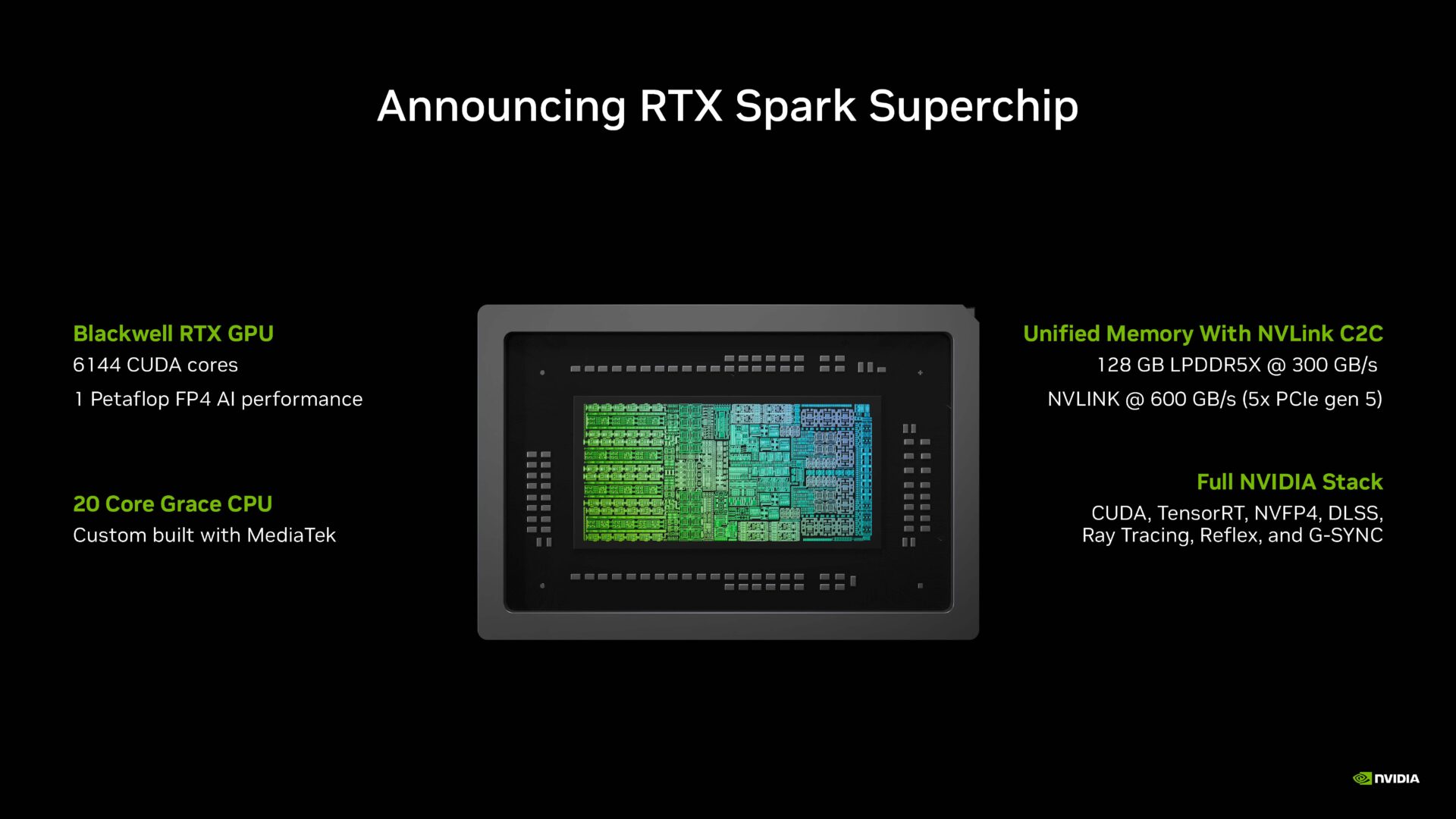
Built in collaboration with MediaTek, the RTX Spark features 6,144 CUDA cores, one petaflop of FP4 AI performance and 20 Grace CPU cores, all of which can be paired with up to 128 GB of LPDDR4X unified memory running at 300 GB/s.
There were rumours about what the NVIDIA Computex announcements would be, but NVIDIA went into detail about what this new SoC would bring to laptops and mini-PCs, and from the presentation, it looks impressive. Built on Arm, the RTX Spark is made for a wide range of uses, and thanks to its architecture, it enables tasks that would normally not be possible on a laptop that runs this efficiently.
In the presentation, NVIDIA noted that because the RTX Spark features the full NVIDIA stack, it can perform a range of tasks, including running local AI agents. This allows a 120B-parameter model with a 1M context window to run locally, enabling users to use agents and AI workflows on a laptop without relying on external services or subscriptions.
Beyond that, the RTX Spark is built for more than just running AI locally, with NVIDIA boasting its performance for content creation and gaming. The NVIDIA representative went into detail about how the RTX Spark could handle 12K 4:2:2 video editing, render 90 GB 3D scenes in software like Blender, and achieve 100-plus FPS at 1440p in the latest titles like DOOM, Cyberpunk 2077, or Indiana Jones and the Great Circle.
There is a lot to take in with this announcement. With this, NVIDIA is jumping into the mobile chip market right alongside Qualcomm, Intel and AMD, and with the NVIDIA RTX GPU advantage, RTX Spark-based laptops would be built from the ground up to avoid the many compromises Arm-based machines currently have, especially when it comes to graphics performance.
“NVIDIA detailed what to expect with RTX Spark devices: all-day battery life, matte glass touchpads, precision-machined aluminum bodies as thin as 14 mm, HD cameras, and, of course, colour-accurate tandem OLED G-Sync displays.”
Currently, Qualcomm has been improving its GPU performance, but the RTX Spark aims to deliver RTX 5070-level performance, all in a machine that retains Arm efficiency, making it a compelling option.
And judging by the details about what consumers should expect from the laptops, the RTX Spark-built machines appear to be a very exciting, premium option. NVIDIA detailed what to expect with RTX Spark devices: all-day battery life, matte glass touchpads, precision-machined aluminum bodies as thin as 14 mm, HD cameras, and, of course, colour-accurate tandem OLED G-Sync displays. All of this feels purpose-built for content creation and gaming, making the experience feel like that of a top-of-the-line laptop in every way.
Along with the announcement of RTX Spark, NVIDIA went into detail about planned updates for Adobe Premiere and Photoshop that will take advantage of the architecture in RTX Spark. This means users can take advantage of creative agents for various tasks in the software, with NVIDIA boasting up to 2x faster AI, editing, colouring and effects within the two software packages.
“The best creative work in the world happens in Adobe tools from Adobe Firefly to Photoshop and Premiere, and the expansion of our partnership with NVIDIA and Microsoft will make those experiences faster and more powerful than ever,” said Shantanu Narayen, chair and CEO of Adobe. “Together, we are building AI-native creative experiences for RTX Spark that deliver the performance, intelligence and responsiveness people need to create at the pace of their
ambition.”
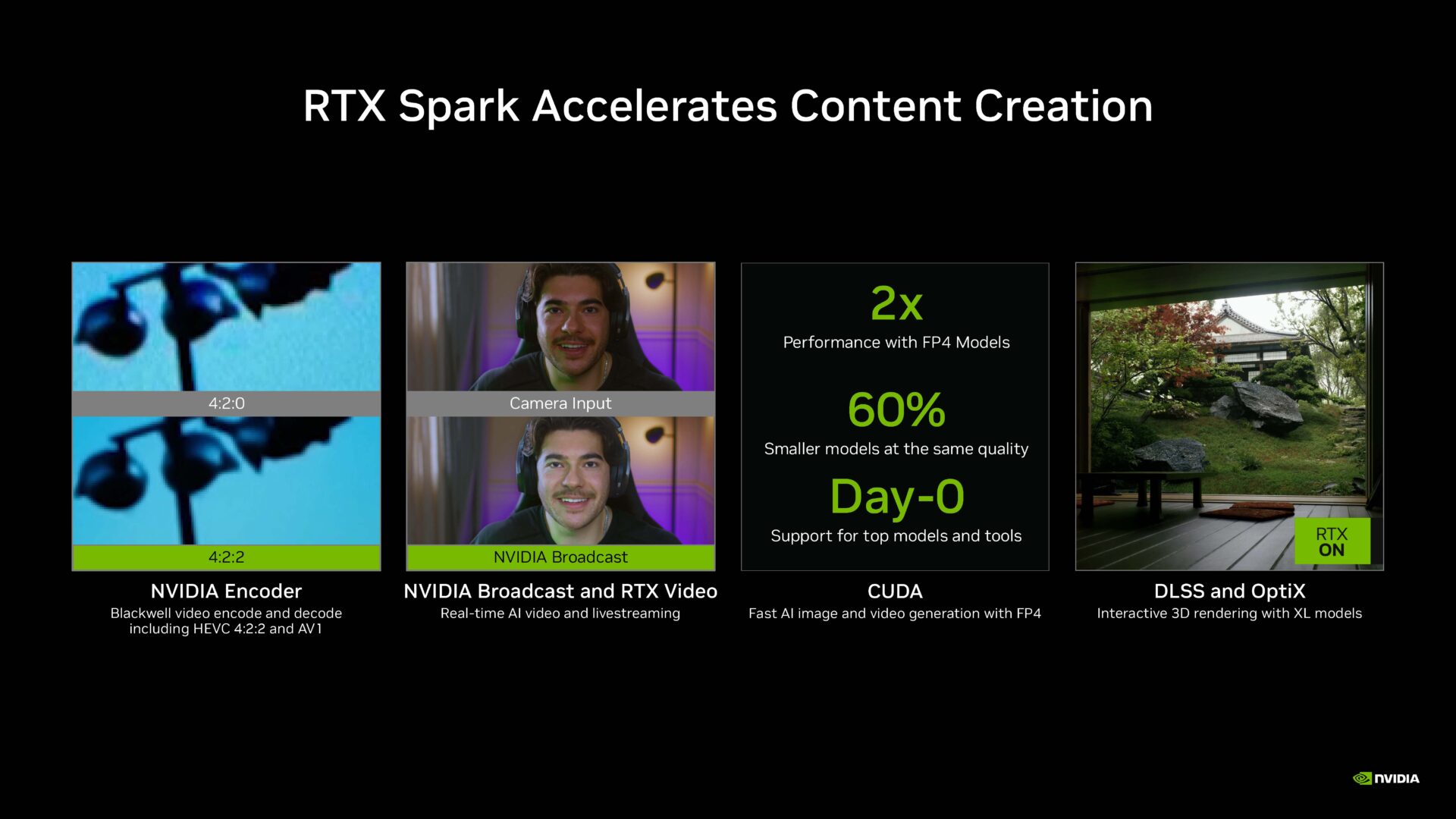
While AI was a big aspect of the RTX Spark presentation, the world of content creation also got a fair amount of time, with NVIDIA going into detail about how the many features RTX brings to the table will all be present with this new SoC. That means all the tools currently available to creators will be available on RTX Spark.
This includes the NVIDIA Blackwell video encoder, NVIDIA Broadcast and RTX Video, DLSS and OptiX for 3D rendering, and AI that can be run locally for various creative tasks, such as helping run a stream, working alongside you as you edit and work on creative projects, along with a range of other uses depending on your needs. Working in a range of software from OBS, CapCut, Blender, and Blackmagic Design, NVIDIA seems to already have substantial industry support to make the RTX Spark a force to be reckoned with when it launches later this year.
“Blackmagic Design and NVIDIA have accelerated video production for many years,” said Grant Petty, CEO of Blackmagic Design. “Portable, lightweight RTX Spark laptops with fantastic battery life are going to help our customers take the next leap in on-the-go production.”
Of course, since this is an RTX-based platform, you can take advantage of all the features NVIDIA allows for gaming. With specs that are similar to an RTX 5070, you have a lot of power in a thin-and-light laptop to take advantage of today’s biggest games without compromising on performance and visual fidelity.
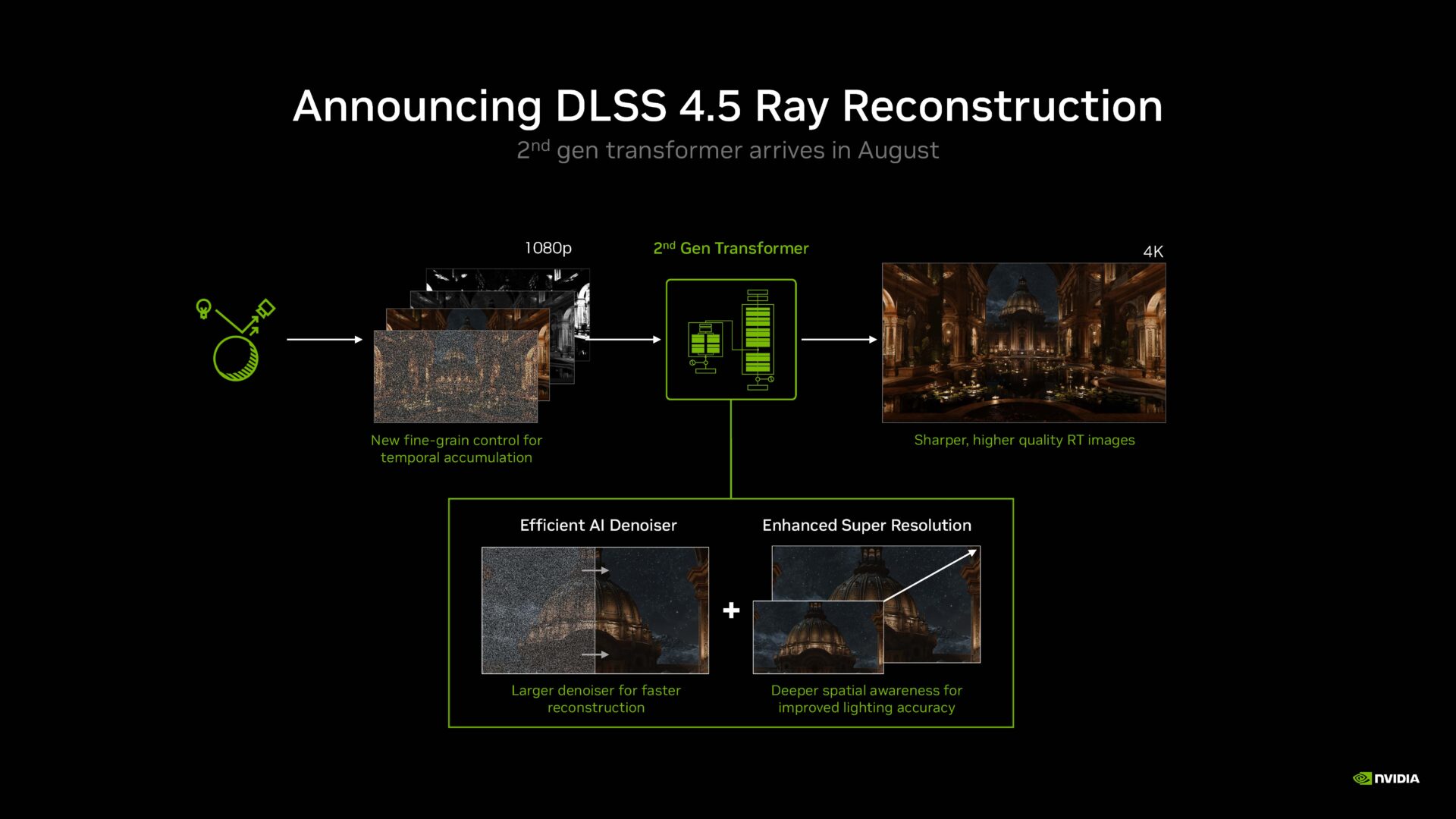
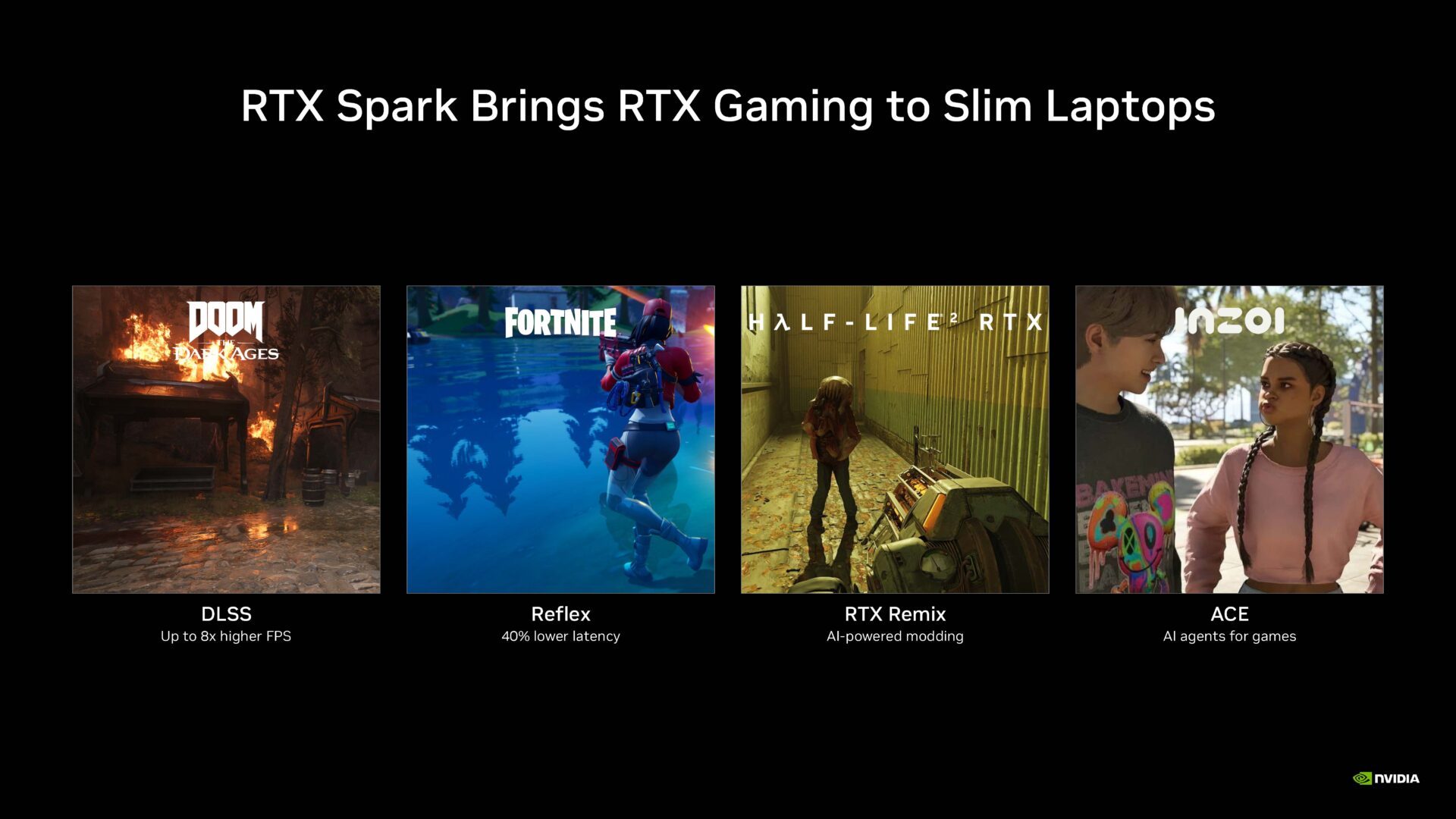
NVIDIA walked the press through how the RTX Spark can deliver high frame rates in games like Doom: The Dark Ages and Fortnite, enable modding with RTX Remix, and support ACE for AI agents in games. However, it should be noted that no comparison benchmarks were shared during the presentation, and all questions about performance were deferred until later this year. NVIDIA did talk about DLSS Ray Reconstruction coming to the RTX Spark when it launches, making the transformer model in the latest version of DLSS even more powerful at delivering visually stunning games at more playable frame rates.
Along with the announcement of the new NVIDIA RTX Spark, we were also briefed on the new collaboration between NVIDIA and Microsoft for the new Windows experience for personal agents. This includes new security primitives and NVIDIA OpenShell to run agents securely on your primary device, giving you more ability to work with agentic workflows without needing to run them on a separate machine.
With the power of RTX Spark, local agents can better handle a range of tasks. As local models become more capable than ever and finally reach the point where they can handle agentic workflows, the new features give laptops or mini-PCs featuring RTX Spark the ability to take on more complex workloads and have your AI work alongside you.
In a demonstration, NVIDIA showed off the ability to use an agent to work alongside your Photoshop workflow, giving you more ways to tackle complex tasks and overcome aspects that could bog you down. It remains to be seen how these workflows actually improve the end results, but the ability to free up creatives by taking on repetitive or tedious tasks while they focus on what they are good at is an interesting idea. We will see how people use these tools in real-world scenarios.
While we still do not have all the answers about what the RTX Spark will deliver in terms of performance, or what all the features of laptops built on this new SoC will look like, what has been announced is very exciting and is sure to shake up the world of laptops and small mini-PCs.
The overall design of the RTX Spark, and how it will deliver performance, looks set to make NVIDIA a major player in mobile computing and has made choosing a new gaming laptop even harder. If everything NVIDIA has detailed can live up to the hype, this could be a big changeup come the fall. We will have to wait and see as more details emerge about this new SoC, but as it stands now, we have not been this excited to dive into a new laptop SoC in a long time. We cannot wait to see how the RTX Spark fares for gaming, content creation and, of course, local AI workflows.