3D scanning has long been a tedious endeavour, with even simpler options on the market feeling like they require users to learn a complex new skill. Creality is looking to change that with its new Pika portable 3D scanner.
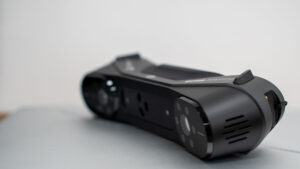
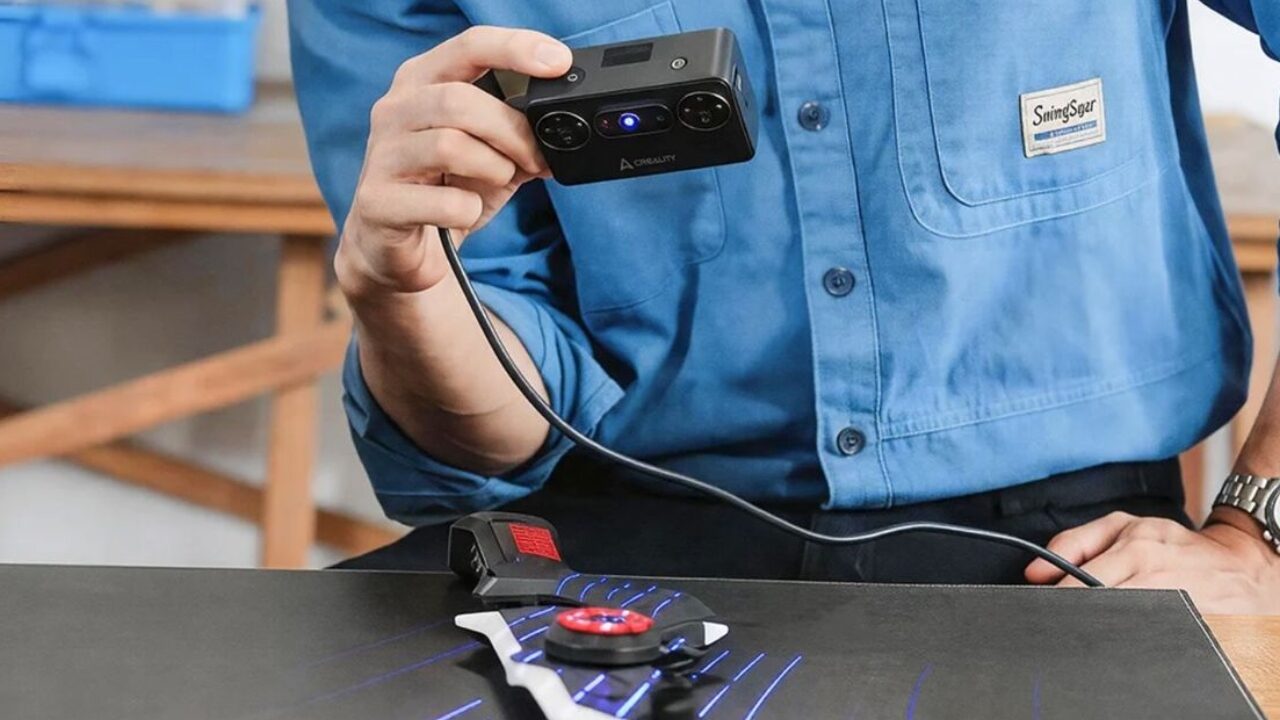
Designed for portability, the Creality Pika resembles a standard point-and-shoot camera more than the complex equipment many users are accustomed to. It appears to be a major step forward for makers, creators and anyone interested in 3D printing or modelling.
The company claims the compact device combines traditional 3D scanning with 3D Gaussian Splatting, a rendering technique designed to preserve colour, texture and depth that may be lost in a standard mesh model. Weighing 260 grams and measuring 100 by 60 by 35 millimetres, the Pika has the profile of a small digital camera, complete with a three-inch touchscreen for monitoring scans. Creality describes it as “the world’s first smartphone-like portable AI scanner,” reflecting the company’s broader effort to make 3D capture more approachable for hobbyists and professional creators.
The Creality Pika uses two capture systems: a seven-line blue laser for detailed close-range work on objects such as miniatures, models and components, and near-infrared structured light for people and larger objects. Creality claims accuracy of up to 0.03 millimetres in blue-laser mode, although the company notes that laboratory results may vary depending on conditions such as temperature and vibration.
Creality says the Pika aims to distinguish itself through its Gaussian splatting output. Rather than relying solely on conventional polygon geometry and textures, the technique uses a large collection of coloured, semi-transparent points to reconstruct how an object appears from different angles. In practical terms, this could make reflective plastics, metallic highlights, hair, fabric and translucent surfaces appear more convincing in a digital scene.
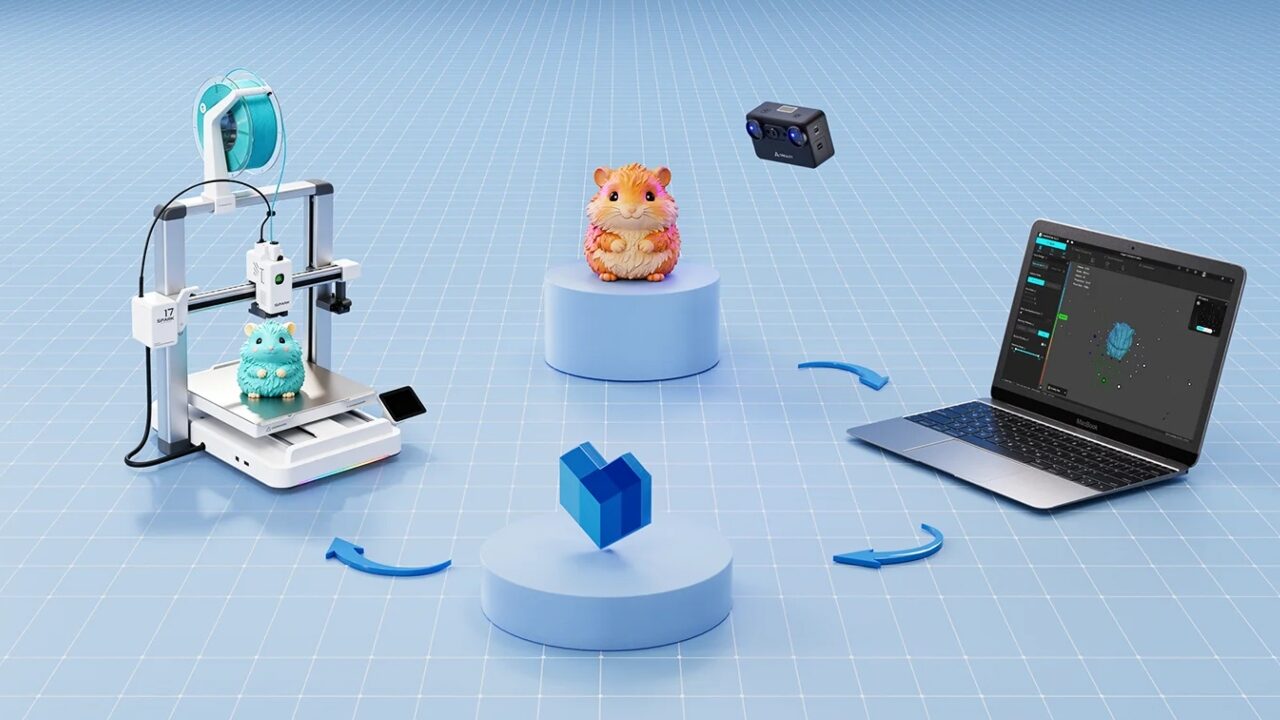
Creality says the scanner can turn objects into “editable 3D models” for creation and sharing, with exports available in STL, OBJ, PLY and ASC formats. The company also combines scanning, processing and basic editing through its CrealityScan software, along with AI-assisted texture mapping and hole filling.
That does not make Gaussian splatting a replacement for conventional scanning workflows. Printable objects, reverse engineering and measurement still rely on mesh data, while the Pika’s more visually focused output may be better suited to game assets, extended-reality previews, portfolio work and digital archiving.
The Pika launched July 22 for $699 USD, with a 10% introductory discount available for 20 days. It includes Wi-Fi 6 and USB 3.0 connectivity, along with two removable 3,350 mAh batteries.