

One of the benefits of PC building getting more expensive is that consumers now expect their cases to look as premium as their price implies. It’s no longer enough to slap wings and lights on the side and call it a gaming case. Fractal Design, however, didn’t need prompting—sleek, minimalist cases have been the brand’s whole thing since the start. One of Fractal’s new offerings, the Fractal Define One, puts that reputation to work inside and out, bridging the gap between full- and mid-sized towers while bringing premium build quality and style to the mid-range market.
The Define One is a case that’s difficult to categorize. Its 482 x 235 x 500mm footprint makes it too small to classify as a full-sized tower, but it’s compatible with some full-sized components, including E-ATX motherboards. Priced at $154.99, it also sits somewhere between affordable and premium. For a budget build, its full-size interior and top-tier cable routing system would be overkill. But for high-end builds, a 280mm radiator limit on the top rail is uniquely limiting, especially for a case of this size.
So what is the Define One, and who is it actually for? This case is best suited to workstation builds—specifically, air-cooled computers that prioritize storage and low noise over high-end CPU and GPU performance.
Here’s my rationale: Fractal Design makes cases that work best when they’re not overloaded. They’re beautiful and simple on the outside, easy to keep organized on the inside, but rarely top performers when it comes to cooling. Once you overpopulate them, the benefits are lost, and the airflow becomes even more restricted. The Fractal Define One is no different.
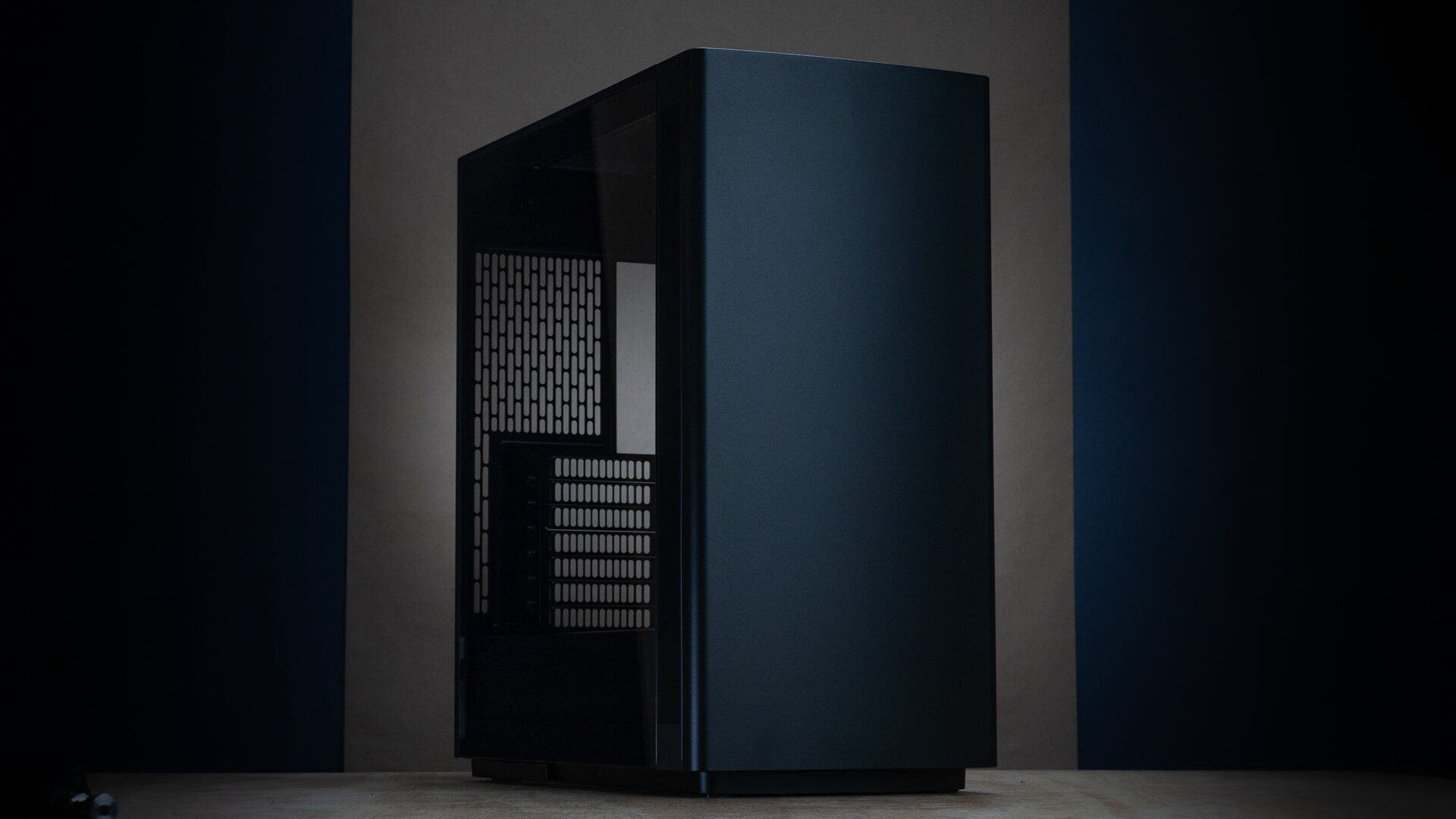
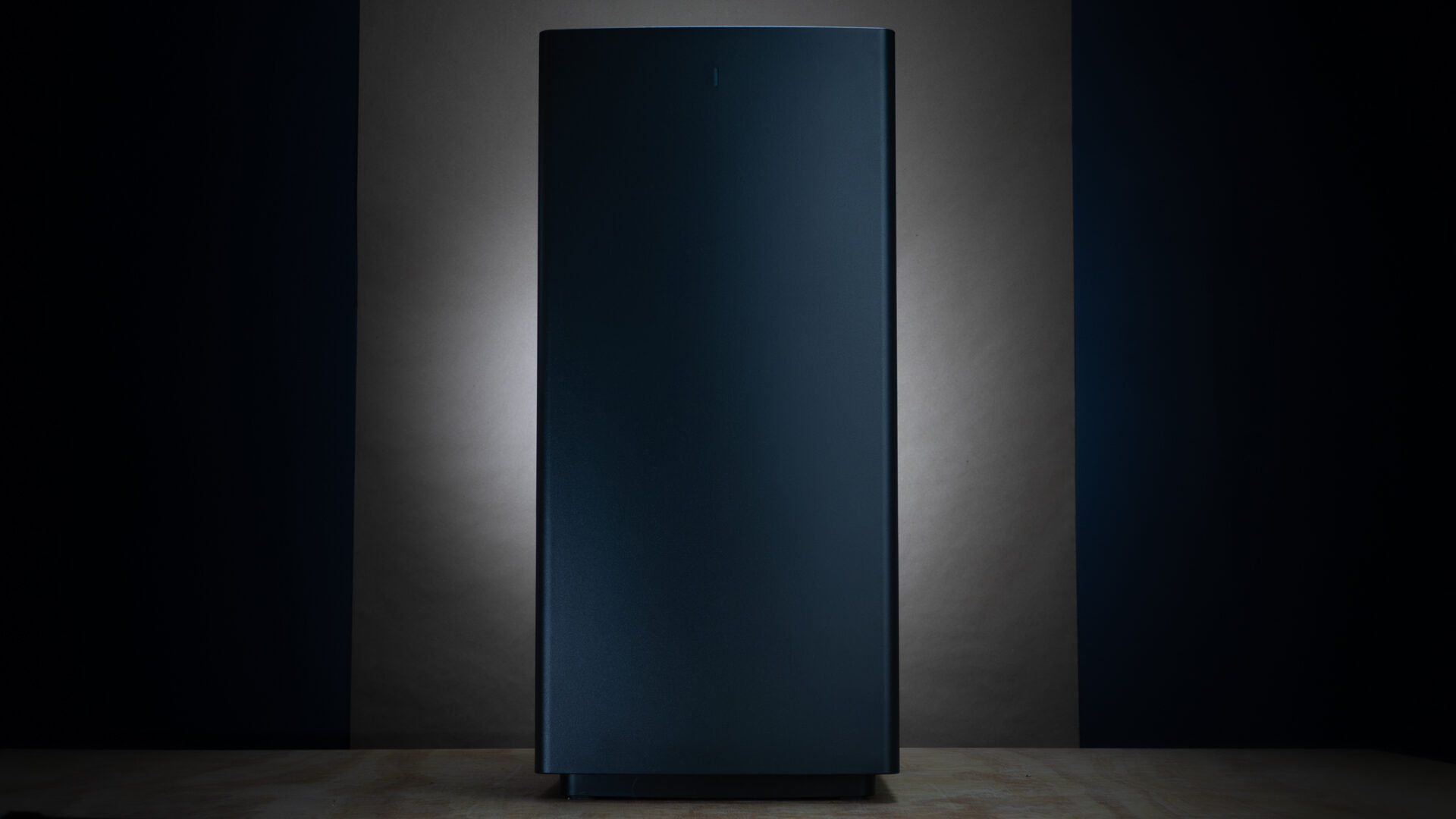
The most prominent feature on the Fractal Define One PC Case is its monolithic front cover. It’s a solid piece of alloy that stretches from top to bottom, with perforated aluminum accents on each side and noise-dampening foam on the inside. It clips over the front fan rail, which can accommodate a 360mm radiator but comes stock with three 140mm Momentum 14 PWM fans. One side has a tempered glass panel, while the other is an unventilated metal sheet, also backed with foam. When clipped in, the mesh top cover sits flush, nested between the other three panels.
What it doesn’t have is a full-sized fan rail on the top or the excessive mesh you see on dedicated gaming cases. The Define One’s top priority is its understated aesthetic, not airflow. It has just enough ventilation to get what it needs, but not much more. And no, that’s not a bad thing.
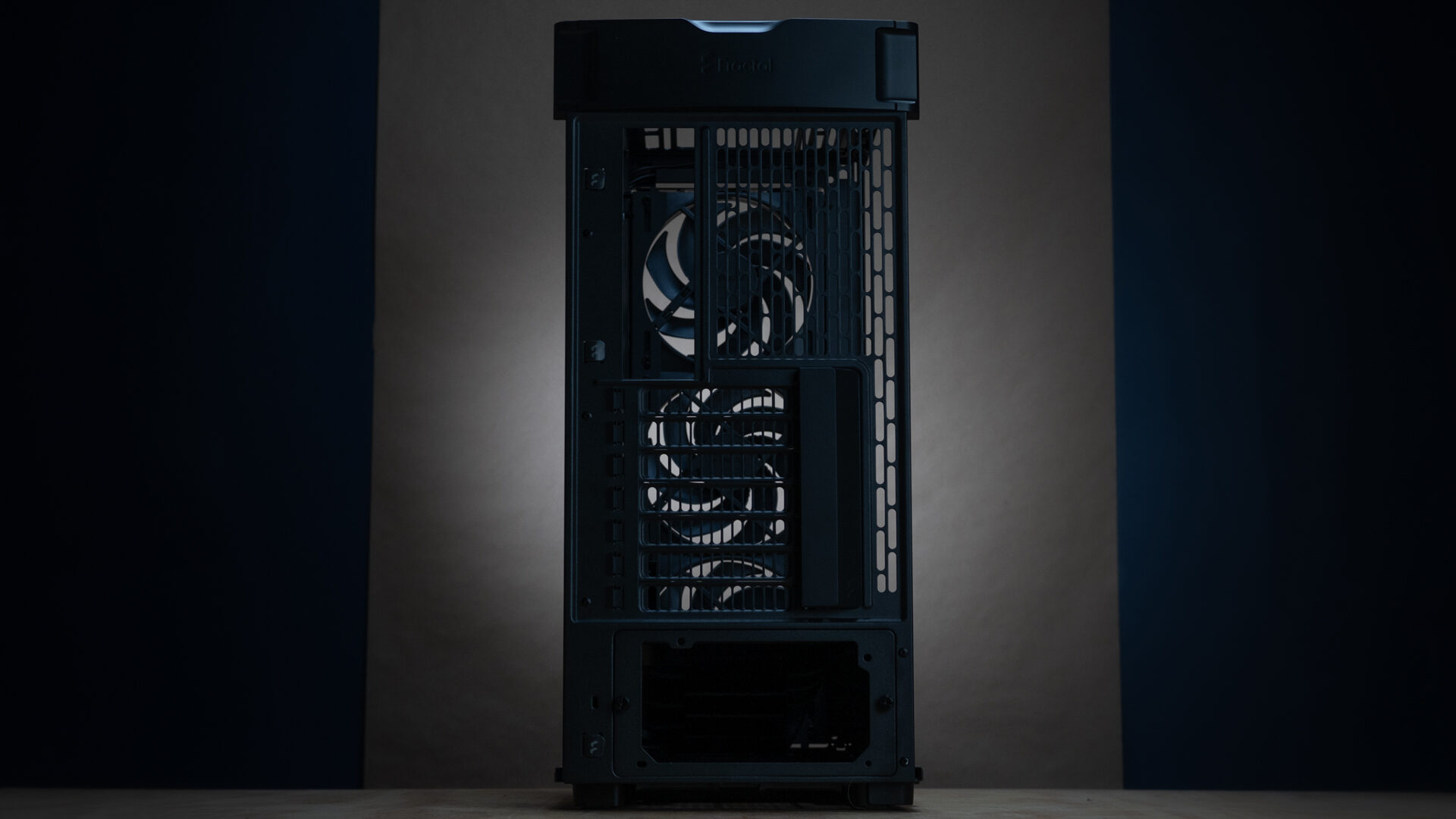
It can be easy to get lost in specs and data and forget that computer parts don’t actually need frigid conditions to operate. During testing, which included lengthy 4K gaming sessions and video renders, the Define One’s internal case temperature averaged in the mid-thirties. It ran a few degrees warmer than my NZXT H6 and Cooler Master builds, but it was also noticeably quieter. That balance is why I think it’s so well suited to a workstation or even a mid-range gaming rig.
“The most prominent feature on the Fractal Define One PC Case is its monolithic front cover.”
I kind of expected this, though. Part of what drew me to the Fractal Define One was how different it was from all the gaming cases I’ve been using, and how much it reminded me of my all-time favourite case, Fractal’s Define R5.
I’ve been a professional video editor for over 15 years, and in that time, Fractal’s Define R5 has become my most reliable piece of equipment. It, too, is more spacious than it needs to be, with an emphasis on unobtrusive design and noise reduction over airflow. This matters when you’re working in a dark room: you don’t need lots of RGB or flashy highlights. You’re also dealing with lots of storage that needs routine replacement, so having meticulously managed cables and plenty of space to work in makes life a little less miserable.
Times are changing, though, and I don’t need the R5’s eight hot-swappable HDD bays. But I do need more storage space than most new full-sized towers offer. Even the massive Cooler Master MasterFrame 500 Mesh only comes with one set of drive rails. The Define One is smaller than both but has enough space for six 2.5-inch SSDs, or two HDDs and four SSDs: two mounted to the drive plate and the other two drives mounted in the bottom chamber.
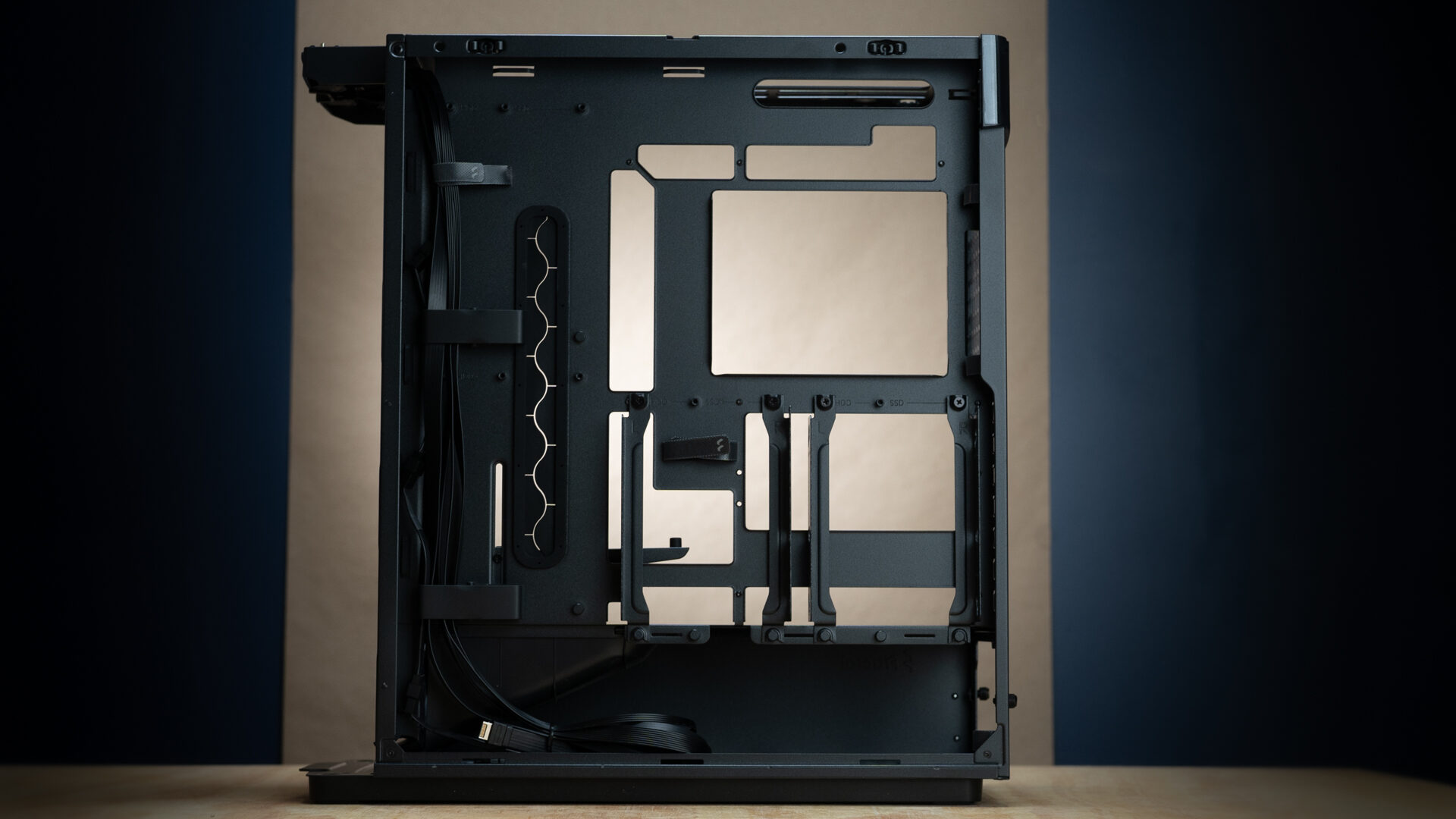
Yes, you can mount two 3.5-inch HDDs to the plate. The wiring side of the motherboard tray has plenty of room to work with. It also includes ample tie-down points, raceways, captive Velcro straps, and built-in cable clamps. The case is mostly tool-less, too. All the panels pop off and click back into place, the clamps snap onto pins, and the power supply bracket and GPU support arm can be removed with thumbscrews. You’ll still need a screwdriver to install drives and new fans, but that’s about it.
Building in the Define One was one of the most pain-free and versatile experiences I’ve had since the Define R5. My only gripe is that it’s yet another dual-chamber design with a restrictive lower chamber. There’s a cut-in for the upper chamber’s air scoop that lines up with the lower front fan, making working with PSU cables a bit of a hand-cramming nightmare, especially if you need to adjust a connector after everything’s installed. Realistically, though, that’s not something that’s going to come up very often.
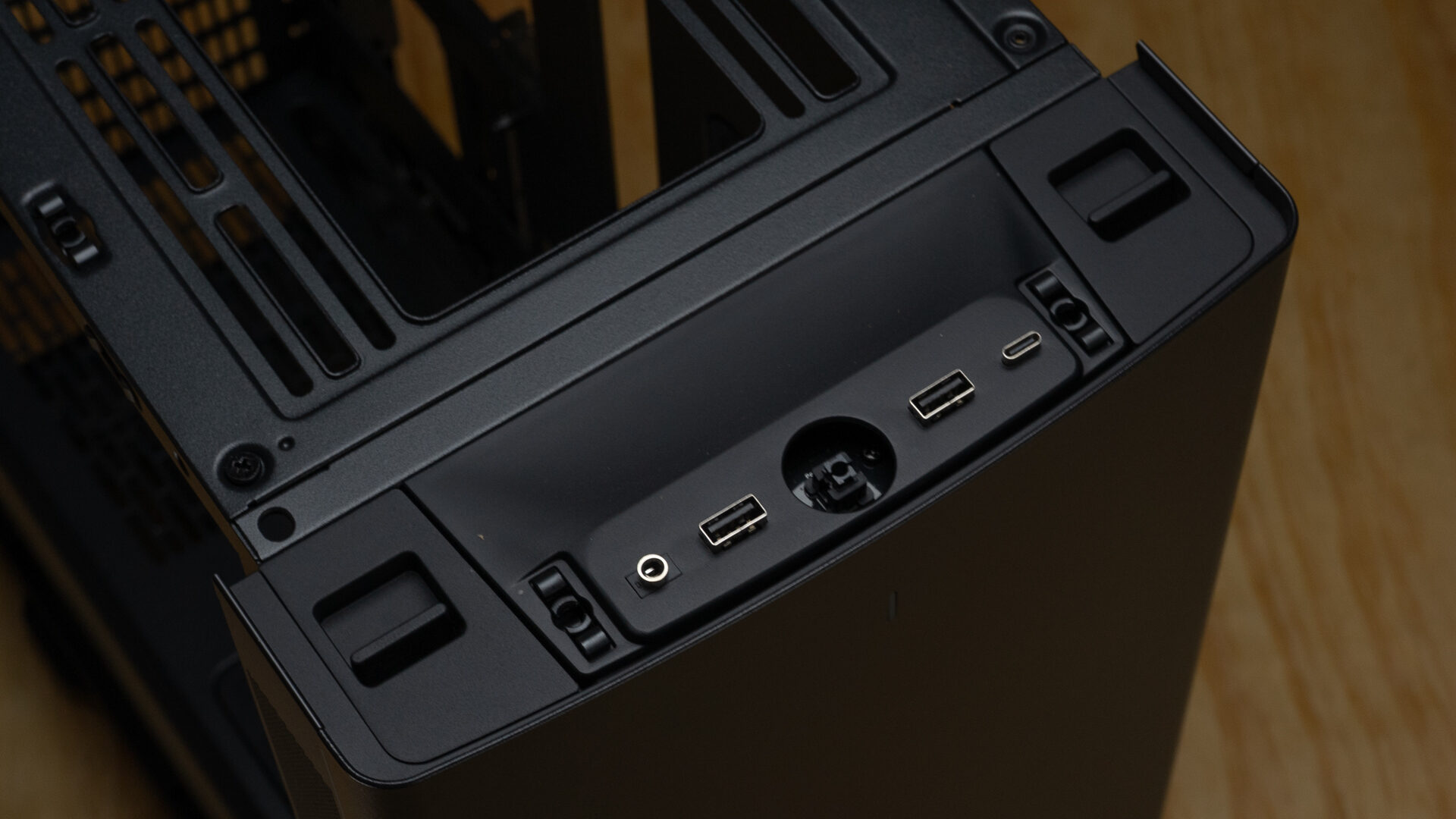
Once the case is set up and running, it really is a work of art. I never thought I’d see the day, but I think I finally have a spiritual replacement for my R5. The Define One offers the same noise reduction and easy maintenance that I’ve missed, but with a more modern, less fridgelike design. The front I/O is slightly reduced to a combined audio jack, two USB Type-A ports, and a single 20 Gbps USB-C port—but that’s a change I can live with.
The Fractal Define One PC Case is an excellent choice for a home office or modest gaming build. It offers a stylish middle ground between aquarium cases and traditional workstation designs, all while coming in at a very reasonable price.