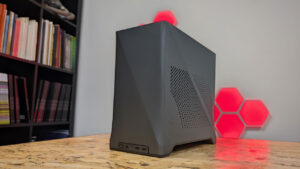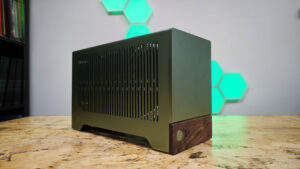


There is something special about the Fractal Design Ridge PC case. I have been a fan of the idea of a gaming PC for my living room for quite some time. I talked about it when I looked at the NZXT H1 case when the Xbox Series X first launched, and I have tested a range of them since then, yet the Fractal Design Ridge still managed to impress me. This US$144.99, 12.6-litre case manages to fit almost everything I needed, be somewhat easy to work with and look absolutely stunning. What else could you ask for?
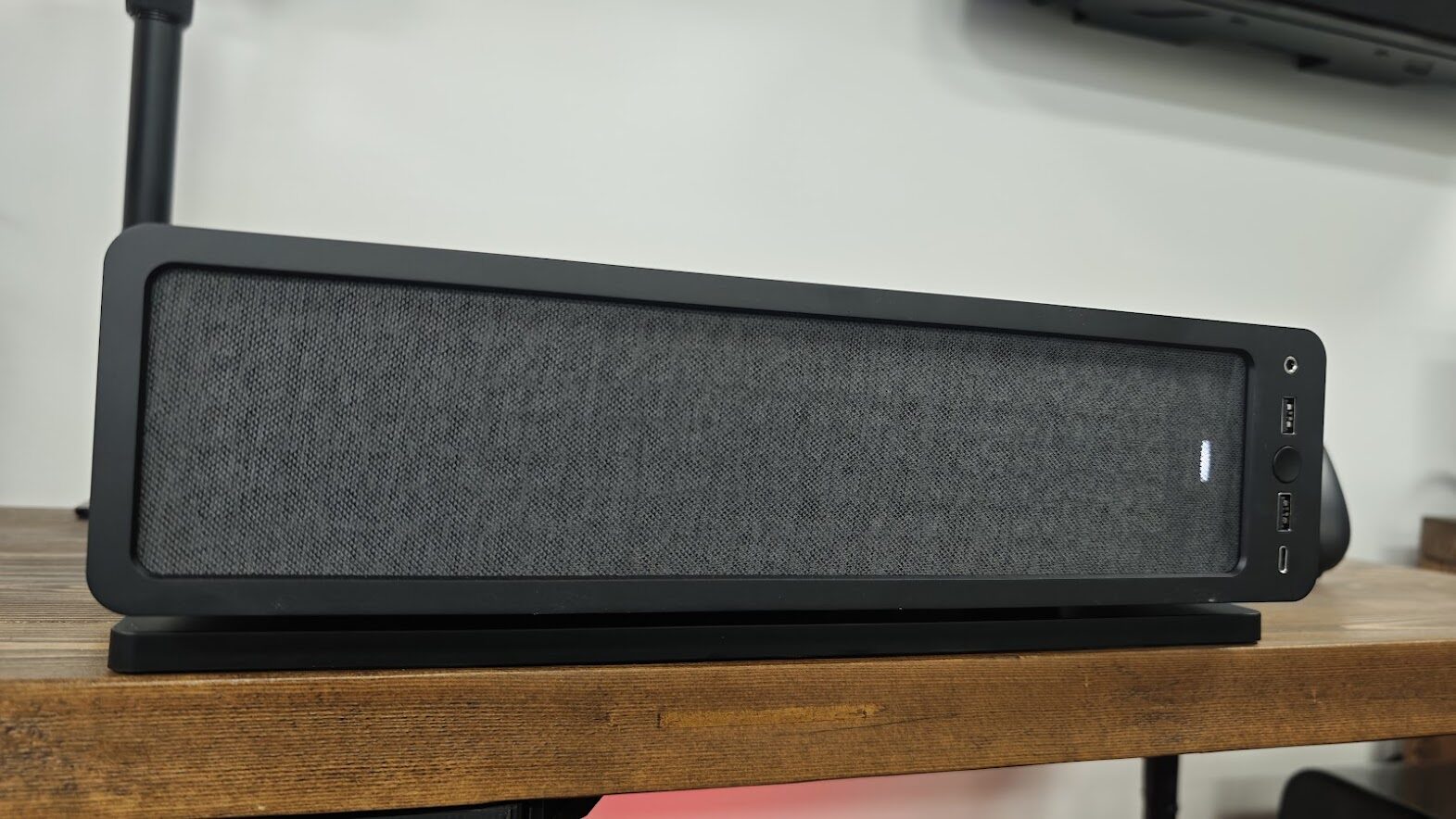
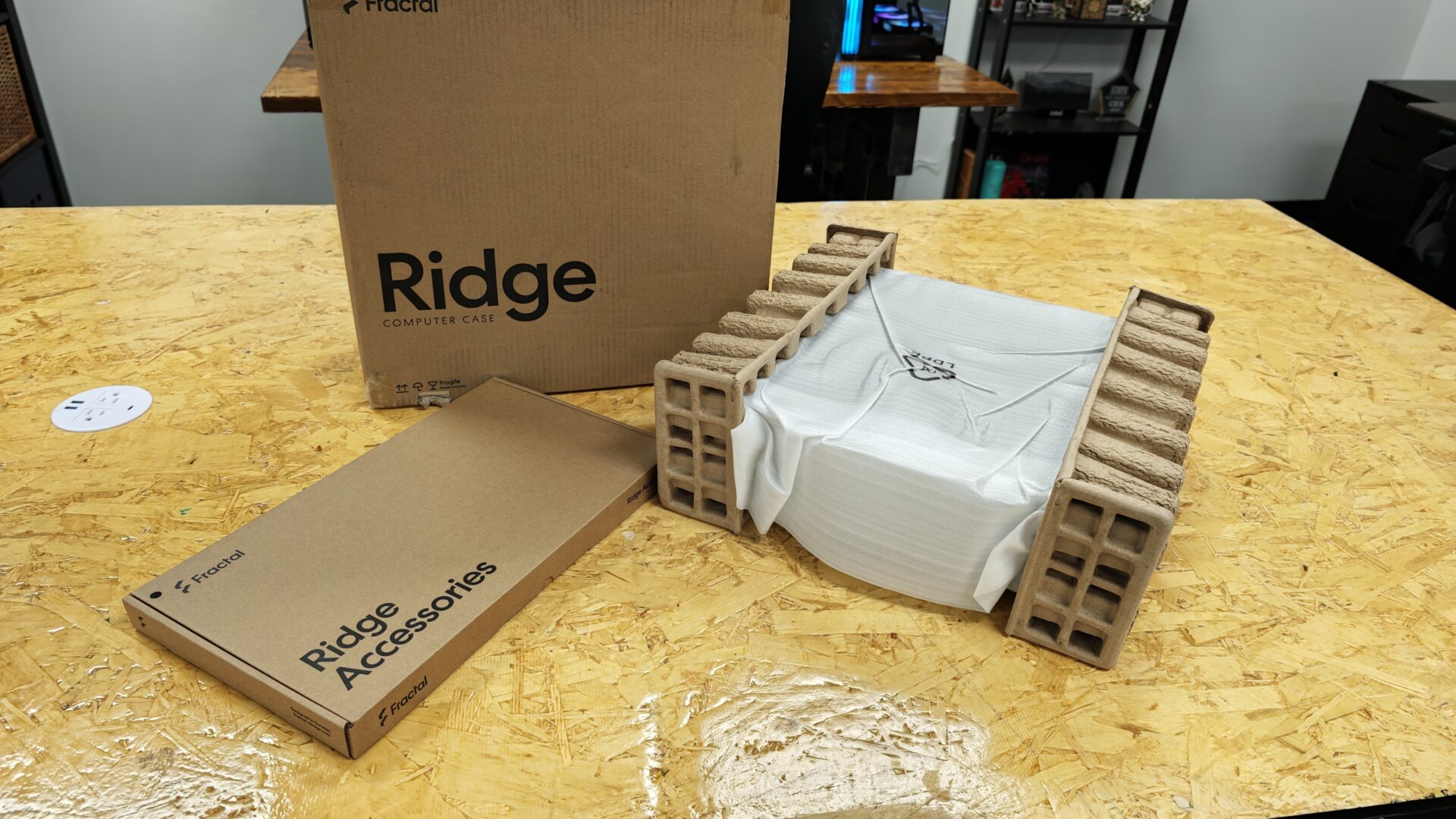
Opening the recyclable cardboard packaging, you are greeted by a sleek-looking case that looks more like audio equipment than a standard gaming case. This low-profile body offers the usual bells and whistles while keeping them in an elegant design that feels incredible to use and unbox. The front panel features a cloth-mesh air intake, power buttons, a single power light, and front USB ports, including USB-C 3.1 Gen 2 and two USB 3.0 ports. Fractal Design has outdone itself with the look of everything, making the case easy to dismantle with very few screws overall. It can also sit vertically or horizontally, with both orientations looking well finished and well thought out.
Once inside, you are greeted with a range of ways to lay out your new build, with the manual outlining a few configurations that Fractal Design has come up with, though you can customize it based on your components. You will need a Mini-ITX motherboard and an SFX or SFX-L power supply, but beyond that, there is a wide range of flexibility. On the GPU side of things, you need a card up to 335 mm in length, or 325 mm with an SSD installed, though if you opt for a GPU in your build, your space for an AIO will be reduced or fully removed.
With a GPU installed, you are looking at around a 120 mm radiator, although for the build I did for this review, I opted for an air cooler on the CPU and a full-size AMD Radeon 9070 XT GPU, along with an MSI MPG X870I EDGE TI EVO WIFI motherboard. The case also supports up to two 120 mm or 140 mm side fans, with two 140 mm PWM Aspect fans included, and even accommodates up to four 2.5-inch SSD mounts. On a case this size, that is pretty impressive. I will note that, like most smaller cases, you need to use a PCIe 4.0 riser card to connect your GPU, but thankfully, it is included with the Ridge case.
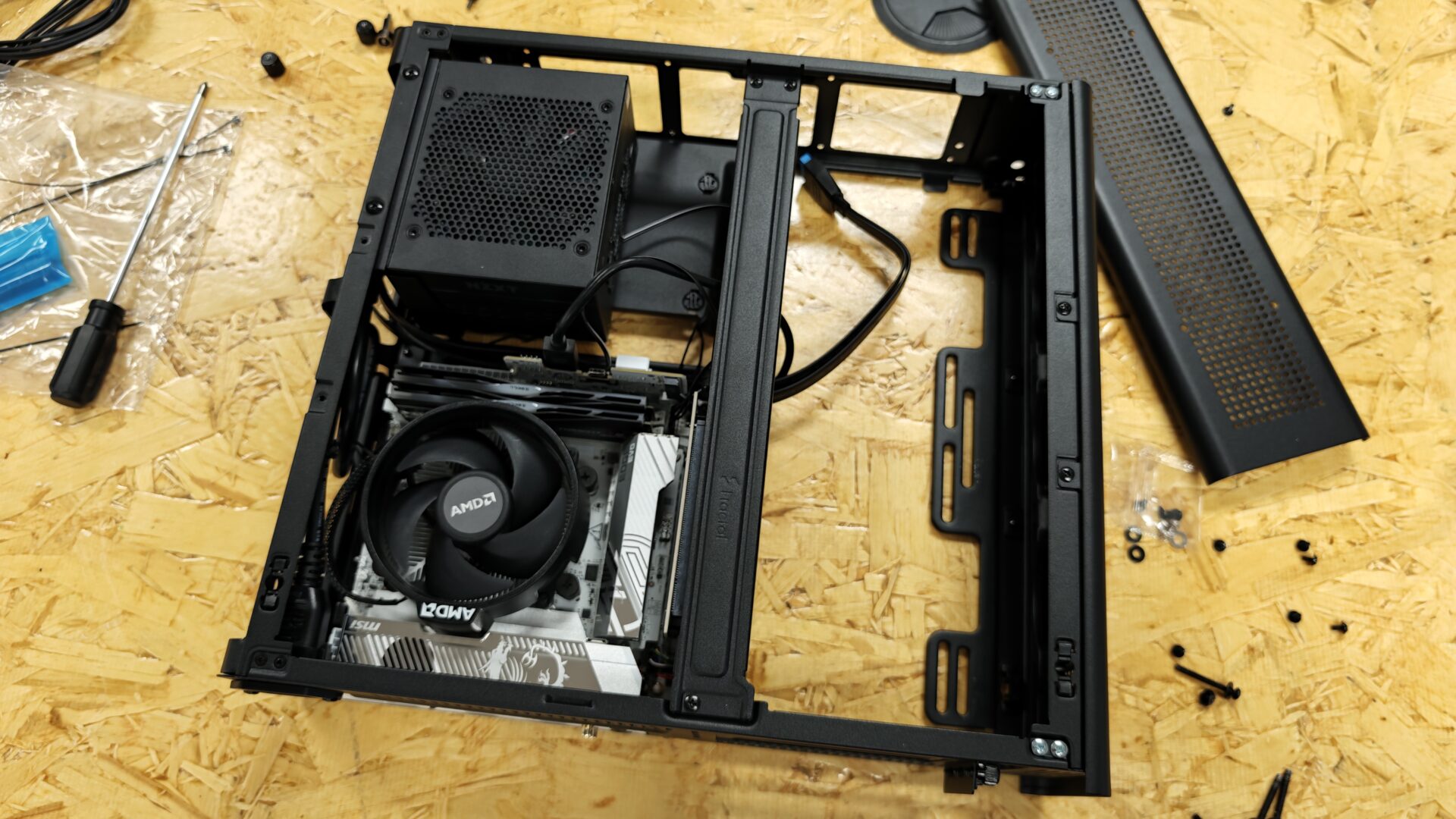
While I love the look of the Fractal Design Ridge case, it is the build process that helps elevate it beyond just another neat Mini-ITX case that ultimately is a pain to work with. As long as you work with how the case is built to come apart, it is relatively easy to get inside and access your components. While it is a very slim case design, it is much less constrained than some other cases on the market, and you should have more than enough room to place most of your components, provided you plan ahead.
This is still a Mini-ITX case, and as such, as I mentioned above, you need components that fit the form factor. Also, while it allows for a range of configurations, it does not have the space you would have in an ATX mid-tower, so you need to make some choices with your build.
“While I love the look of the Fractal Design Ridge case, it is the build process that helps elevate it beyond just another neat Mini-ITX case…”
That all said, I found the Fractal Design Ridge very easy to work with, and provided you have everything ready to go, most builds should take under an hour to get installed and ready. The PCIe 4.0 riser card is solid and keeps the GPU secure within the build, so there is no fear of things falling out while in use, in either orientation.
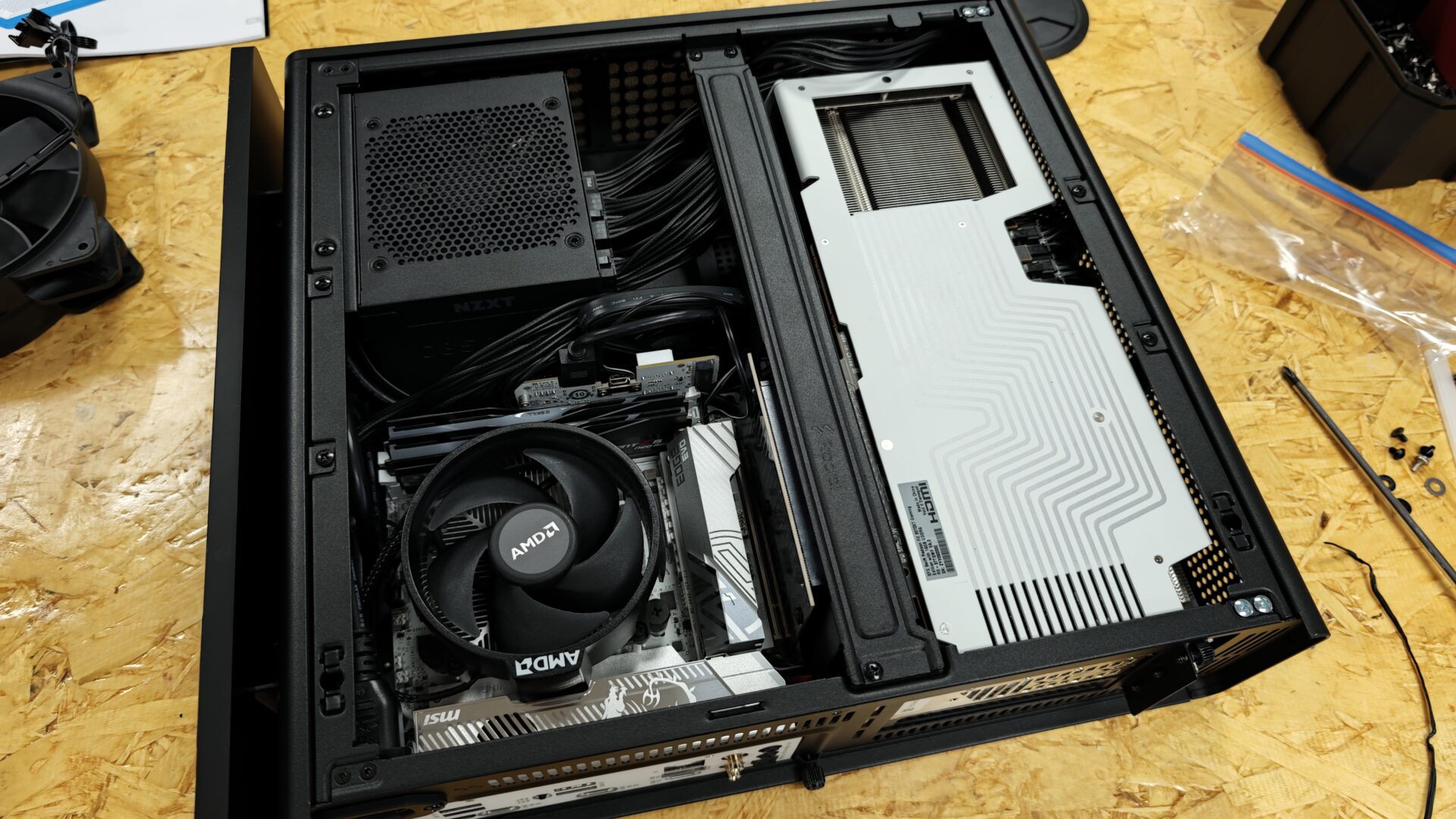
There is enough room to use zip ties or other cable management solutions to keep things looking relatively clean. I was a bit disappointed that I could not make a 240 mm AIO work with a GPU, but that is a relatively minor complaint considering I did not walk away with cuts all across my hands while trying to get wires in place, something I cannot say for many Mini-ITX cases I have looked at.
On the thermal performance of the Ridge case, things are a bit mixed. Depending on how you orient the case, you can run into issues getting enough airflow to your components. It is not horrible by any means, but it can be a bit more stifling than larger case offerings.
The case ships with two 140 mm PWM fans, and depending on how you set these up and place your parts, airflow through the components will vary. I have not noticed any major throttling while using the rig in games or other workflows, but I did notice the CPU fan spin up a bit in editing software. When playing Cyberpunk 2077, the GPU also spun up a bit more than I saw when it was used in an ATX mid-tower case.
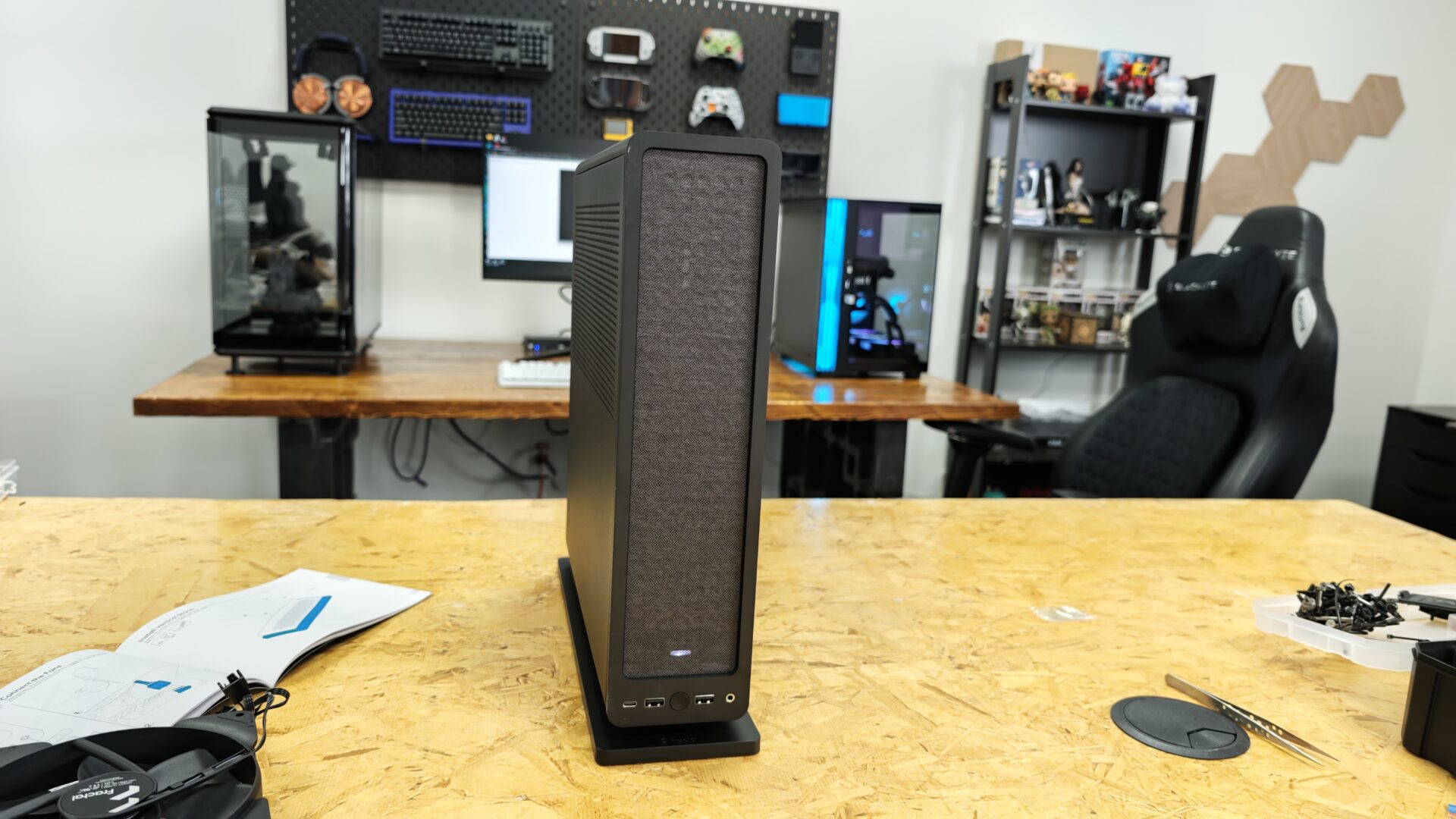
There is an option for a range of fans beyond what ships with the case, including space for three optional 80 mm top fans, though I did not test them. While testing, the horizontal stand, due to its size, caused a bit less airflow than when the case was used vertically, though this could be addressed with third-party stands or perhaps a 3D-printed alternative. While not a massive issue, if you are looking to push your new Mini-ITX build, it could be worth considering, especially if thermal performance is at the top of your list.
Honestly, considering the price, ease of building and materials used, the Fractal Design Ridge is one of the best Mini-ITX cases I have reviewed in a long while. Fractal Design has done a phenomenal job delivering a case that not only looks fantastic, but also allows you to build a very powerful PC with only a few sacrifices in the process.
The thermal performance is a concern, but with many options to set up your PC, there are many ways to mitigate, if not fully eliminate, the problem, as long as you plan ahead. I am impressed by what Fractal Design has delivered, and for anyone looking to make a powerful and slim PC, this could be your best option.

- An uncluttered, small form factor case designed to integrate seamlessly into your living space and daily rituals. An evolution of the slimline format, Ridge was developed in collaboration with gaming and entertainment enthusiasts to subtly improve their homes and enhance the small form factor PC experience.
- Engineered to maximize its capability while minimizing its footprint