

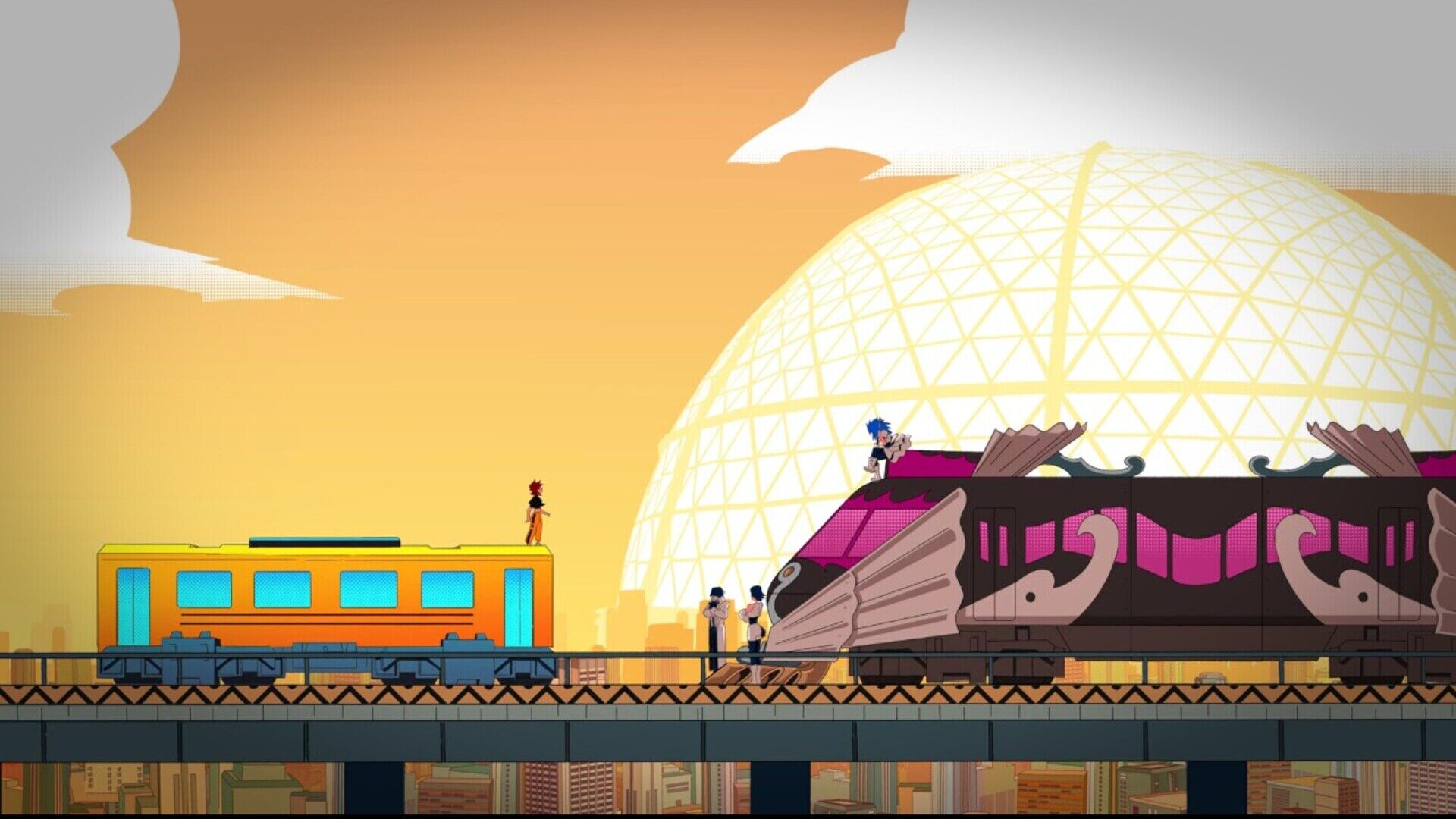
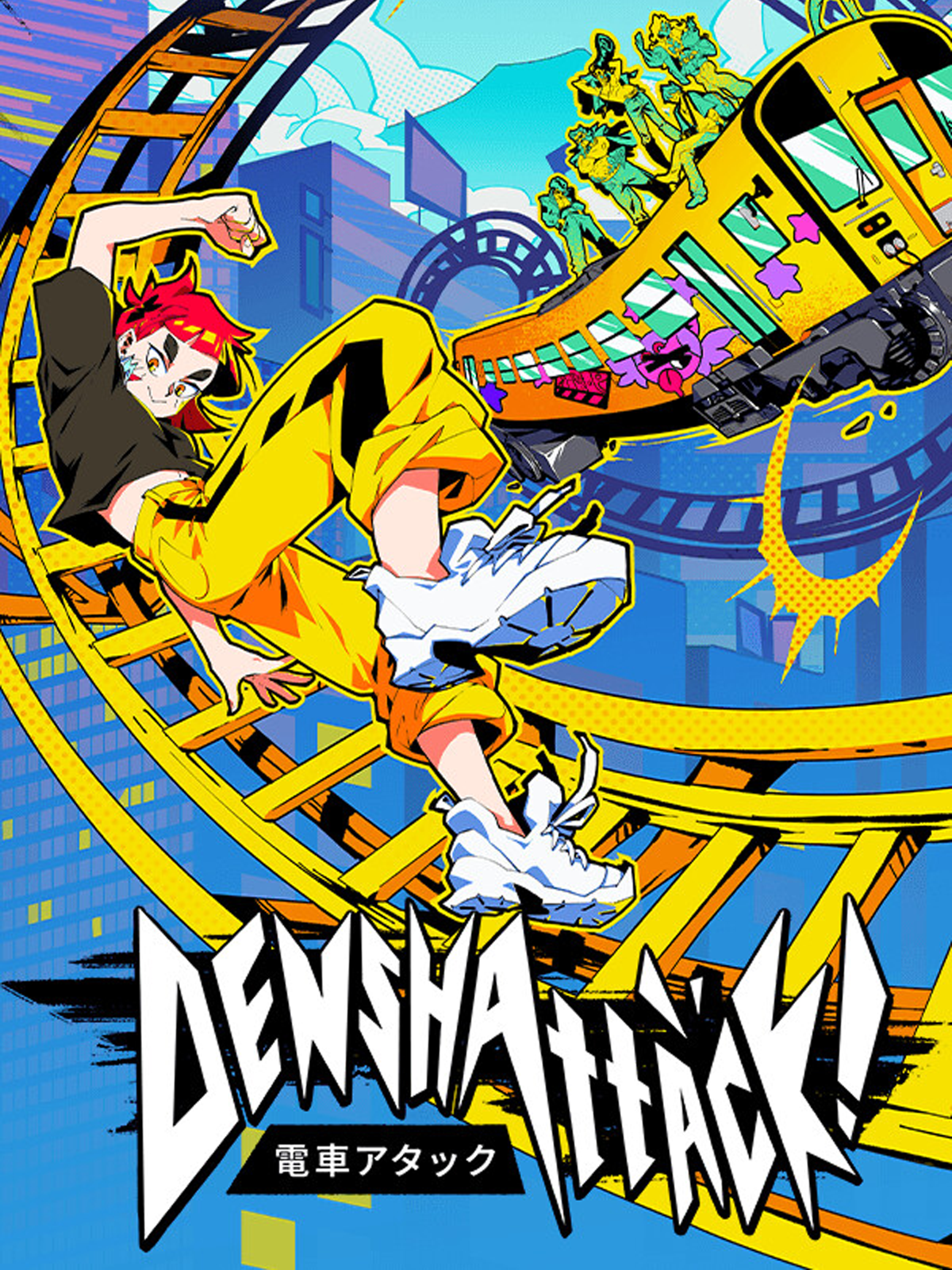

I was lucky enough to be in attendance at last year’s gamescom ONL when YouTuber extraordinaire and Easy Allies alumnus, Kyle Bosman, revealed the first trailer for cel-shaded trick-based 3D platformer Denshattack!. Developed by Undercoders, an indie studio based in Barcelona, Spain, perhaps best known for their work on Koa and the Five Pirates of Mara and Treasures of The Aegean, Denshattack!’s debut impressed me with its display of high-octane platforming action, which involves fast-moving electric trains performing sick skateboarding-like tricks, and so it has remained on my radar ever since.
Earlier this year, my colleague, Hayes Madsen, was left similarly impressed when he got hands-on with Denshattack!, referring to it as “…the kind of game you play for just a few minutes, and you already know it’s onto something, just through the sheer joy it brings to play”. To continue Hayes’ thoughts, after rolling credits and spending around 15 hours with it, I’m thrilled that Denshattack! does not just meet expectations and is an absolute joy to play, but, furthermore, it is also one of the best games of this year and a benchmark for other games in the 3D platforming genre to be judged by.
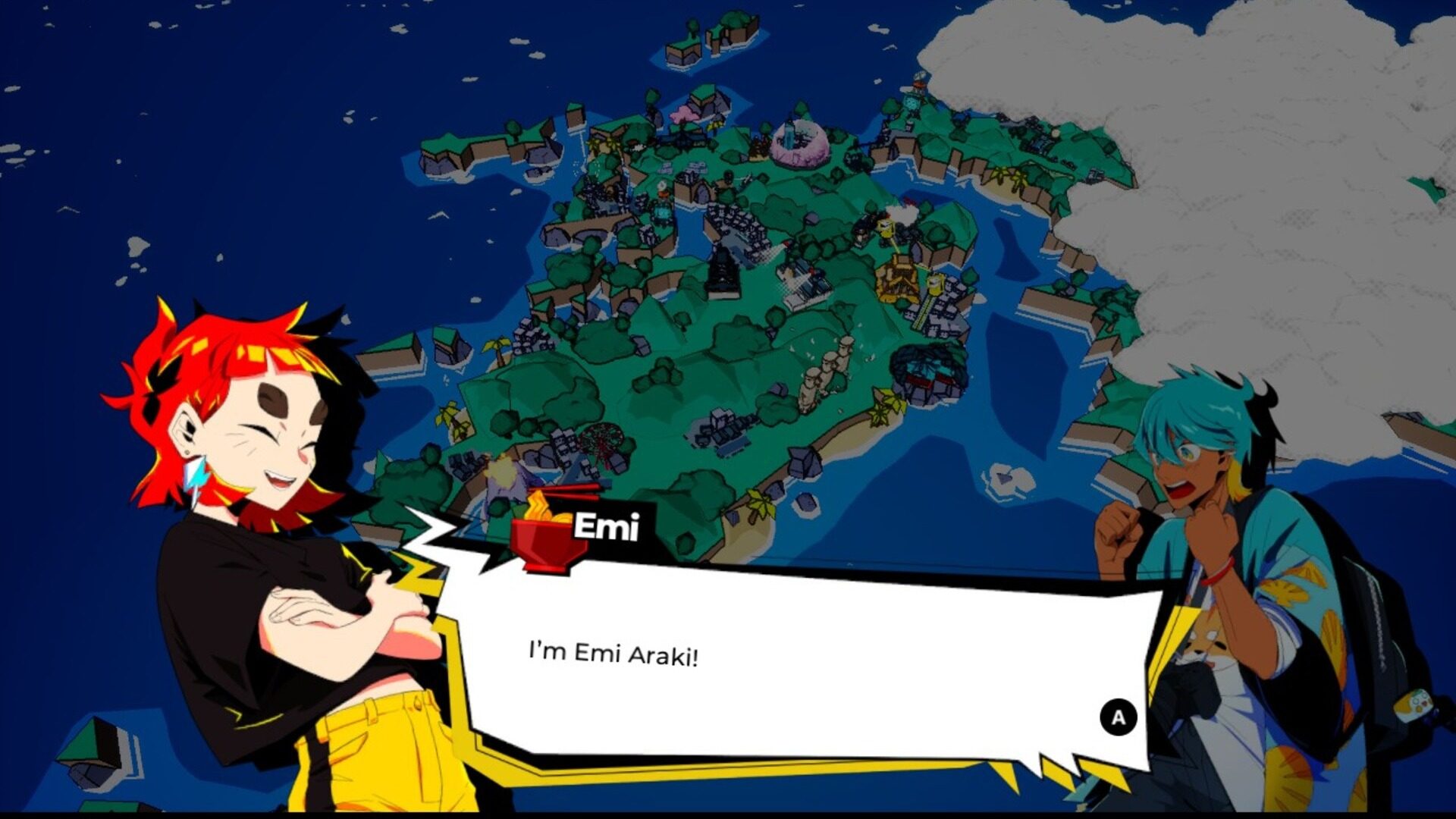
Now, before delving deeper into the specifics of what exactly the game does so, so well, time for a brief breakdown: in Denshattack! players follow the story of Emi Araki, a 19-year-old who makes a living delivering ramen on her old train in the hot spring city of Beppu, Ōita Prefecture, Japan, as she dreams of one day riding the so-called “VACTRAIN” — an underground train shaped like a mole that can traverse the whole country in an hour.
The catch, however, is that Emi’s Japan exists in a future in which multiple climate catastrophes have pushed people to live in cities encapsulated by giant protective domes built by a mega-corporation called Miraidō (the word “mirai” means “future” in Japanese), which is in charge of the state as a whole and which, naturally, also operates this VACTRAIN.
“Denshattack!’s debut impressed me with its display of high-octane platforming action…”
Spurred on by a chance meeting with Fernando, an artist who contributes to a fanzine all about Miraidō’s evil-doings, Emi, joined by Fernando, leaves her hometown, which has been left to be ravaged by the forces of nature, in pursuit of setting things right and becoming the best train driver possible. On the way to confronting Miraidō in their headquarters in Hokkaido, Emi and Fernando make friends and enemies aplenty but, most importantly, eventually join the Denshattack (“densha” meaning electric train in Japanese): both a competition between Japan’s best train drivers — Miraidō’s are, of course, AI-operated — and an organization declared to be an enemy of the state.
To avoid any spoilers, I’ll mention only that, once proceedings came to a close, I’ve found the story to be quite heartfelt and told with gusto. Moreover, I’ve grown quite fond of the rag-tag group of people that Emi gets to call her friends, which is a remarkable achievement considering that this is, essentially, a game about Akira sliding a train that’s running at lightning speeds.
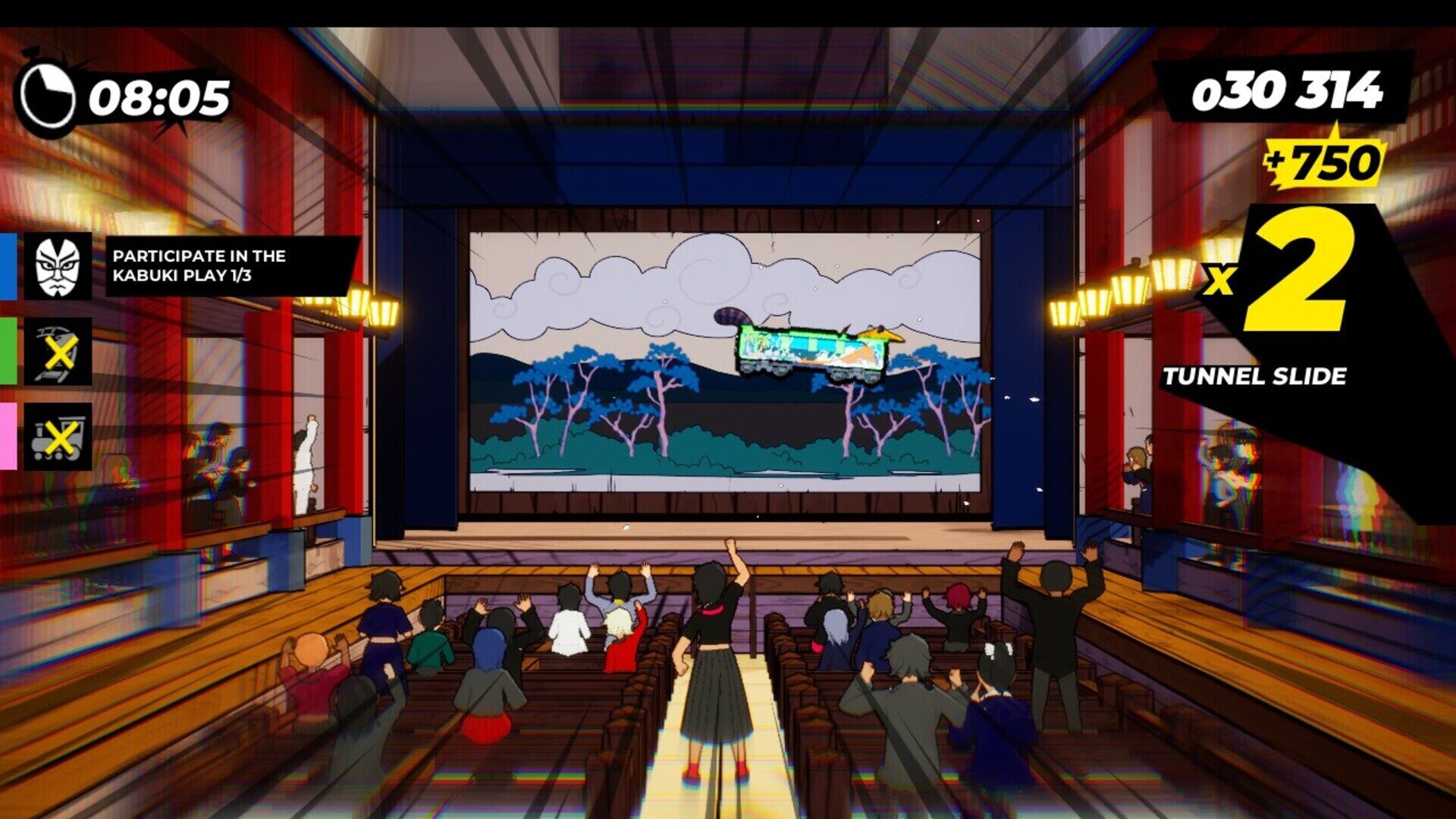
Gameplay-wise, Denshattack! follows in the footsteps of inspirations such as the boost-style Sonic the Hedgehog games, EA’s skate series, but especially Jet Set Radio and Tony Hawk’s Pro Skater 2, as it challenges players to set high scores, find the many unlockables scattered across each level and stunt on any opponents who dare get in the way. Like in many of the aforementioned games, in Denshattack!, the controls are easy to understand but hard to master, in particular as the game expands on the mechanics as Emi and friends navigate the 46 Japanese prefectures featured in the game.
For example, whereas the first few levels are concerned with teaching the basics, such as drifting and jumping, as the gameplay gets more layered, some of the latter levels will require players to deploy pretty complex combinations such as ground smashing straight into a grind, which itself is then followed immediately by a wall jump.
It’s pretty complex stuff, and, after a few failed tries at some areas in certain levels and especially some late-game mechanics that didn’t work as well as I wanted them to, I found myself wishing that Denshattack! knew that even too much of a good thing is still too much. On the other hand, when the mechanics here come together in a meaningful way, the game sings like no other — I had to pry myself from attempting one more run of a level after another.
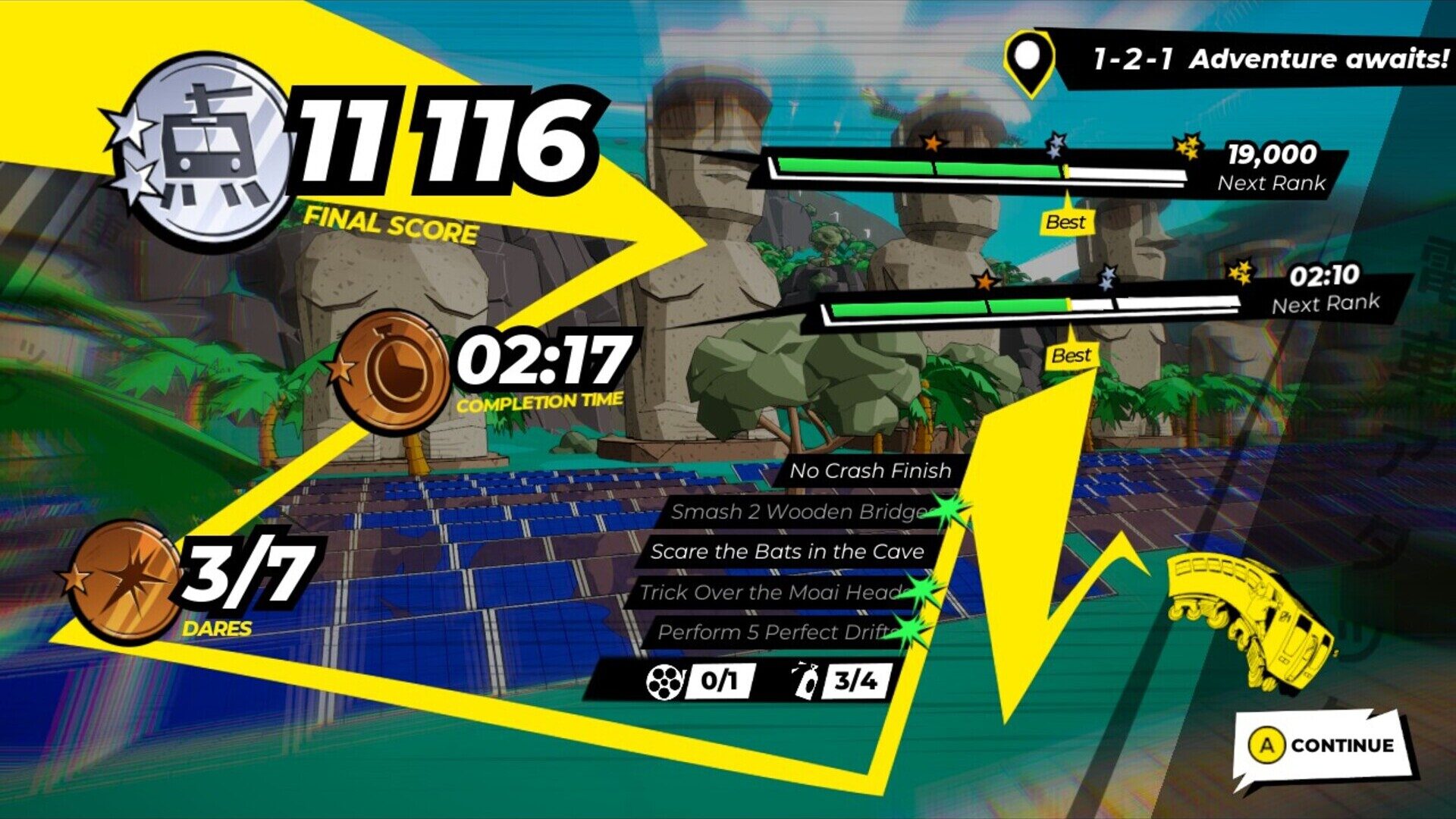
Speaking of levels, Denshattack! is structured into 60 levels spread across eight different regions. Levels take place in unique locations such as a derelict airport, an empty baseball stadium and the capital city, Tokyo. The levels themselves are split into different kinds, such as linear, race, etc., with the most distinct being the boss battles.
The developers at Undercoders have only shown the first of these boss battles, namely the Sailor Moon-inspired Gundam made up of multiple train cars, but take it from me: you haven’t seen anything yet. That said, not all boss battles are winners, as the game runs out of steam in this regard by the finale. In any case, finishing a race or wrapping up a boss battle is only the first part of it, as Denshattack! also employs a system that keeps a combined score of the tricks performed, completion time and objectives accomplished called “dares”.
Most of these dares are enjoyable; however, some, such as needing to use every booster pad in a particular section of a stage, are tedious and repetitive. Regardless of their difficulty, though, in the end they add an extra layer of replayability, especially for completionists. As for me, given these prerequisites, I found mastering levels in Denshattack! so hard that I only did it once and definitely not by accident.
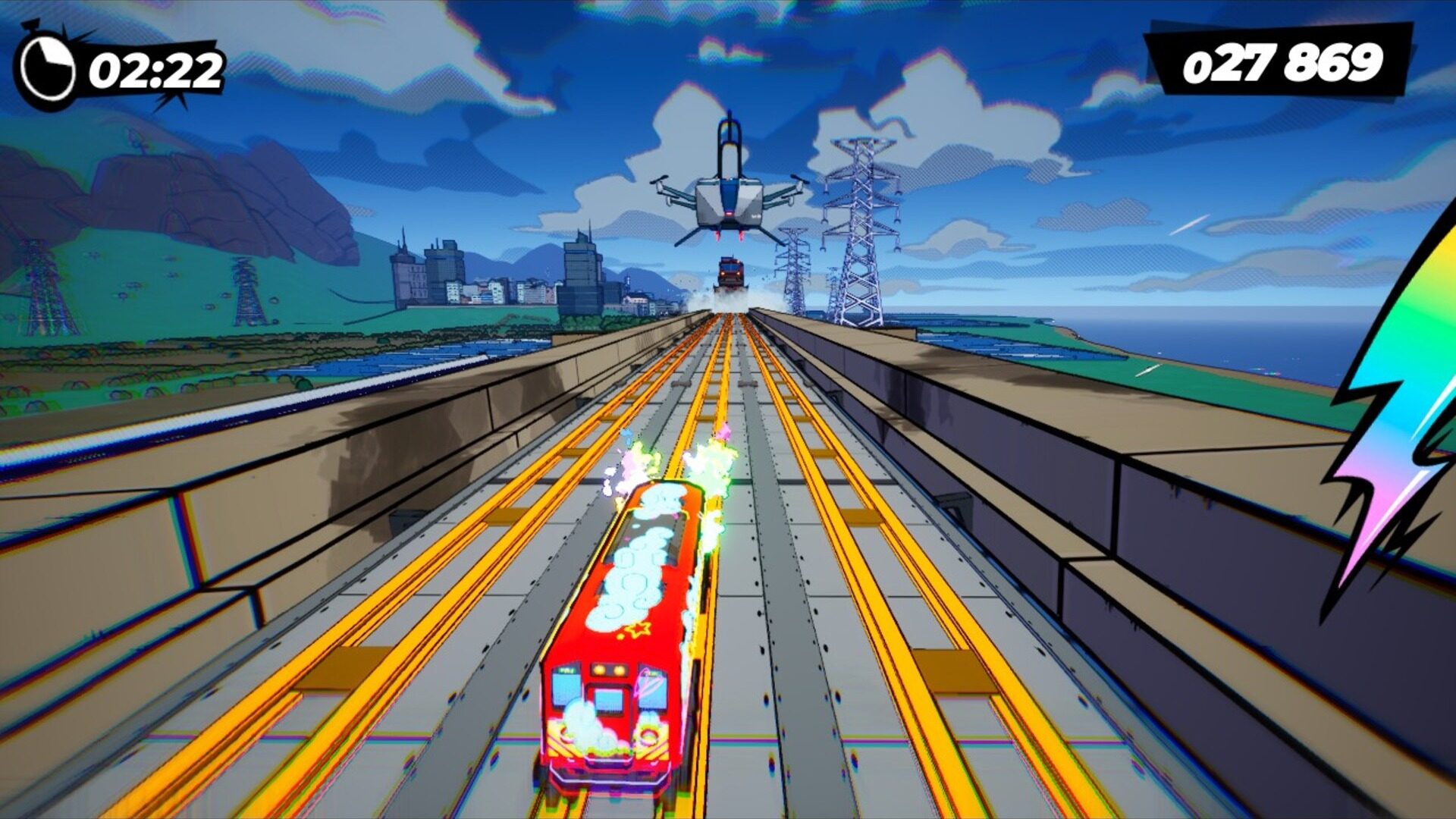
It is also not by accident that, when it comes to the visuals and soundtrack, Denshattack! gets it right on the money. From the vibrant anime cutscenes to the absolutely stacked list of guest composers such as Shoji Meguro (the Persona series) and Takenobu Mitsuyoshi (from the SEGA Sound Team) accompanying an all-timer trio of lead composers consisting of Tee Lopes (Sonic Mania, Penny’s Big Breakaway), Sean Bialo (Teenage Mutant Ninja Turtles: Shredder’s Revenge) and Andrew One (G.I. Joe: Wrath of the Cobra), the game simply oozes charm and confidence.
With regards to the soundtrack in particular, if I had to choose just one song to listen to from this no-skips album, my absolute favourite one is Set for Destruction featuring Lotus Juice, the other Persona collaborator working on this game — but that might just be the Persona fan in me.
The single thing about how Denshattack! looks and sounds that bothered me enough to mention here is that, in some contexts, it is really difficult to assess where to go next. The game does make use of colour-coded traffic signs to instruct you on what to do occasionally, which is a great solution, but problems might and did occur from time to time, especially in sections where the game wants you to take a single pre-determined path.

By the time I reached the end of the road with Denshattack!, I was absolutely smitten by the total package of a game that it is. Despite some blemishes, it’s a must-play for most people, double-so in a gaming climate in which so many AAA games released are insipid, cynical and hollow on the inside — oftentimes just like the money bags who push for them. In this respect, playing Denshattack! feels like a radical act: I almost forgot video game art could have a heart.