
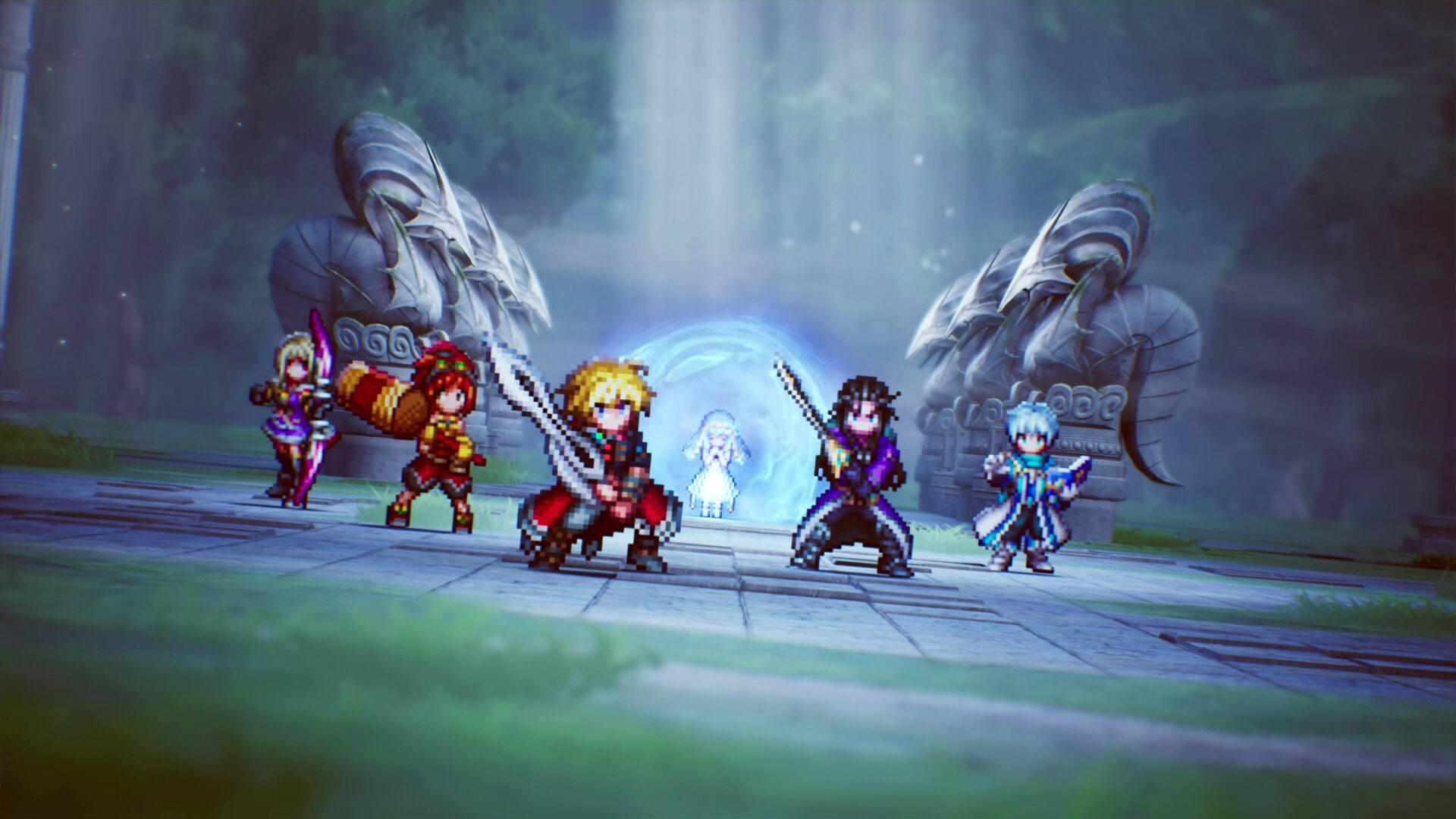
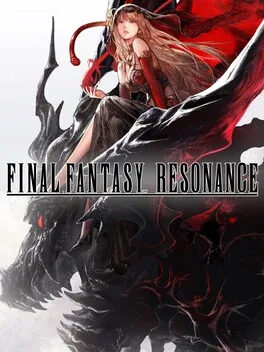

Final Fantasy Resonance has been marketed as “the first Final Fantasy in HD-2D,” which is an exciting selling point in itself. Yet there’s so much more riding on its shoulders than just the fact that it’s using Square Enix’s stunning graphical engine that blends old-school 2D sprites with modern 3D environments and lighting effects.
Final Fantasy Resonance is also an adaptation of a now-defunct mobile title, Final Fantasy Brave Exvius—adapting the first season of its story into a full-scale traditional RPG. It’s also a title that leans into the series’ history by featuring protagonists from all sixteen mainline games as spiritual aids for the new cast, effectively helping to kick off festivities for the series’ 40th anniversary. As a lifelong Final Fantasy fan, and someone who could never get into the original mobile game, I am very pleased to report that this title delivers on all the weight sitting on its shoulders.
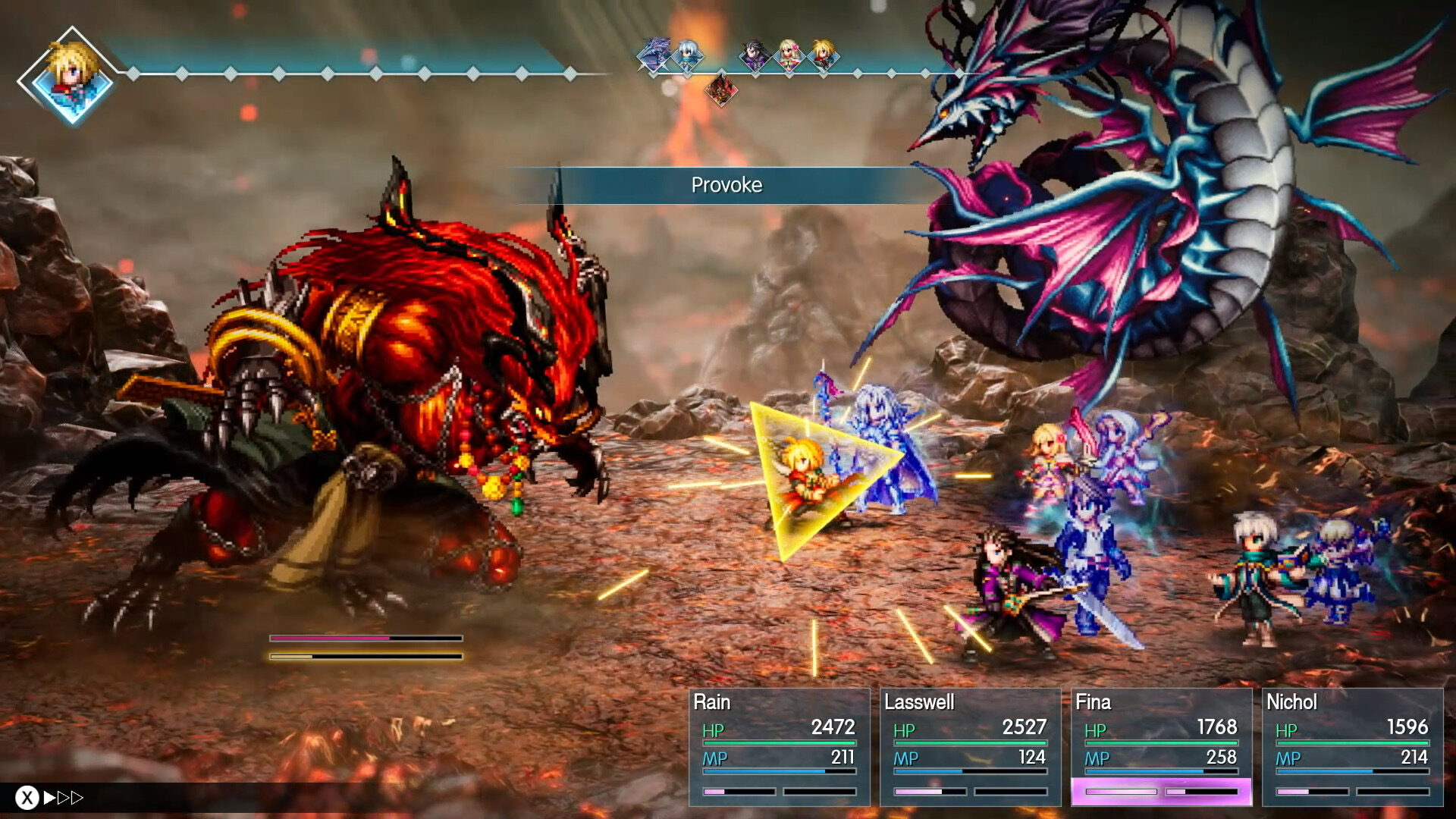
Final Fantasy Resonance is framed like a classic-era game in many ways. I immediately saw parallels between the main trio of heroes (Rain, Lasswell, and Fina) and their so-called franchise “ancestors”—there’s a lot of Cecil in Rain, and other points throughout the story echo familiar plot points from previous games in subtle ways. However, these echoes are the faintest of resonances (pun intended), unlike other games that have drawn more heavily from across the Final Fantasy pantheon. But while there’s a familiar frame revolving around crystals and a group of antagonists, the journey stands on its own two feet.
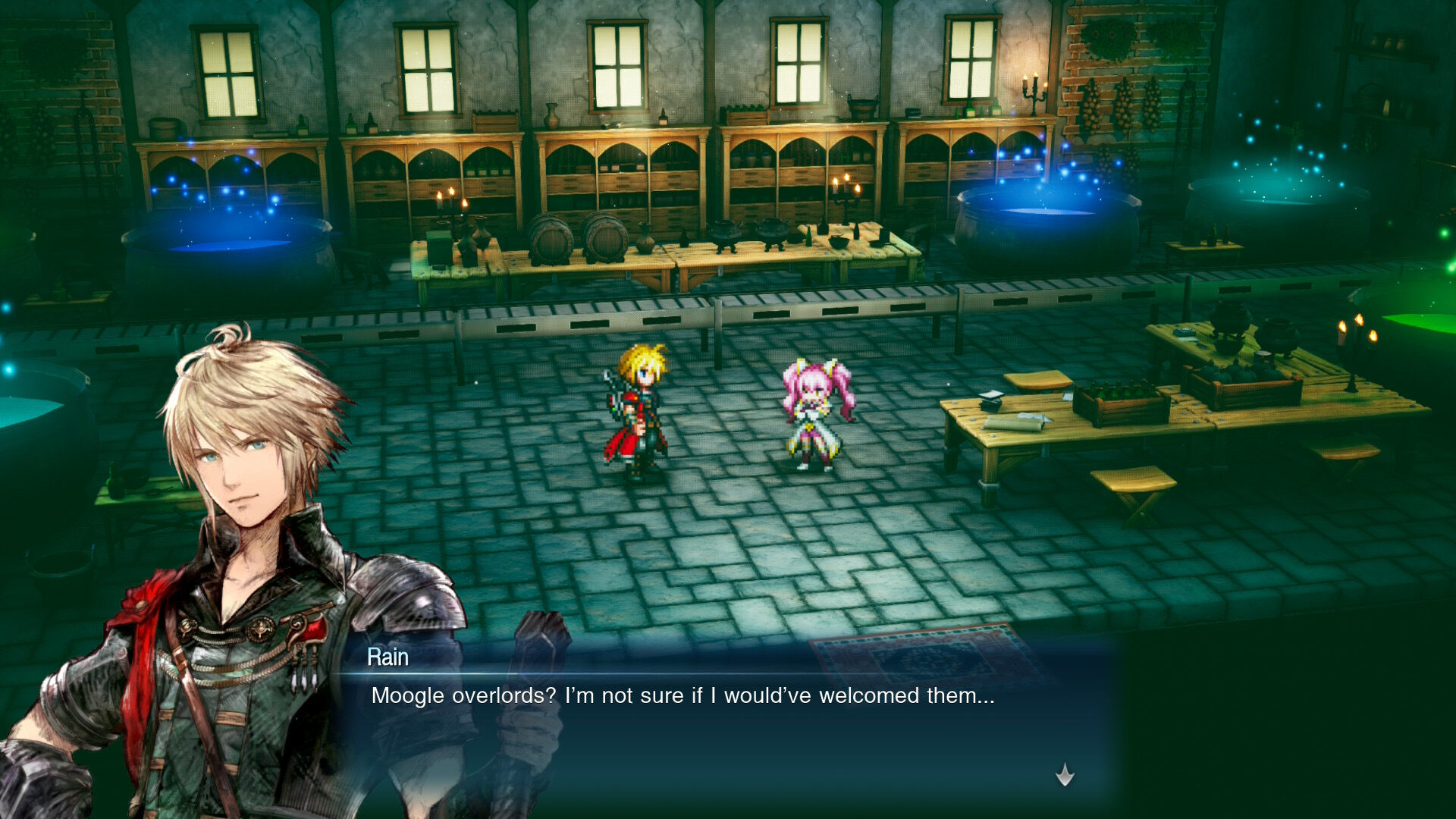
This classic-inspired story plays out with fully voiced cinematics for the modern crowd, helping the characters leap out of the screen. Hearing voices from the 2D sprites in cutscenes and dialogue almost made me wish the recent Final Fantasy Pixel Remasters had been given full ensemble casts as well. Meanwhile, in battle, like any RPG, the same voice clips start to wear thin by the end of the journey, as they trigger consistently at certain points, like moving back and forth through the menus; there’s a good variety of lines, but even they wear thin.
“Like many of its departments, Final Fantasy Resonance‘s combat mixes the right proportion of the familiar and the innovative, making a satisfying new paradigm.”
(One small detail worth highlighting and appreciating: characters afflicted with Silence don’t speak during their actions. It’s a nice touch that not all voice-acted RPGs have included, but the first time I heard Rain’s Limit Break without its accompanying yells, it really drove home just how much chatter there can be during combat.)
Speaking of battles, Final Fantasy Resonance throws players into its turn-based combat system for much of their playtime. This isn’t Active Time Battle like Final Fantasy VII, but rather a more traditional, round-based system that combines elements of Final Fantasy I-III and Final Fantasy X. Each participant gets a turn during every round, with their speed determining how early they act. Lasswell, for instance, is usually among the first to move, while Rain was often one of the last. A gauge at the top of the screen displays the current turn order, similar to the system found in Final Fantasy X.
Enemies also have a Stagger gauge, and when it is depleted, they enter a Staggered state, something anyone who has played Final Fantasy XIII or the Final Fantasy VII Remake series will recognize. In Final Fantasy Resonance, however, a staggered enemy is removed from the current round. Depending on how many allies still have turns remaining, a “bonus phase” can trigger, giving players an opportunity to land additional attacks. If all enemies are staggered, this becomes a “sweeping stagger,” allowing every available ally to attack again before triggering a finishing move with an equipped Vision (more on that in a moment) for a coup de grâce.
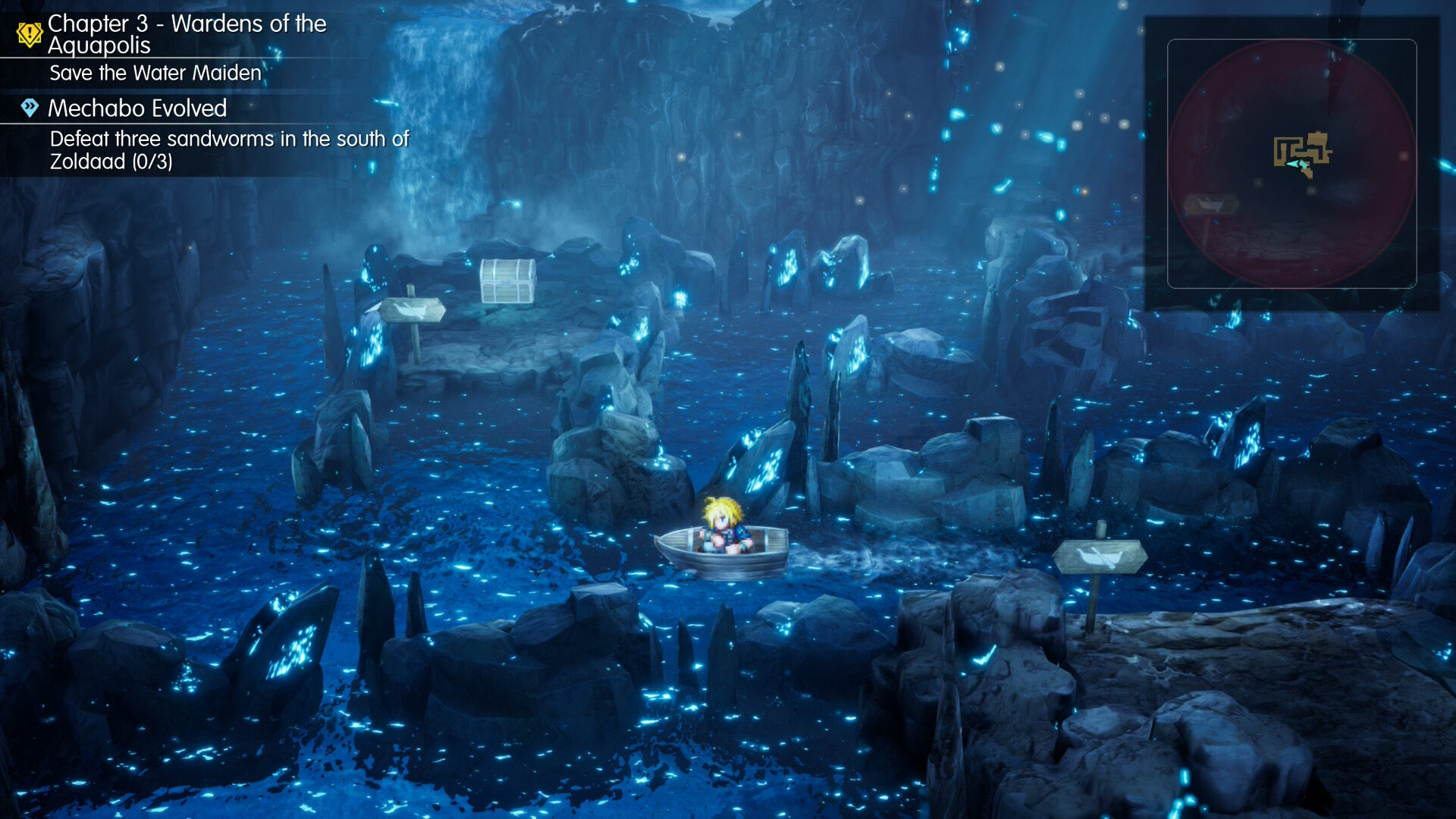
Thus, like many of its other systems, Final Fantasy Resonance‘s combat mixes the right proportions of the familiar and the innovative, creating a satisfying new approach. Staggering has become a staple of Final Fantasy, and blending it with turn-altering mechanics is a clever touch. Min-maxers will enjoy seeking out the optimal moment to stagger foes, while the system is intuitive enough that you don’t really need to worry about it either. The bigger concern is having the right tools at your party’s disposal to consistently exploit enemies’ elemental weaknesses, staggering them more efficiently and dishing out massive damage with Visions.
Visions are the aforementioned likenesses of former Final Fantasy protagonists like Cloud, Squall and Clive, as well as some original characters familiar to Brave Exvius players. Final Fantasy Resonance treats these veterans almost like Final Fantasy VI‘s magicite, which allows characters to equip summons and learn spells. Equipping a Vision grants its bearer a suite of powers relevant to that character’s skill set, while levelling them up also unlocks permanent bonuses, including active and passive abilities. You can then use these abilities even when you equip a different Vision. For example, Rain can level up Bartz to learn his Dual Spellblade ability, then equip another Vision, such as Warrior of Light, and double-tap his light-elemental techniques.
Thus, outfitting the party becomes an intricate dance. Visions don’t just grant characters half their move sets. They also need to be levelled up to permanently unlock new abilities, and each has a different finishing technique to consider. For fear of letting experience go to waste, I consistently shuffled my roster to keep characters learning new permanent abilities, even when I really wanted to continue using some of my personal favourite Visions. Luckily, this also kept the combat fresh in the process.
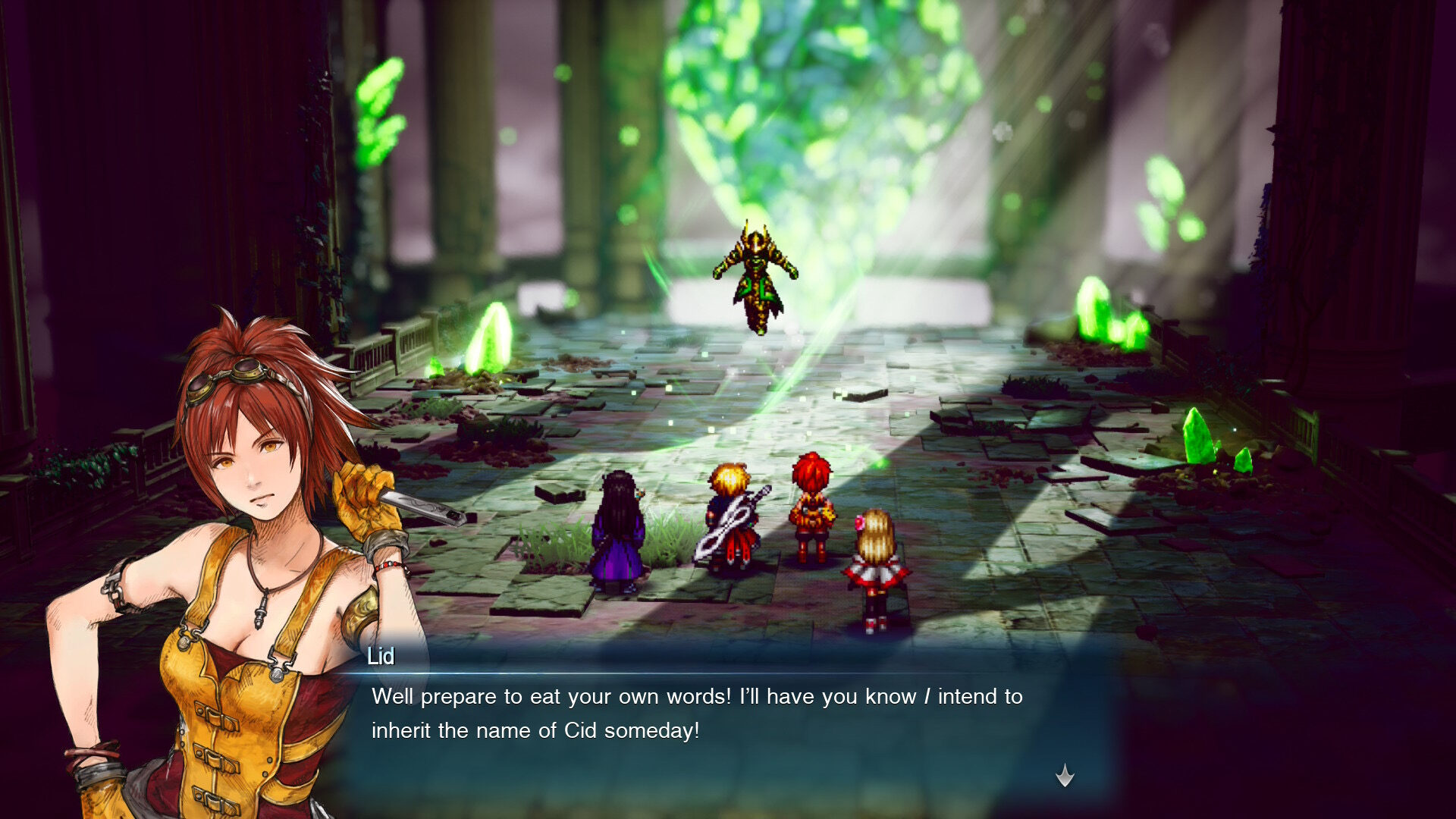
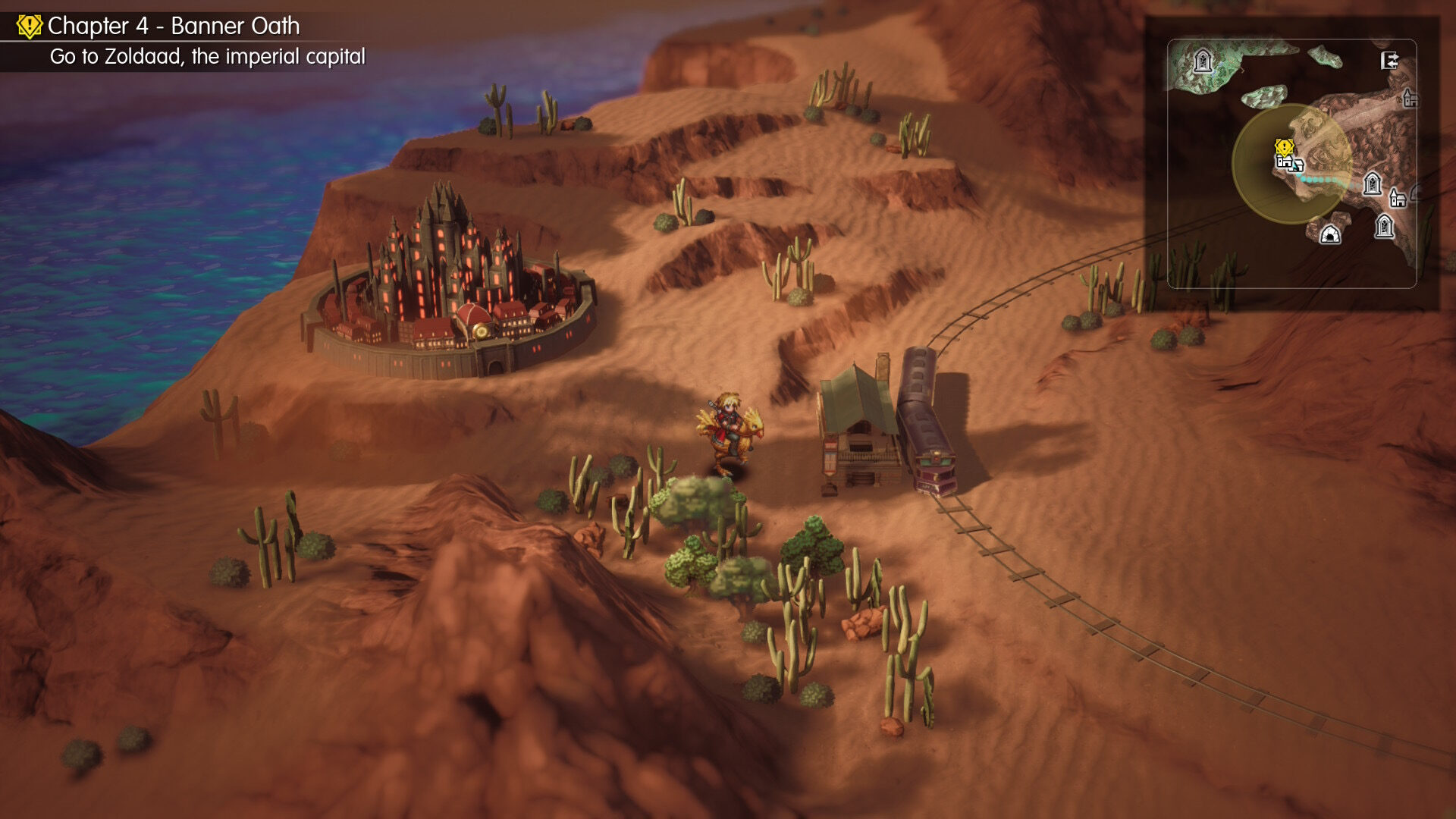
When not in battle, Final Fantasy Resonance offers a sufficiently sprawling world to explore, with multiple continents and a plethora of optional locations to discover. This is where the blending of different eras becomes especially clear. Initially, the party travels across a traditional world map on foot before unlocking the series’ familiar avian method of transportation, the chocobo. Unlike older games, however, the chocobo can be summoned at will without needing to track one down again. The same essentially applies to the airship later in the game, and all the while, fast travel remains an option outside of dungeons.
It’s been 26 years since we last had this kind of global mobility in a Final Fantasy game, with grand world maps largely reduced to fast-travel menus. Now, while travelling on foot or riding a chocobo quickly becomes less useful beyond a few specific situations, there is something cathartic about having all these tools at our disposal again, especially when freely roaming the world in an airship. It helps that the airship, true to tradition, serves as a mobile fortress with all the amenities readily available. Especially in the later stages, its convenience helps stave off some of the tedium.
“Final Fantasy Resonance is the most visually dynamic HD-2D game to-date, bringing a new bombastic energy to cutscenes and further proving the aesthetic’s versatility.”
To that point, Final Fantasy Resonance is a hefty experience. It doesn’t quite rival Final Fantasy VII Rebirth, but completing the main story alone will take around 30 hours. By tackling all the level-appropriate side quests as they appeared, I rolled credits closer to the 50-hour mark. Doing everything, however, will surely push that total closer to 70 to 80 hours, because there are a lot of extracurricular activities to pursue. These start with optional caves where challenging opponents lie in wait, a long-running side quest to gather tablet shards across the globe and character-focused side quests that appear throughout the story. They eventually escalate into some serious challenges, and proper preparation will be required to overcome them.
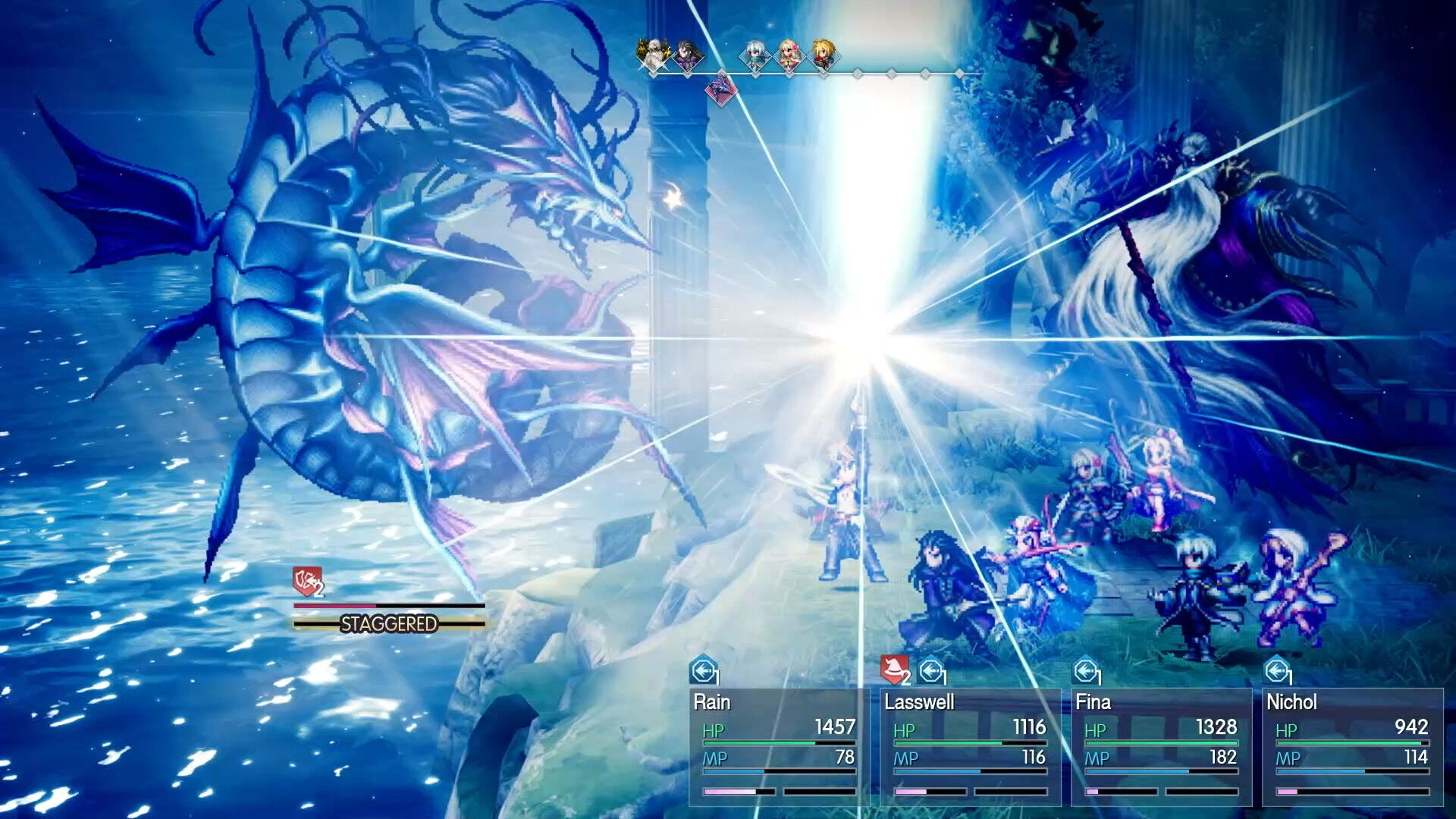
While I was absorbed in the battle system for the entire experience, there were a couple of flies in the ointment that left a slightly sour note. Regular encounters can begin to drag, especially if you get caught up in the sweeping stagger mechanic and end up beating every random encounter into a messy pulp with Visions’ finishing moves. These signature attacks are particularly jarring for the 16 returning heroes, who suddenly transition into pre-rendered, fully 3D sequences borrowed from the original mobile game. It doesn’t help that their voice-overs are available only in Japanese.
About two-thirds of the way through, I began to notice some balancing issues with how the characters develop as combatants. Each character and Vision has a role that describes their skill set, such as Rain the Sentinel or Fina the Medic. It’s beneficial to equip a Vision with a matching role, such as giving Lasswell a fellow Breaker like Cloud, although there are times when pairing different roles can be useful, such as giving Fina some additional offensive abilities.
By that point, I was beginning to feel that there wasn’t quite enough variety in the Visions’ abilities, especially for Fina and the Medic role. Of all the Visions in the game, only a small number are Medics, and equipping them to Fina can feel redundant when she already learns many of the same White Magic spells naturally. There are plenty of excellent Commando and Breaker units, divided between physical and magical attack styles, but relatively few Medics, while the Saboteur and Synergist roles feel somewhat underdeveloped. Meanwhile, all the roles can burn through their MP supplies rather quickly, making it feel as though the core combat balancing could use a little more attention.
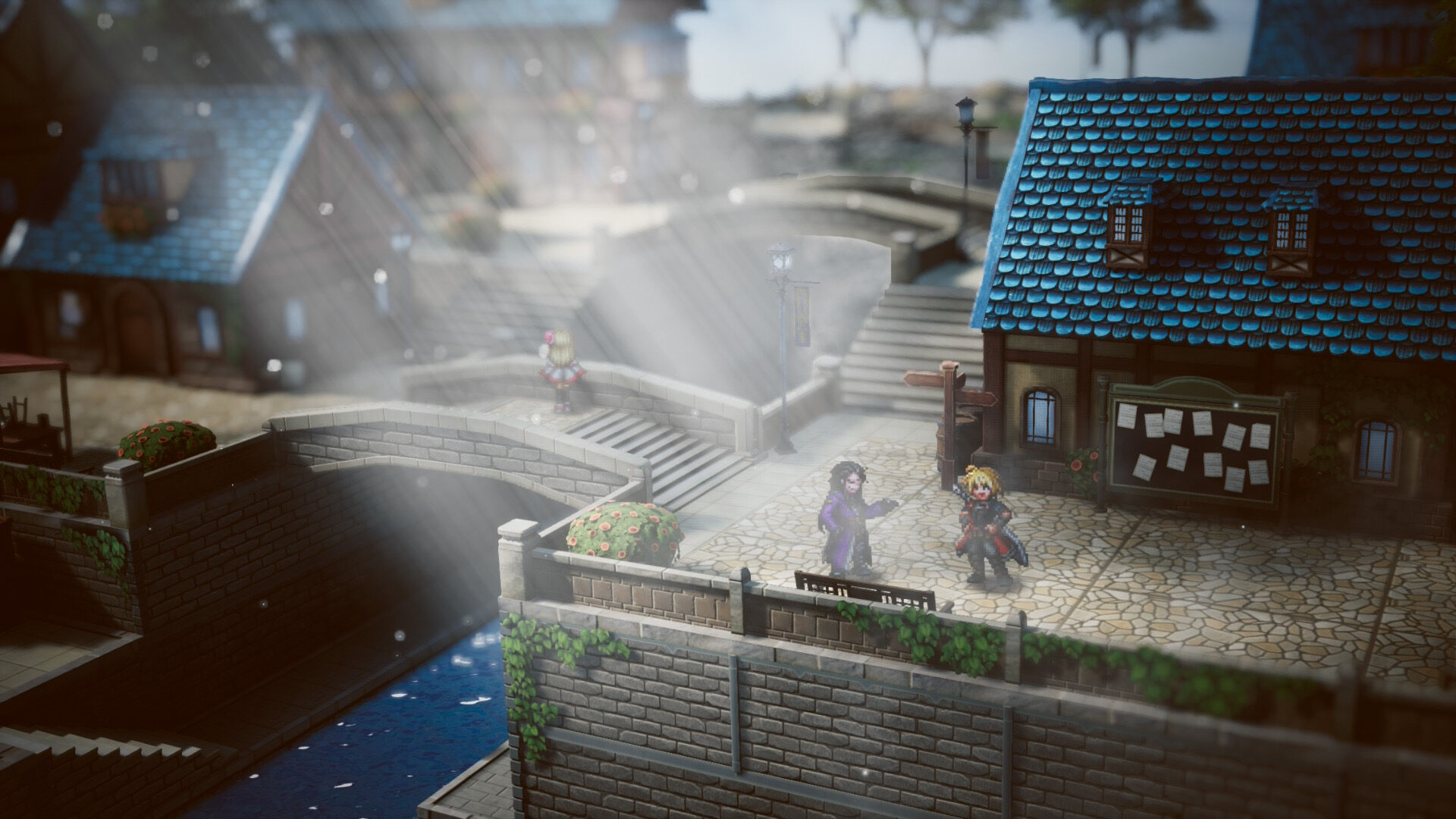
Around the same stage, the side quests also began to feel a little too simple. Part of this is a consequence of having such convenient travel options, but many of these missions felt exactly like errands, amounting to busywork or straightforward fetch quests. The battle content remains stimulating, but the questing content does not. This extends into the main questline as well, with later environments around the 80% mark beginning to feel a little stale, almost like dungeons that exist simply for the sake of having more dungeons. Overall, the dungeon layouts play things a little too safe, never quite reaching the heights of the best 2D dungeons in the series. Thankfully, they also avoid some of the worst classic pitfalls, such as Final Fantasy III‘s absolute marathon of a final dungeon.
However, the art style really works. Square Enix’s Team Asano has brought its full experience to bear, and Final Fantasy Resonance is the most visually dynamic HD-2D game to date, bringing a new, bombastic energy to cutscenes and further proving the aesthetic’s versatility. The sprite work is phenomenal, especially for the returning heroes. Beyond the many familiar enemy designs, there are also some truly eye-catching bosses and superbosses. It was worth the wait to see Square Enix’s flagship franchise receive this particular facelift.
Quibbles aside, Final Fantasy Resonance was a heartening experience. It’s rare to see the old and new blend together so well, or to have a game make good on so many different promises, but Square Enix has done it here. Every aspect of its identity is well served, adding up to a cohesive experience that should please both new and longtime fans. With any luck, it may also pave the way for other seasons of Brave Exvius to receive similar adaptations or for other lost mobile games, such as Final Fantasy Record Keeper, to receive the same restorative treatment someday.