

Anyone who has worked with 3D printing or model making has likely needed to cut or trim plastic parts, and the process can be tedious. Enter the HOZO NeoBlade, a smart and capable ultrasonic cutter that earns its place on a busy maker’s desk. It is not without flaws; it is not for everyone, and it will not replace every hobby knife. However, it is a fast, well-built tool for finishing 3D prints, model work and precise cuts, and it is a joy to use.
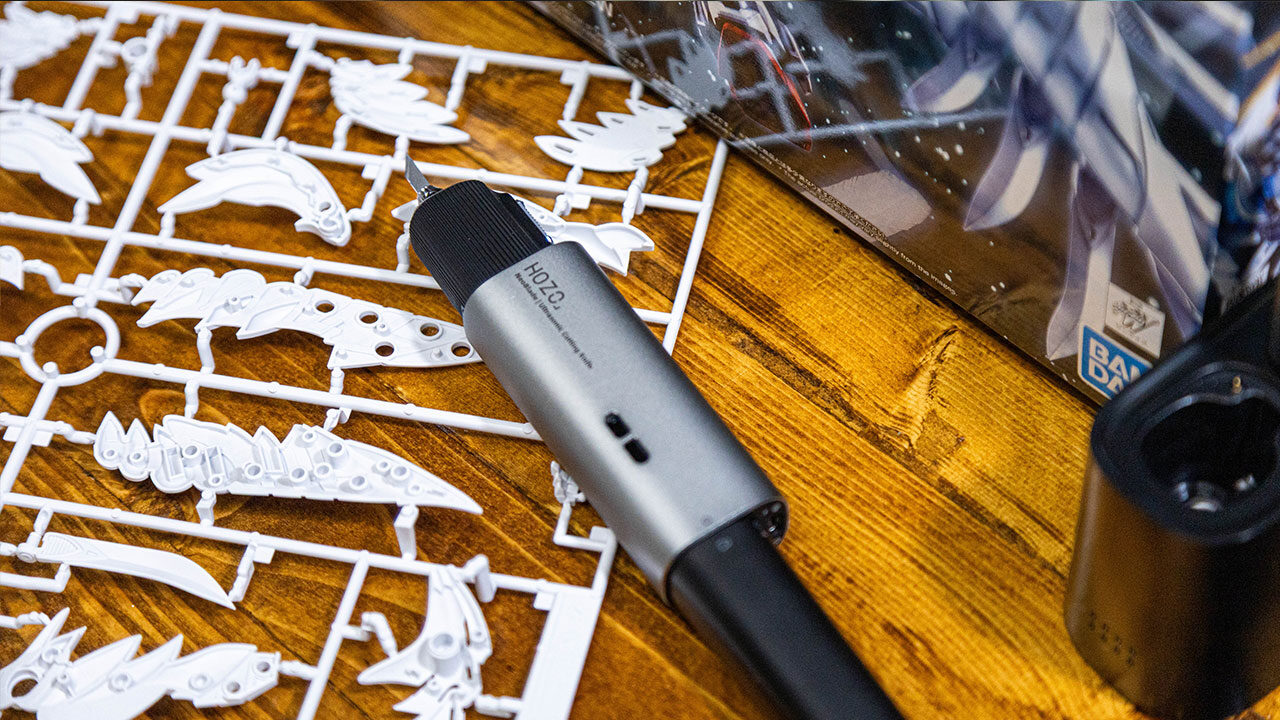
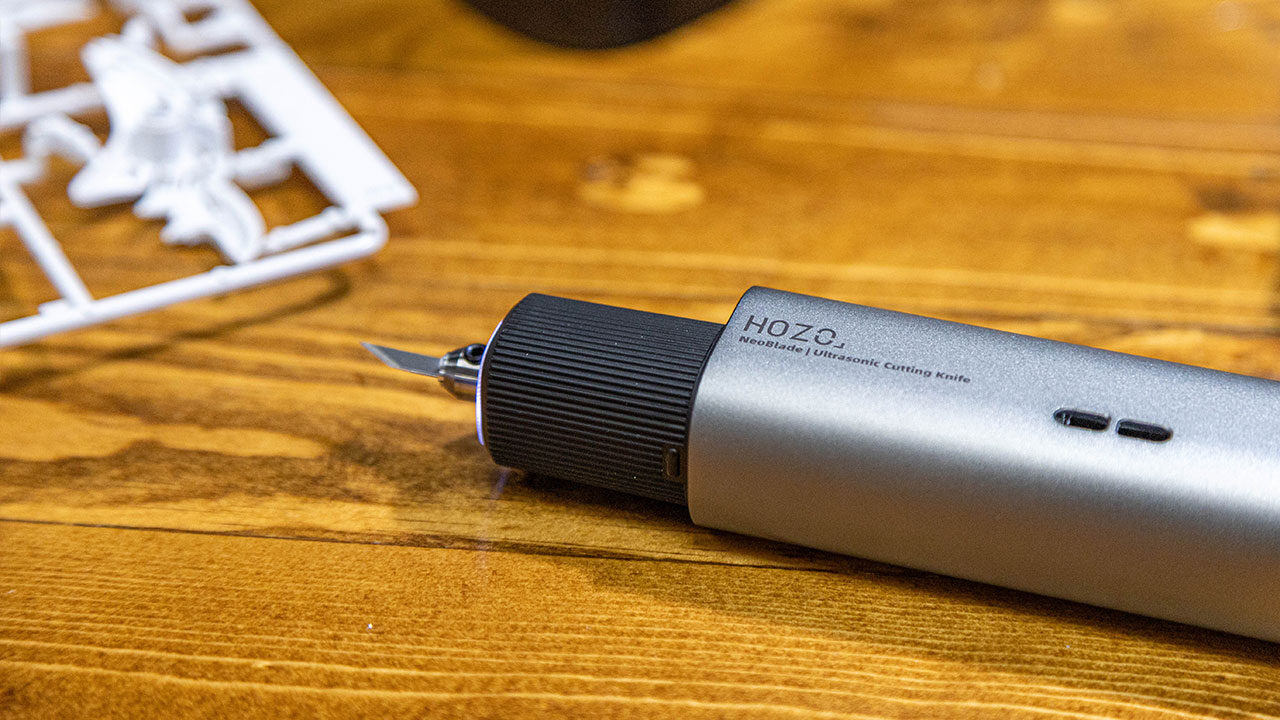
Inside the box is a well-designed tool with a premium feel. Beyond its interesting features, the HOZO NeoBlade looks more like a compact power tool than a typical hobby knife. That makes sense because it does not work like one. Instead of relying mainly on hand pressure, the cordless cutter moves its blade at 40,000 Hz, or 40,000 times per second. It is a smart concept that works remarkably well in practice, with the vibrations doing most of the work while the user guides the blade. It may sound like a gimmick, but I was surprised by how well it performs.
For the right project, it works very well. The HOZO NeoBlade Ultrasonic Cutter is best suited to cleaning resin prints, removing supports, trimming foam, cutting cardboard, working with leather and shaping thin wood. It is not magic, nor is it a replacement for every small blade in a tool kit. However, it can make long, fiddly jobs feel much less tiring. I will also admit there is a sense of joy in seeing the HOZO NeoBlade work for the first time. Even after using it for more than a month, that feeling remains.
The core tool measures 224 by 33 by 26 millimetres and has a body made from aluminum alloy, nylon, fibreglass and ABS. HOZO rates it for use at temperatures ranging from 0°C to 60°C. It is not featherweight, but it is compact enough to hold like a thick marker. Its balance also appears better suited to controlled cuts than broad, rough work. After using standard X-Acto knives for years, I found the NeoBlade fairly easy to handle.
The thicker grip creates one small compromise. It is bulkier than a standard craft knife, but it never feels unwieldy. The NeoBlade feels more substantial than a narrow No. 11 knife, which can make it harder to reach cramped spaces. Users who do a lot of close, detailed model work will still want to keep a standard hobby knife nearby. The NeoBlade is a specialized tool, not the only blade a maker will need.
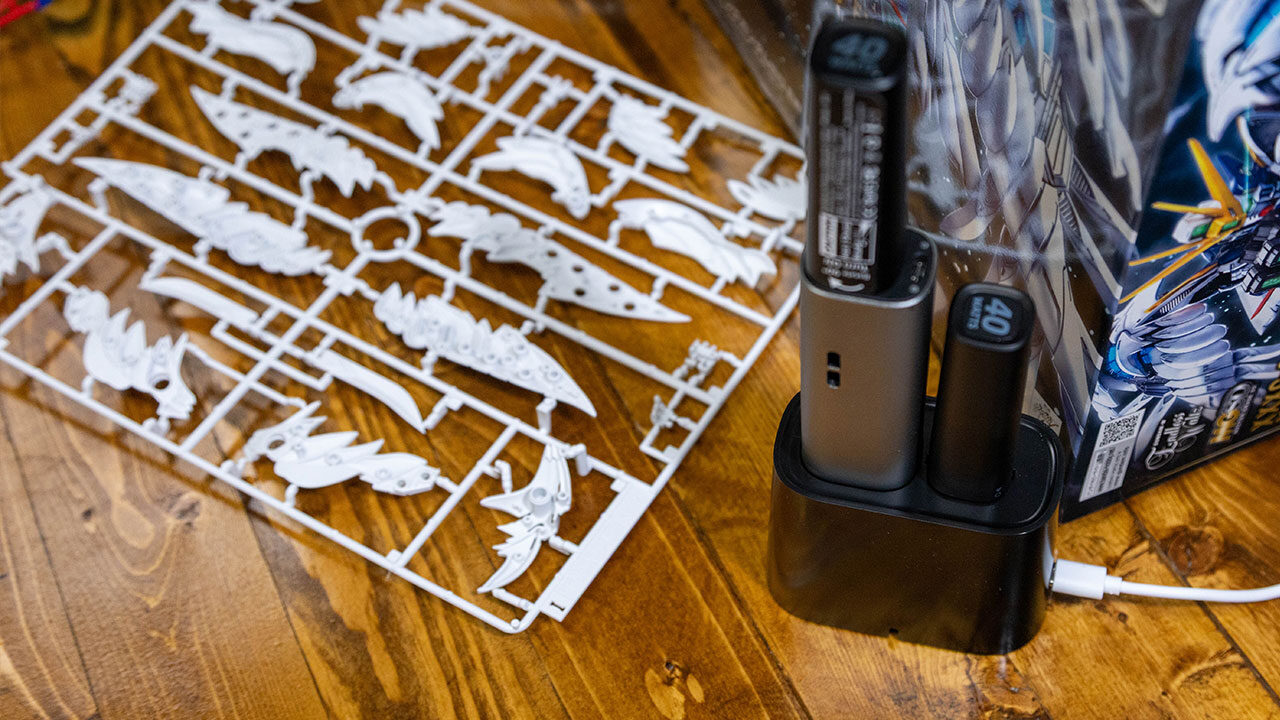
The cutting system has two modes. A press-and-hold setting is designed for short, careful work, while a sliding control locks the cutter into continuous operation for longer passes. The unit also adjusts its output from 9W to 40W based on resistance. This allows it to move through thin materials without running at full power, then increase its output when needed. The NeoBlade is not made for every project, and anyone attempting deep or complex cuts may struggle with it. However, it delivers during precision work or when cutting numerous fiddly pieces, making those jobs much less frustrating.
“The HOZO NeoBlade Ultrasonic Cutter is best suited to cleaning resin prints, removing supports, trimming foam, cutting cardboard, working with leather and shaping thin wood.”
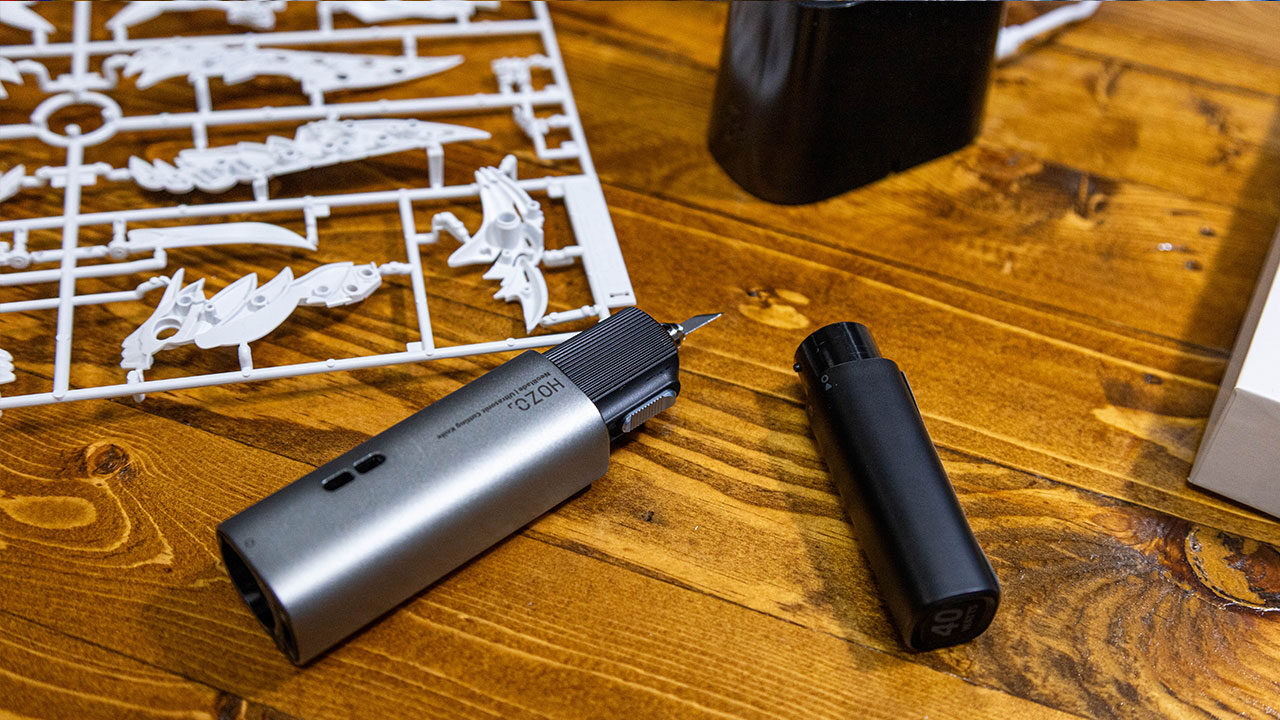
The feature set is unusually comprehensive for a handheld cutter. Two LEDs illuminate the work area, while a 13,000 rpm vortex fan helps manage the heat created by the ultrasonic assembly. The included blade sample kit contains six SK5 high-carbon steel shapes: standard, long, chisel, mini chisel, curved and double-edged. The cutter can also use standard 9 mm snap-off blades.
Blade changes rely on a clamping mechanism and a small tool stored in the protective cap. That is a practical addition when working through several types of cuts in one session, and it makes what could be a tedious task relatively simple. The NeoBlade also has a battery twist-lock that acts as a physical safety control, an automatic shutoff function and a removable battery. The latter prevents the cutter from becoming unusable when one battery runs out of power.
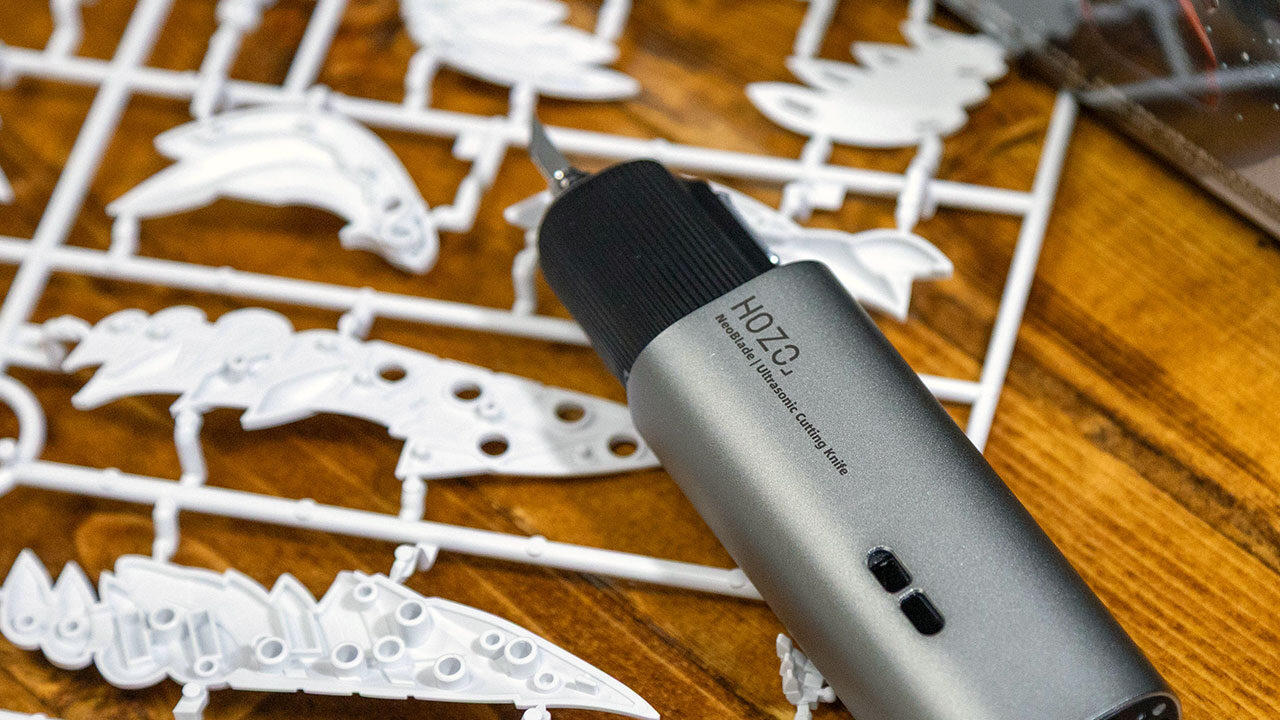
The NeoBlade also cuts cardboard, foam, leather and thin plywood with less effort than a standard craft blade. Thin wood may require a slower pass and can show signs of heat, but the cutter reduces the force typically needed to produce a clean line. That can make a difference during long sessions, when repeated pressure starts to become uncomfortable.
If you are printing things off a Bambu Labs H2S or Pruza Core One L, the NeoBlade can cut PLA, PETG, and many other popular printing materials, but ultrasonic cutting generates heat. On some plastic pieces, that heat can soften or melt the material instead of leaving the crisp edge users may expect. I encountered this problem during testing, and it can be frustrating. Freshly cut plastic can also stick back together if the pieces are not separated quickly, another issue I experienced several times.
This does not make the HOZO NeoBlade ineffective. It simply means users must account for its limitations while working. Quick, deliberate cuts are more effective than holding the blade in one place. When working with delicate styrene parts, the safer approach is to cut farther from the piece before completing the final cleanup by hand. Resin supports are generally better suited to the NeoBlade than conventional injection-moulded styrene sprues.
Despite those limitations, battery life was my biggest frustration and may be a problem for many makers. Each 1,300 mAh battery is rated for about 30 minutes of continuous use. HOZO includes two batteries with its combo packages, while the optional TurboDock can charge the tool and a spare battery at the same time. Charging with the dock takes about 30 minutes, while the optional TurboDock can charge the tool and a spare battery at the same time. Charging with wired USB-C Power Delivery takes about 60 minutes.
The dock makes a meaningful difference during regular use, although it is limited to the more expensive bundles. Prices for the NeoBlade range from $149 USD for the base tool to $218 USD for the Creator Combo and US$338 for the Premium Combo. Those packages add accessories such as the dock, a second battery and larger blade selections.
Despite its minor issues, the HOZO NeoBlade delivers and has become my go-to tool for cutting and cleaning up 3D prints. It is well suited to makers who regularly trim resin prints, work with heavier craft materials or want cleaner cuts with less hand pressure. It runs hot, can be noisy, requires users to learn its limitations with plastic and costs far more than a basic hobby knife. However, when its strengths match the work on the bench, the NeoBlade feels less like a novelty and more like a worthwhile upgrade.
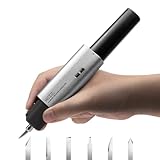
- 【The World’s Smallest & Feather-Light Ultrasonic Cutter】 – Just 4.4oz (124g) without battery and 6.7oz (190g) with battery, NeoBlade is lighter than any ultrasonic cutter.Power in your hand, freedom in your moves—cut anywhere, create everywhere
- 【40W Auto Power Adjustment】– NeoBlade’s intelligent control automatically adapts output for different materials, giving you smooth, precise cuts without overheating or stalling