
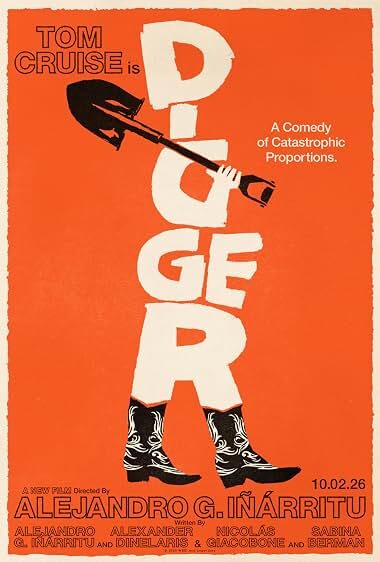

Digger follows the most powerful man in the world who embarks on a frantic mission to prove he is humanity’s saviour before the disaster he’s unleashed destroys everything. However, there is something more at work beyond the disaster. This may be Tom Cruise’s wildest but most meaningful film to date, once you get through this experience. There is no better way to explain Digger. Audiences have to go in as blind as possible.
I would recommend sticking to what you know from the trailers or the description provided above to get the most out of Digger. This movie had a few more layers than one might expect, emphasizing the importance of climate change—sprinkled with political satire. The environmental shots of the glaciers and polar ice caps were stunning.
Every outdoor shot was a VFX-fest that made natural disaster movies like The Day After Tomorrow and 2012 look way better than they did in Digger. Something about the water simulations was a bit janky throughout this movie. Still, the cinematography from Emmanuel Lubezki was insane on this production. Lubezki won three Academy Awards for Best Cinematography for Gravity, Birdman, and The Revenant, and he showcased that in this movie. The fixed camera shots inside Digger’s domain were perfect, as the actors felt like they used the setting as a stage in a certain manner.
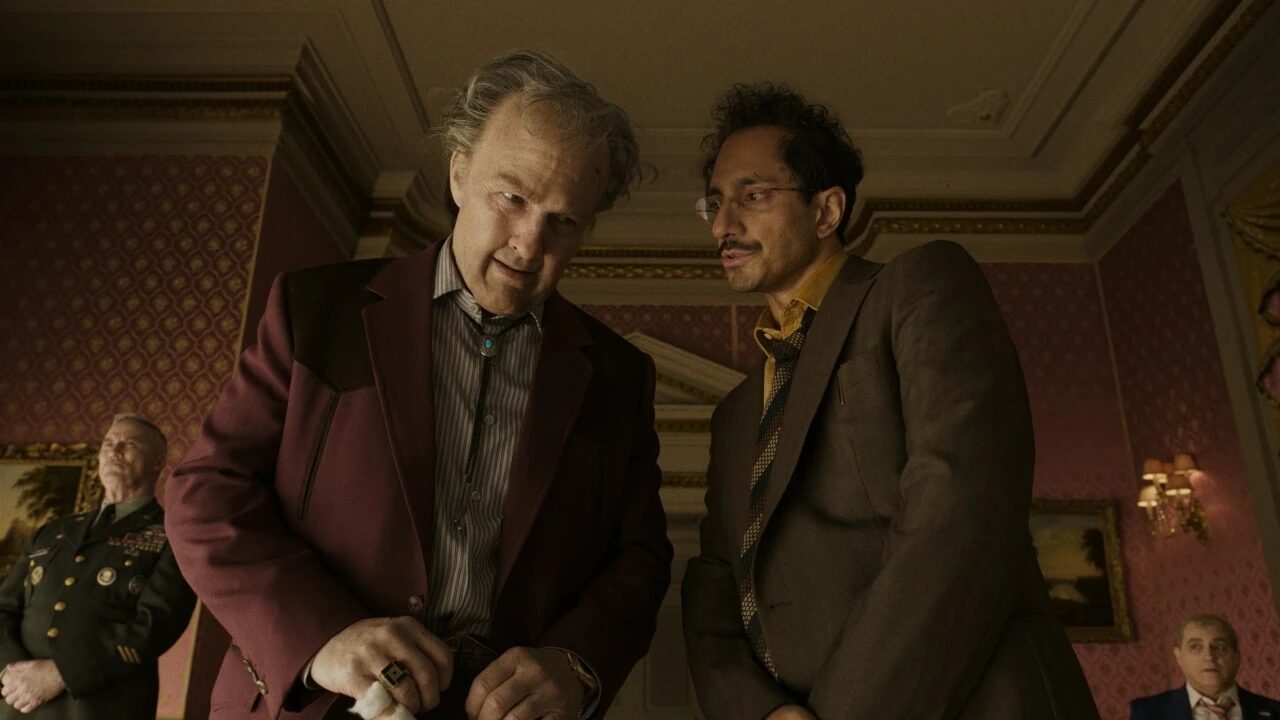
Lubezki, production designer Dennis Gassner, and set decorator Anna Pinnock appeared to work in tandem because the opening at Digger Rockwell’s home was a work of art. As the film went on, the sets looked more intricate and carefully planned for tone-setting. Just from Digger’s many rooms in his house, the excess stuffed animals served as a powerful character design—revealing more about Digger without saying much.
The intentional set designs added to the lore of the overarching tale. One of the most disturbing and unsettling sets was the representation of the UN in this world. The muted colours of almost everything emphasized how tacky some of the most important buildings and institutions looked. Many of the painted walls throughout Digger’s house reminded me of the artwork shown at the opening themes from The White Lotus, with each painting serving some kind of symbolism.
“There is no better way to explain Digger. Audiences have to go in as blind as possible.”
The number one standout treat of this film was its score, composed by Cosmo Sheldrake—who did not seem to have scored a film or TV series before. I would not believe that Sheldrake had never scored a film before because there was an evident theme for this film. The orchestral work was both whimsical and eerie, laying out how this movie was going to go down. It was like polka music, with some slight theremin—the sound that commonly plays when aliens are mentioned in media.
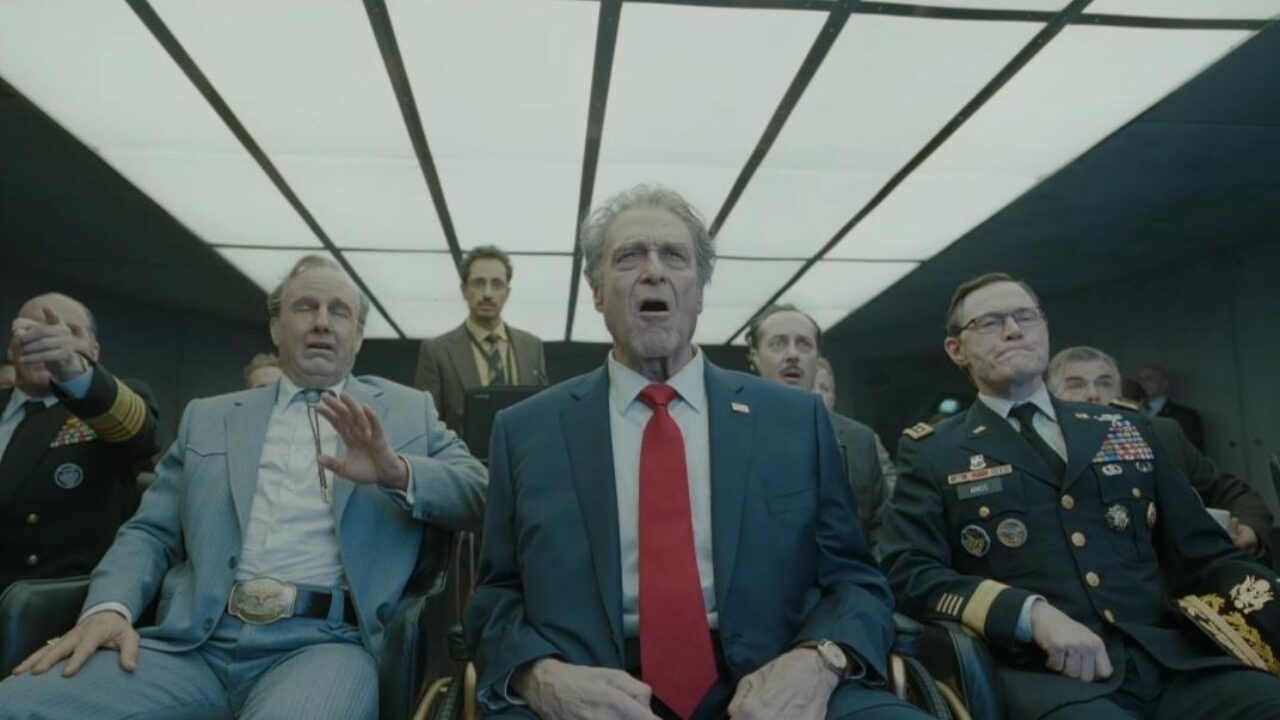
To go along with the score, the sound design was also meticulously planned out. Some of the doors in Digger’s house made some comically squeaky sounds. Also, there were some humorous non-dialogue moments, like when the President’s war room adjusted their seats and leaned in when hearing about the disaster. Speaking of the President’s war room, any of their collective scenes reminded me of Dr. Strangelove and how these high-power American men were all in a position of power to do something to resolve the issue—but most of their solutions are dumb.
John Goodman’s President Compson gives current U.S. President Donald J. Trump a run for his money on questionable political choices. In a way, President Compson was like the current president when his psyche is broken, or when he listens to delirious advice from his inner circle; and Digger is the bold and demeaning business tycoon side of the current president—the personality that does not back down. Either way, Goodman gave a performance and a half for his character.
I did not expect to see a drunk Riz Ahmed, but his performance in Digger showed me his widest range of acting yet. I knew he was a good dramatic actor from performances since Rogue One: A Star Wars Story to Hamlet. But I did not see him give such a performance as in this film. For Tom Cruise’s Digger, Cruise looked like he was having as much fun in this character as he was in Tropic Thunder. However, the more you watch this movie, Cruise’s performance gets better and better.
“For those searching for their next favourite satire film, this was the one—crafting a one-of-a-kind story.”
Sandra Hüller as Digger’s half-sister Emma Rockwell was the perfect chaos to match Cruise’s bombastic, cowboy personality. This was the complete opposite of the Hüller we saw in Project Hail Mary earlier this year, where she was cold and stoic—a little close to her international breakout role in Anatomy of a Fall. Hüller’s Emma provided enough character presence to understand Emma’s relationship to Digger.
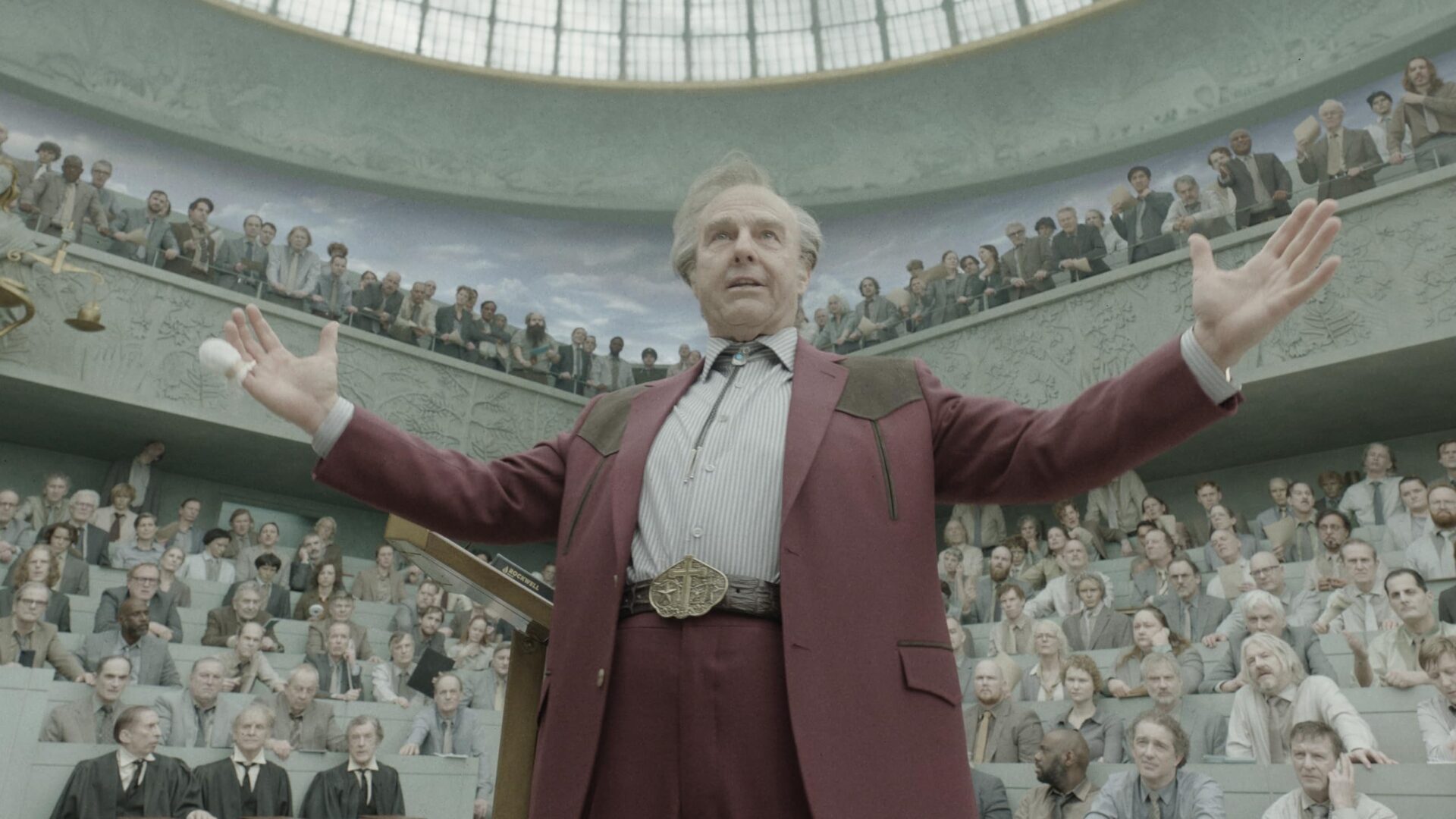
Again, I cannot stress how monumental Digger is required to be watched without any spoilers at all. Otherwise, the film will lose a good amount of its charm. But sometimes even knowing the end goal is not as satisfying to watch as witnessing the journey it takes to get to that final destination. For those searching for their next favourite satire film, this was the one—crafting a one-of-a-kind story. Strangely, those who enjoy Black Mirror or those types of media narratives will feel at home with the overall story of this movie. Dig into your theatre seats and prepare to have some good laughs.