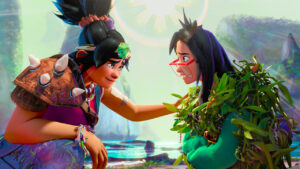
As someone who grew up half-Filipino, the food and culture could not be ignored growing up—especially the food! The amount of lechon and adobo my family would cook or order was insane. Forgotten Island unapologetically celebrates all of that. On top of that, it reminds us to hold on to all the strong friendships we have nurtured over the years. Of course, when I heard that co-director of the film Joel Crawford was attending SCAD AnimationFest 2026, I had to have a quick chat with him for CGMagazine.
We discussed how the big proponent of Raissa emigrating to the United States was such a realistic, personal story for many Filipinos. Then we talked about the casting and finding the right animation and art styles to match the loud and proud story. Additionally, we dove into what made the 1990s aesthetic important to Forgotten Island, what Crawford will always remember from this production, and what he learned about Filipino culture through this process. This interview was conducted prior to Crawford accepting the Variety Creative Impact in Animation Award and the screening of Forgotten Island.
Just wanted to say, thanks again so much to you and Januel [Mercado] for making this film for yourselves, your family, your kids, and all Filipinos out there!
Joel Crawford: Yeah, thanks for the support, man.
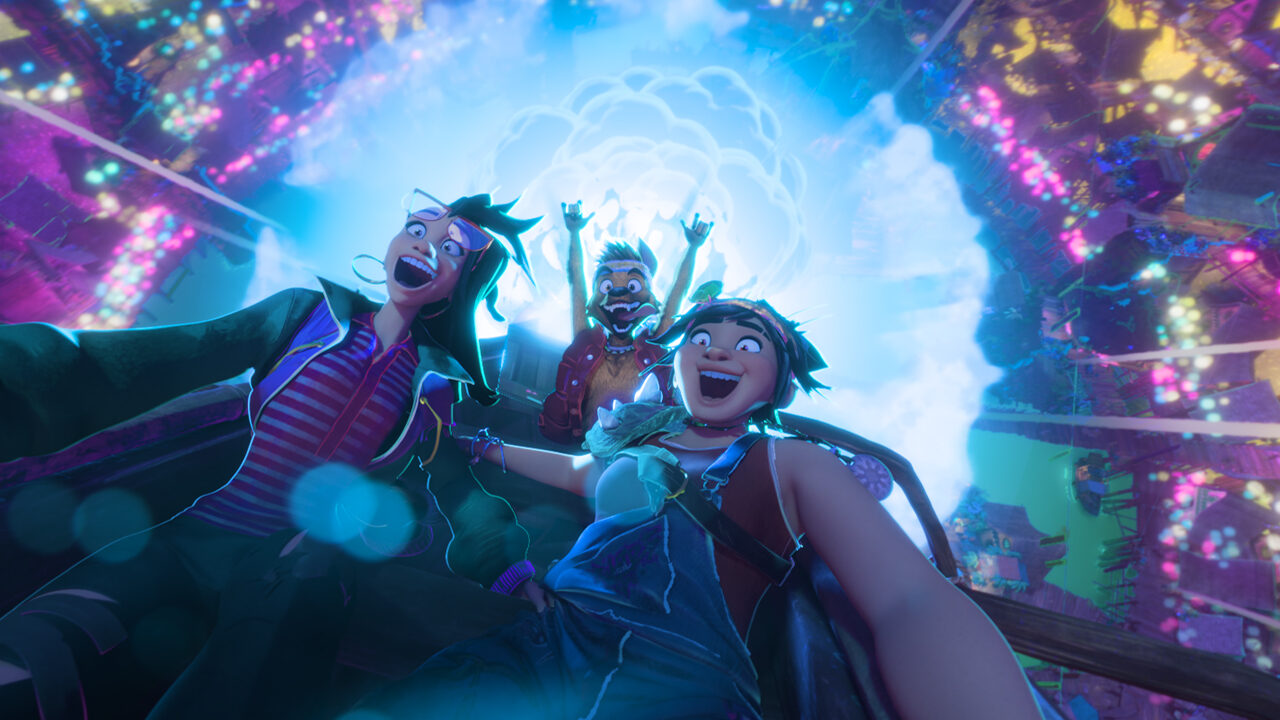
And what a story—a coming-of-age story that focuses on friendship. One of the interesting aspects that felt quite relatable was when Raissa has to emigrate to the United States for a better life. How was that incorporated into the story at the earlier or later stages?
Joel Crawford: That was from the early conception of the story Januel and I were working it out, knowing we’re telling a story about this coming-of-age experience of these lifelong friends. But it’s at an inflection point in their friendship when one is leaving, and the other’s staying—there’s that feeling of being forgotten. I’d say the personal side of the story for me was inspired by my wife, Cathy, who grew up in the Philippines until she was 9 and then came over to the US.
Januel and I constantly talk about how there’s that thing in screenwriting where it’s ‘write what you know.’ But for us, we’re writing who we know because he was inspired by his sister Jo for the character of Jo, and then my wife, Cathy, was Raissa—being able to tell a story that celebrates these important people in your life. It evolved into a story that is also about identity because when you have people that are meaningful to you, that empower you to be you, you find yourself.
Immigrating, leaving your home, your cultural roots and going somewhere new—that identity of you knowing who you are, where you came from in order to know where you’re going, it’s so important. There are so many layers in this story that have come from not only Januel and I’s friendship and the women in our lives who’ve inspired us, but also from our cast. [They] brought themselves and their experiences into this film too, so it’s so layered.
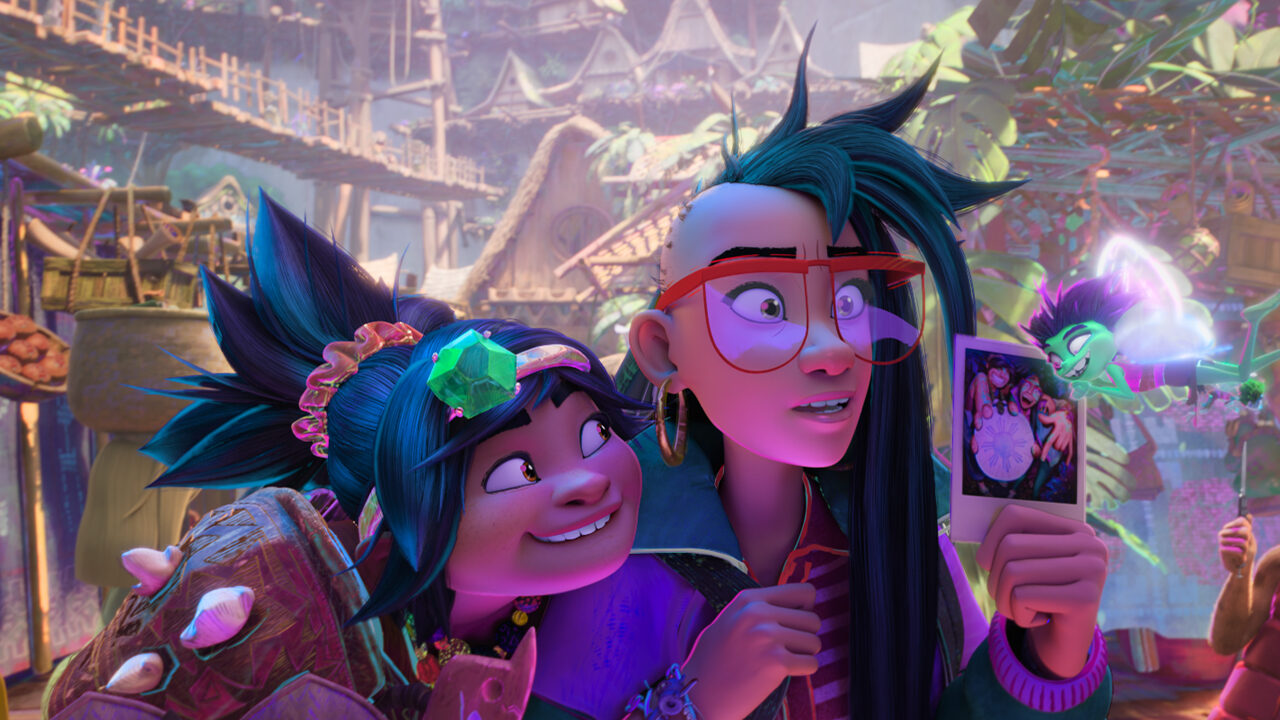
Speaking of the cast, what an amazing cast for Forgotten Island. Were there a whole bunch of Filipino stars throwing their name into the mix? Getting Lea Salonga was a must!
Joel Crawford: Yeah, not only actors who were amazing voice-wise for the part but also brought their own experiences, their own points of view, and their own cultural connection to the Philippines. We didn’t just want someone to show up and perform these lines; we wanted partners in creating this story. So, when we were casting Jo and Raissa, from the very beginning, Januel and I said H.E.R. would be amazing!
Januel saw a video that Vogue Philippines had done for her years ago, and her persona was so cool—usually with the sunglasses and everything. But when she was talking about Filipino food and tasting it, she always got all enthusiastic and bubbly—that’s another side of H.E.R. And for us, we’re like, ‘that feels like Jo.’ She was such a delight to work with.
You couple H.E.R. with Liza Soberano, [Liza] came in for the audition for Raissa, and we were blown away not just by her acting and performance, but also bringing her experience of being in the Philippines, being a huge actress there, and then leaving all that to come over to the US to pursue her dreams. She brought that perspective of Raissa, who’s pulled between two worlds and cares deeply about the people; she didn’t want them to feel like she was abandoning them, but she had these goals and aspirations.
That’s the cool part about our cast; they were a part of creating the characters, not just with their voices, but with their experiences. And then of course, you can’t have a Filipino movie without having Miss Lea Salonga in it, right?
Oh yeah, you have to!
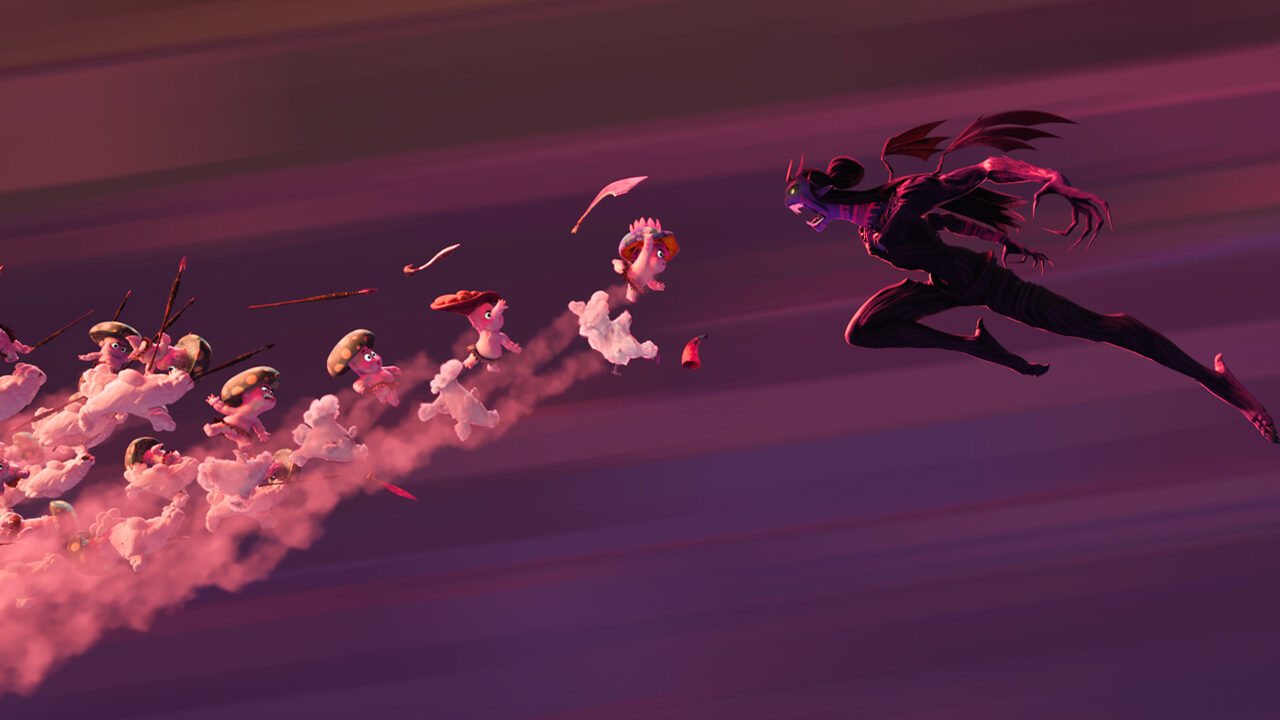
We were so delighted when we were like, ‘Man, we’re presenting her to play this iconic villain, the Manananggal. And she was actually very excited about the opportunity and the part to play against [her usual parts]—since she’s so used to playing the princess. It’s been so wonderful; the experience of this whole movie. I keep looking for the words to describe things because I’m it’s so, so special.
One that I learned recently is ‘tadhana’, which means ‘fate.’ The stars aligned for so many talented people to come together to celebrate Filipino culture, to celebrate memories and friendship. And really, just create this human story that I think everybody connects to, that each of us matters and each of us has a story to tell.
Truly amazing and special. And to match all that human energy are the wonderful animation and art style inspirations that I’ve seen in the trailer. What influences or references were used in Forgotten Island to find the right visuals?
Joel Crawford: So…you haven’t seen the full movie yet?
No, not yet, but tonight I will at the SCAD screening.
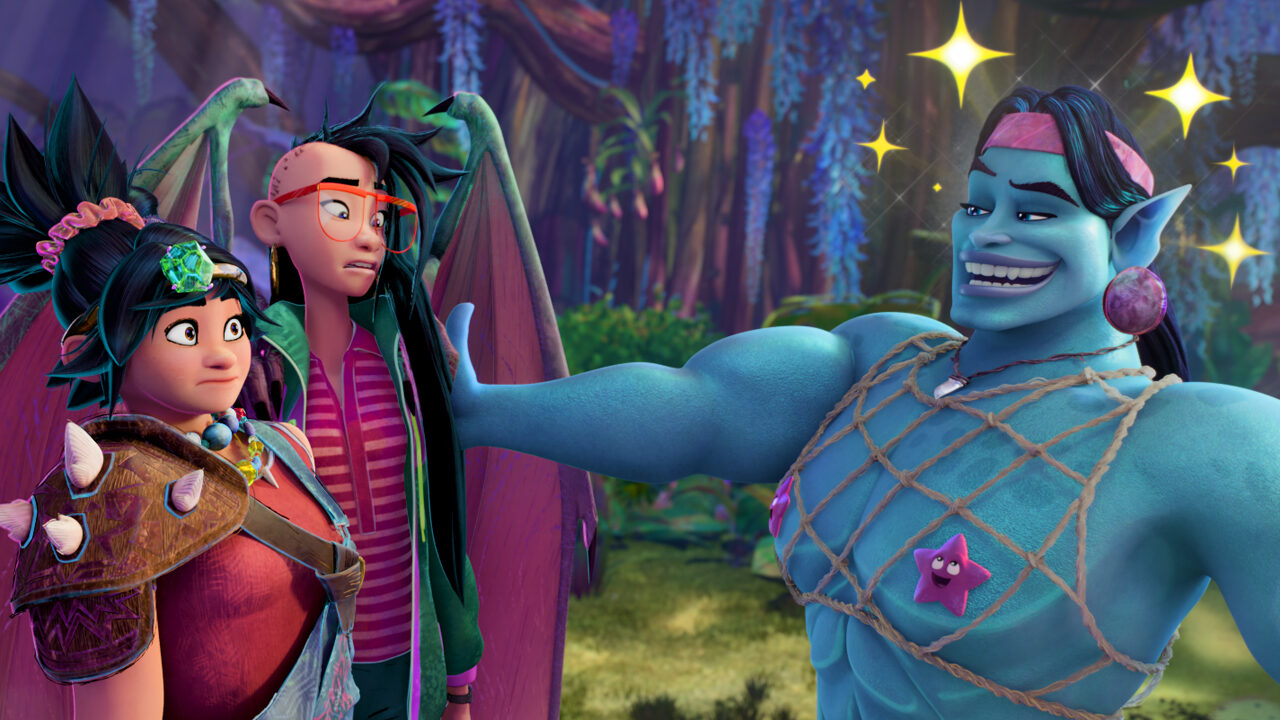
Joel Crawford: Okay, cool! You’re in for a treat! Because in addition to Jo and Raissa, there’s a lot of other supporting characters. One of the great opportunities in telling a story that really is at its core is about memories and how they make us who we are. In animation, you can do anything to find a way to visually experience memories. We use CG animation with a hybrid 2D sensibility that gives you a nostalgic, throwback feel.
We have moments in the movie that pull from some of the anime Januel and I grew up with like Dragon Ball Z. In the 90s, there’s a Capcom anime of Street Fighter, and there’s Sailor Moon. So depending on who’s telling and reliving their memories, the style changes to fit them. And that’s it, yeah, you’re in for a visual treat!
Oh, man, Sailor Moon encapsulates that 90s aesthetic for me so much. And talking about the 90s aesthetic, friendship bracelets have been coming back with Taylor Swift and the Swifties. Forgotten Island appears to focus on their friendship bracelets quite a bit. Was that something you and Januel added early on to keep the girls bonded throughout the story?
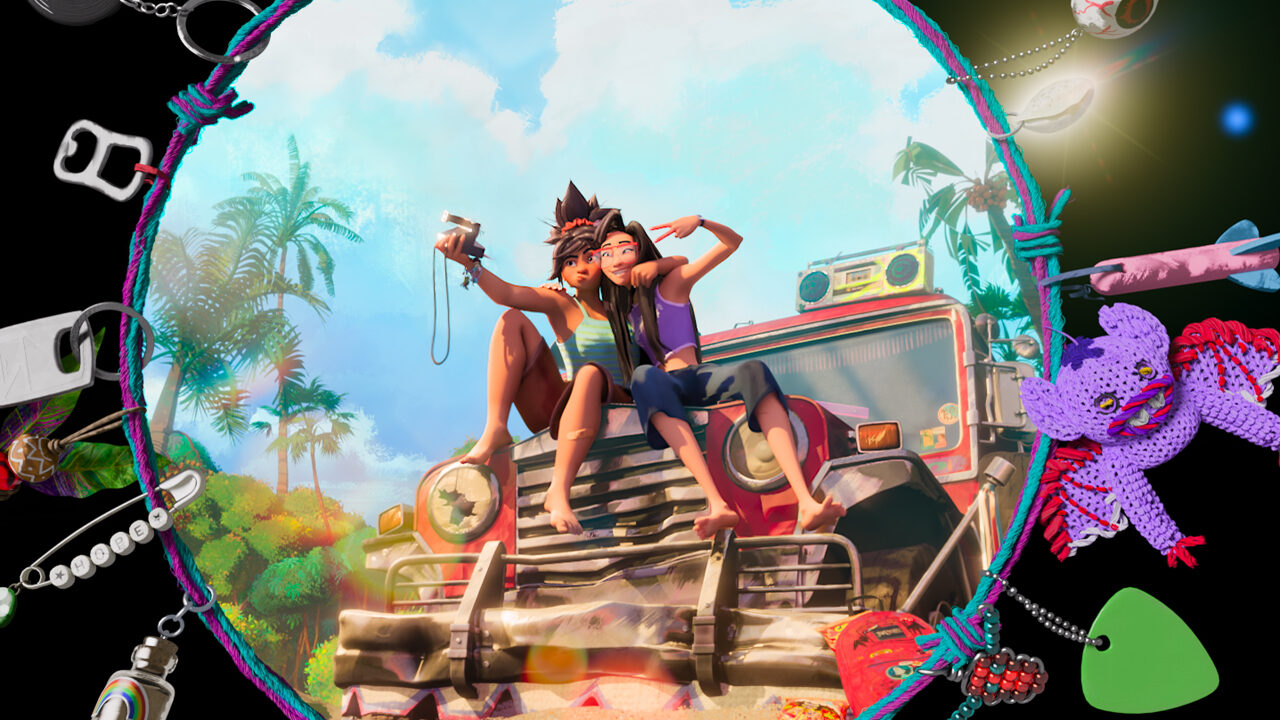
Joel Crawford: Absolutely! To sum it up, I think there’s been a resurgence in the tangible. We live in a time where everybody’s got a phone; they can take thousands of photos, but they never look at them again. In the 90s, you got a Polaroid where you could take a photo, you wait for it to dry, [the image] appears, and then you hang it up on your wall—it’s special. It was a time when you didn’t have a phone and couldn’t do FaceTime. If your friend is leaving, you genuinely feel like you might not see them again.
I think so much of growing up at summer camp, you would make these friendship bracelets. It’s these tangible things that represent kind of intangible moments and feelings. So, the friendship bracelets became a way in the storytelling to say these meaningful moments stay with you—they kind of make up who you are. To have a visual of that, a bracelet that carries different kinds of core memories and each object, when they look at it, represents their childhood and their friendship. We’re very visual as storytellers, and that was the perfect way to nail that.
Wow, now I really can’t wait to see how the visuals of the friendship bracelets play into the story. And from all the press on this film, everyone looks happy about this journey. What’s a core memory that you don’t want to forget about in making Forgotten Island?
Joel Crawford: It’s hard for me to sum it up to one. This whole experience of making this film. Every film is personal, whether it was The Croods: A New Age or Puss in Boots: The Last Wish. But this one started personal and is so special to Januel Mercado and me. It started with the two of us going, ‘What if we told a story that celebrated Filipino culture and celebrated friendship?’
To see it now, it’s a crew of over like 400 people who have worked on this, from all areas of the world. There’s a studio in the Philippines that animated 2D moments in this movie. There are so many people who have come together, brought their talents and so much of themselves.—including our cast who this has been one of the most special memories in a way for creating this movie.
At the premiere the other night, just a couple of nights ago, we had our entire cast with us; we had my family, my wife’s family, Daniel’s family, and we were surrounded by friends and family and that memory right before the movie played, and to look around at the people you love and to be able to share something with them. That’s when I’m like, ‘I never want to forget that mental…’
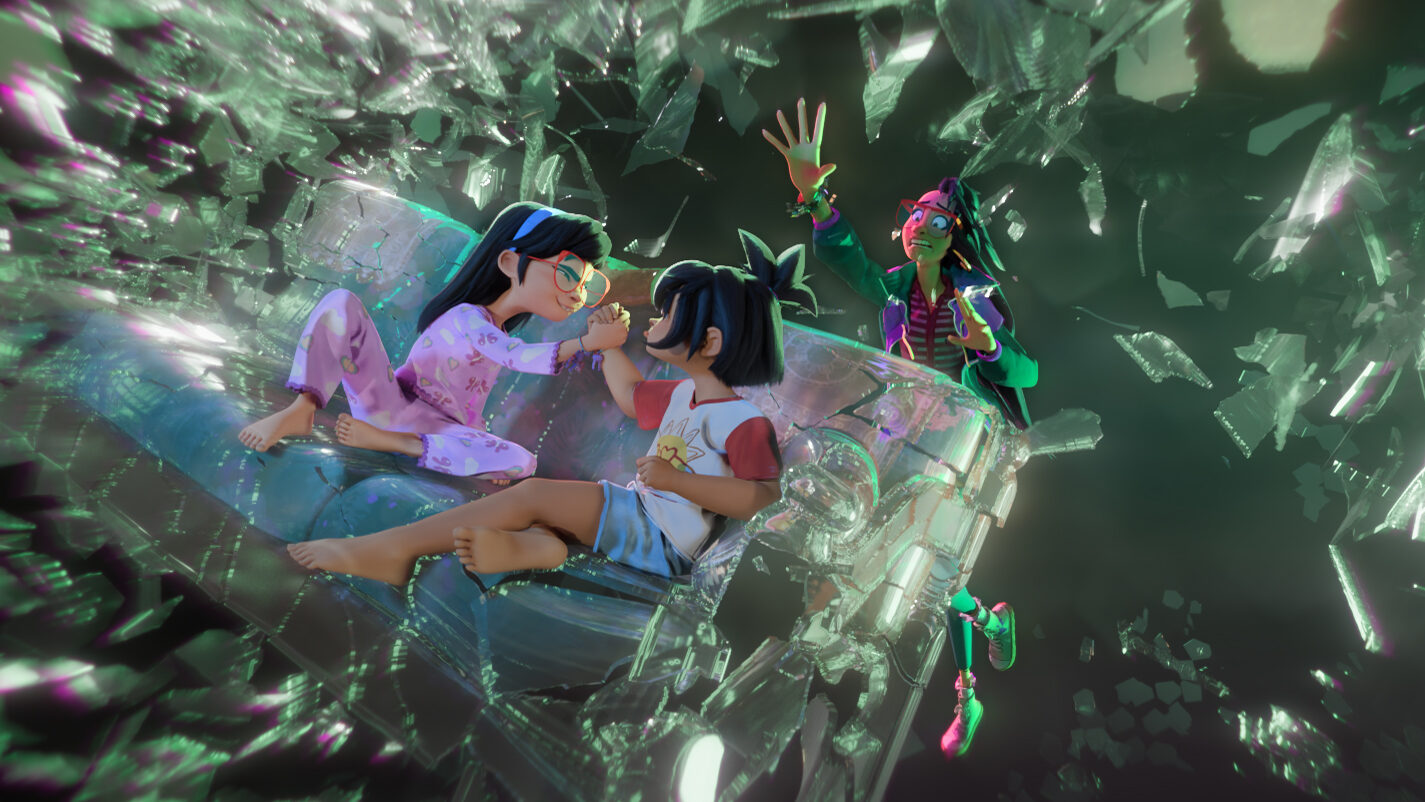
(Gestures an imaginative Polaroid to Crawford)
Joel Crawford: Exactly. I don’t ever want to forget that.
That’s so sweet, and it makes so much sense. And yeah, what’s one last thing that you’ve appreciated from the Filipino culture after working so hard on this film?
Joel Crawford. Liza Soberano talks about the Filipino heart. It’s everybody looking out for each other. It’s a shared invitation. Whether you’re family or not, you feel like family, and that’s done through music, food, dance, and more food.
Oh yeah! We love our food!
Joel Crawford: I gained so much weight when my wife and I got married! (Everyone in the room laughs out loud)
But I think one of the special things about celebrating a specific culture–celebrating Filipino culture—is that it gives the main stage to a culture that hasn’t been represented before. But it also allows other people who maybe didn’t know anything about the culture to see the similarities, see themselves in that and go, ‘We’re not that different.’ I’m just so excited to share this with the world, man!
Right on! Same! Thank you again so much for your time!