
With RTX Spark being a new platform from NVIDIA and MediaTek, we wanted to approach our coverage of this new laptop range a little differently. We will still have reviews of the individual laptops, where we talk about overall performance, battery life and gaming and creator performance, but we also wanted to take the time to dive into what NVIDIA RTX Spark can actually do and why, if you are a PC user, this is such a major launch.
It arrives at a time when PC hardware comes at a premium, so with these laptops being some of the most expensive options you can currently buy, it is worth asking whether the new platform is all hype or if this could finally be the PC’s M1 moment.
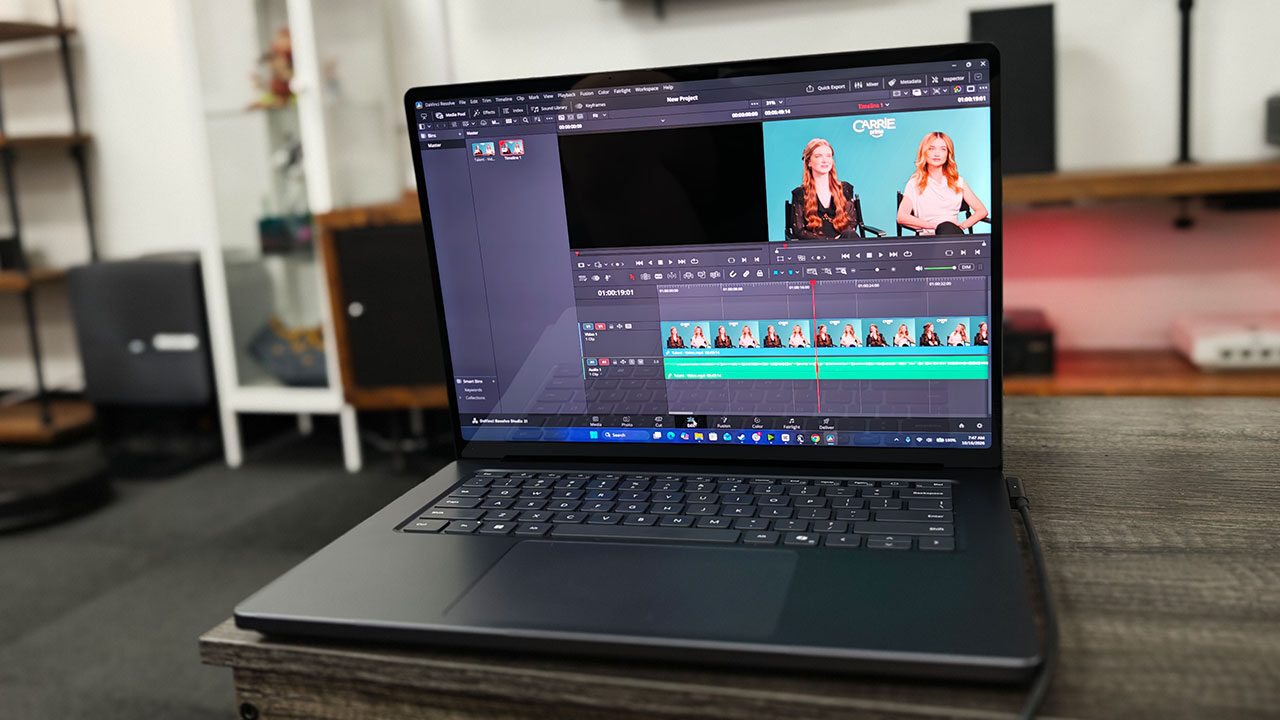
NVIDIA has been at the heart of PC gaming for decades, but RTX Spark is something the company has never offered before: a complete platform of its own. First unveiled at Computex 2026, the RTX Spark N1X superchip pairs a 20-core Arm processor with a Blackwell GPU featuring 6,144 CUDA cores, backed by up to 128 GB of fast unified memory. It is the same basic formula that made Apple’s silicon so compelling, now arriving on Windows with NVIDIA’s graphics and AI expertise behind it. With all of that in mind, there is a lot of excitement around what RTX Spark could mean for the PC market and whether it is worth the investment.
With up to 128 GB shared between the processor and GPU, RTX Spark laptops can run large AI models locally, offline and privately, without paying for cloud access. For developers, creators and anyone watching where local AI is headed, RTX Spark is being positioned as one of the fastest ways to do that work on a laptop. And to be honest, there are a lot of pieces falling into place to make that a reality. Microsoft, NVIDIA and the OEM laptop makers have all worked together to bring these systems to market, and from the look of things, it is working.
Microsoft’s Prism emulation layer runs most x86 software transparently and has seen major improvements since it first hit the market, while major anti-cheat systems already work and Dell, HP, Lenovo, ASUS and MSI are all building machines around the chip. Gaming takes a back seat here, but DLSS, frame generation and ray tracing all function as expected. After years of false starts, Windows on Arm finally has a platform with real graphics credibility, and that alone makes NVIDIA’s RTX Spark one of the more interesting PC launches in recent memory.
Specs and features
The world of Windows has been lagging behind some of the advancements we have seen on the Mac. While Qualcomm has made major strides with Windows on Arm, it has never quite felt like a creator or gaming platform, and its AI workflows have lagged behind what we have seen from Apple. With RTX Spark, that trend looks set to change.
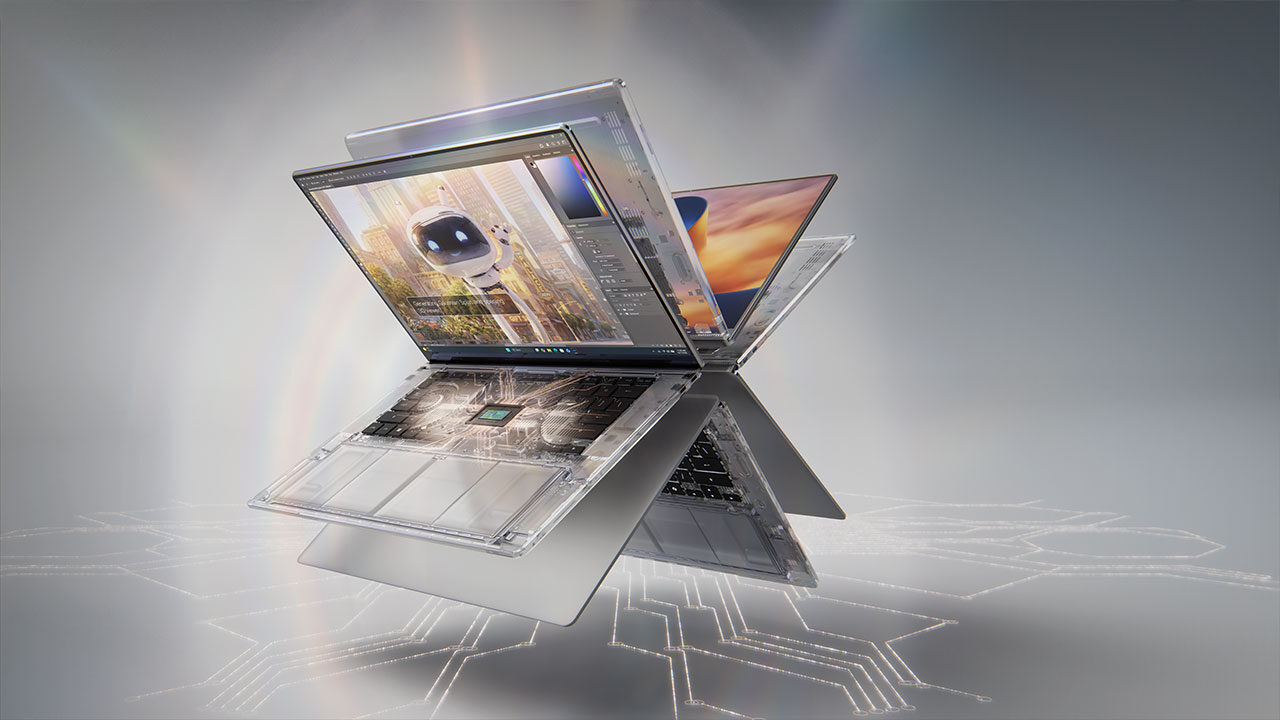
RTX Spark is NVIDIA’s first real attempt to bring its high-end GPU and AI hardware into a unified Windows-on-Arm platform. At the top end, the N1X configuration pairs a 20-core Grace CPU with a Blackwell RTX GPU featuring 6,144 CUDA cores, fourth-generation ray-tracing cores and fifth-generation Tensor Cores.
“Windows on Arm finally has a platform with real graphics credibility, and that alone makes NVIDIA’s RTX Spark one of the more interesting PC launches in recent memory.”
Rather than relying on separate CPU and GPU memory pools, the platform uses up to 128 GB of shared LPDDR5X memory linked through NVIDIA’s NVLink-C2C interconnect. The result is a machine designed to move large data sets between the processor and graphics hardware without the usual compromises associated with a thin-and-light system. This is the kind of power and performance we normally expect from a beefy gaming laptop, yet it is packed into a machine that remains relatively portable.
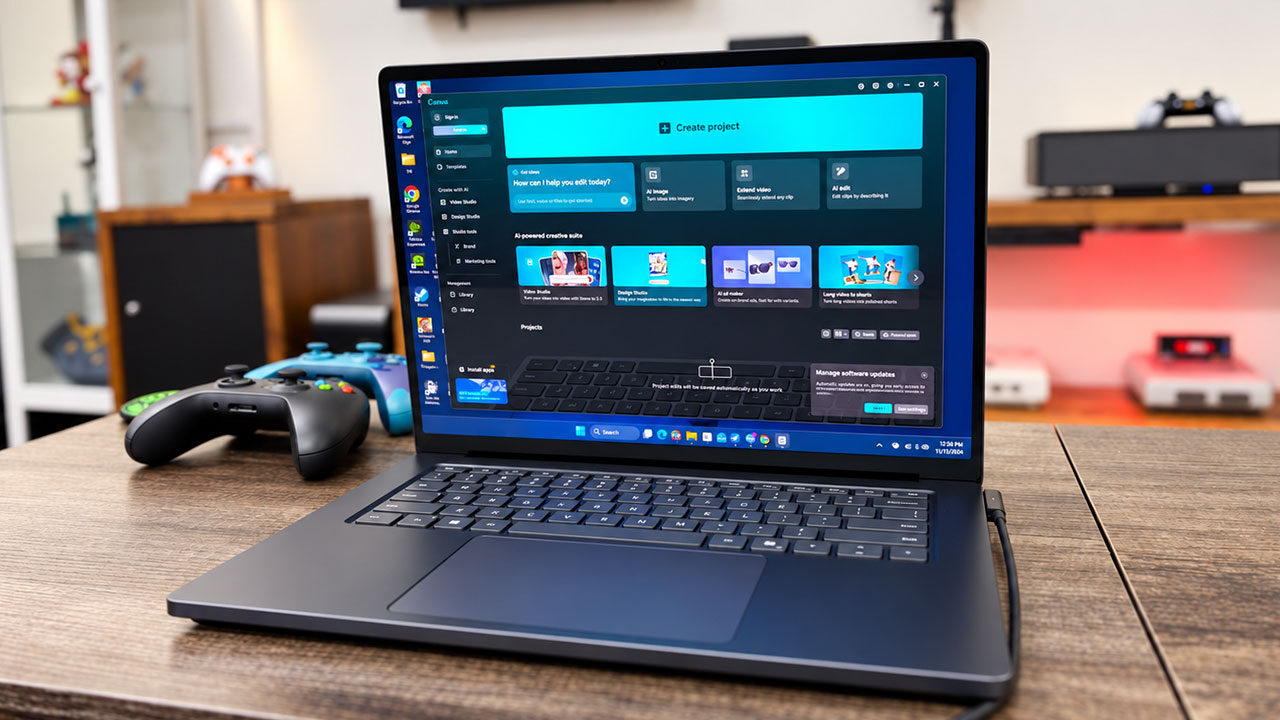
RTX Spark is built to handle local AI tools, large language models, 3D rendering and video production workloads that would normally call for a much more substantial workstation. NVIDIA rates the platform for up to one petaflop of FP4 AI performance and says it can run models with up to 120 billion parameters locally, though the usefulness of that capability will depend heavily on the software available for Windows on Arm.
For gaming, RTX Spark includes the expected RTX feature set, including ray tracing, DLSS 5, Reflex 2, DirectX 12 Ultimate support and ninth-generation NVIDIA encoding hardware. Its 45 W to 80 W power range also helps explain the platform’s positioning. It is not designed to replace a full-size gaming laptop GPU, but it offers considerably more graphics horsepower than the integrated solutions typically found in ultraportables.
I will be honest: after using the Microsoft Surface Laptop Ultra for all of our testing, I was amazed by how much the machine could handle. Being able to adjust memory allocation while still having access to NVIDIA’s full suite of tools, from creator-focused applications to gaming features, makes the platform feel remarkably capable for something that can still be carried around with relative ease.
AI Testing
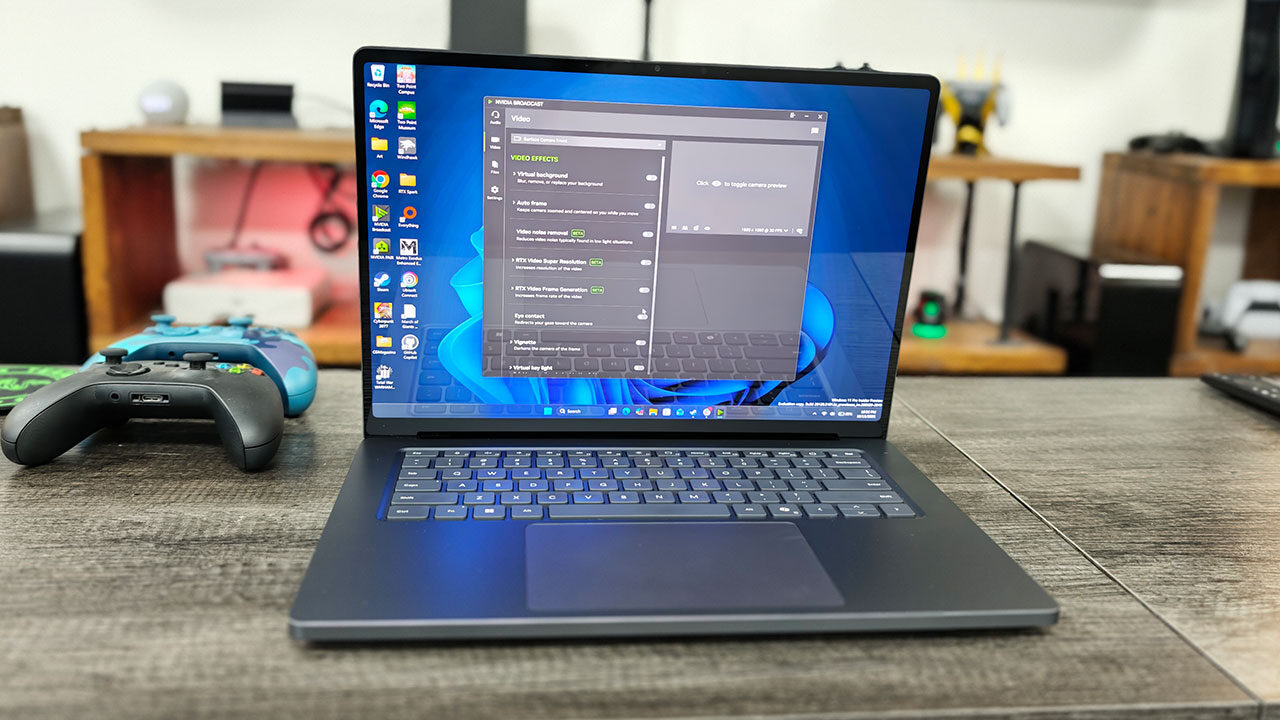
Sitting in the workshops with NVIDIA, I was a bit skeptical that this new laptop could outperform my desktop with an RTX 4090, 128 GB of DDR5 system memory and a 1,200 W PSU, but I am man enough to admit when I am wrong. AI workflows are where RTX Spark really shows what the platform is capable of, and it does so without getting as hot or draining the battery as quickly as a comparable x86 system.
The Superchip pairs a 20-core Arm CPU with a 6,144-core Blackwell GPU, all fed by 128 GB of unified LPDDR5X-9400 memory, and up to 96 GB of that pool can be handed directly to the GPU. This is what makes RTX Spark so interesting. It means the machine can load 35-billion-parameter models locally that simply do not fit on much faster discrete laptop GPUs limited to 24 GB of VRAM. It can also generate output from those models at roughly 89 tokens per second, a pace that feels genuinely usable rather than simply a fun thing to show friends.
“The unified memory in RTX Spark machines gives the platform a massive advantage here and lets it trade blows with Apple’s latest M5 offerings.”
In agentic workloads such as Hermes or Perplexity Computer, which measure how long a system takes to complete multistep AI tasks rather than how quickly it answers a single prompt, RTX Spark finished ahead of Apple’s M5 MacBook Pro and completed the same jobs in roughly half the time of the fastest x86 rival with integrated graphics we had in our office for testing. For anyone who wants a private coding assistant or local document analysis without sending data to the cloud, RTX Spark is one of the most capable laptop platforms for local AI we have tested to date.
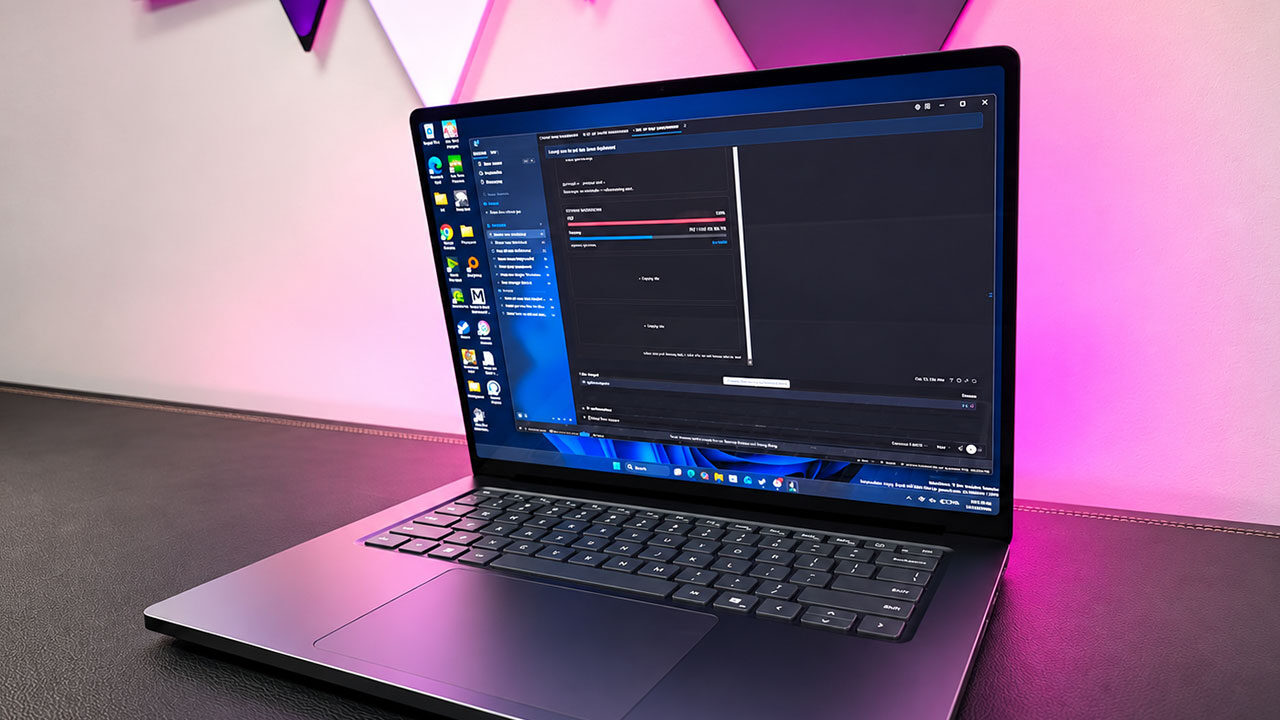
I tested a range of models, including Qwen 3.8 27B, Qwen 3.6 35B and the much smaller Gemma 4, along with several lighter models to explore different workflows. I have to say, NVIDIA’s RTX Spark managed to handle these larger models with ease. Even the biggest models I used to push the platform had no real trouble loading and delivering results quickly, something many of my gaming laptops struggle to do simply because they do not have enough memory available. The unified memory in RTX Spark machines gives the platform a massive advantage here and lets it trade blows with Apple’s latest M5 offerings.
Even with all of that said, there are some things worth noting, especially if you are looking to replace your entire workflow with a single laptop. A discrete GPU with a fraction of the memory can run circles around RTX Spark on any model small enough to fit within its VRAM, operating at more than twice the speed. Because RTX Spark’s graphics and processor share a single memory pool, leaving an agent running in the background also cut everyday browser performance nearly in half during testing. RTX Spark is an incredibly capable local AI platform, but it is not yet one you can forget is thinking.
Gaming
That brings us to gaming, and despite some limitations because RTX Spark isn’t an x86 platform, I was generally impressed by what I saw this little machine achieve. On paper, the N1X’s Blackwell GPU carries 6,144 CUDA cores across 48 SMs, the same core configuration as a desktop RTX 5070, but it shares up to 300 GB/s of LPDDR5X memory bandwidth with the CPU, far below what even an RTX 5060 Laptop GPU gets from dedicated memory. NVIDIA is nonetheless bullish, claiming AAA titles can run at 1440p and more than 100 FPS with ray tracing, DLSS and Reflex enabled.
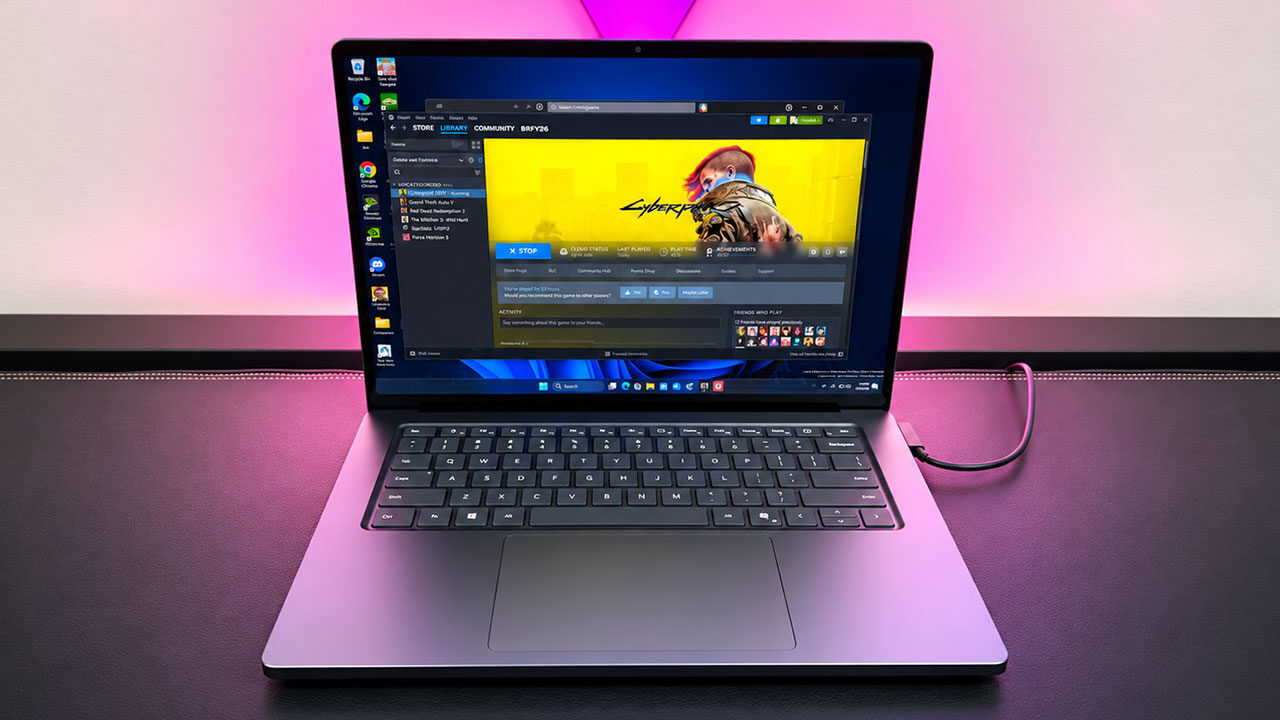
But what really matters is the games, and overall, RTX Spark delivered impressive results, even if performance wasn’t equally strong across every title. In Metro Exodus Enhanced Edition at 1080p Ultra, RTX Spark hit 75 FPS while drawing just 43 W, as measured by HWiNFO, while Black Myth: Wukong effectively matched discrete RTX 5070 laptops at 66 FPS. Cyberpunk 2077 at RT Ultra managed only 36 FPS, dropping to 18 FPS at native resolution. However, with ray tracing and path tracing left off the table and DLSS combined with frame generation, the game ran at well over 60 FPS, with a high of around 68 FPS and a low of 62 FPS.
CPU-bound titles suffered the most. Baldur’s Gate 3 ran noticeably slower than comparable systems, a consequence of Arm single-thread performance and Microsoft’s Prism x86 emulation overhead, while games like Civilization VII felt noticeably slower compared with my ASUS ROG Zephyrus. Still, when the CPU is not the bottleneck, RTX Spark is a monster at delivering solid frame rates. I even managed to play a bit of Cyberpunk 2077 on a plane, and over an hour-long gaming session, the laptop’s battery dropped by only around 18%.
Compatibility is better than expected, but it will still be a limitation if you are looking to make an RTX Spark laptop your main machine. Denuvo, BattlEye and Easy Anti-Cheat all work at launch, covering much of the multiplayer library, though EA’s Javelin means Battlefield 6 and EA Sports FC 27 remain unplayable until next year.
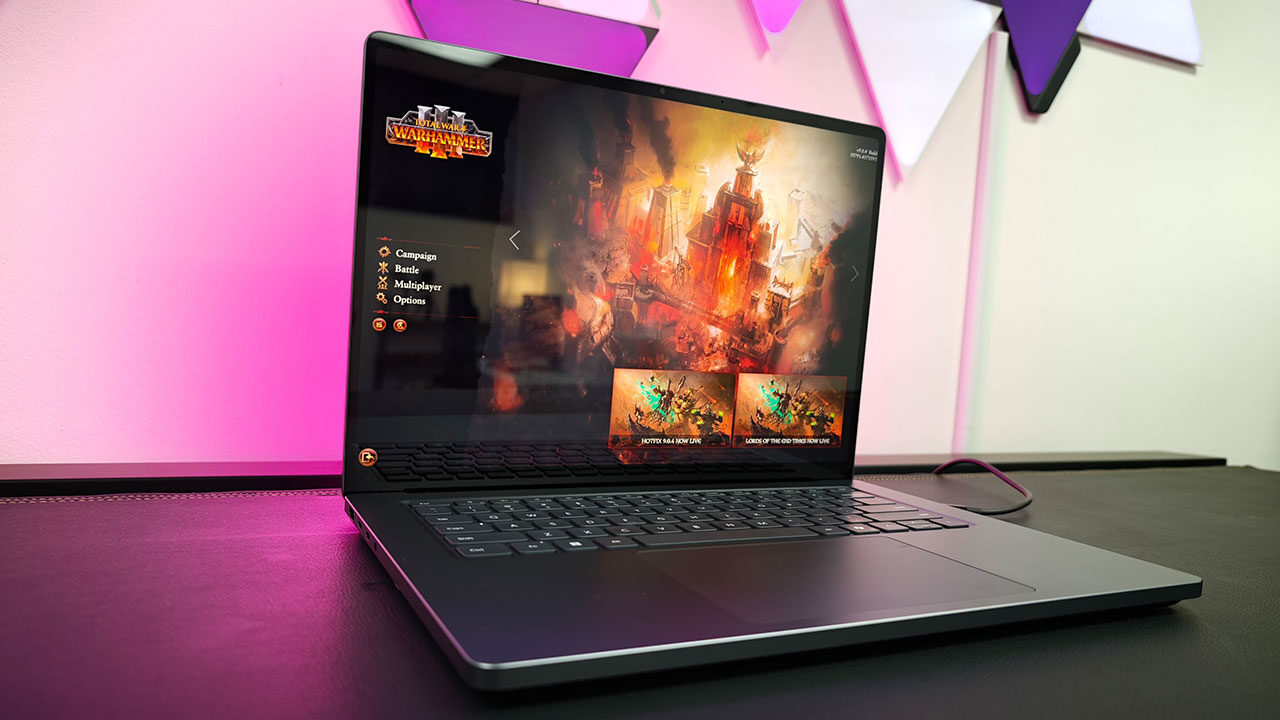
Even more impressive, RTX Spark delivers this level of performance whether plugged in or running on battery. While you will struggle to make it through an entire flight while gaming if you can’t stay plugged in, the platform retains around 99% of its performance when unplugged. I will be honest, when testing unplugged and plugged in, I really saw no noticeable difference between different benchmarks or testing beyond the normal margin for error, something I honestly did not think was possible. That means you are not sacrificing much of the laptop’s capability just because you cannot find an outlet.
I walked in excited but hesitant about the RTX Spark platform, but NVIDIA has delivered one incredibly powerful SoC. The unified memory and raw performance make RTX Spark a real workhorse, whether you are using it for creative software, gaming or AI workflows. There are still some growing pains compared with an x86-based machine, and not everything will work perfectly out of the box, but the platform is now getting real push.
If you can get past the eye-watering price of many of these machines, Windows finally has a chip that can compete with the best Apple has to offer, while offering a large library of titles that work right out of the box, with hopefully more compatibility coming over the next few months. That is an impressive feat in itself. Windows has finally found its M1 moment, and it could not have come at a better time.