
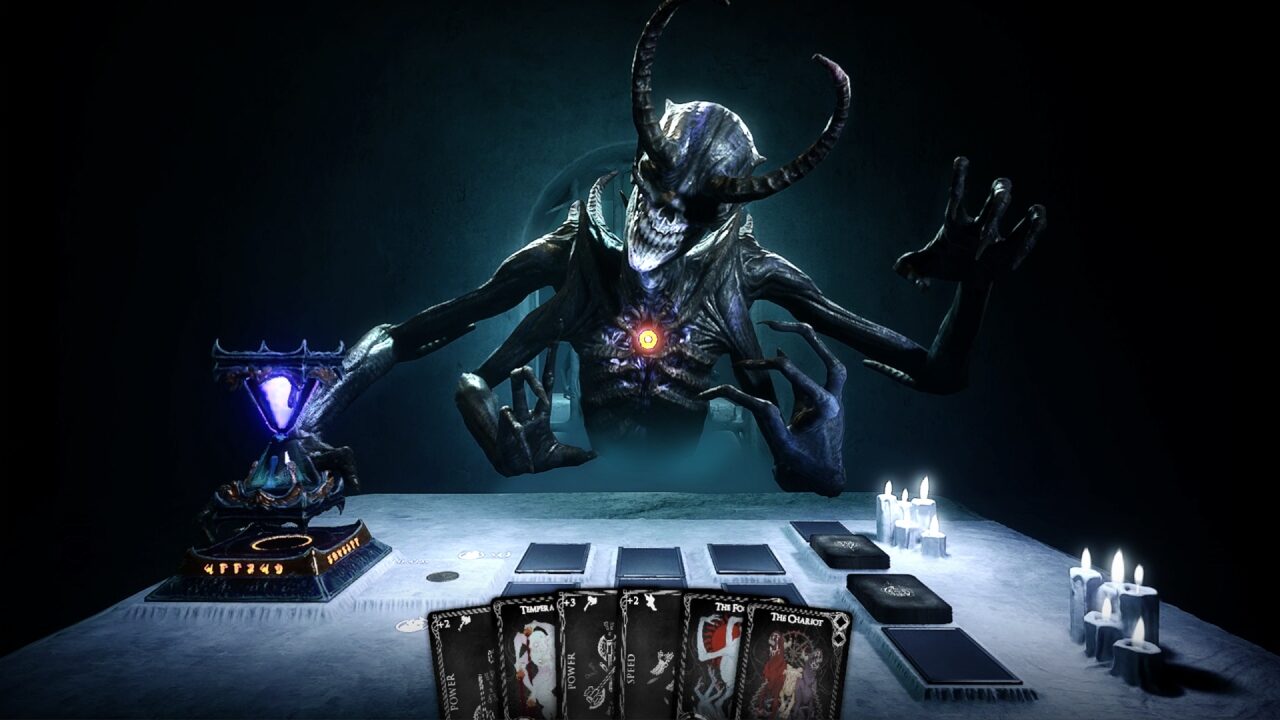
INFERIUS is the debut title from Canadian indie studio Lucid Rain, and it has just released its first public demo on Steam! The game got my attention with its incredibly creepy character models and overall horrifying designs. It blends first‑person horror, surreal creature design, and roguelike deckbuilding into something worth paying attention to.
With no release date yet, Lucid Rain is getting the word out there about their upcoming horror title. CGM was able to sit down with INFERIUS Game Director Rosche Rheeder and Technical Director Ricardo Rheeder to talk about the game’s origins, its Dante‑inspired descent into the underworld, and the challenges of building a new horror universe from the ground up.
First off, tell us a little about your first game, INFERIUS?
Rosche Rheeder: INFERIUS is a horror game about the soul’s journey through the underworld (our interpretation) and the experience of facing trials and failure in a world not built for that soul. You take on the role of a Pilgrim, a soul that exists between life and death, and you are tasked against your will to take part in a ritual that will require strategy, wits and survival.
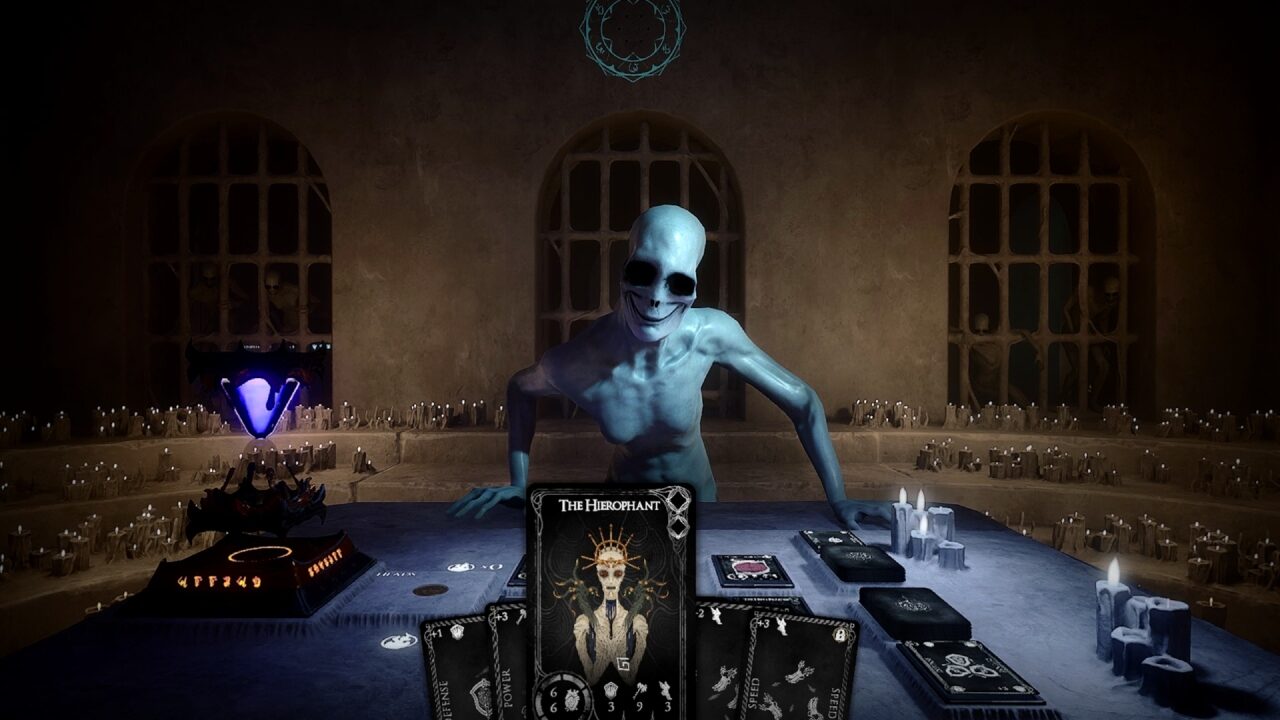
In the Inferno, there are nine Dominions: Limbo, Lust, Gluttony, Greed, Anger, Heresy, Violence, Fraud, and Treachery and each is governed by its own Ruler. You are required to summon and challenge these Rulers to a ritual game of life and death, wagering both your soul and the souls of others. This game is the basis for INFERIUS’ deck-building experience. You will need to plan your deck well if you plan to win against each of these deities. But that’s only half the game.
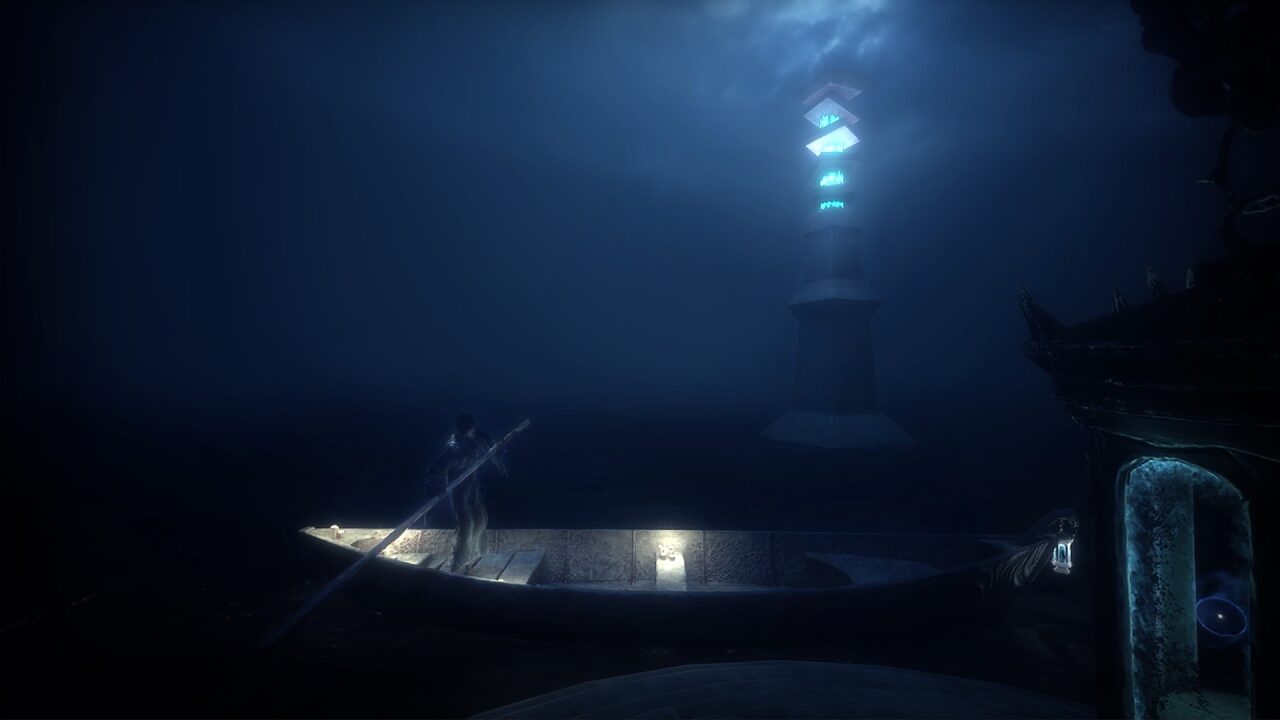
You cannot simply walk up to each Ruler and challenge them directly; you first have to navigate and survive their Dominions, encountering the horrors and inhabitants who reside there. Some are harmless; most are out to consume your soul. Once you explore those landscapes and survive the encounters, you’ve earned the privilege of challenging the Ruler of that respective Dominion, and progressing onwards into the story, descending further into the unknown.
INFERIUS is inspired by Dante’s Divine Comedy. How does that play into the game, and how did the team come up with the overall story?
Rosche Rheeder: We actually came up with the idea when we attended the 52nd Ludum Dare game jam, where we had to come up with a working game concept within 72 hours. The theme of the event was “Harvest,” which is pretty broad, so we started looking through some inspirations that could help give us a direction or north star to work towards. We are primarily a horror-based studio, so we needed to find something that fit with the identity of games we want to make.
We knew we wanted to do something Lovecraftian, but the genre is a bit oversaturated, so we needed to find a twist that could separate us from the rest of the horror and Lovecraft-themed games out there. At the time of looking for our “north star,” I was reading a copy of The Divine Comedy, and it kind of hit me right away — instead of just Lovecraft, why don’t we do something inspired by The Divine Comedy, as I haven’t seen it used in media as much as Lovecraft.
We loved the idea of descending through the nine circles of Hell, with the caveat that you had to win a card battle while wagering Hell’s creatures’ souls, playing with sacrificing and harvesting their souls as a way to upgrade your creature fighters. From there, things just took off!
We knew there was a much bigger story we could tell with that idea. We wanted our game to feel like a journey the player will undertake, and The Divine Comedy is all about one’s journey through sin, redemption, and spiritual transformation. It was a perfect fit for what we want to do. Plus, it’s weird, and we love weird.
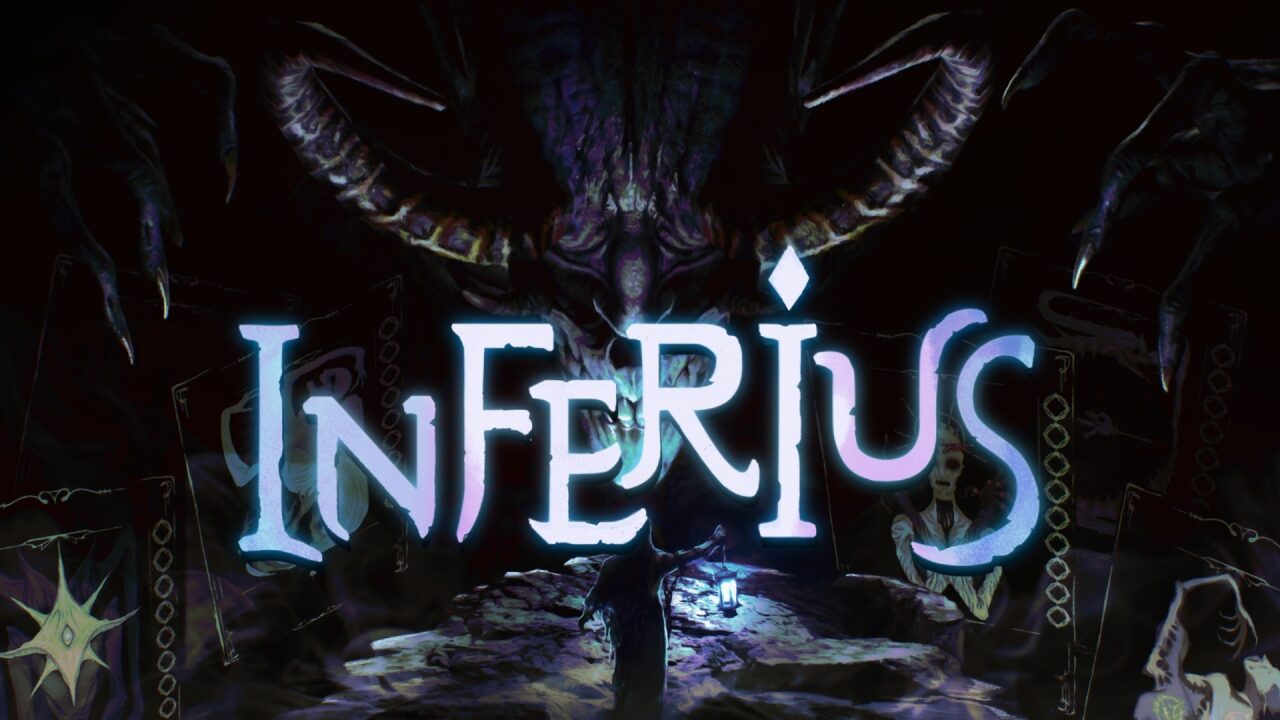
The concept art and creature design in INFERIUS are…well, creepy! What goes into those creatures, and are they taken from other inspirations or original concepts?
Rosche Rheeder: Creepy is the goal! We want to make the player feel uncomfortable and insignificant within this world, and so we made that Lovecraftian trope the primary art direction. I had this idea that I wanted our games to take on a more dystopian, surrealist direction. INFERIUS is meant to be the starting point of our evolving art direction.
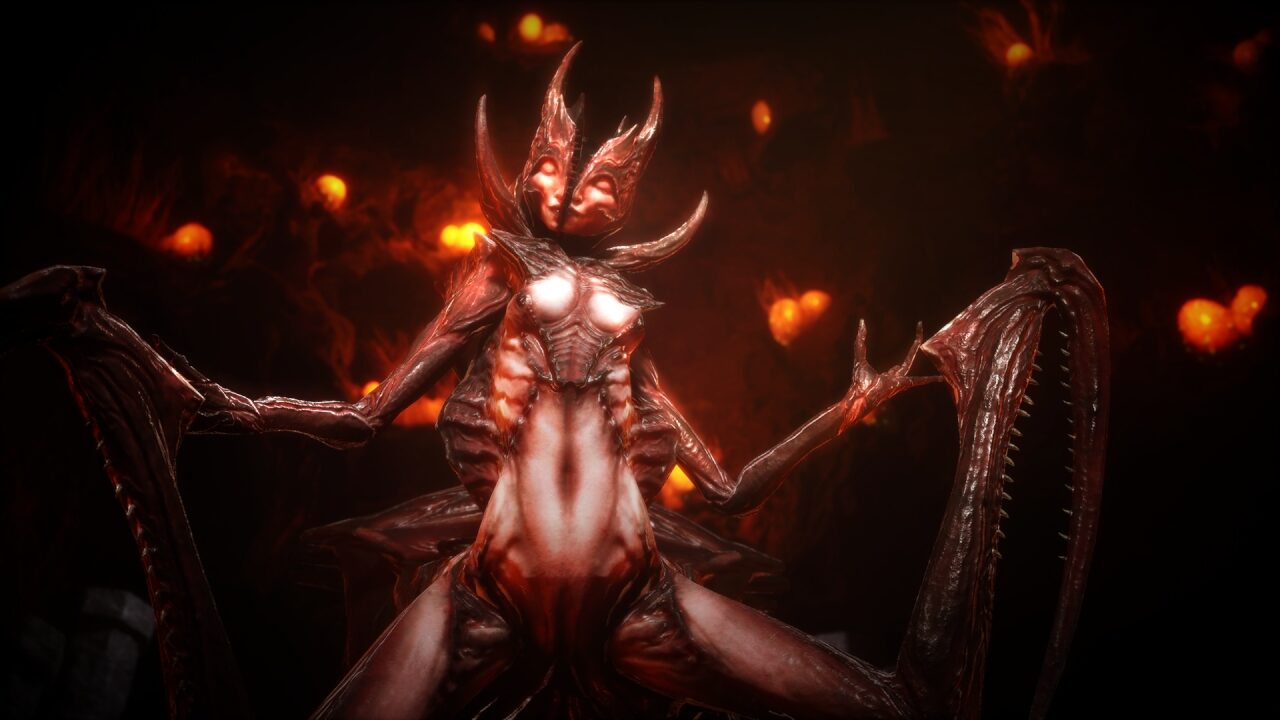
The creatures here are the main characters of not just INFERIUS but future games as well, so it was important for us to get the designs right now so we can establish our visual identity for games to come down the line. We pulled a lot of inspiration from Zdzisław Beksiński and H.R. Giger’s work, two incredibly profound artists, not just for their designs but also for what they represent. Our creatures are intentionally designed to represent more than what first meets the eye. In the case of the Rulers, their Dominions were designed to be formed by their essence over millennia; there’s a lot of depth we’re trying to explore with our creature design.
The lack of eyes, the missing fingers, the morphing of bodies, all of these aspects that contribute to our creature designs are intentional, and if you are paying attention, you will learn why they are there to begin with. As there isn’t a whole lot of real world reference (for obvious reasons) for what the underworld and its inhabitants can look like, and we didn’t want to go the traditional “demon” route either, we had to have a clear direction for our creature design and invest a lot of time in refining that direction ourselves from the start, and I think we’ve nailed it.
Do you have a favourite creature so far?
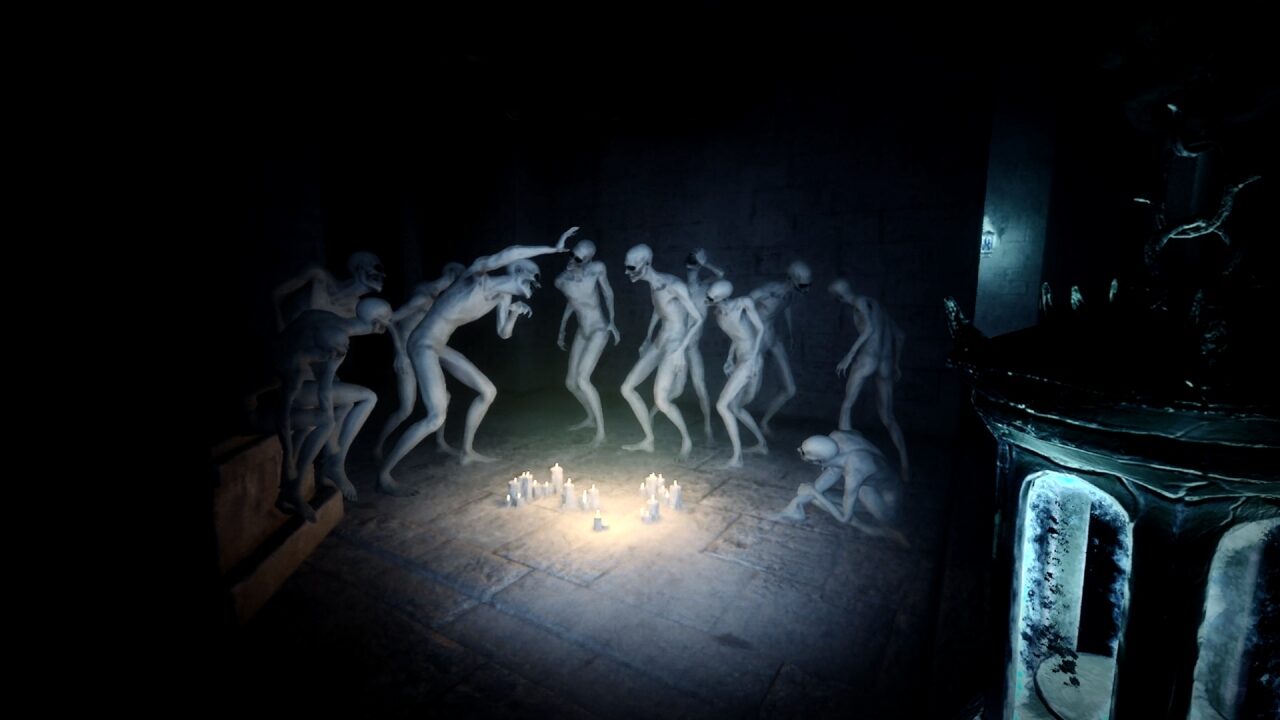
Ricardo Rheeder: I’d have to go with the fan-favourite, the Finger Creepers. They’re these fleshy, finger-like spiders with a single eye underneath, and instead of a body, it’s basically a mass of fingers forming a mouth. It’s… not pleasant.
Finger spiders have been done before, but we wanted to push it in a direction that feels a bit more unsettling and unpredictable. The Creepers themselves are about medium-sized and were loosely inspired by the Headcrabs from Half-Life, especially in how they move and latch onto the player.
Then you’ve got the Finger Broods, which are a whole different problem. They’re much larger than the player, and that’s where we pulled more inspiration from things like Mother Longlegs from the MonsterVerse. The goal with both is really about that loss of control, whether it’s something jumping onto your face or something physically overpowering you. We want those encounters to feel personal and a bit violating in a horror sense.
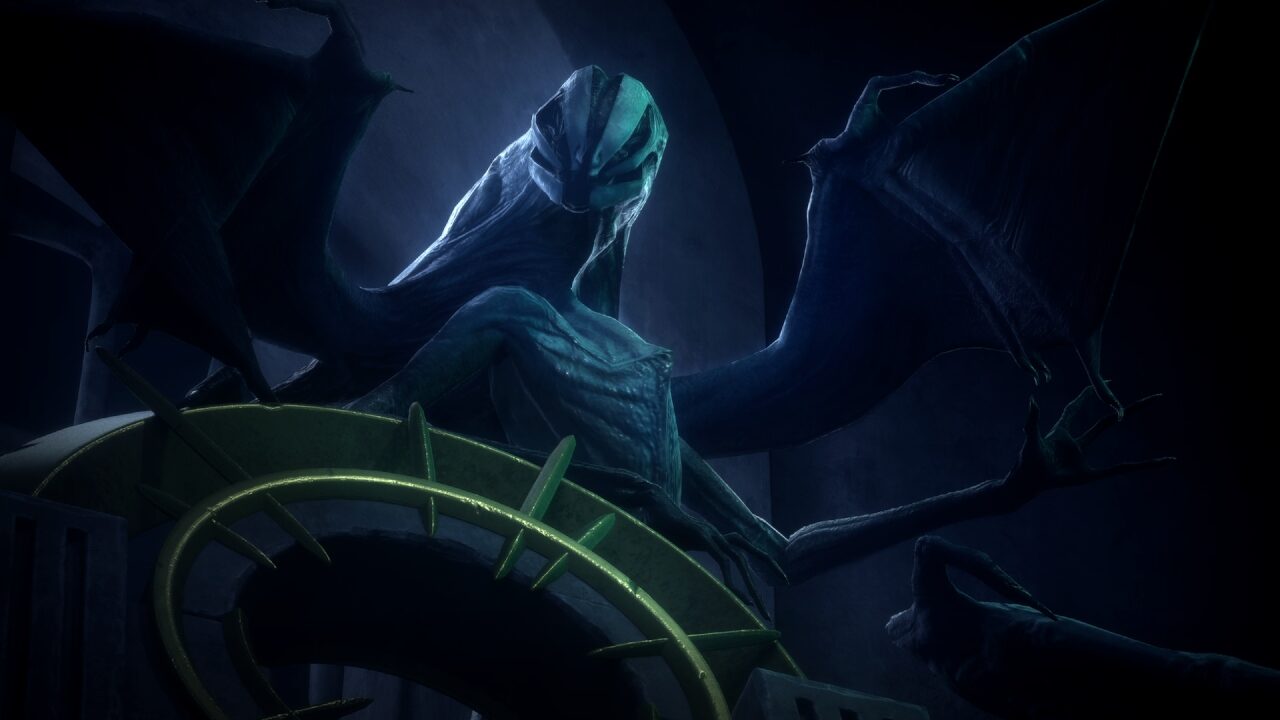
Rosche Rheeder: I want to say all of them, but if I had to pick one, it would be Malphas. He’s a character the player sees quite often, and he acts as a kind of guide throughout the experience.
What I like about him is that everything in his design is intentional. The way he looks, the way he speaks, even how he presents information to the player, it’s all tied into a larger mystery. If you’re really paying attention, you can start piecing together what’s actually going on beneath the surface.
He also came with some interesting technical challenges. If you look closely, he has wings on both his back and his head, which isn’t exactly the easiest thing to pull off, especially for a small indie team. But with a really talented art team, and honestly not a lot of sleep, we managed to make it work within a pretty tight production window.
How are you blending both first-person horror and deck-building mechanics in INFERIUS? Were there any challenges blending genres?
Ricardo Rheeder: We’re bringing together two styles of gameplay that don’t usually overlap. On one side, you’ve got that first-person horror experience, like Amnesia or Outlast, and on the other, you’ve got deck-building and roguelike systems like Inscryption or Slay the Spire.
It’s a really interesting mix, but it came with some pretty big challenges. One of the first things we had to figure out was how to keep the horror effective in a roguelike structure. When players are seeing the same types of creatures or environments across multiple runs, there’s always a risk that it stops being scary.
So we leaned into unpredictability. The way events play out, where creatures appear, even how encounters unfold, all of that can shift between runs. The idea is that even if something feels familiar, it never feels completely safe.
The other big challenge was making sure the card gameplay and the first-person exploration didn’t feel like two separate systems. We wanted them to support each other. So exploration feeds directly into your deck, whether that’s finding new cards, upgrades, or preparing for what’s ahead. And when you enter combat, it still feels like a natural extension of the world you’ve been moving through.
That connection is really what makes the blend work, where both sides of the game are constantly reinforcing each other instead of competing for attention.
How much has INFERIUS changed from inception until now?
Ricardo Rheeder: It’s changed quite a lot, honestly. In the beginning, INFERIUS was a much smaller concept; it started as a quick 2D card game built around the idea of descending through the Inferno, inspired by The Divine Comedy.
As we worked on it, we realized that the core idea had a lot more potential than what we were initially building. It didn’t feel like it fully captured the kind of experience we wanted to create, especially on the horror side.
That’s when we started exploring how to bring it into a more immersive space. We looked at things like Inscryption’s first act as a reference point, not in terms of copying it, but in how it blends atmosphere with card gameplay in a really compelling way.
From there, the project kind of evolved naturally into what it is now, a narratively rich, full 3D, first-person horror experience with deck-building at its core. It’s still built on that original idea, but it’s been expanded in a way that lets us fully explore both the world and the mechanics.
What are the challenges behind being an indie studio and making your first game? Have you learned any lessons so far while making INFERIUS?
Ricardo Rheeder: There are a lot of challenges, and most of them come up on a daily basis. A big one for us is managing scope. We’re a relatively small team, so even with a lot of talent, we have to be very intentional about what we take on and what we don’t.
It’s really easy, especially on a first project, to keep adding ideas because everything feels exciting. But we’ve learned pretty quickly that not every good idea belongs in the game. Staying focused on our core pillars and making sure we’re actually finishing things properly has been a huge lesson for us.
Another big area is balancing game design with player expectations. We spend a lot of time thinking about how the experience will land with players, especially in genres like horror and deck-building where expectations are quite high. That means a lot of iteration, a lot of testing, and being willing to step back and adjust when something isn’t working.
I think the biggest takeaway so far is just learning how to be disciplined with our vision, knowing when to push something further, and when to simplify it so the overall experience stays strong.
How did Lucid Rain Studios come to be?
Rosche Rheeder: The studio really came together during COVID in 2021. Growing up, Ricardo and I had always talked about building a studio together, but it was more of a shared idea than something concrete at the time. Delena was pursuing a career in the music industry but wasn’t satisfied with sticking with music only and wanted to build something larger in the production space.
When everything slowed down during COVID, that’s when it finally became real. I was looking for a way into the games industry, and it felt like the right moment to actually take that step. I reached out to Ricardo and Delena, and it just clicked. We had the right mix of skills, mindset, and ambition to actually build something serious.
We were able to establish the studio, connect with the local indie scene here in Edmonton and across Canada, and start building INFERIUS with structure and long-term vision. That support and environment made a huge difference in turning what was once just an idea into an actual studio.
What does it mean to you to be a Canadian game studio?
Rosche Rheeder: For us, being a Canadian studio isn’t just a label; it’s something we want to embody. Canada is where Lucid Rain Studios was built; it’s where our foundation is, and where we’re choosing to grow long-term. There’s a sense of pride and momentum in the Canadian games industry that we really want to contribute to, even if it’s in a small way.
The Canadian game scene has often been overlooked, and while we’re not here claiming we’ll change that overnight, we do want to be part of the movement pushing it forward and helping it get the recognition it deserves.
What’s exciting is that one of Canada’s greatest strengths is its openness, the ability to bring together people from different backgrounds to build something meaningful. Our team reflects that, with developers from across Canada, the US, Europe, and beyond. That openness, that collaboration, that willingness to build something bigger together, that’s what being Canadian means to us.
And anything else you want our readers to know about your studio or INFERIUS?
Ricardo Rheeder: For us, INFERIUS is really just the beginning. It’s one entry into a much larger world that we’re building out over time. We already have ideas and projects in the pipeline that connect back to this universe, both in subtle and more direct ways.
Our goal is to push into spaces that feel a bit different, blending mechanics and atmosphere in ways that feel fresh, while still delivering something that’s genuinely fun and unsettling to play. This is the first step, but there’s a much bigger vision behind it.
Rosche Rheeder: INFERIUS is laying the foundation for that larger universe. A lot of the creatures you see here aren’t just designed for this one game; they’re part of a bigger cast that we want to carry forward as we expand the world.
At the same time, we’re very community-focused. We want people to feel like they can be part of this as it grows. If someone connects with what we’re building, we’d love for them to jump into our Discord, chat with the team, and follow along as things evolve.
For us, it’s about building something alongside a community that’s just as passionate about it as we are.
You can wishlist INFERIUS now or check out the demo on Steam.