
I am really impressed with the Hollyland LARK M3. The creator space keeps getting more exciting, with new gear, cameras, and mics coming out almost monthly. The Hollyland LARK M3 is one of the more interesting products I have seen recently and could become my go-to multi-mic recommendation. With an incredibly portable form factor and support for up to four mics with a single receiver, the LARK M3 could be a solid upgrade if you are looking to improve your audio.
While most lavalier sets you can buy offer up to two mics, the LARK M3 is different. It is built around a multi-transmitter, multi-receiver architecture. Up to four transmitters can feed a single receiver, allowing four speakers to be recorded independently at the source. A single transmitter can also broadcast one voice to as many as four receivers connected to cameras and smartphones. The concept is wild, but despite the big claims, it held up in our own testing.
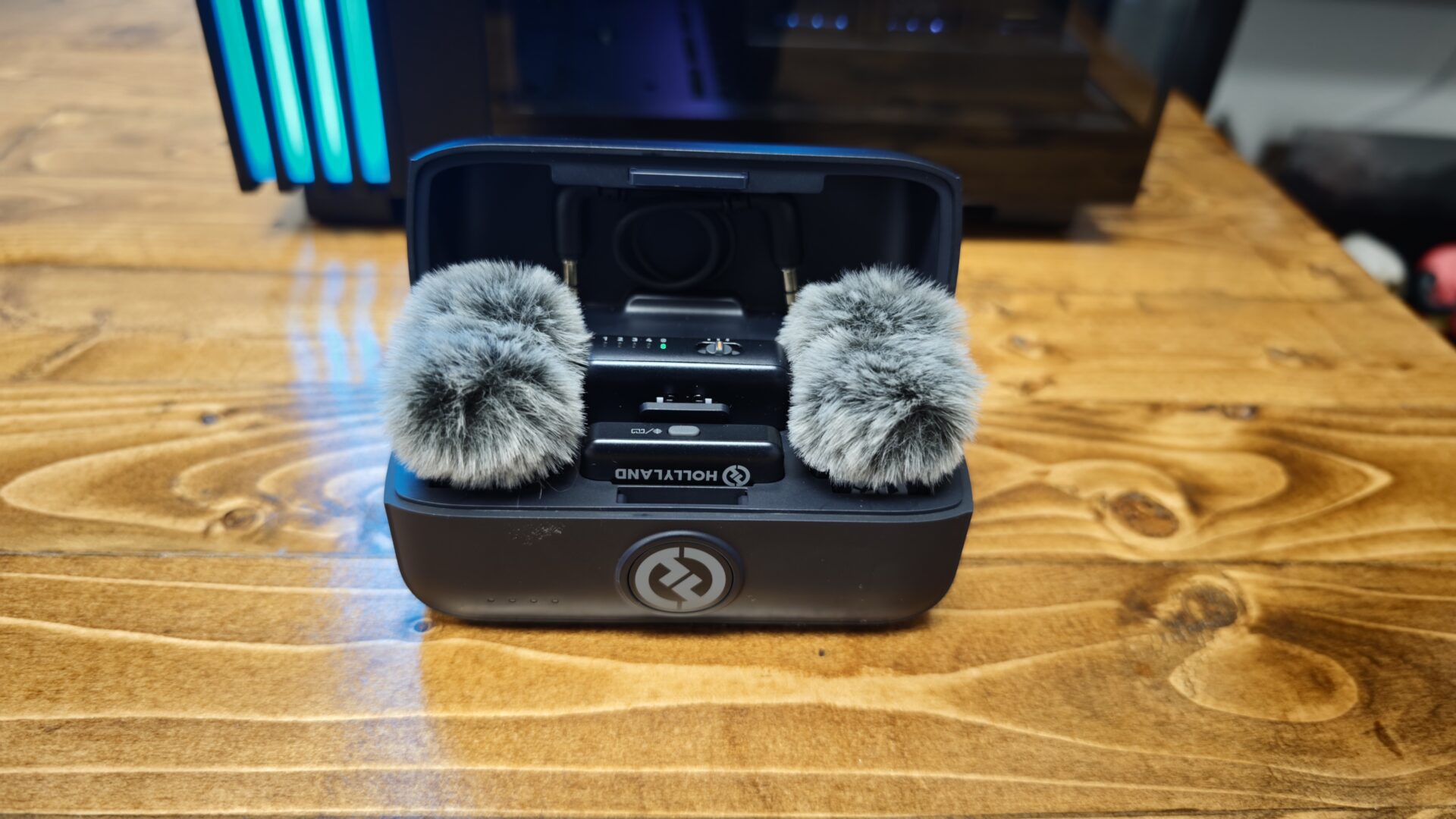
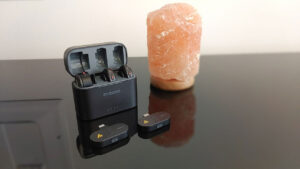
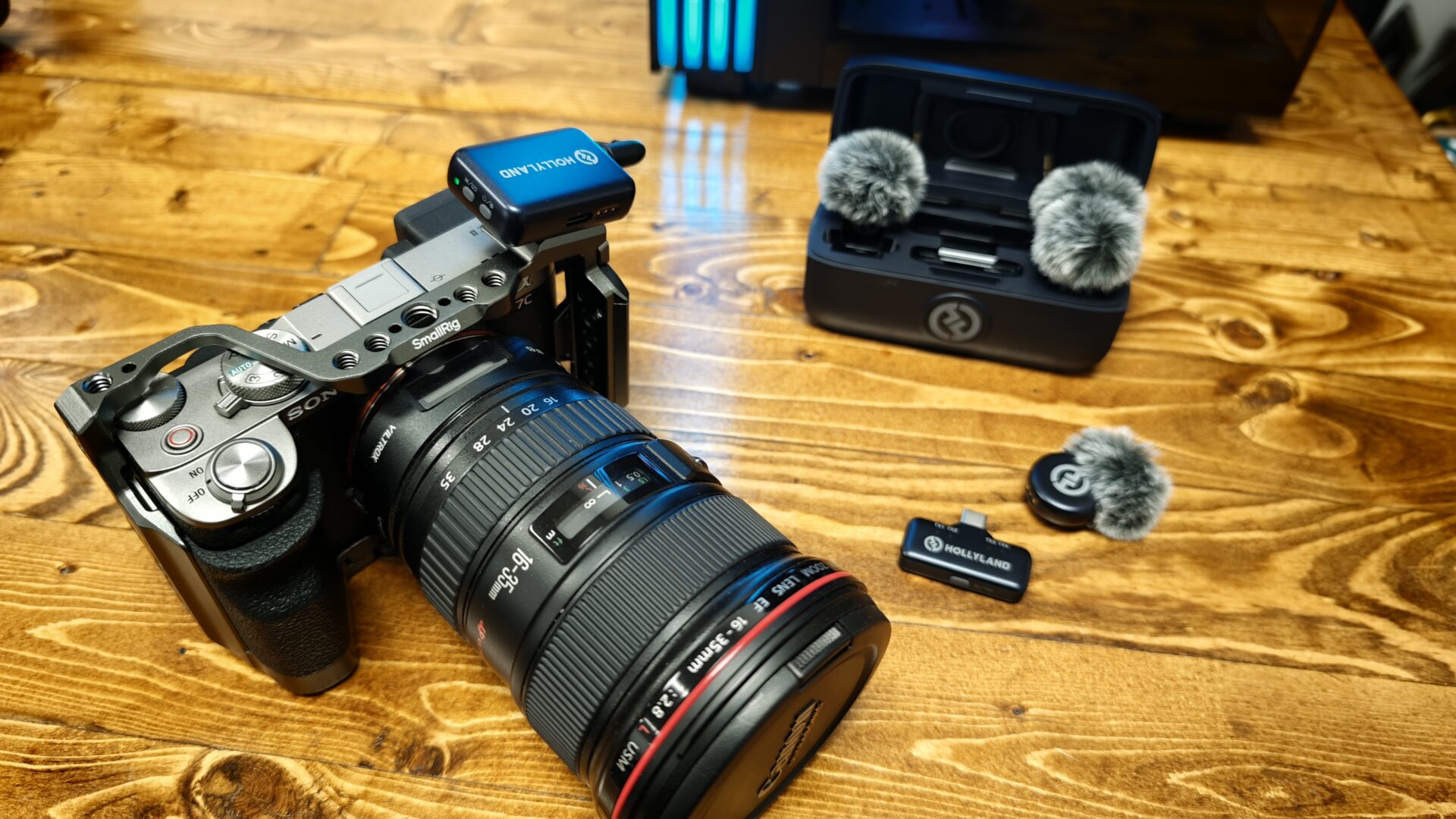
When you unbox the full set, you could be forgiven for thinking there is relatively little inside. Hollyland has made the full setup compact on purpose, with a single carrying case containing everything you need to get started. Each transmitter in the LARK M3 set weighs 9g and attaches with a flexible magnetic mount. The all-in-one charging case stores the transmitters, receivers, cables, and windshields while delivering up to 48 hours of total battery life, with roughly eight hours from each transmitter charge.
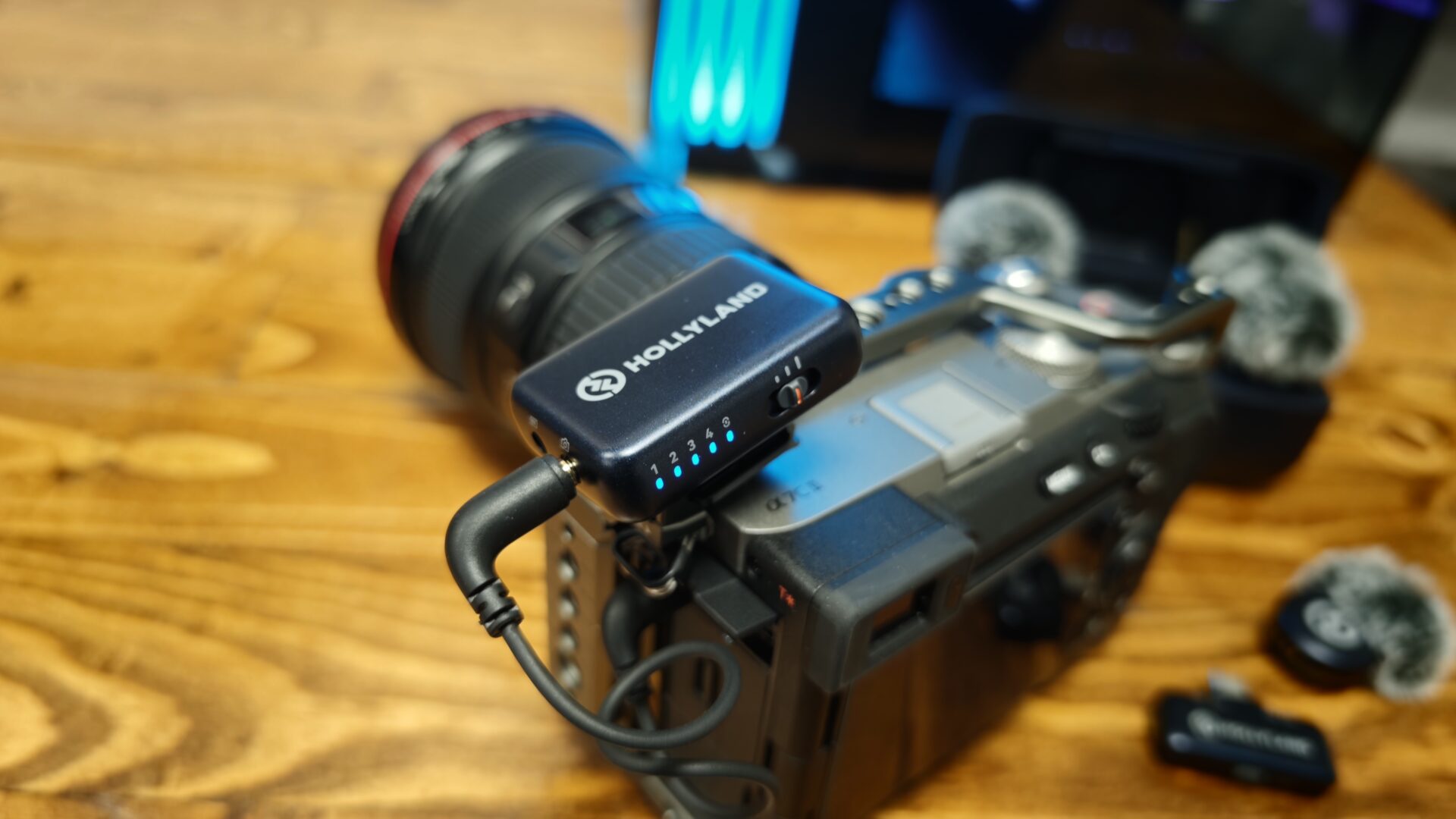
The best part is how easy everything is to hook up and get ready for recording and content capture. Take the mics out of the charging case, attach them to each person you want to record using the magnetic clips, and connect either Hollyland’s hot shoe adapter or a USB-C or camera receiver. When connected to a computer, the LARK M3 delivers four isolated audio tracks, giving editors independent control over the volume and sound of each speaker.
It is a surprisingly large amount of control, but if you just want to plug everything in and start recording, the set lets you do that too. The LARK M3 is incredibly versatile, and I was up and recording less than five minutes after unboxing it. It was incredibly impressive.
If you want to configure everything to your liking, there is an onboarding process that helps get the system set up and working. Hollyland has made it relatively painless while still offering plenty of control. AI noise cancellation, built on deep learning and computational auditory scene analysis, targets wind, traffic and running water across three adjustable levels.
A custom voice-tuning feature offers one-tap vocal enhancement across all transmitters, along with eight vocal presets that can be assigned individually and fine-tuned in the companion HollyAudio app. Auto-Limit Clip Protection helps keep levels stable across wide dynamic swings, while a Primary/Secondary receiver configuration acts as a failsafe. If the primary receiver drops out, a connected secondary unit takes over immediately so recording can continue without interruption.
Under the hood, the Hollyland LARK M3 records at 48 kHz with 32-bit depth, a 70 dB signal-to-noise ratio and a maximum sound pressure level of 125 dB. Audio travels over Hollyland’s proprietary HDT wireless technology, which the company says moves data 50% faster than its previous generation and reaches up to 300 metres in ideal conditions. There are some caveats to the 32-bit promise. Full 32-bit float output on Apple devices requires a third-party recording app, while Android support tops out at 24-bit.
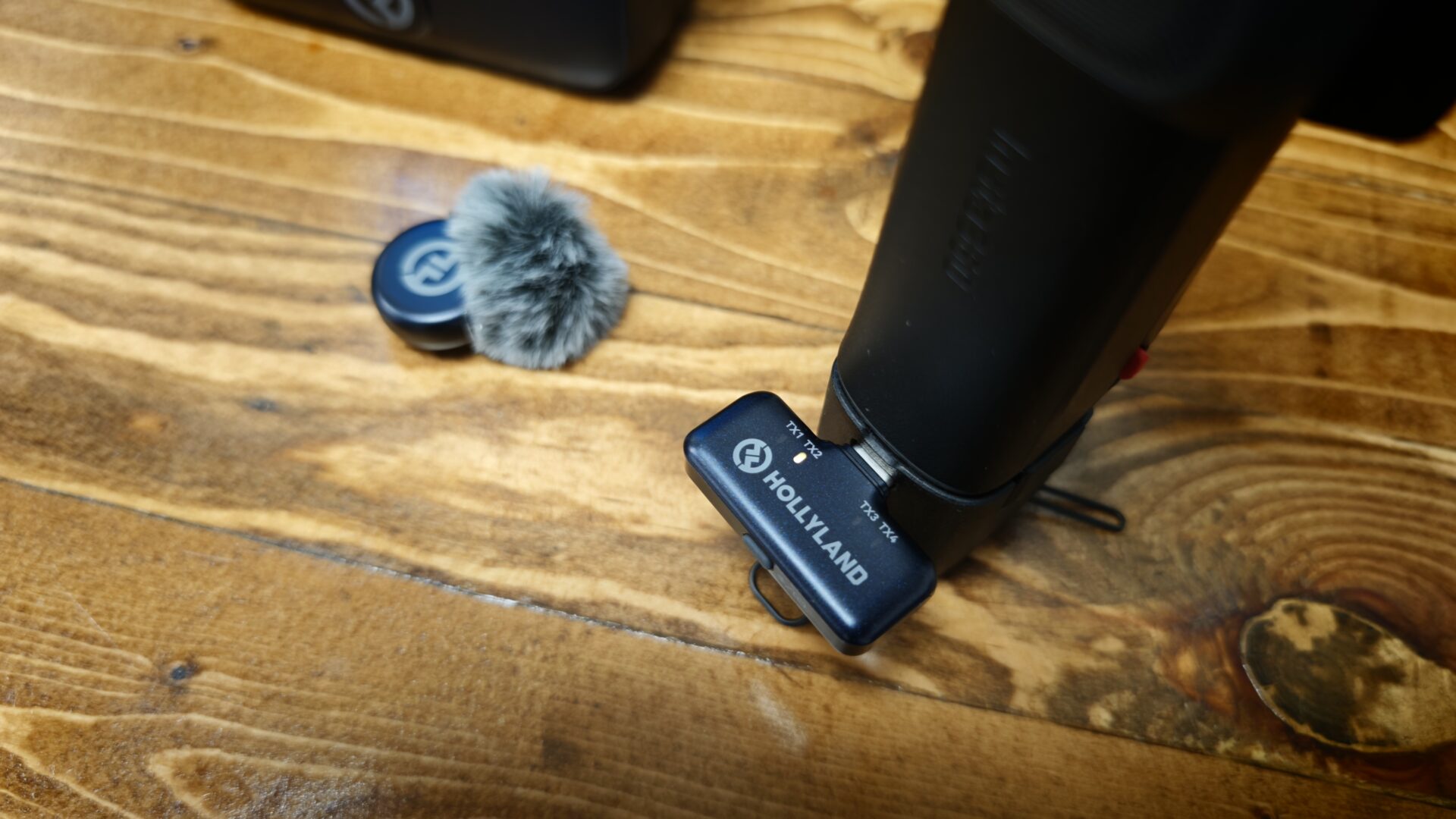
I did all of my testing on a Xiaomi 17 Ultra, and getting everything connected was easy. The phone quickly found the mic through the HollyAudio app, which gives you full control over each aspect of the system. Once everything was configured, I was off to the races.
“The Hollyland LARK M3 has impressed me and delivers real value for creators looking to improve their audio game.”
The LARK M3 also connects to gimbal cameras. Using the USB-C connector, I paired it with the Insta360 Luna Ultra without any trouble. The camera instantly detected the mics and was ready to go. I did not have to worry about digging through menus or adjusting additional settings. I also tried the mics with a Sony a7C II. Using the included 3.5 mm cable, the camera was up and running with the mics in no time.
What impressed me most, though, was the audio quality. To put it into perspective, these mics are incredibly small, but even when subjects simply held them during an interview, everyone came through crystal clear. I had no problems transcribing everything, and the audio sounded production-quality. I would have no problem using it for an on-camera interview or another type of professional production.
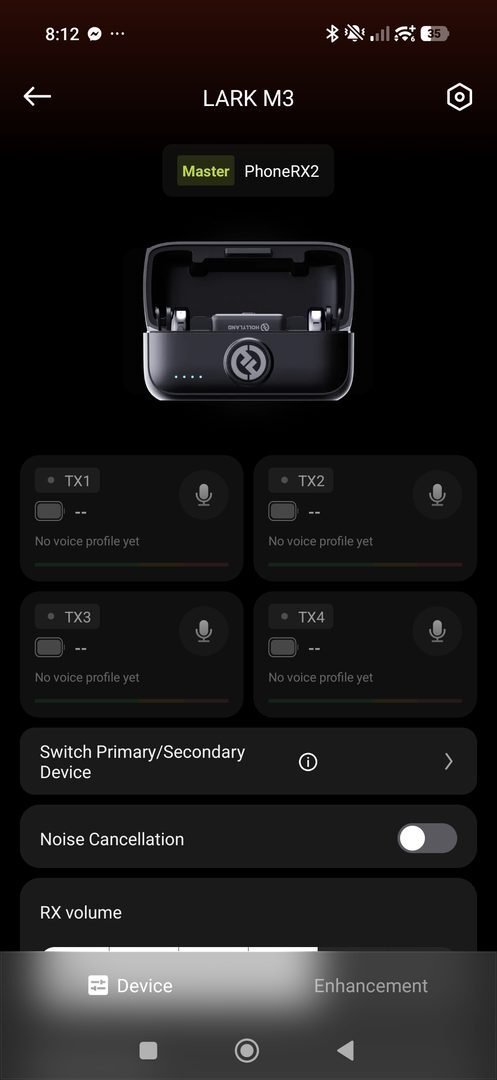
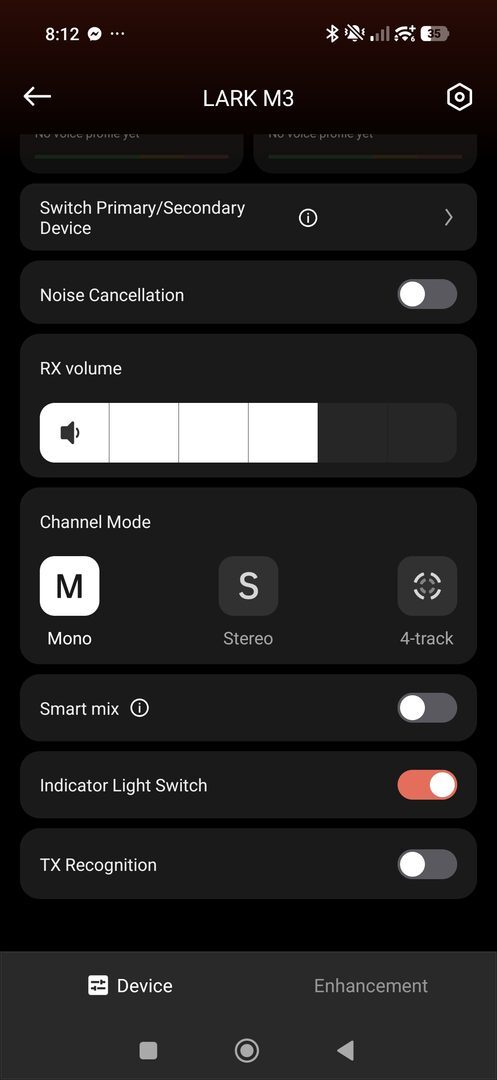
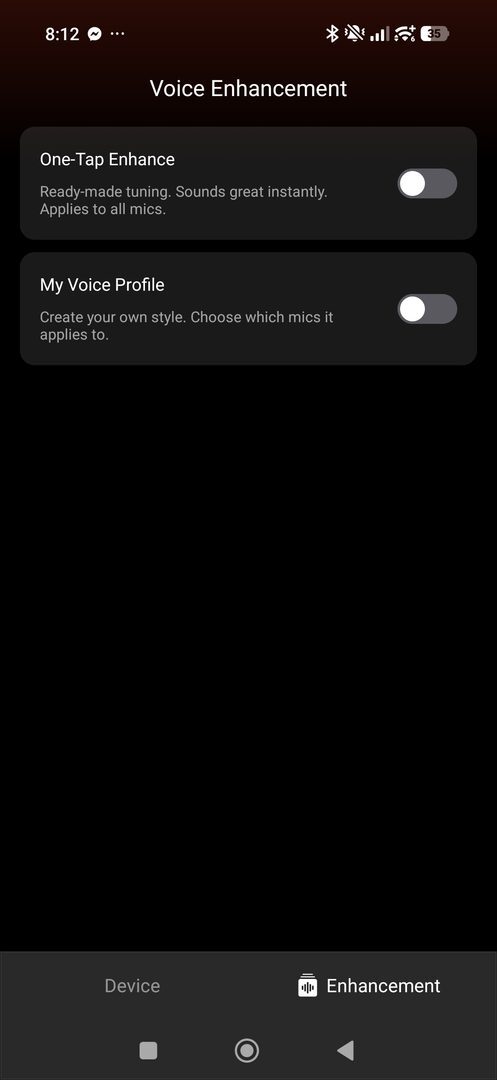
Hollyland has compressed everything into a package that can easily be thrown into a bag, but it did not lose quality in the process. The mics are easy to use, sound great and even managed to avoid picking up random room noise, something microphones of this nature can struggle with. They also managed to capture sections of dialogue that were quiet or not spoken directly into the mic, so colour me impressed.
I will say that, out of the box, the LARK M3 mics do not have an easy way to slot into a mic holder like the one RØDE sells and that we use regularly at CGM. Since Hollyland opted for a magnetic mounting system rather than a traditional clip, there is nothing to slide into the standard mic handles already on the market. There are some newer options available, including holders designed for DJI mics that look like they could work, but be aware that your existing gear may need some adjustments.
There is a lot to like about the LARK M3, especially its ability to record with four mics with little to no setup. However, it is entering a crowded market, with some of the biggest names in the creator space offering mics in a similar form factor. DJI’s Mic 3 similarly pairs up to four transmitters with a single receiver and reaches about 400 metres using dual-band 2.4 GHz and 5 GHz transmission. It also offers a maximum SPL of 130 dB and uses 16-gram transmitters, though its two-transmitter, single-receiver kit retails for $329 US.
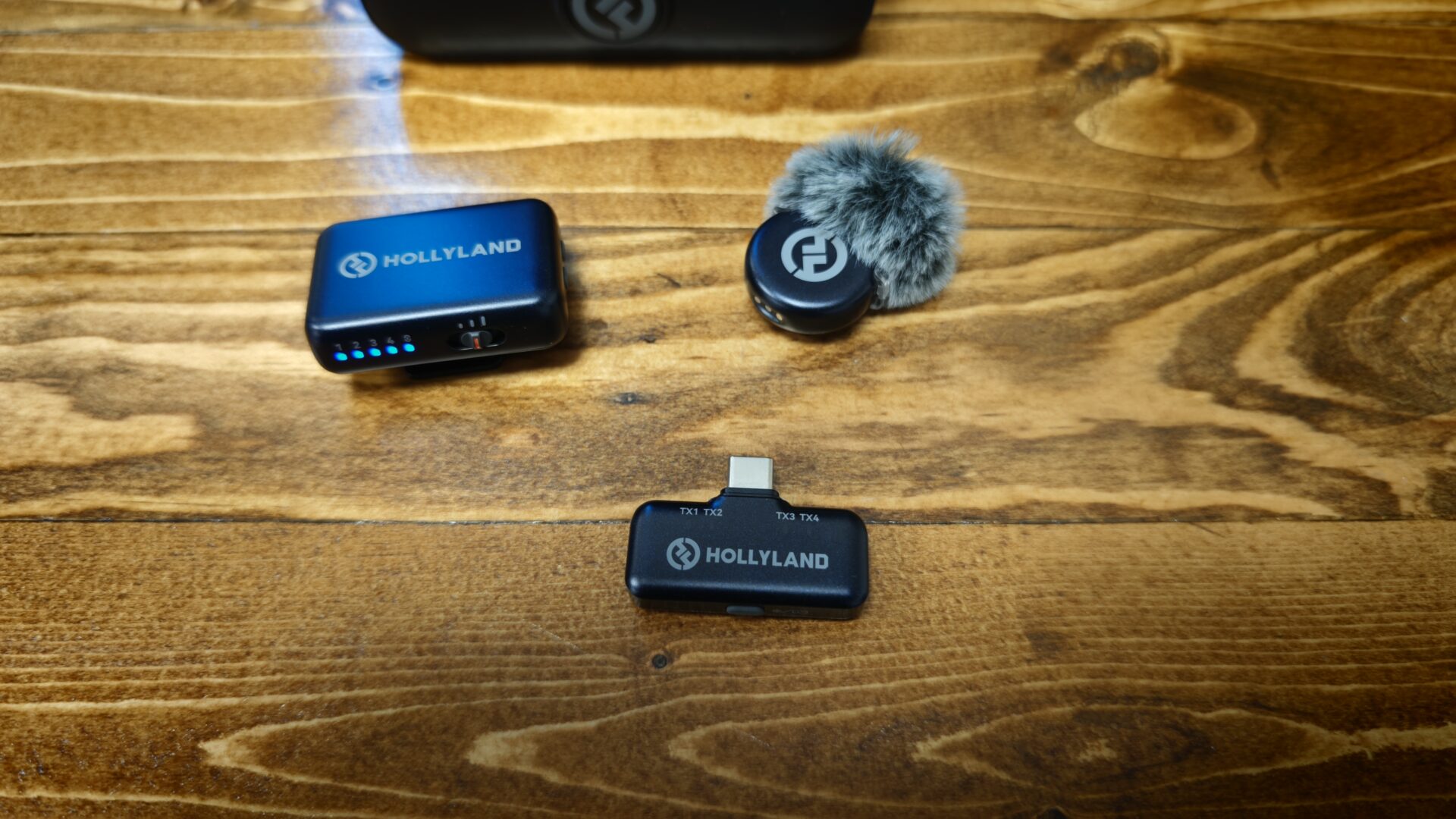
RØDE’s Wireless Micro ships with two transmitters for $86 USD, but it is limited to roughly 100 metres of range and cannot scale to additional receivers. The LARK M3’s ability to broadcast from one transmitter to as many as four receivers for multi-camera shoots remains uncommon at this price point, and the fact that it works so well and so easily is genuinely impressive. At $179 USD for the four-mic kit, or $119 USD for the two-mic kit, Hollyland is delivering a lot of value for the price.
The Hollyland LARK M3 has impressed me and delivers real value for creators looking to improve their audio game. The mics are easy to set up, sound fantastic and bring many of the latest features we hope to see from this category, all with the option of using up to four microphones at a fair price. What is not to love?
There are a lot of things that could have gone wrong with a mic kit like this, but Hollyland managed to avoid them. For the time being, at least, this is the kit I plan to bring with me to events. For the size, quality, and price, Hollyland has knocked it out of the park with the LARK M3.

- 【FLEXIBLE SETUP FOR ANY SCENARIO】Connect up to 4 transmitters and 4 receivers for interviews, weddings, and multi-camera productions. Choose Camera or USB-C receivers to fit your setup. The Primary Receiver manages TX settings while Secondary Receivers monitor status, with automatic role switching to keep your wireless microphone recording if the Primary goes offline.
- 【EDIT EVERY VOICE YOUR WAY】Capture up to 4 Independent tracks with this wireless mic system for precise post-production control. Use the hot shoe adapter, or connect the USB-C RX or Camera RX to a computer via USB-C cable and compatible third-party software. Separate each speaker’s audio during editing for cleaner interviews, panel discussions, podcasts, and commercial productions.