
Masters of Albion feels like Peter Molyneux returning to the exact kind of grand, messy ambition that made his name in the first place.
While I doubt younger generations know who he is, there was a time when Peter Molyneux’s name was notorious in video games. The creator of Black & White, one of the progenitors of the god game genre, as well as the Fable franchise. Molyneux always had grand ambitions for his games – but was equally known for overpromising what his studios could actually deliver. This left many of his games in a strange juxtaposition, like the original Fable: beloved and undoubtedly influential, but with a slight edge of unrealized potential. Not to mention the debacle that happened the last time Molyneux tried to bring back the god game, with broken Kickstarter promises over his 2014 title Godus.
Now, all these years later, that brings us to Masters of Albion, a game that Molyneux has already said is going to be his last – and another attempt at revising the long-dormant “god game.” And while Masters of Albion certainly needs to be measured against Molyneux and studio 22Cans’ past mistakes and promises, there’s an undeniable earnestness to the game.
It’s a game that’s uneven and certainly has its own share of jank, but feels like it truly wants to confront why “god games” rose to popularity in the first place – and what a modern take on that might look like. I’ve honestly had a lot of fun with my 20 hours of the game. There’s the spark of something special at the heart of Masters of Albion, but it has a long way to go, and 22Cans will have to prove its commitment to seeing this latest experiment through.
“There’s the spark of something special at the heart of Masters of Albion, but it has a long way to go.”
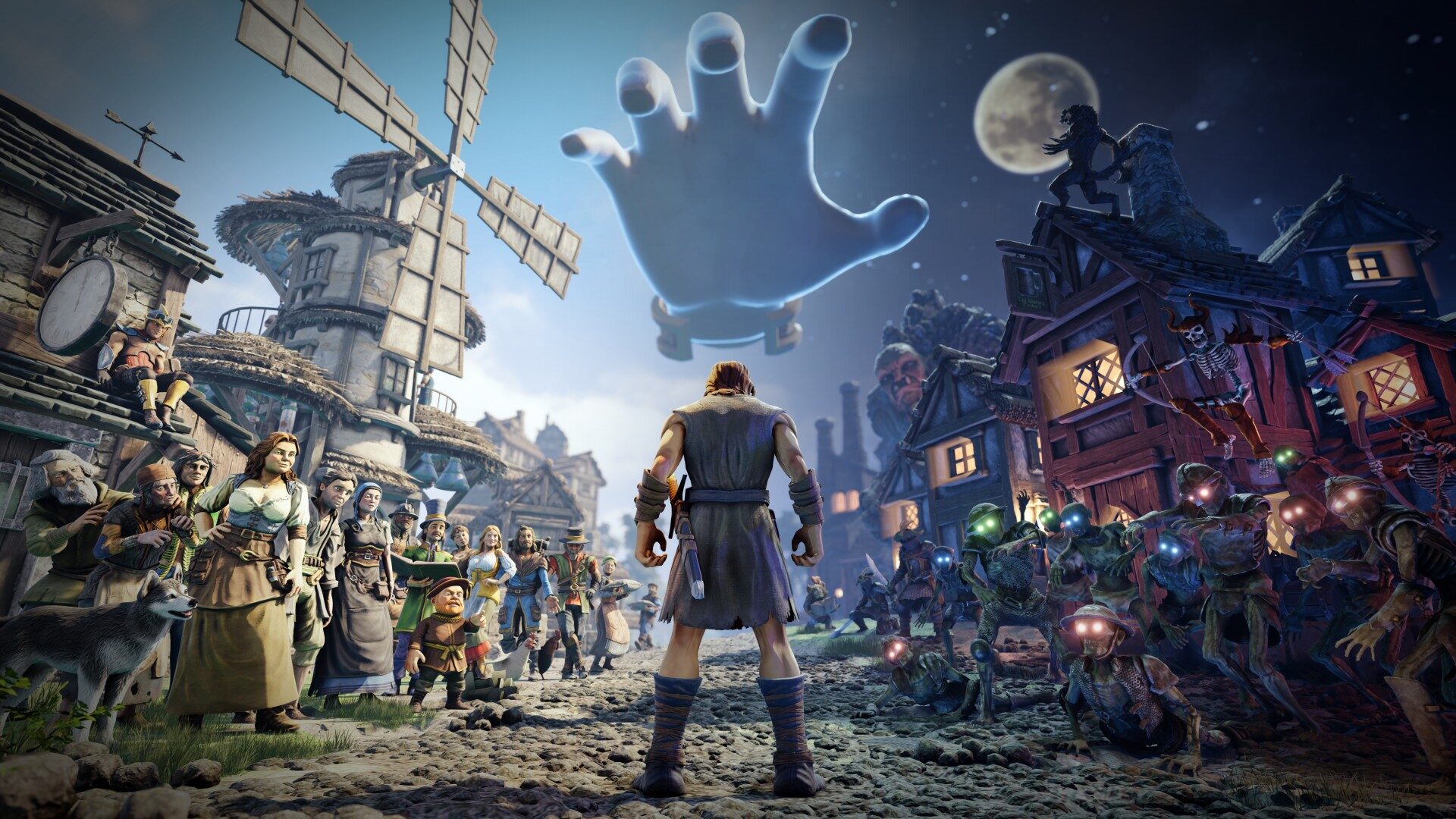
If you’re a little confused by denoting something as a “god game,” it’s essentially a simulation genre where you quite literally take on the role of an omnipotent god. More often than not, you’re leading or managing a civilization with the use of supernatural or divine powers. At the start of Masters of Albion, your blank-slate character is led to a mysterious crypt, where they find a lone chair. When you sit on that chair, it locks you in place and grafts a bizarre helmet onto your head, essentially transforming you into a godly detached hand that’s now responsible for guiding the people of Oakridge to prosperity – and eventually saving all of the realm of Albion.
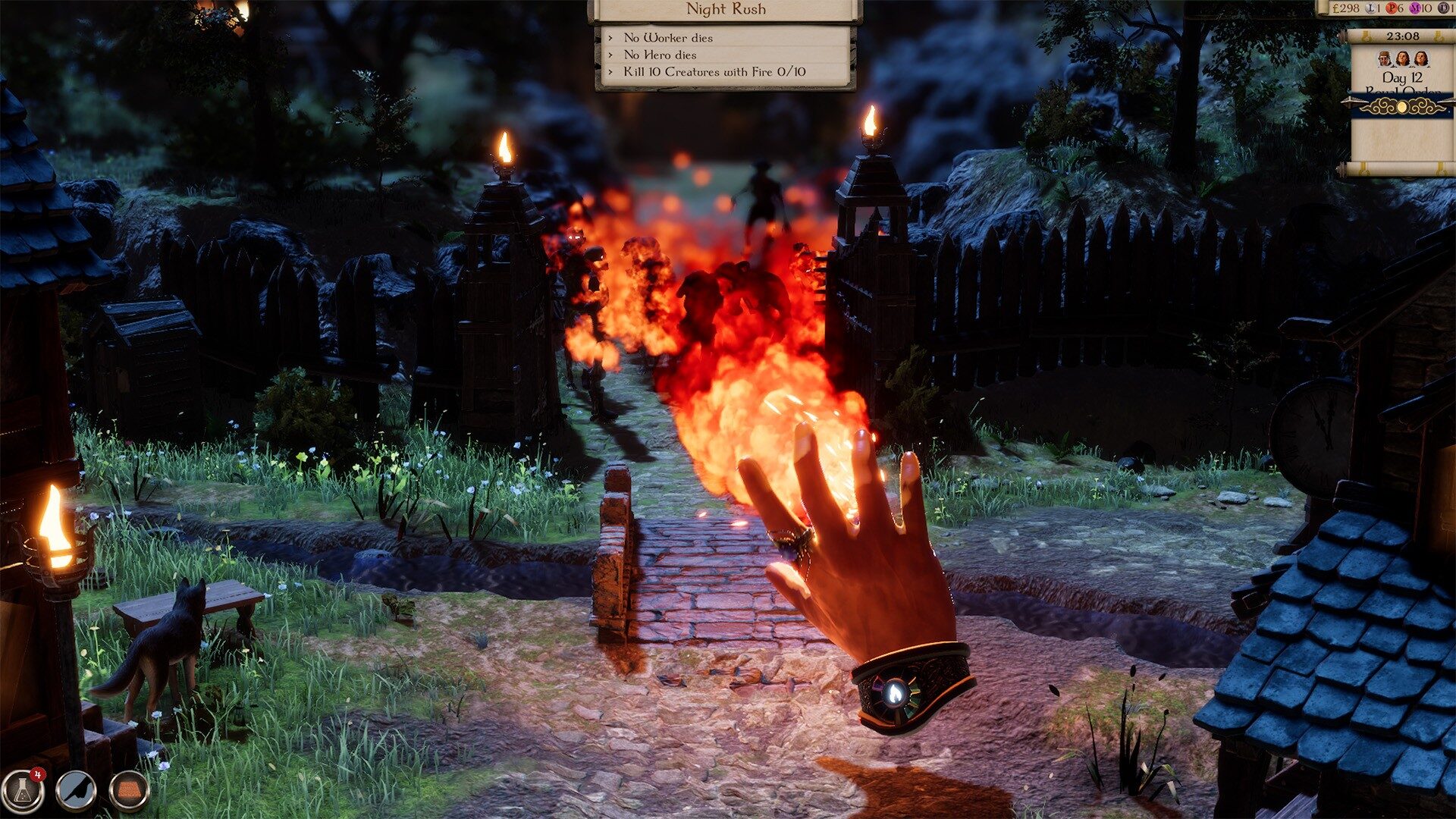
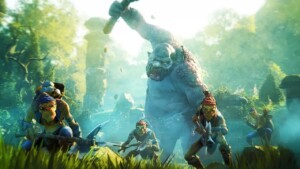
To get the obvious out of the way, yes, Masters of Albion is quite clearly inspired by Molyneux’s work on the Fable series, which also takes place in a world called “Albion.” This is a bit like a legally distinct Fable, with a very similar art style, sense of humour, the role of heroes, and even some strikingly similar locations in the world, with just enough differences to make it plausible.
It’s honestly a bit funny how it all comes together. Especially as Masters of Albion, like most of Molyneux’s work, has an extremely British sense of humour – like an extremely over-the-top chill shaman named Jon Bovi, who requires you to solve puzzles using musical stones. Or pirates who sold their nails to a bunch of bandits, meaning they can’t rebuild their ship until you get them some more.
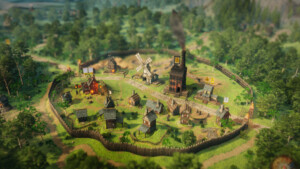
The big differentiator in Masters of Albion is its focus on industry: the game is one part city-builder and one part god game, smashed together. Essentially, you need to construct buildings to gather resources, transport those resources to factories, and then craft products to sell to the aristocracy of Albion. You use this money and a variety of different tokens to then upgrade your god hand powers, buildings, purchase new products, etc.
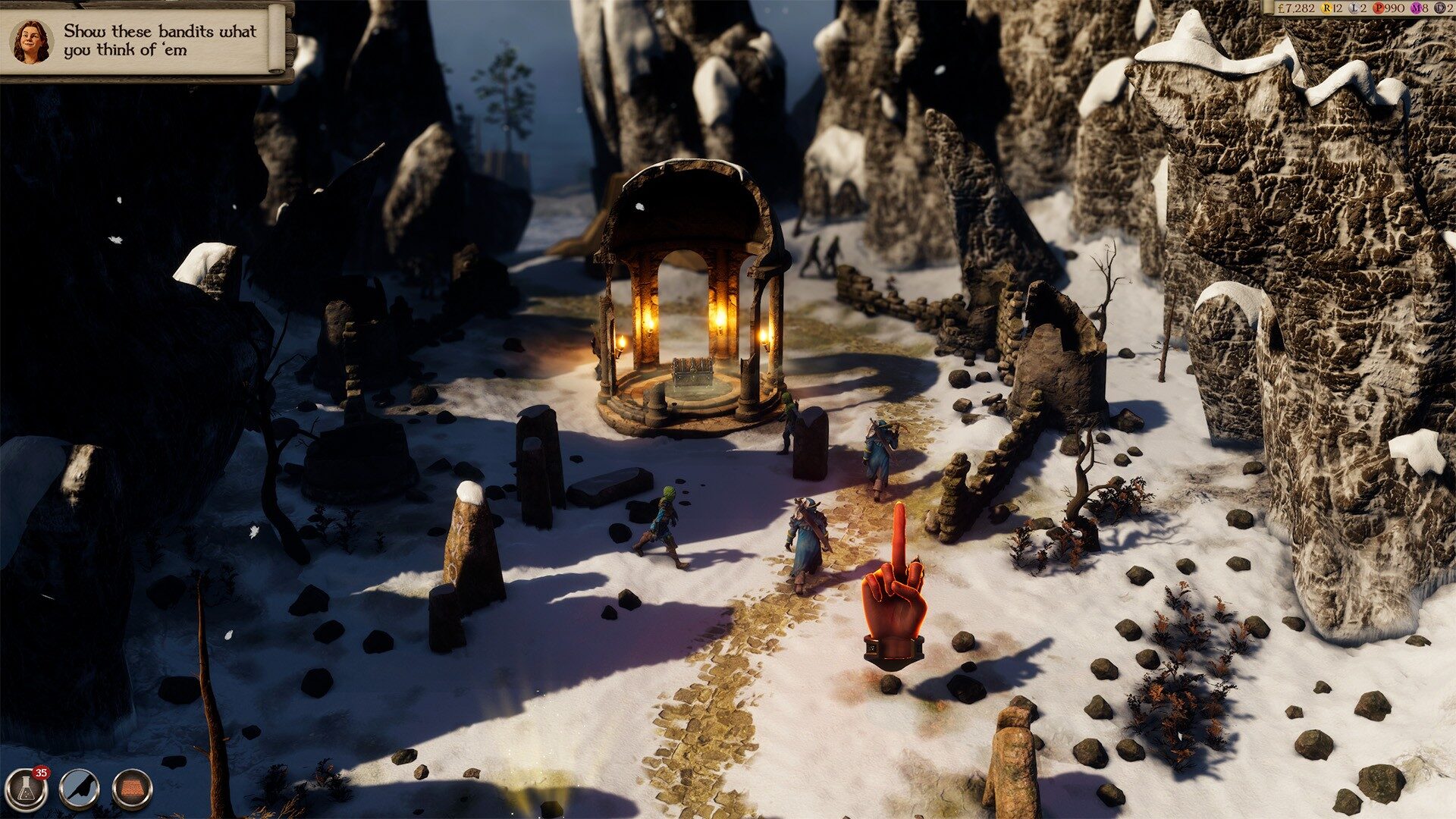
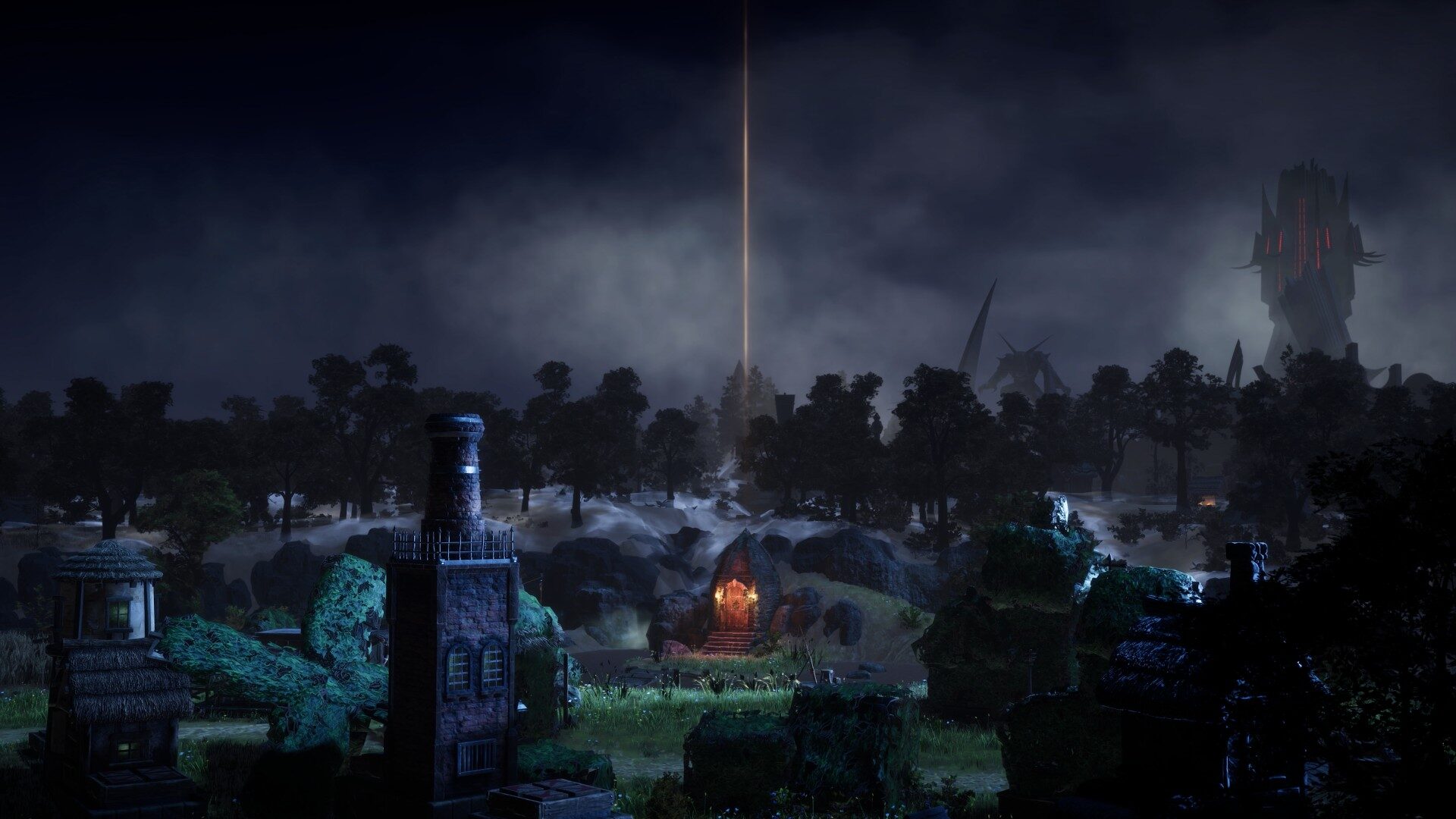
You’ll need to make these improvements and explore during the day, because at night your settlements will be besieged by zombies and other creatures, and you’ll need to put your entire focus into defence. At these moments, you need to combine heroes and build defences with your god hand powers and literally pick up and throw things like rocks to stave off the invasion. At critical junctures, you can also use gestures from your hand to decide the fate of criminals in your civilization.
“The big differentiator in Masters of Albion is its focus on industry: the game is one part city-builder and one part god game, smashed together.”
But what really surprised me is how narratively-focused and guided the first 20 hours of Masters of Albion truly are. Sure, there’s a large degree of freedom in how you build things out, but you’re largely following a guided track of objectives for the first big stretch of Masters of Albion. And while I typically prefer more freedom in city builders, in the case of Masters of Albion, I don’t really think that’s a problem, because the game largely strikes a nice balance between guidance and freeform gameplay, weaving the two together.
You use your giant hand to move around the world, which is one seamless continent entirely accessible all at once, with a catch. Certain regions are covered in a sort of grey fog where none of your hand powers work, and your villagers can’t tread. To clear the fog from these areas, you need to possess one of your heroes, quite literally, and then adventure as them into the unknown to find towers that will restore the land.
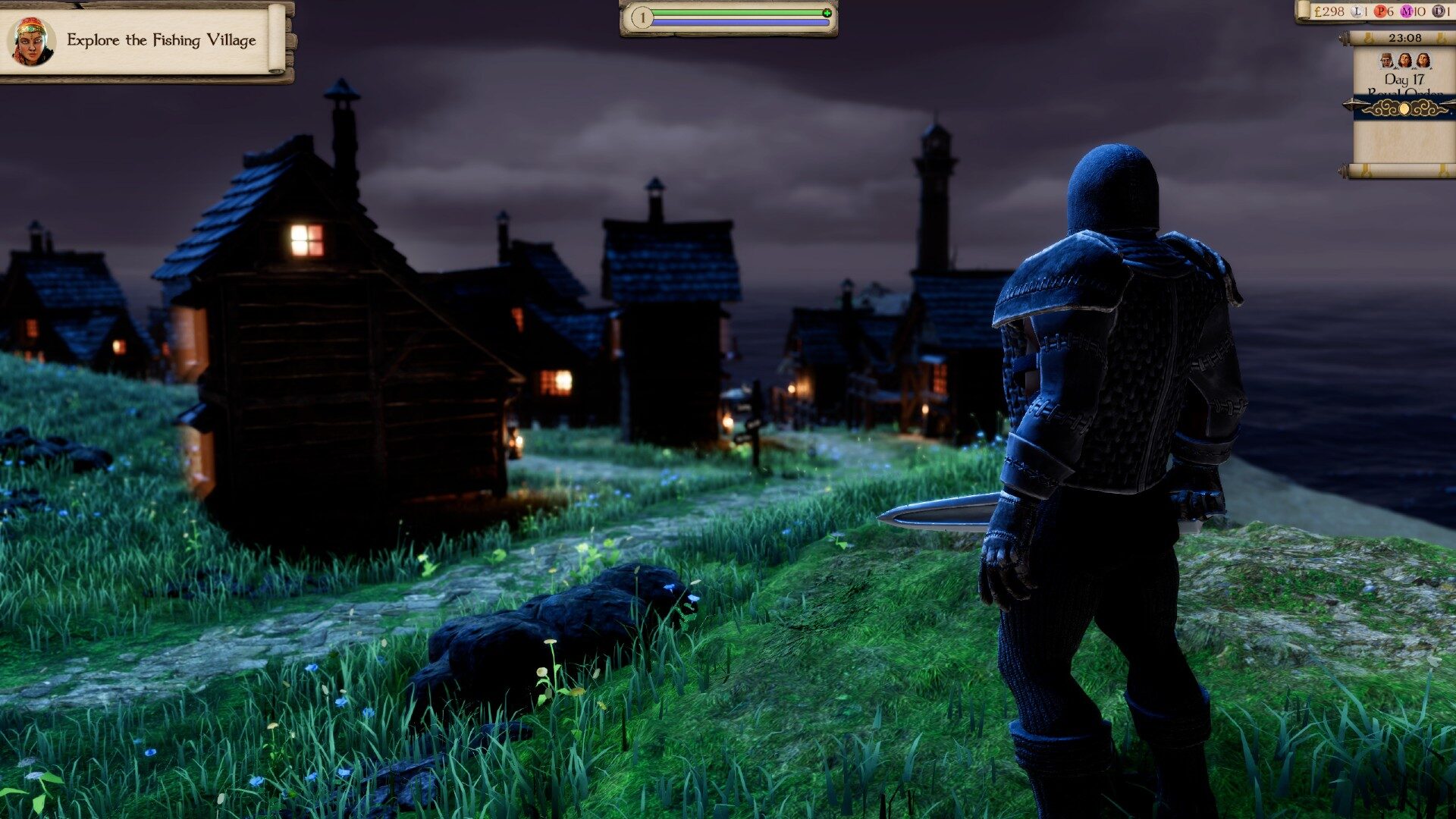
That possession mechanic is one of the more interesting elements of Masters of Albion, letting you take control of heroes directly at any time – but by extension, later on, you’ll also be able to possess ballista towers and even a dog for a specific quest. This creates a fascinating juxtaposition of viewpoints, seeing the fruits of your labour firsthand. But crucially, that different viewpoint in possession also opens up new options, caves to explore, and sassy gargoyle statues that hurl insults at you until you smash them to bits.
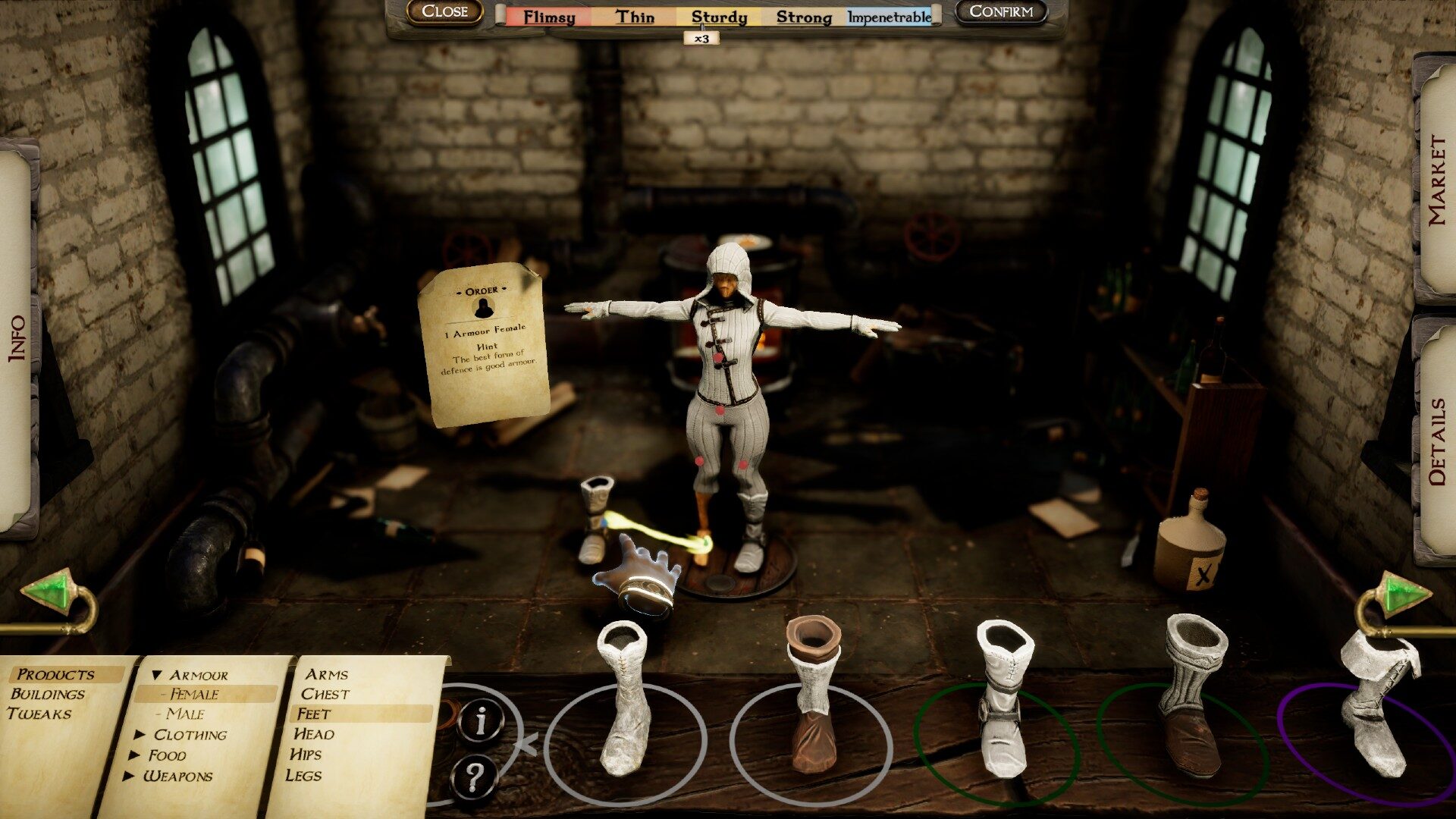
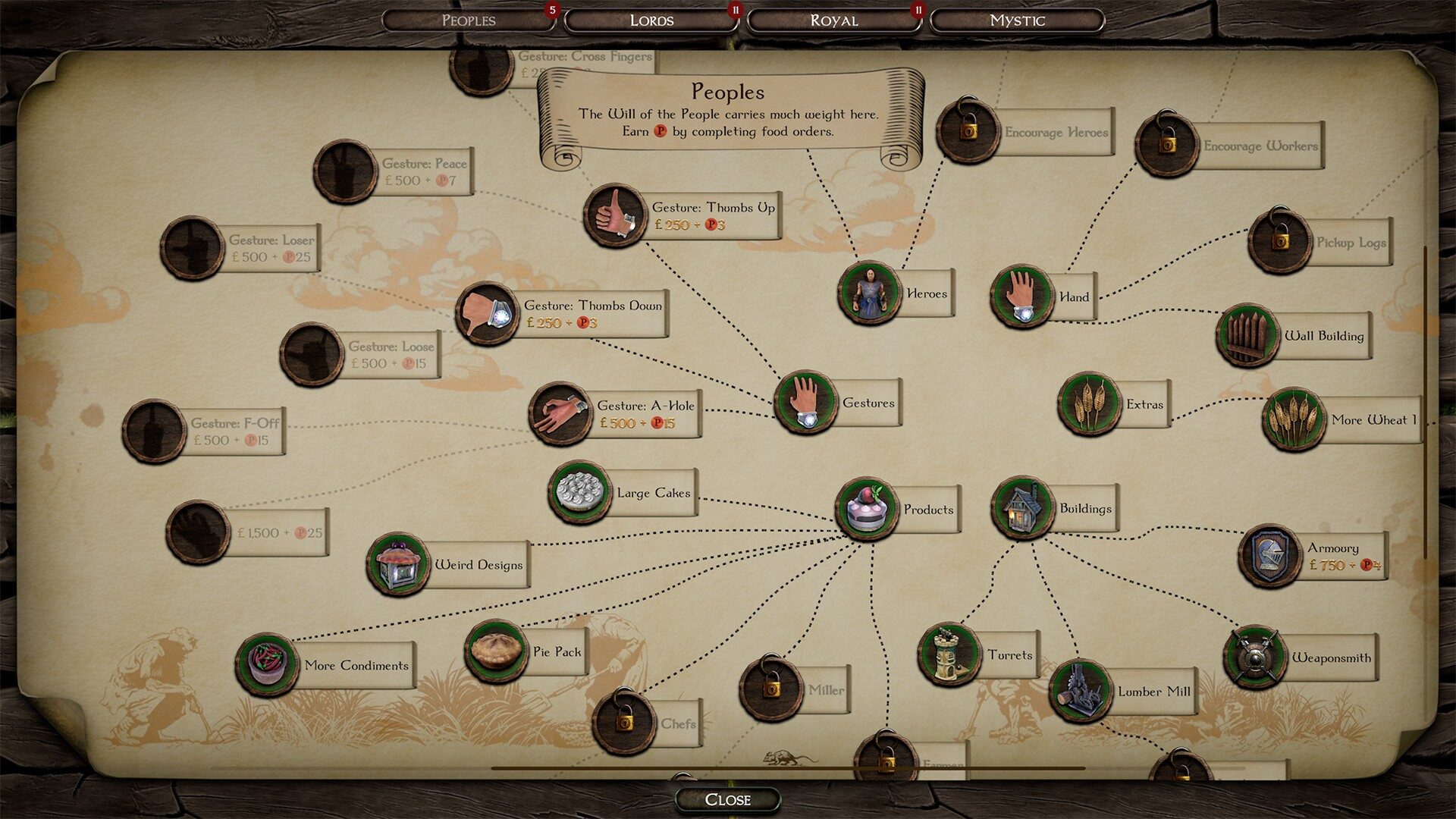
There’s just enough of new elements consistently layered into Masters of Albion to keep it interesting – from dropping fireballs on zombies with your god hand, to designing snazzy new outfits for your lord and lady, thus unlocking even more upgrades. The one caveat, however, is that a lot of the game’s tech tree is currently locked off in Early Access. I appreciate that 22Cans has laid out what the whole thing will look like, but it doesn’t necessarily mean some of Masters of Albion’s core features feel underbaked, presumably because their progression and enhancements aren’t implemented yet.
The other element here is that Masters of Albion has some clear technical issues. This is a massive world with a clearly complex simulation running underneath, and that leads to some performance hiccups every now and again. Equally, character animations feel blocky, but that might be a necessity because of the scope of the game as well. These are both elements that I’m confident can be worked out over time, but are there nonetheless.
The fact that I’ve put in 20 hours with Masters of Albion and I’m eager to put in even more is certainly a good sign. But I also can’t help but reflect on the idea of Early Access games, and how that ties into the legacy of Molyneux himself. Ironically, this game is now at the same nexus that all of Molyneux’s works have ended at – fantastic ideas that aren’t fully realized or implemented.
Will this Early Access format mean Molyneux’s final game can finally find a path to full realization? I don’t honestly know. I love the ideas of what’s here, but it’s undeniably hard to have faith that the “final” product can bring all of those to fruition – despite my hope that it genuinely does.
“The fact that I’ve put in 20 hours with Masters of Albion and I’m eager to put in even more is certainly a good sign.”
Early Access has integrally changed players’ relationships with games and studios. Whereas we could only listen to the promises of what a game would have before, we can now tangibly feel and experience how a project is coming together, and in some cases, help shape it. I still question how that might interfere with true artistic vision, as studios seek to satiate what players want rather than deliver what was initially envisioned. That’s obviously not the case for every Early Access game, but I find myself wondering how a game like Masters of Albion can strike that balance.
But I think 22Cans and Molyneux himself feel like a microcosm of the last two decades of video games – unchecked joyous ambition that oftentimes can’t get reigned in. That feels like at least a part of why the industry is where it is, with these massive multi-year development projects that cost multitudes of millions. How do games realize their artistic ambitions while still being realistic? That’s a question I think the industry has to seriously answer right now. And despite the road to get here, I hope it’s an answer that Molyneux and Masters of Albion, specifically, can find an answer to.