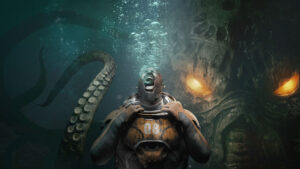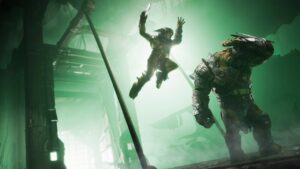

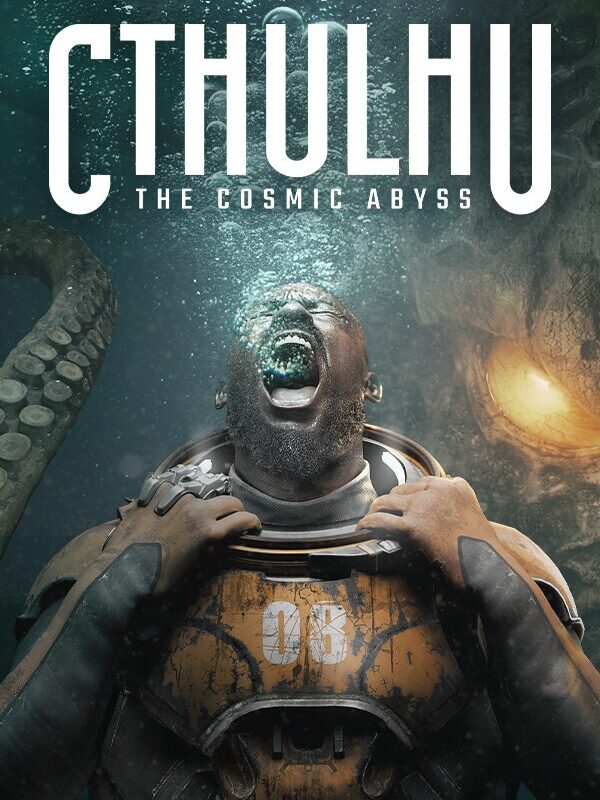
I was honestly excited to play Cthulhu: The Cosmic Abyss after my initial hands-on preview with it back in February, because it was setting up an interesting experience. I said in my preview that the Cthulhu mythos has been done to death in the game industry, that it’s kind of hard to take it seriously anymore, so when a game comes along that actually has a good idea with the character, it’s a genuine treat.
However, after taking a deeper look at the final product, I am left feeling somewhat conflicted. There is a good game in Cthulhu: The Cosmic Abyss, with some genuinely interesting ideas. However, they are buried under a torrent of questionable design decisions that left me feeling dejected and, more often than not, annoyed.
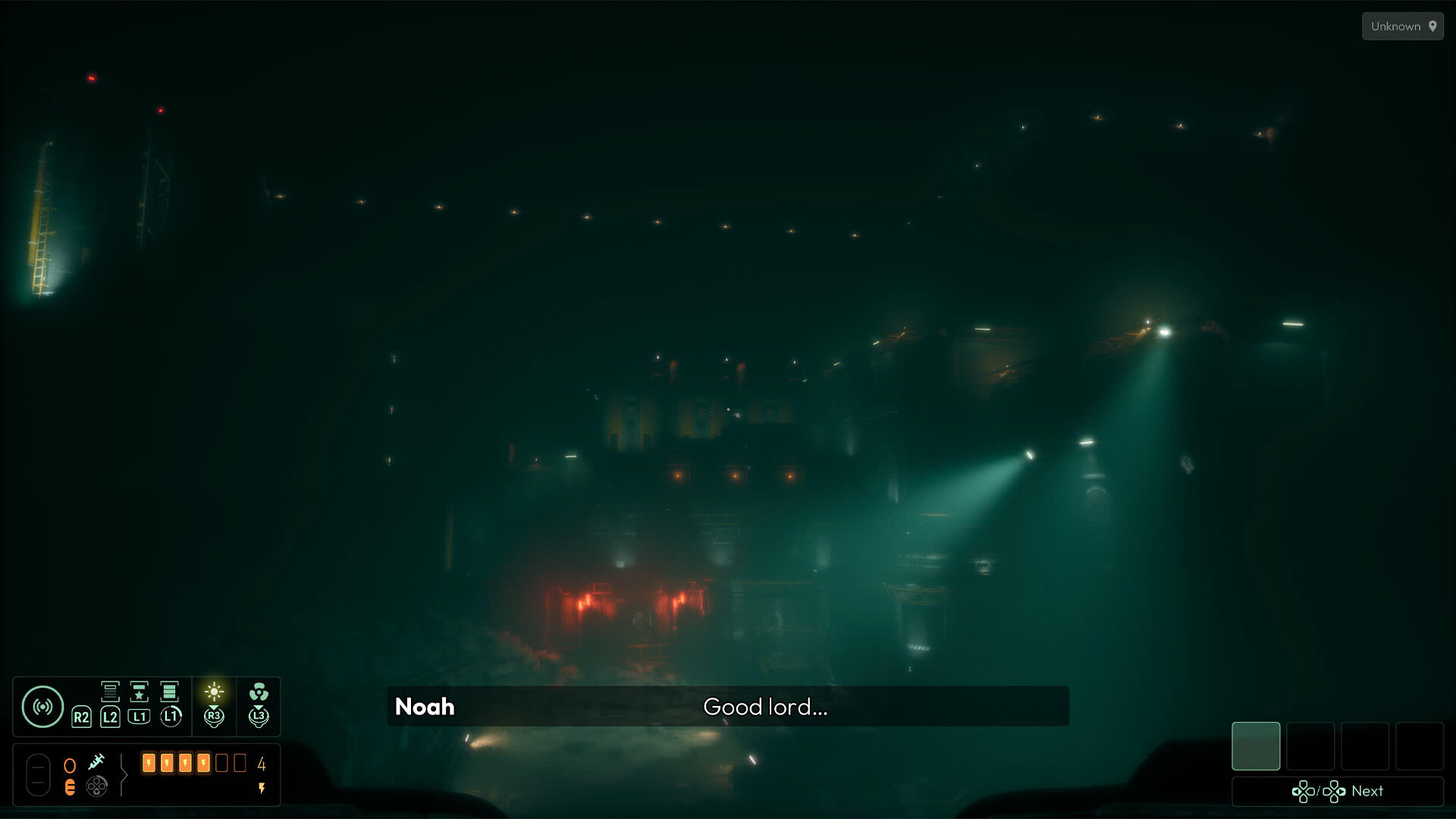
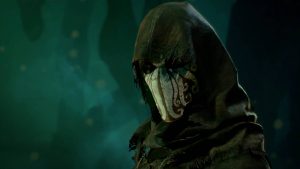
Players take on the role of Noah, an occult investigator tracking the workings of an organization known as Ocean-I, led by the enigmatic Andrew Marsh, after a friend of his mentor disappears following a slow descent into madness. Before long, Noah is pulled into the cosmic abyss of R’lyeh and quickly begins to discover that Marsh was searching for something mysterious and terrible.
“There is a good game in Cthulhu: The Cosmic Abyss, with some genuinely interesting ideas.”
Working against the clock and his own deteriorating mind, Noah must unravel the mystery of Marsh’s work and prevent the return of the old gods. It is pretty standard as far as Cthulhu stories go, in that someone discovers ancient knowledge and is driven mad by its incomprehensibility, taking it as a sign of the glorious return of ancient beings. What helps distinguish Cthulhu: The Cosmic Abyss is both its story and gameplay, and its setting in a more advanced near future.
Unlike most Lovecraftian material, which usually stays in the early 1900s, closer to when Lovecraft wrote his fiction and better suited to these kinds of stories, combining these elements of magic and technology makes for a really interesting contrast. It not only creates a stark visual contrast but also presents a unique idea: using technology to make sense of the senseless, which makes the story more interesting.
Gameplay is a bit of a mixed bag. As I mentioned in my preview, there is a big emphasis on examination and investigation, and part of the hook is that, depending on how well you conduct your deductions, the faster or slower the madness takes hold. Cthulhu: The Cosmic Abyss would have you believe this is the case. However, in all my time with the game, it felt somewhat illusory.
I first noticed this fairly early on, when Noah discovers an undersea research station alongside a liminal space maze. Attempting to go through the maze only resulted in Noah being turned in every direction, while there were some subtle ways to find a path through it. However, the only way to move forward was through a corridor that was impassable because of extremely strong ocean currents.
“If I can provide one piece of advice to anyone playing Cthulhu: The Cosmic Abyss its this: if you can analyze something, ANALYZE IT.”
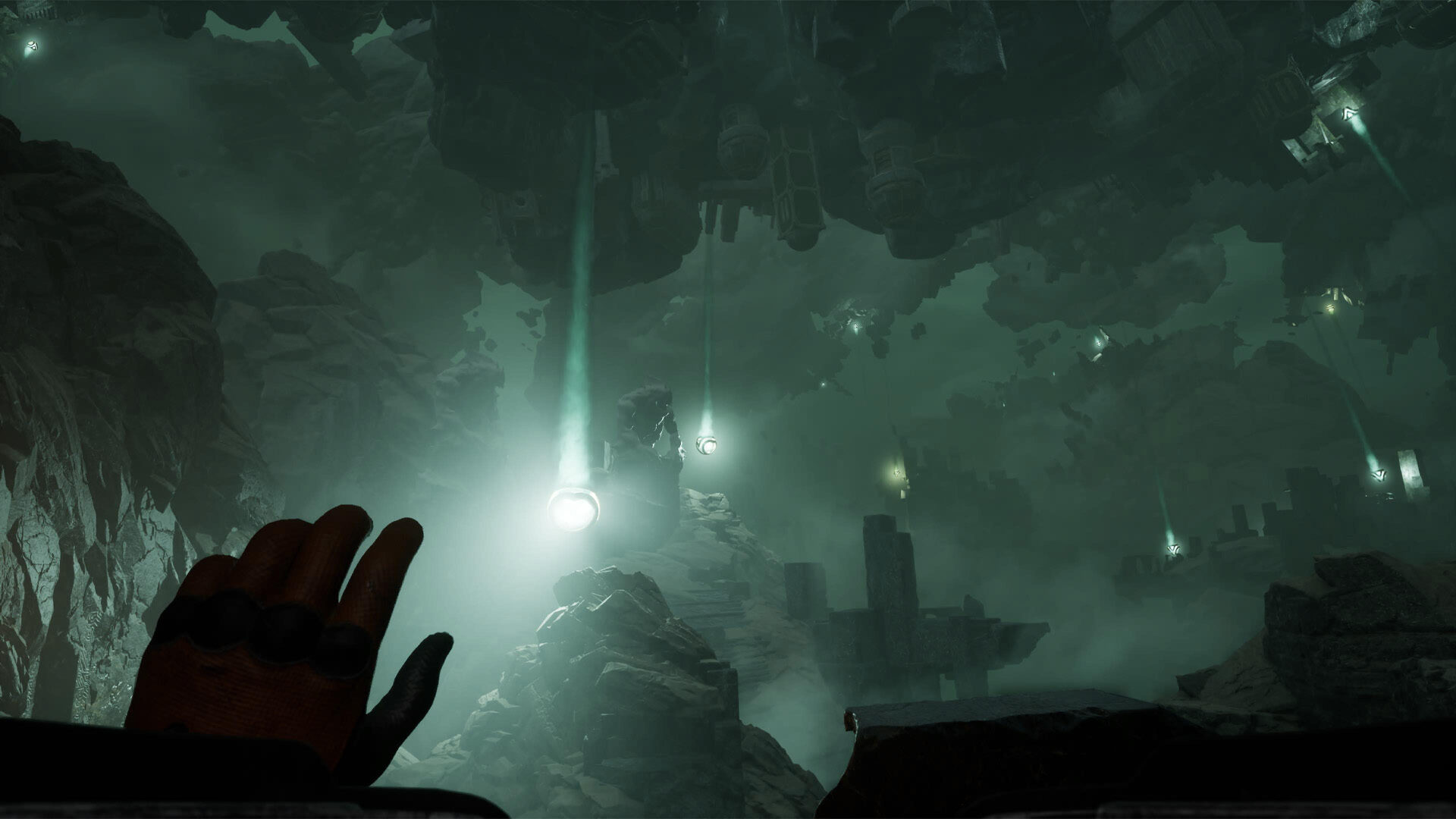
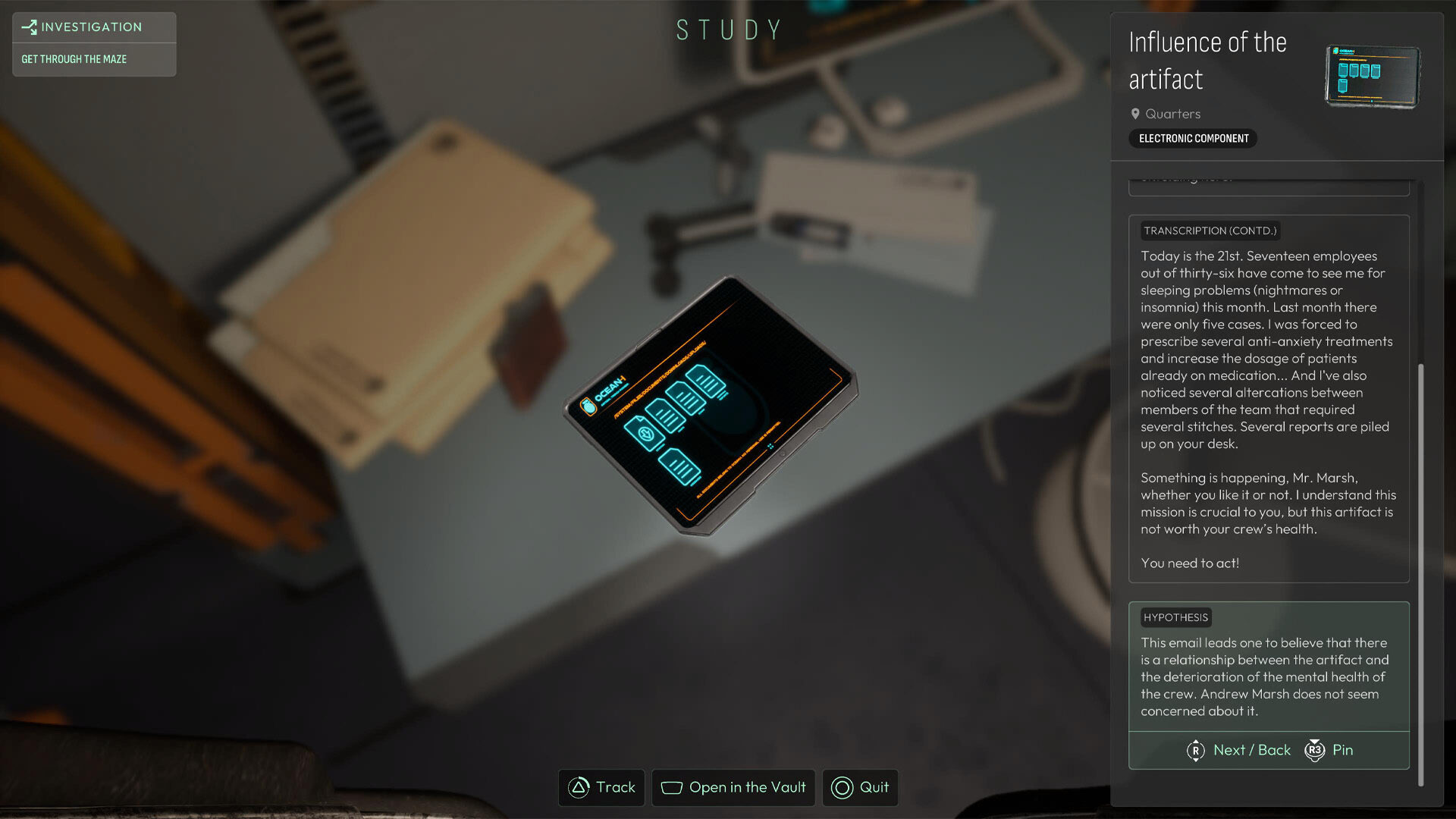
The main element of investigation is scanning, in both a micro- and macro-sense. As players pick up investigation-specific objects, they can spend energy to analyze them for additional information or key elements that can be targeted with their sonar. As players pulse their surroundings, objects that share elemental properties are highlighted, allowing for more robust inspection.
There was a seemingly obvious answer hidden within all the information I had gathered and the deductions I had made: find a mystical artifact that would open the way forward. And if I can provide one piece of advice to anyone playing Cthulhu: The Cosmic Abyss, it is this: if you can analyze something, ANALYZE IT. It was an issue I noticed more than once, where the only perceivable way forward required a keycard that took an embarrassingly long time to find because it was tucked into an easily missed drawer.
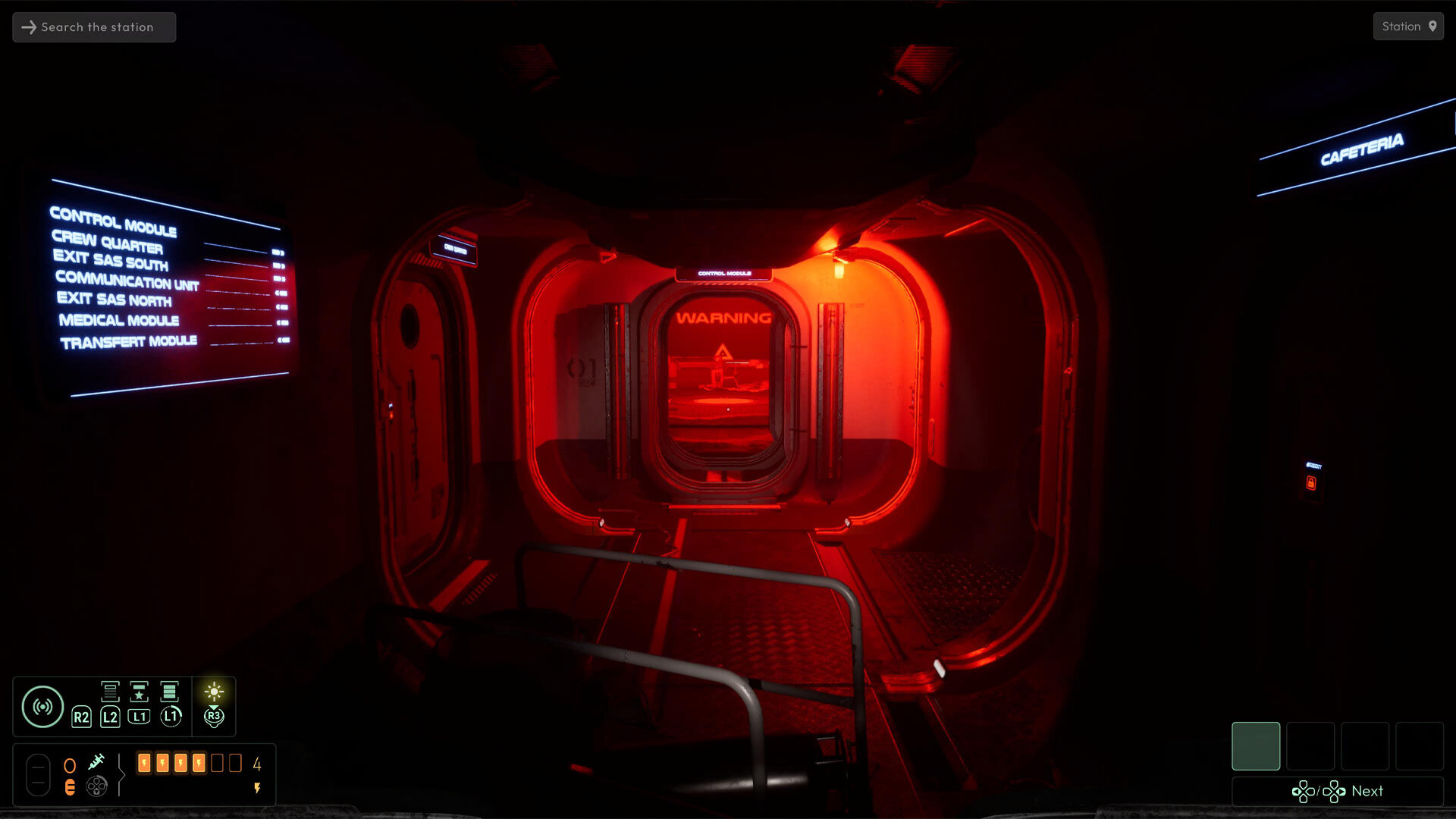
Only after analyzing a different keycard to add the term “keycard” to my Sonar was I able to find it and move forward. And this was something of a pattern I began to notice. The game presents puzzles as if there are seemingly obvious, or even multiple, solutions, but so many of them just require analyzing objects and following a ping path to the next clue. Suffice to say, it began to suck a bit of the mystique out of the experience.
And after a solid hour or so of scanning every inch of the Sea Lab for every possible clue and object, I found a way to retrieve the artifact and move forward. This, in turn, gave me the “bad” result of the investigation, pushing the corruption to almost 50 percent. Now, I do not claim to be a genius, but I like to think of myself as fairly smart. Still, I could not for a moment think of how I could have done anything differently, because the game was not indicating any way that I could.
And Cthulhu: The Cosmic Abyss goes out of its way to tell you there are two ways to solve every chapter mission, but I must be some kind of turbo moron because, despite meticulous searching, it seemed like the game only presented me with one clear way to progress the story. There was no room for interpretation, not even subtly, just one answer and a single path forward. I am not saying the game needed to guide me at every turn, even though that is a possible difficulty option, but it needed to give me something.
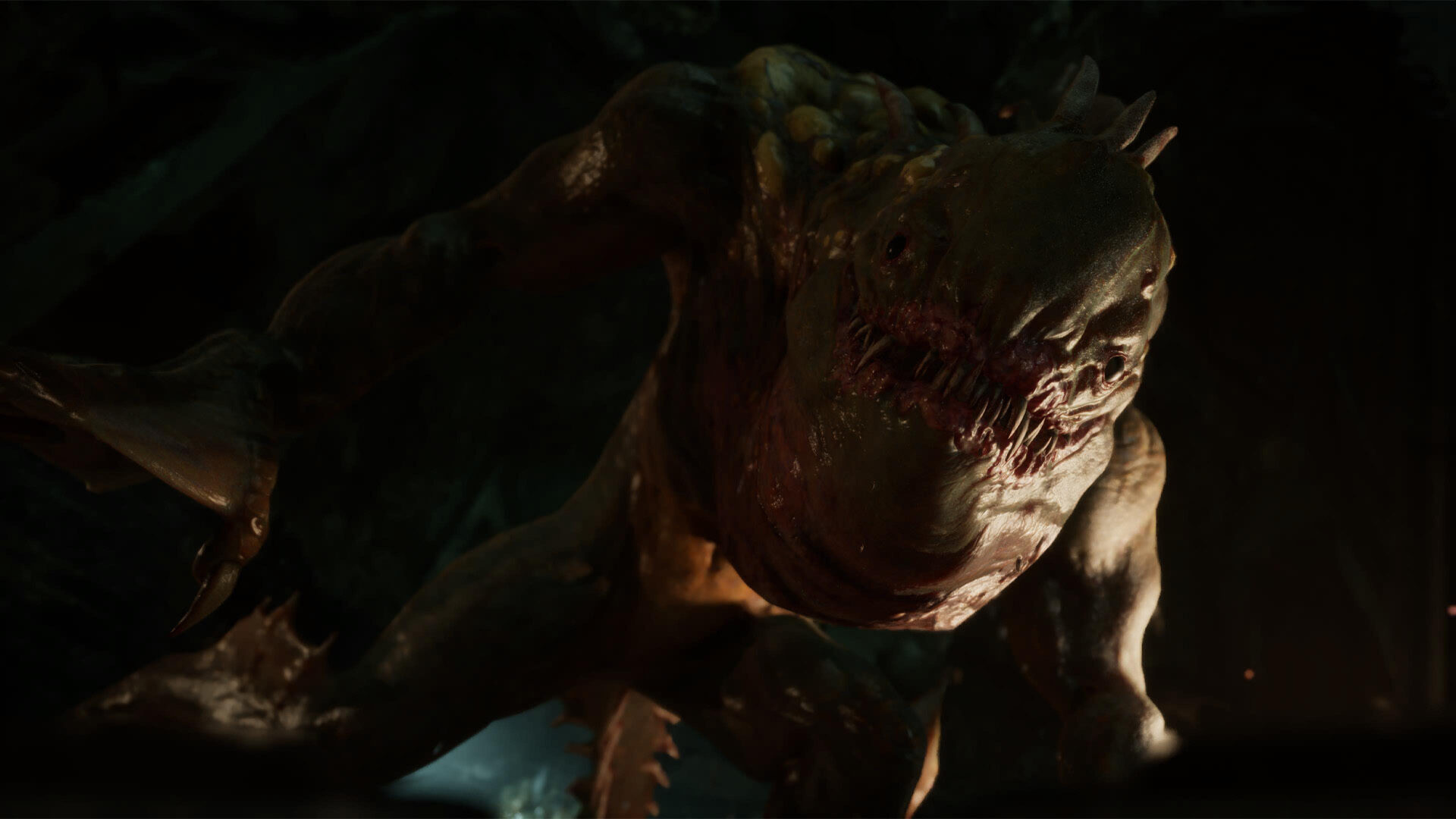
Like I have said numerous times, a puzzle is something you have all the information for, and the difficulty comes from your ability to put the pieces together. But at almost every crucial story point, after connecting every dot and scouring every piece of information, there was never even a clue about how to approach a solution from a different angle. Essentially, the game withholds information, then punishes players for not knowing the answers.
“While it had potential for some decent storytelling, its central gameplay feature is both needlessly obtuse and obfuscatingly straightforward.”
Visually, Cthulhu: The Cosmic Abyss looks fine, about as good as you would expect from a game built in Unreal Engine 5. It creates some pretty decent environments and has a solid sense of atmosphere. It also creates a pretty interesting version of R’lyeh that feels appropriately modern in conjunction with the rest of the game, merging sharp, angular architecture with strange, twisting shapes, otherworldly landscapes and an abundance of water.
However, its performance, even on the PlayStation 5, leaves a lot to be desired. Using the sonar to light up a multitude of things can cause the game to lag pretty badly. The game has a really hard time getting Noah out of the water, and even areas with small, accessible ledges will see him jerk up and down before falling back into the brine. It also crashed a few times for seemingly no reason. Seriously, one time I just walked through a door.
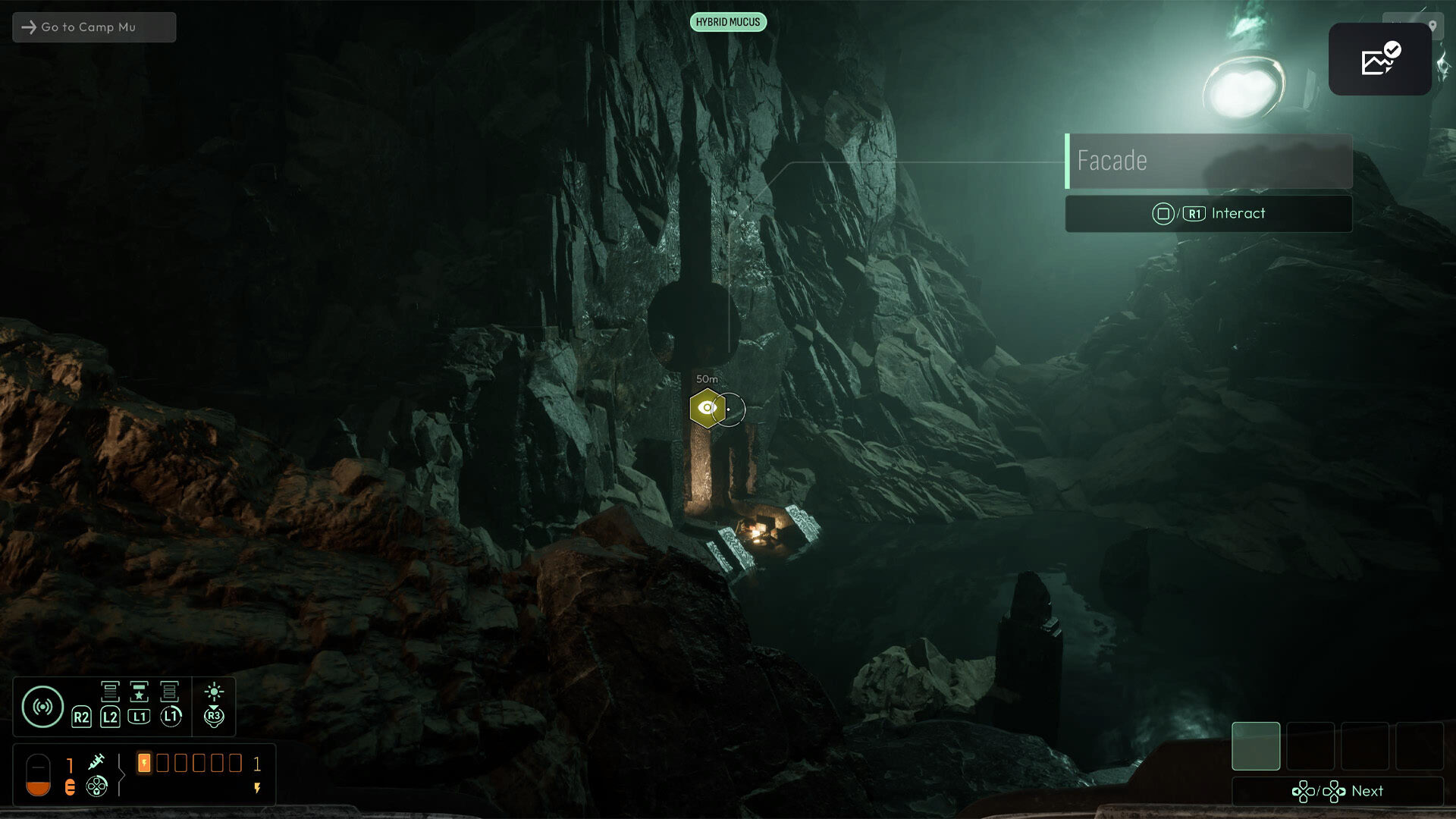
I was really looking forward to Cthulhu: The Cosmic Abyss, but the longer I played it, the less interested I became. While it had potential for some decent storytelling, its central gameplay feature is both needlessly obtuse and obfuscatingly straightforward.
Also, it’s a minor nitpick, but there are books of a “Lovecraftian TTRPG Game” placed as cute “worldbuilding,” but it just annoyed me because it means in this world, both H.P. Lovecraft and the fictional mythos he created exist simultaneously.